










Does Sunscreen Block Vitamin D in Kids? What Indian Parents Should Know
"I don't put sunscreen on my child because they need Vitamin D." This is one of the most common things Indian parents say — and it is based on a myth. Does sunscreen block Vitamin D? The short answer: no. Clinical studies consistently show that sunscreen used in real-world conditions does not cause Vitamin D deficiency. This guide explains why — and what actually does.
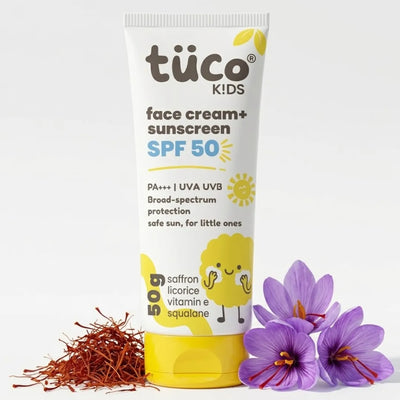
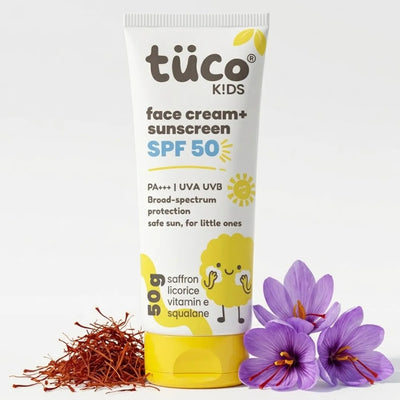
Tuco Kids tip: Your child can get all the Vitamin D they need from 10–15 minutes of early morning sun before 9am — and then wear sunscreen for the rest of the day. The Tuco Kids Sunscreen SPF 50 protects against UV damage without interfering with Vitamin D — no oxybenzone, no fragrance, no white cast on Indian skin tones.
Shop Sunscreen SPF 50 →
What's in This Guide
- Quick Comparison: Tuco Sunscreen Products
- How Vitamin D Is Made in the Skin
- Does Sunscreen Actually Block Vitamin D? What the Research Says
- The Indian Context: How Much Sun Do Kids Actually Need?
- What Actually Causes Vitamin D Deficiency in Indian Children
- Signs of Vitamin D Deficiency to Watch For
- The Right Approach: Sun + Sunscreen Together
- Frequently Asked Questions
- Related Reads
Quick Comparison: Tuco Sunscreen Products
| Product | Best For | Key Features | Shop |
|---|---|---|---|
| Sunscreen SPF 50 (50gm) | Daily school use · Outdoor play · Indian summer months | SPF 50 PA++++ · No oxybenzone · No fragrance · No white cast · Water-resistant · Dermatologist-tested from age 3 | Shop → |
| Sunscreen SPF 30 (30gm) | Regular school days · School bag reapplication · Ages 6m+ | SPF 30 broad-spectrum · Lightweight · Fragrance-free · Paraben-free · Compact 30gm size | Shop → |
| 3-in-1 Dull Skin Kit SPF 30 | UV-induced dullness + daily SPF · Ages 3+ | Face Wash + Dull Skin Lotion + SPF 30 sunscreen · Restores existing UV damage + prevents new · Sulphate-free | Shop → |
| Detan Kit | Existing UV-induced tanning · Ages 2+ | Gently reverses UV-induced skin changes · Sulphate-free · Paraben-free · Works alongside daily SPF | Shop → |
| Face Care Regimen (SPF 50) | Complete morning routine · Ages 5+ | Cleanser + Treatment + SPF 50 · Full morning skincare habit · Dermatologist-tested | Shop → |
How Vitamin D Is Made in the Skin
When UVB rays from the sun hit the skin, they interact with a molecule called 7-DHC (a cholesterol-like compound) to produce Vitamin D3. The liver and kidneys then convert this into the active form the body uses. This is why sun exposure is the most widely cited source of Vitamin D — especially in India, where dietary Vitamin D sources are limited in most children's diets.
The key point: only UVB rays trigger Vitamin D production. UVA rays — which are responsible for tanning, UV-induced dullness, and deeper skin damage — do not. Sunscreen that blocks UVB does theoretically reduce UVB reaching the skin. The question is whether real-world application makes this difference clinically significant. The research says: it does not.
Does Sunscreen Actually Block Vitamin D? What the Research Says
Sunscreen and Vitamin D deficiency are not linked in real-world use. Here is what the evidence actually shows:
- No clinical study has found daily sunscreen use causes Vitamin D deficiency — the Skin Cancer Foundation, American Academy of Dermatology, and multiple independent reviews all confirm this. Studies that found sunscreen reduced Vitamin D synthesis used controlled laboratory conditions with precise, very high application doses — not how any parent applies sunscreen to a child in real life
- People apply far less sunscreen than the tested amount — studies show most people apply 25–50% of the recommended quantity. This means a significant amount of UVB still reaches the skin even with SPF 50 applied — enough for Vitamin D production to continue
- SPF 50 does not block 100% of UVB — it blocks approximately 98%. That remaining 2% of UVB, across normal outdoor time, is sufficient for the body to continue producing Vitamin D. In India's UV Index 9–11 conditions, 2% UVB is still a significant amount of radiation reaching the skin
- Field studies consistently show sunscreen users maintain Vitamin D levels — one published study found that participants who used sunscreen daily actually improved their Vitamin D levels over the study period, because they spent more time outdoors without the deterrent of sunburn
The bottom line on the sunscreen and Vitamin D myth: skipping sunscreen to get Vitamin D is not supported by evidence. It exposes children to real, cumulative UV damage for no proven Vitamin D benefit.

The Indian Context: How Much Sun Do Kids Actually Need?
This is where the guidance becomes specific to Indian families — and different from the advice parents in the UK or US receive.
| Factor | India | What It Means for Your Child |
|---|---|---|
| UV Index | 9–11 year-round (Very High to Extreme) | Vitamin D synthesis happens very quickly — within 5–10 minutes of morning exposure. Children don't need extended unprotected sun time |
| Vitamin D synthesis window | Most efficient before 10am and after 4pm | 10–15 minutes of early morning indirect sun on arms and legs, 3x per week, is sufficient for most children |
| UV damage risk | Highest 10am–4pm | Any sun exposure in this window without sunscreen accumulates damage. Children in school outdoor periods are most at risk |
| Indian skin tones | Higher melanin than European skin | Melanin provides partial UV protection but also slows Vitamin D synthesis slightly — not enough to justify skipping sunscreen, but worth knowing. Dark-skinned children may need slightly longer sun windows for synthesis |
The practical rule for Indian parents: 10–15 minutes of morning sun before 9am, arms and legs uncovered, three times a week. Then apply sunscreen for all subsequent outdoor time. This covers Vitamin D needs while keeping UV damage in check.
How much sun for Vitamin D in kids (India): 10–15 minutes before 9am, 3x per week on exposed skin — no sunscreen needed in this short early-morning window. For everything after 9am, Tuco Kids Sunscreen SPF 30 for school days or SPF 50 for outdoor activity.
Shop Sunscreen SPF 30 →
What Actually Causes Vitamin D Deficiency in Indian Children
If sunscreen isn't the cause, what is? Vitamin D deficiency in kids in India is genuinely common — but its causes are different from what most parents assume.
- Spending the entire day indoors: school hours, afternoon tuitions, and evening screen time mean many urban Indian children have very little outdoor time at all — sunscreen or no sunscreen. A child indoors from 7am to 7pm simply isn't getting sun exposure regardless of what's on their skin
- Diet: Vitamin D is found naturally in very few Indian foods — egg yolks, fatty fish, and fortified dairy are the main sources. Vegetarian children who eat no eggs or fish are at higher dietary risk
- Full-body clothing and cultural norms: children dressed in long sleeves, trousers, and covered clothing throughout the day have limited skin surface exposed to even the sun they do encounter
- Air pollution: heavy particulate pollution in cities like Delhi and Mumbai absorbs and scatters UVB radiation before it reaches ground level — reducing effective UVB exposure even during outdoor time
- Timing of outdoor time: many children's outdoor time (evening play, late afternoon sports) coincides with lower-UV periods when UVB-driven Vitamin D synthesis is less efficient
Signs of Vitamin D Deficiency to Watch For
Vitamin D deficiency in children is often asymptomatic until it becomes severe. The most reliable way to identify it is a serum 25-OH Vitamin D blood test — ask your paediatrician. Watch for these signs:
- Frequent illness or infections (Vitamin D plays a direct role in immune function)
- Bone pain or tenderness, particularly in the legs
- Delayed growth or developmental milestones
- Muscle weakness or fatigue that seems disproportionate to activity level
- Increased dental cavities — Vitamin D affects calcium absorption and tooth enamel development
If you suspect deficiency: request a serum ferritin and 25-OH Vitamin D blood test from your paediatrician. The fix is Vitamin D supplementation at the appropriate dose for the child's weight and age — not reducing sunscreen use. Reducing sunscreen to address Vitamin D deficiency exposes your child to UV damage risks that significantly outweigh any Vitamin D benefit.
The Right Approach: Sun + Sunscreen Together
The choice is not between Vitamin D and sun protection. Both are achievable simultaneously with the right routine.
- Before 9am: 10–15 minutes of outdoor morning sun on exposed arms and legs — no sunscreen. This is sufficient for Vitamin D synthesis in India's high-UV conditions
- After 9am outdoors: apply sunscreen SPF 50 for any extended outdoor time. Reapply every 2 hours
- Diet: include Vitamin D-rich foods — eggs, fatty fish, fortified milk — in daily meals. If dietary sources are limited, ask your paediatrician about a Vitamin D supplement. Most Indian paediatric guidelines support routine supplementation for children under 5
- If UV-induced dullness is already visible: months of unprotected outdoor school exposure can leave toddlers and older children with uneven, dull skin. The 3-in-1 Dull Skin Kit SPF 30 restores existing UV-induced changes while preventing new ones
- Don't use Vitamin D as a reason to skip sunscreen: the evidence is unambiguous — sunscreen use does not cause Vitamin D deficiency. UV damage, on the other hand, is cumulative and begins from infancy
Already seeing UV-induced dullness from outdoor school exposure? The 3-in-1 Dull Skin Kit SPF 30 combines daily SPF protection with a face wash and lotion that restore the skin's natural appearance from accumulated UV damage — while the sunscreen stops new damage from adding up.
Shop 3-in-1 Dull Skin Kit →
Frequently Asked Questions
Does sunscreen block Vitamin D in children?
No. Sunscreen does not block Vitamin D in real-world use. Studies consistently show that people who use sunscreen daily maintain normal Vitamin D levels. SPF 50 blocks approximately 98% of UVB — the remaining 2%, combined with normal gaps in application, allows sufficient UVB to reach the skin for Vitamin D synthesis to continue.
Can children get Vitamin D with sunscreen on?
Yes. Because real-world sunscreen application is never as complete or as thick as lab conditions, meaningful UVB still reaches the skin. Additionally, a short window of early morning sun before sunscreen is applied — 10–15 minutes before 9am — provides sufficient Vitamin D synthesis for most Indian children.
Is sunscreen bad for Vitamin D levels in kids?
Sunscreen is not bad for Vitamin D. No clinical study has demonstrated that daily sunscreen use causes Vitamin D insufficiency or deficiency. The Skin Cancer Foundation, AAD, and WHO all confirm that sun protection and adequate Vitamin D are compatible. Skipping sunscreen to get Vitamin D exposes children to UV damage for no evidence-based benefit.
How much sun does a child need for Vitamin D in India?
For Vitamin D, Indian children need approximately 10–15 minutes of direct morning sun (before 9am) on exposed arms and legs, three times a week. India's high UV Index means synthesis happens quickly. After this window, sunscreen should be applied for all remaining outdoor time.
My child's Vitamin D is low — should I stop using sunscreen?
No. If your paediatrician has identified Vitamin D deficiency, the correct treatment is a Vitamin D supplement at the appropriate dose — not reducing sunscreen. Reducing sun protection exposes your child to UV damage risks that are significantly greater than any Vitamin D benefit gained. Supplementation is safe, evidence-based, and does not require UV damage as a trade-off.
What actually causes Vitamin D deficiency in Indian children?
The main causes are: insufficient total outdoor time (especially in urban children with full school + tuition schedules), diet low in Vitamin D (eggs, fatty fish, fortified dairy), full-body clothing limiting skin exposure, and air pollution in cities like Delhi and Mumbai which scatters UVB before it reaches ground level. Sunscreen is not on this list.
Is it safe to let my child have some sun without sunscreen?
Yes — within limits. The safe window for Vitamin D synthesis without sunscreen is early morning (before 9am) for 10–15 minutes, three times a week. This is low-UV time in India's daily cycle. Outside this window — particularly between 10am and 4pm — UV intensity is high enough that unprotected exposure accumulates damage rapidly, especially in children whose skin is thinner and more UV-reactive than adult skin.
Which sunscreen is best if I'm worried about Vitamin D?
The best approach is a high-quality kids' sunscreen SPF 50 applied correctly after your child's early morning sun window — not a low-SPF product as a compromise. Low-SPF sunscreens don't meaningfully increase Vitamin D production but do meaningfully reduce UV protection. Use SPF 50, supplement Vitamin D if levels are low, and trust the morning sun window to do the synthesis work.
Related Reads
- Best Sunscreen for Kids in India: SPF 30 vs SPF 50 — What Really Protects Your Child
- The Best Sunscreens for Kids Aged 10 and Up
- Which SPF Sunscreen Is Best for Teenage Girls?
- Best Sunscreens for Kids: Gentle, Safe and Dermatologist-Approved
- Sunscreen for Teenage Girls: How to Choose SPF for Acne-Prone and Sensitive Skin
- What PA Ratings Mean in Sunscreen and When PA++++ Makes a Difference