






Why Is My Child Losing Hair After a Fever? Post-Illness Hair Fall Explained
If your child recovered from a high fever — dengue, typhoid, COVID, or even a bad viral infection — six to twelve weeks ago, and their hair is suddenly falling out in clumps now, you're not imagining a connection. This is a real, well-documented condition called telogen effluvium, and it's one of the most searched, least-answered haircare concerns among Indian parents.

Quick tip: During post-fever hair fall, the goal is to protect what's regrowing, not treat the shedding aggressively. Switch to a gentle, sulphate-free wash routine like the Tuco Kids Champi Kit — the oil-shampoo-conditioner combination nourishes the scalp without the harsh stripping that regular shampoos can add on top of an already stressed scalp.
What's in this guide
- What is telogen effluvium?
- TL;DR — what helps
- Why fever triggers hair fall 6–12 weeks later
- Illnesses that trigger post-fever hair fall in India
- Normal shedding vs. something more serious
- Recovery timeline: will the hair grow back?
- What helps during recovery
- FAQs
- Related reads
What Is Telogen Effluvium?
- Telogen effluvium is temporary, diffuse hair shedding triggered by a physical shock to the body — high fever, illness, surgery, severe stress, or rapid weight loss
- It is not the same as alopecia — there's no bald patch, no scalp disease, and no permanent follicle damage
- Hair sheds evenly across the scalp rather than in one spot, and it grows back on its own once the body recovers
- It is far more common than most parents realise — it just isn't discussed much because the delay between the fever and the shedding confuses people into not connecting the two
TL;DR — What Helps
| Product | Why it helps during recovery | Price |
|---|---|---|
| Champi Kit: Oil + Shampoo + Conditioner | Full gentle routine — oiling nourishes the scalp, sulphate-free shampoo cleans without stripping, conditioner reduces breakage on regrowing hair | Rs. 749 |
| Champi Duo: Shampoo + Hair Oil | A lighter two-step version of the same gentle oil-and-wash routine | Rs. 699 |
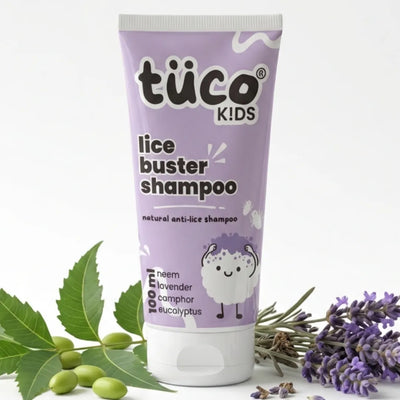
| Natural Shampoo for Kids (300ml) | Sulphate-free, pH-balanced — avoids adding extra stress to hair that's already shedding | Rs. 410 |

Why Fever Triggers Hair Fall 6–12 Weeks Later
- Hair grows in cycles: an active growth phase (anagen), a short transition phase (catagen), and a resting phase (telogen) before the strand sheds and a new one begins growing
- Normally, only about 10% of hair is in the resting phase at any time — which is why some daily shedding is completely normal
- A high fever or serious illness is a physical shock that pushes a much larger percentage of hair follicles into the resting phase all at once, prematurely
- Hair in the resting phase doesn't fall out immediately — it sits there for roughly 2–3 months before shedding, which is why the hair fall shows up weeks after the child has already recovered and looks completely fine
- This delay is exactly why so many parents don't connect the dots — by the time hair is falling, the fever is old news
Illnesses That Trigger Post-Fever Hair Fall in India
- Dengue: One of the most commonly reported triggers in Indian children — the combination of high fever and the body's inflammatory response is a strong shedding trigger
- Typhoid: A prolonged high fever illness, endemic in India, frequently followed by noticeable hair fall 2–3 months later
- COVID-19: Post-COVID telogen effluvium has been widely reported in both children and adults, even after mild infections
- Severe viral fevers: Any prolonged high fever — 102°F+ for several days — can be enough of a shock to trigger the same response, even without a named diagnosis
Normal Shedding vs. Something More Serious
- Normal post-fever shedding: Diffuse thinning across the whole scalp, no bald patches, hair coming out in the shower/on the pillow/on the brush in noticeably higher amounts than before the illness
- Something to get checked: Distinct round bald patches (could be alopecia areata, unrelated to fever), scalp redness, scaling, or sores, hair fall that continues unchanged for more than 6 months, or any sign the child is unwell beyond the hair itself
- If shedding is diffuse and the child otherwise recovered normally from the illness, this is very likely ordinary telogen effluvium and does not need urgent medical intervention — but a paediatrician or dermatologist visit is reasonable if you want reassurance
Recovery Timeline: Will the Hair Grow Back?
- Weeks 6–12 post-fever: Shedding begins and is usually most noticeable during this window
- Months 3–6: Shedding gradually slows as fewer follicles remain in the resting phase
- Months 6–12: New hair growth becomes visible, often as short, fine "baby hairs" along the hairline and part — this is a good sign, not a cause for worry
- By 12 months: Most children see close to full regrowth, since telogen effluvium does not damage the hair follicle itself
- The key reassurance for parents: this condition resolves on its own in the overwhelming majority of cases, without needing any treatment beyond gentle care
What Helps During Recovery
- Nutrition: Protein, iron, and biotin support the hair regrowth cycle — include eggs, dals, leafy greens, nuts, and seeds in daily meals, especially important post-illness when appetite may still be recovering
- Gentle washing: Use a sulphate-free, pH-balanced shampoo and avoid daily washing — over-washing adds unnecessary mechanical stress to hair that's already shedding
- Avoid harsh chemical treatments: No hair colouring, straightening, or tight hairstyles during the recovery window — regrowing hair is finer and more fragile
- Gentle oiling: A light, regular oil massage before wash day improves scalp circulation and nourishes follicles without pulling on fragile strands
- Handle hair gently: Use a wide-tooth comb, detangle from the ends up, and avoid vigorous towel-drying
- Patience: This is the hardest part for parents — there is no product or remedy that speeds up the hair cycle significantly; consistent gentle care and time are what actually work
Tuco Kids Champi Kit: Oil + Shampoo + Conditioner
A gentle, pediatric-safe hair routine formulated for children aged 3–15. The oil nourishes the scalp before washing, the sulphate-free shampoo cleans without stripping fragile regrowing hair, and the conditioner reduces breakage from detangling — exactly the low-stress routine recommended during post-illness hair fall recovery.
Shop the Champi Kit →Frequently Asked Questions
How long does post-fever hair fall last?
Shedding typically begins 6–12 weeks after the fever, peaks over the following 1–2 months, and gradually slows over 3–6 months. Most children see visible new regrowth by 6–12 months, since telogen effluvium doesn't damage the hair follicle itself.
Will my child's hair grow back after fever?
Yes, in the vast majority of cases. Telogen effluvium is temporary and doesn't damage the follicle — it simply pushes more hair into the resting phase at once. Once the body fully recovers, normal hair growth cycles resume and hair grows back over the following months.
Does dengue cause hair loss in kids?
Yes — dengue is one of the most commonly reported triggers for post-fever telogen effluvium in Indian children. The high fever and the body's inflammatory response to the infection are enough of a physical shock to push hair follicles into the resting phase, with shedding showing up 6–12 weeks later.
Is hair oiling safe during hair fall recovery?
Yes, and it's actively recommended. Gentle oiling before wash day supports scalp circulation and nourishes follicles. The key is to be gentle — light massage rather than vigorous rubbing — since regrowing hair and a recovering scalp are more fragile than usual.
When should I see a doctor about my child's hair fall?
See a paediatrician or dermatologist if you notice distinct round bald patches (rather than even thinning), scalp redness or sores, hair fall that continues unchanged past 6 months, or if the child shows other signs of being unwell. Diffuse shedding that follows a recent fever, with no scalp symptoms, is very likely ordinary telogen effluvium.
What foods help hair regrow after illness?
Protein, iron, and biotin are the key nutrients for the hair regrowth cycle. Eggs, dals and legumes, leafy greens, nuts, and seeds are good everyday sources — especially important post-illness, when a child's appetite and nutrient stores may still be recovering.