



Sunscreen for Teenage Girls: How to Choose SPF for Acne-Prone and Sensitive Skin
Most teenage girls in India are already aware they need sunscreen — the problem is they try one, it breaks them out or feels suffocating in the heat, and they stop within a week. The formula is almost always the issue: the wrong texture for the wrong skin type, or an adult formula with pore-clogging ingredients that teenage skin cannot tolerate. Sunscreen for teenage girls is not one-size-fits-all — oily, acne-prone, dry, and sensitive skin need fundamentally different formulations, and choosing the wrong one is exactly what causes the breakouts and stickiness that make teenagers give up on SPF entirely. This guide tells you exactly which sunscreen works for each skin type, why it matters more at this stage than any other, and how to integrate it into a routine your daughter will actually follow.
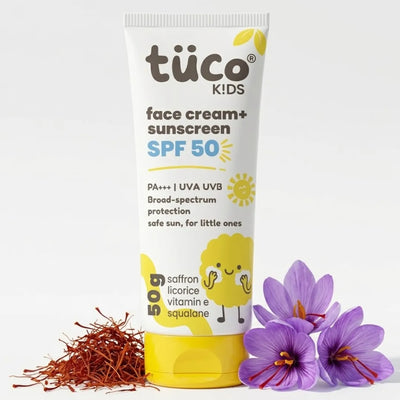
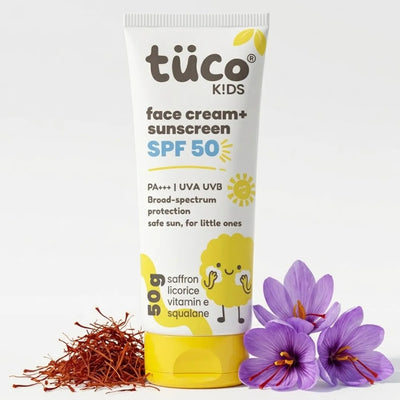
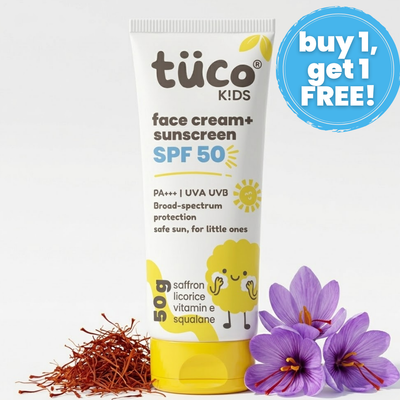
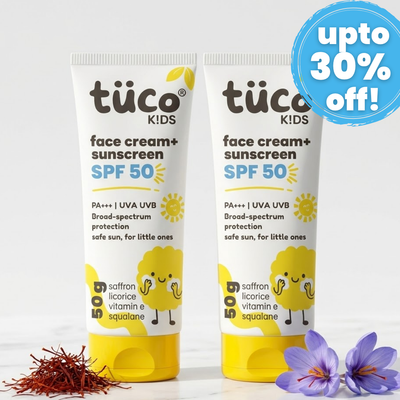
Tuco Kids tip: If your teenage daughter keeps skipping sunscreen because "it makes my skin worse" — the problem is almost certainly the formula, not sunscreen itself. The Tuco Kids Sunscreen SPF 50 (50gm) is non-comedogenic, oil-free, and absorbs in under 60 seconds — specifically designed to sit well on oily and acne-prone teenage skin without triggering breakouts or leaving a greasy film.
Shop Sunscreen SPF 50 →
 What's in This Guide
- Quick Comparison: Tuco Sunscreens for Teenage Skin
- Why Sunscreen Matters More During the Teenage Years
- How to Identify Your Teen's Skin Type
- Oily and Acne-Prone Teenage Skin: What to Use and Why
- Dry and Sensitive Teenage Skin: A Different Formula Is Needed
- How Sunscreen Prevents Acne Scars from Getting Darker
- SPF 30 vs SPF 50: Which Does a Teenage Girl Need?
- Sunscreen Myths Teenage Girls Believe (and the Truth)
- How to Build a Morning Routine Teenagers Will Actually Follow
- Frequently Asked Questions
- Related Reads
Quick Comparison: Tuco Sunscreens for Teenage Skin
| Product | Best Skin Type | Key Features | Shop |
|---|---|---|---|
| Sunscreen SPF 50 (50gm) | Oily, acne-prone, combination · Ages 10–15 · Outdoor-active teens | SPF 50 broad-spectrum · PA++++ UVA · Non-comedogenic · Oil-free · No white cast · Absorbs in 60 sec · Saffron Oil + Olive Squalene · Water-resistant | Shop SPF 50 → |
| Sunscreen SPF 30 (30gms) | Normal, combination, dry · Indoor-heavy school days · Travel and school bag | SPF 30 broad-spectrum · Lightweight 2-in-1 formula · Moisturiser + sunscreen · Compact 30gm size · No white cast · Paraben-free · Fragrance-free | Shop SPF 30 → |
| Morning Skincare Routine Kit | All skin types · Complete morning routine · Ages 10–15 | Complete 3-step morning routine · Cleanser + treatment + SPF 50 sunscreen · Builds consistent daily habit · Dermatologist-tested · SLS-free, paraben-free | Shop Kit → |
Why Sunscreen Matters More During the Teenage Years
Competitor guides consistently understate this: the teenage years are when sun protection is simultaneously most important and most commonly skipped. Here is why the stakes are higher at this age than at any other:
- Hormonal changes make skin more reactive to UV: rising androgens during puberty increase sebum production and skin sensitivity — the same hormonal environment that makes teenage skin more prone to acne also makes it more vulnerable to UV-induced inflammation, post-acne hyperpigmentation, and UV-induced dullness
- UV damage from teenage years is cumulative and permanent: UV exposure doesn't reset. Every unprotected school commute, sports period, and afternoon outdoors adds to a lifetime total of UV damage that directly affects what skin looks like in the 20s and 30s. The skin's DNA repair mechanisms are still developing in adolescence, making UV damage at this stage disproportionately impactful
- Post-acne marks worsen dramatically with UV exposure: this is the most important fact for acne-prone teenage girls specifically — UV exposure on active or healing acne spots causes the marks left behind to darken and persist for months longer than they otherwise would. SPF 50 is the single most effective step for preventing and reducing post-acne hyperpigmentation in teenage skin
- Screen exposure adds a new UV threat: Indian teenagers spend an average of 4–6 hours daily on phones and laptops. High-energy visible light (blue light) from screens contributes to oxidative stress and pigmentation on skin — an angle that most sunscreen guides for teenagers still miss entirely. Broad-spectrum sun protection with antioxidant actives (like Saffron in Tuco's SPF 50) provides partial protection against this as well
- Habits formed now determine long-term compliance: a teenager who builds a daily SPF habit between ages 12 and 15 will maintain it through adulthood. One who develops a "sunscreen doesn't work for me" belief at 13 will be significantly harder to convert later. Getting the right formula matched to the right skin type from the start is the only way to make the habit stick.
 How to Identify Your Teen's Skin Type
The fastest way to identify a teenage girl's skin type — and therefore the correct sunscreen for teenage girl formula — is the blotting paper test: press a plain tissue against different areas of the face 1–2 hours after washing. No oil transfer = dry. Oil from the T-zone only = combination. Oil from all areas = oily. Flakiness or tightness with no oil = dry or sensitive.
| Skin Type | Signs in Indian Teenage Girls | Common Mistake | Right Sunscreen Type |
|---|---|---|---|
| Oily | Shiny all over by mid-morning · Enlarged pores · Frequent blackheads and breakouts | Using a heavy cream sunscreen that clogs pores and worsens breakouts within days | Oil-free, non-comedogenic, fast-absorbing SPF 50 |
| Combination | Oily T-zone (forehead, nose, chin) · Dry or normal cheeks · Uneven texture | Using a gel that dries out the already-dry cheeks, causing flakiness | Lightweight lotion SPF 30 or 50 that balances both zones |
| Dry | Tight after washing · Fine flaky patches · No visible shine at any point of the day | Skipping sunscreen because "nothing absorbs properly" — the formula needs moisturising actives | 2-in-1 sunscreen with moisturising base, SPF 30 minimum |
| Sensitive | Redness after product application · Stinging or itching in the sun · Reactive to new products | Using a chemical sunscreen with oxybenzone or synthetic fragrance — both common in adult formulas | Mineral or mineral-hybrid, fragrance-free SPF 50 |
| Acne-prone | Regular active breakouts · Post-acne dark marks · Oily or combination skin underneath | Avoiding sunscreen entirely because of fear of breakouts — making post-acne marks darker | Non-comedogenic SPF 50 — specifically tested to not clog pores |
Oily and Acne-Prone Teenage Skin: What to Use and Why
This is the skin type most Indian teenage girls deal with from age 11 onwards — and the one most likely to either get the wrong sunscreen or skip it entirely. The most-searched query in this category is best sunscreen for teens with acne — and the honest answer has nothing to do with brand recognition and everything to do with specific formulation criteria.
What non-comedogenic actually means (on an ingredient level)
- Non-comedogenic means the formula has been tested to not block pores — but the label alone is not sufficient. Look at the actual base ingredients. Avoid: coconut oil, lanolin, isopropyl myristate, petrolatum in heavy concentrations, and thick silicones (dimethicone in heavy quantities)
- Gel or fluid textures are the only practical format for oily teenage skin: cream textures — even those labelled non-comedogenic — trap heat and sebum on an already-oily surface, making the skin feel worse and increasing the chance of breakouts
- Oil-free does not always mean non-comedogenic: these are two separate criteria. A formula can be oil-free but still contain pore-blocking silicones or alcohol that worsen oily skin over time. Check both
- Avoid synthetic fragrance (listed as "parfum") unconditionally: synthetic fragrance is the most common contact allergen in cosmetics used by teenage girls — it also increases inflammation on acne-prone skin, worsening both active breakouts and the marks they leave behind
Ingredients that actively help oily and acne-prone teenage skin
- Zinc oxide: a mineral UV filter that also has natural anti-inflammatory properties — one of the few ingredients that both provides sun protection and actively reduces redness around active spots
- Niacinamide: reduces sebum production and minimises the appearance of pores over time — an excellent active to have in a sunscreen for oily skin
- Squalane: a lightweight, non-comedogenic moisturising ingredient that hydrates without adding oil — present in Tuco's SPF 50 and one of the reasons it works well on oily teenage skin
- Liquorice Root Extract: natural anti-inflammatory that calms redness and helps prevent UV-induced hyperpigmentation on acne-prone skin
For oily and acne-prone teenage skin: The Sunscreen SPF 50 (50gm) is non-comedogenic, oil-free, and formulated with Saffron Oil and Olive Squalene — both lightweight, non-pore-blocking actives. It absorbs completely within 60 seconds, leaves a matte finish, and does not add any oiliness to a hormonally oily teenage complexion. Rated as the best sunscreen for teenage girl by parents whose daughters had previously given up on SPF due to breakouts.
Shop Sunscreen SPF 50 →
Dry and Sensitive Teenage Skin: A Different Formula Is Needed
Dry and sensitive teenage skin is significantly underrepresented in sunscreen guides — guides focus disproportionately on oily and acne-prone skin because it's more visually obvious. But dry-skinned teenage girls who use the wrong sunscreen develop a very specific problem: the formula strips what little moisture the skin has, the skin becomes flaky and irritated, and the teenager concludes sunscreen is drying her skin out — when the reality is that the formula was wrong for her skin type.
- Avoid gel sunscreens and alcohol-based formulas on dry teenage skin: gel formulas that work perfectly for oily skin are too stripping for dry skin — they evaporate moisture rapidly in India's AC environments and during the dry winter months
- Look for a 2-in-1 formula that combines sunscreen with moisturising actives: a product that provides both SPF protection and skin nourishment in one step eliminates the need to layer a separate moisturiser, which dry-skinned teenagers frequently skip — meaning the skin gets protection and hydration in one step or nothing at all
- For sensitive teenage skin, mineral or mineral-hybrid formulas are the safest first choice: zinc oxide and titanium dioxide sit on the skin surface without being absorbed, dramatically reducing the chance of reaction or irritation. Chemical UV filters like oxybenzone and avobenzone are absorbed through the skin — on sensitised teenage skin, this can cause stinging, redness, or a delayed allergic reaction
- Patch test any new sunscreen before full-face application: apply a small amount to the inner wrist or jawline, leave for 24 hours, and check for redness or itching before committing to full face use — especially important for teenagers who have had reactions to products in the past
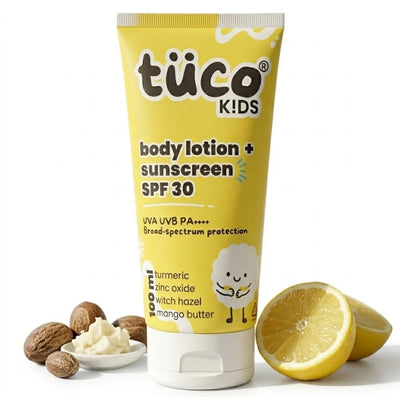
The Sunscreen SPF 30 (30gms) is the right starting point for dry or sensitive teenage skin — a lightweight 2-in-1 formula that provides SPF 30 protection alongside nourishing actives, in a compact size that encourages consistent daily use.
How Sunscreen Prevents Acne Scars from Getting Darker
This is the section most guides miss — and for acne-prone teenage girls, it's arguably the most persuasive reason to use SPF 50 every single day.
- UV radiation directly darkens post-acne marks: when a spot heals, it leaves behind post-inflammatory hyperpigmentation (PIH) — a flat, dark mark where the breakout was. UV exposure is the primary driver that makes these marks darker and more persistent. Every unprotected outdoor hour actively worsens acne scarring, regardless of what treatment is being used
- SPF 50 PA++++ on acne-prone skin is both protective and corrective: PA++++ provides the highest rated UVA protection — UVA rays are what drive pigmentation. Blocking them prevents new PIH from forming and allows existing marks to fade at their natural rate, rather than being continuously darkened by UV exposure
- No topical treatment for acne scars can work without daily SPF: vitamin C serums, niacinamide, and retinol (common anti-pigmentation ingredients) are all rendered ineffective without daily sun protection — UV exposure regenerates the melanin production these ingredients are trying to suppress. For any parent whose daughter is using treatments for post-acne marks, SPF 50 applied every morning is non-negotiable for those treatments to deliver results
- The practical implication: for an acne-prone teenage girl, the single most impactful skincare step she can take — more than any spot treatment, serum, or face wash — is consistent daily SPF 50 on every school day
SPF 30 vs SPF 50: Which Does a Teenage Girl Actually Need?
For most Indian teenage girls — particularly those who spend time outdoors for school sports, commutes, and social activities — sunscreen for teenagers should be SPF 50 as a daily standard.
| SPF 30 | SPF 50 | |
|---|---|---|
| UVB blockage | ~97% | ~98% |
| When it's the right choice | Mostly indoors, limited outdoor exposure, school days with no outdoor sports | Any outdoor activity lasting 30+ min · Sports days · Summer months · Active teens |
| For acne-prone teenage skin | Minimum acceptable | Recommended — PA++++ UVA protection prevents PIH from worsening |
| India UV context | Adequate for winter, indoor-heavy days | The sensible daily standard given India's UV Index of 8–11 year-round |
| Tuco product | Sunscreen SPF 30 (30gms) | Sunscreen SPF 50 (50gm) |
The practical recommendation: for most Indian teenage girls, keep SPF 50 as the daily standard and the SPF 30 (30gm) in the school bag for convenient midday reapplication. The 30gm size fits in any pencil case or bag pocket — making it practical to reapply before afternoon outdoor periods.

Sunscreen Myths Teenage Girls Believe (and the Truth)
Competitor research consistently shows that teenage girls who skip sunscreen do so because of specific myths — and that addressing these directly is the most effective way to change behaviour. Here are the most common ones:
-
Myth: "Sunscreen causes my acne."
Truth: Heavy, comedogenic sunscreens cause acne. A non-comedogenic, oil-free formula specifically formulated for young skin does not. Almost every teenager who believes sunscreen causes breakouts has only ever tried adult or baby formulas — not a formula built for oily teenage skin. Switching to the right formula resolves sunscreen-related breakouts in most cases within 2 weeks -
Myth: "I have dark skin so I don't need sunscreen."
Truth: Melanin provides some UV protection — but nowhere near enough to substitute for SPF. Darker skin tones are more prone to UV-induced hyperpigmentation and post-acne marks specifically because melanocytes are more active. Sunscreen for teens is more important, not less, for Indian skin tones -
Myth: "I'm inside most of the day, so I don't need it."
Truth: UVA rays penetrate glass — a teenager sitting by a classroom window, in a car, or near a home window receives meaningful UV exposure throughout the day. Blue light from screens also contributes to oxidative skin damage. Daily SPF applies on indoor days too -
Myth: "SPF in my moisturiser or makeup is enough."
Truth: The layer of moisturiser or foundation applied on a real face is far too thin to deliver the SPF on the label. You would need to apply 10–15 times the normal amount of SPF moisturiser to actually get SPF 30 protection. Sunscreen must be a standalone product applied at the correct quantity -
Myth: "Higher SPF means I don't need to reapply."
Truth: SPF degrades with UV exposure, sweat, and physical contact regardless of SPF number. SPF 50 applied at 8am does not protect you at 2pm during afternoon sports. Reapplication every 2 hours during outdoor activity is the rule for every SPF level -
Myth: "Sunscreen makes skin look grey and ashy on Indian skin."
Truth: 100% mineral sunscreens with large particle zinc oxide do leave a white cast on darker skin tones. Hybrid mineral-chemical formulas and micronised mineral filters — like those in Tuco's SPF 50 — are specifically formulated to eliminate this on Indian skin tones. No white cast is a formulation achievement, not an accident
How to Build a Morning Routine Teenagers Will Actually Follow
The most consistent finding across competitor guides is that complicated routines get abandoned. A teenage girl who commits to a 3-step morning routine will maintain it. One who has a 6-step routine will have quit by week 2. Here is the only morning routine that reliably works for Indian school-going teenagers — and how sunscreen fits into it as the final, non-negotiable step.
- Step 1 — Cleanser (60 seconds): a gentle, sulphate-free face wash suited to her skin type. This is Step 1 of the Morning Skincare Routine Kit — don't skip it even on rushed mornings, because sunscreen applied over an unclean face sits on top of overnight oil and bacteria rather than the skin itself
- Step 2 — Treatment or moisturiser (optional, 30 seconds): for dry skin, a lightweight moisturiser. For oily or acne-prone skin, a targeted treatment if one is being used. For most teenagers, this step can be skipped or combined with a 2-in-1 product to keep the routine short enough to sustain
- Step 3 — Sunscreen (60 seconds, mandatory): apply the Sunscreen SPF 50 using the two-finger rule (squeeze along the index and middle finger for the face and neck combined — this is the correct quantity to actually achieve SPF 50). Apply 10–15 minutes before going outdoors. Put the 30gm SPF 30 in the school bag for midday reapplication before sports or outdoor periods
Total time: under 3 minutes. A routine that takes under 3 minutes is a routine that happens. A routine that takes 8 minutes does not — especially on school mornings.
The complete 3-step morning routine: The Morning Skincare Routine Kit bundles cleanser, treatment, and SPF 50 sunscreen in one kit — everything needed for the 3-step routine above. Dermatologist-tested, SLS-free, paraben-free. Designed for ages 10–15. Takes under 3 minutes every morning.
Shop Morning Routine Kit →Frequently Asked Questions
Which sunscreen is best for teenage girl in India?
The best sunscreen for teenage girls in India must be non-comedogenic (won't clog pores), SPF 50 with PA++++ UVA protection, oil-free or lightweight for oily Indian teenage skin, free from synthetic fragrance and oxybenzone, and formulated with no white cast on Indian skin tones. Tuco Kids Sunscreen SPF 50 (50gm) meets all five criteria and was tested specifically on Indian children and teenage skin from age 3 to 15.
Which sunscreen is best for teenage skin that tends to break out?
For best sunscreen for teens with acne, look for the words non-comedogenic, oil-free, and fragrance-free on the label — and verify the base ingredients don't include coconut oil, lanolin, or isopropyl myristate. Gel or fluid textures are the most appropriate format for acne-prone skin. Tuco Kids SPF 50 is formulated with Squalane (lightweight, non-comedogenic) and Saffron Oil (anti-inflammatory) specifically to avoid the pore-clogging that causes sunscreen-related breakouts. Most teenagers who believe sunscreen causes their acne have only used adult or baby formulas not designed for oily teenage skin.
Should teenage girls use SPF 30 or SPF 50?
SPF 50 is the recommended daily standard for Indian teenage girls, particularly those who are outdoors for commutes, sports, or social activities. SPF 30 is adequate for mostly indoor days. For acne-prone teenage skin specifically, the PA++++ UVA rating of SPF 50 prevents UV from darkening post-acne marks — making SPF 50 more than just sun protection for this skin type. Keep the SPF 30 (30gm) in the school bag for practical midday reapplication.
Can sunscreen make teenage acne worse?
Only if the formula is comedogenic — meaning it contains pore-blocking ingredients. The formula, not sunscreen itself, is almost always the issue. Heavy, oily, or occlusive sunscreens designed for dry or mature skin block teenage pores rapidly. A non-comedogenic, oil-free formula like Tuco Kids SPF 50 does not clog pores or worsen acne — and is in fact beneficial for acne-prone teenage skin because SPF 50 prevents UV from darkening healing spots and post-acne marks.
Is mineral sunscreen better than chemical sunscreen for teenage girls?
For sensitive, reactive, or very acne-prone teenage skin: mineral is the safer starting point. Zinc oxide and titanium dioxide sit on the skin surface and deflect UV without being absorbed — dramatically reducing the chance of irritation, stinging, or allergic reaction. For teenage girls with normal or oily skin who have had no previous reactions, a hybrid mineral-chemical formula provides the same gentle properties with a lighter, no-white-cast finish that teenagers will actually wear consistently. Tuco Kids SPF 50 uses a mineral and natural-hybrid formula that combines both benefits.
How often should a teenager reapply sunscreen?
Every 2 hours during outdoor activity — and immediately after swimming or heavy sweating. For a standard school day where most time is spent indoors, a morning application is sufficient. For afternoon sports periods, PE days, or outdoor events, a midday reapplication is needed. The most practical solution is keeping a compact SPF 30 (30gm) tube in the school bag — it takes 60 seconds to apply and can be done before outdoor periods.
What is sunblock for teenage girls — is it different from sunscreen?
Sunblock for teenage girls is a colloquial term for the same product as sunscreen — it refers to physical/mineral formulas that "block" rather than chemically filter UV rays. In India, the terms are used interchangeably by most parents. What matters is the formula rather than the label: SPF 50, PA++++ rated, broad-spectrum, non-comedogenic, and free from oxybenzone and synthetic fragrance are the criteria that matter for teenage skin regardless of whether the product calls itself sunscreen or sunblock.
Can teenage girls use adult sunscreen?
Adult sunscreens can be used, but most adult formulas are not formulated for teenage skin's specific needs — higher oil production, more reactive to irritants, and acne-prone pores. Many adult sunscreens contain oxybenzone, synthetic fragrance, heavy silicones, and alcohol denat that are associated with breakouts and contact reactions in teenage skin. A formula specifically tested for teenage and children's skin — like Tuco Kids SPF 50 — provides the same or better protection without these risks.
Does sunscreen for teenage girls help with tanning?
Sunscreen prevents new UV-induced tanning and UV-induced dullness from accumulating. It does not reverse tanning that is already on the skin — that is addressed by leave-on treatment products used alongside daily SPF. For Indian teenage girls whose skin looks dull or uneven from school commutes, sports, and outdoor activity, daily SPF 50 prevents the UV damage from worsening while any treatment routine works to restore the skin's natural, undamaged appearance.
Related Reads
- Best Sunscreens for Girls of Every Skin Type: A Complete Guide
- Best Sunscreen for Kids in India: SPF 30 vs SPF 50 — What Really Protects Your Child
- Best Sunscreen for Kids in India 2026: No White Cast, Safe from Age 2
- Hydration + Protection: Best Sunscreens for Teenage Girls with Dry Skin
- The Best Sunscreens for Kids Aged 10 and Up: Top Picks for Ultimate Protection