



Which SPF Sunscreen Is Best for Teenage Girls? Choosing the Right SPF for Oily, Dry, or Sensitive Skin
Teenage skin is unique. It is transitioning from childhood to adulthood, and this phase brings noticeable changes in oil production, hydration levels, sensitivity and overall texture. These changes influence how you choose the best sunscreen for teenage girls and why SPF selection cannot be random for teenage girls.

Parents often assume any sunscreen will work, but teenage skin behaves differently based on whether it is oily, dry or sensitive. Understanding which sunscreen is best for teenage girl is not only about the number on the bottle. It is about understanding the skin type, the lifestyle of the teenager and how sunscreen ingredients respond to young skin.
This blog explains what SPF truly means, why different teenage skin types need different types of sunscreen for teen girls and how parents can choose the most suitable SPF for their child.
Understanding SPF and What It Really Does
SPF stands for Sun Protection Factor. It measures protection against UVB rays, the rays responsible for tanning, sunburn and long-term DNA damage.
In the market, you will commonly find:
SPF 15
Everyday indoor use. Not strong enough for teenage girls with outdoor travel or sports.
SPF 30
Blocks around 97 percent of UVB rays and is often considered the best spf for teens during school days or moderate outdoor activity.
SPF 50
Popular for teenagers because it blocks around 98 percent of UVB rays and is widely recommended as the best spf for teenage skin when outdoor exposure is higher.
SPF 50+ or SPF 60
Used for long outdoor hours, heat exposure, sensitive skin or heavy sports routines, especially when selecting the best sunscreen for 13 year old girl or the best sunscreen for 14 year girl.
The difference between SPF 30 and SPF 50 looks small, but in real-life conditions where sweat, dust and reapplication gaps occur, SPF 50 performs significantly better for teens.
What SPF and PA Rating Should Teenage Girls Use in India?
⚡ India UV Reality Check
India's UV index regularly hits 10–11 (Extreme) across Mumbai, Chennai, Hyderabad, Bengaluru and Kolkata from March to September. The WHO classifies anything above 8 as extreme. Most Indian teenagers go out in this without adequate protection — and UV damage at this age accumulates silently for years before it becomes visible as pigmentation, uneven tone, and premature ageing.
SPF 30 vs SPF 50: The Difference That Actually Matters
On paper, SPF 50 (98% UVB blocked) vs SPF 30 (97% UVB blocked) looks like a 1% gap. In practice, that gap matters because:
- Most teenagers apply 40–60% less sunscreen than the recommended amount — which cuts effective SPF roughly in half regardless of the number on the label
- Sweat and outdoor activity degrade SPF within 2 hours in Indian conditions
- SPF 50 gives you a meaningful safety buffer when application is imperfect — which it almost always is
The rule: SPF 30 for days your teen barely steps outside. SPF 50 for everything else — school commute, outdoor sports, weekend outings. In Indian summer, SPF 50 should be the default.
PA Rating: The Number Most Indian Parents Completely Miss
SPF only measures UVB protection — the burning rays. PA rating measures UV-A protection — the tanning, pigmentation, and deep-ageing rays that are present every single day, pass through glass, and don't feel intense until the damage is already done.
| PA Rating | UV-A Protection | Suitable For |
|---|---|---|
| PA+ | Minimal | Mostly indoor days, brief sun exposure |
| PA++ | Moderate | Short outdoor spells, cooler months |
| PA+++ | High | Daily outdoor use, most Indian cities |
| PA++++ | Maximum | ✅ Recommended for Indian teenage girls year-round |
A sunscreen without PA++++ is leaving your teen unprotected against the rays that cause tan, pigmentation and early skin ageing — the exact concerns teenage girls worry about most. The standard to shop for: SPF 50 + PA++++, every day.
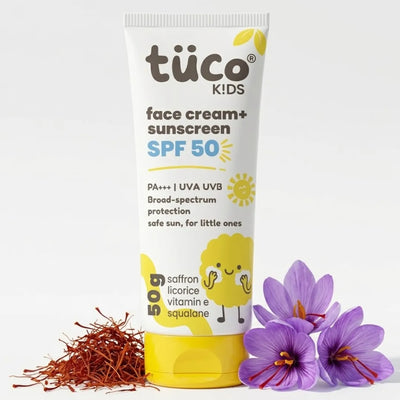
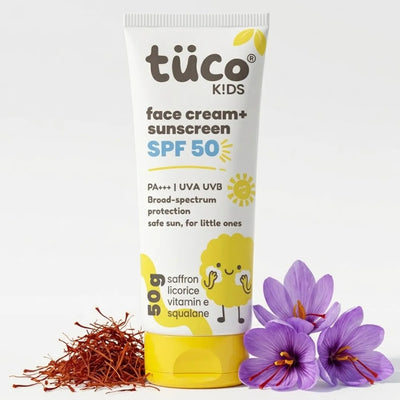
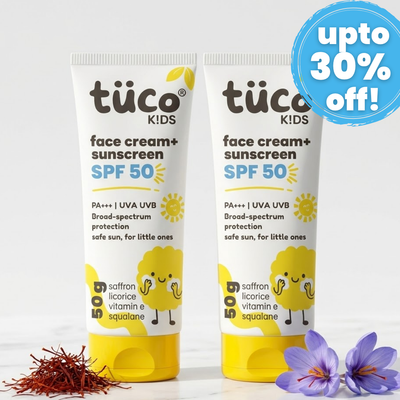
TucoKids Sunscreen SPF 50 — PA++++ Protection for Indian Teenage Skin
✅ SPF 50 + PA++++ | ✅ Non-comedogenic | ✅ No white cast | ✅ Dermatologist-tested
Built specifically for Indian conditions — protects against both the burning and the tanning rays, without clogging pores or leaving a white film on Indian skin tones. The one product that ticks every box for teenage girls in India.
Get SPF 50 PA++++ Protection →Why SPF Matters More for Teenage Skin?
Teenage skin is different from adult skin because:
Oil glands become more active.
Acne, whiteheads and blackheads become more common.
Skin sensitivity increases due to hormonal fluctuations.
Acne marks darken easily under sunlight.
Uneven tanning becomes faster.
Outdoor exposure during school, sports and travel is higher.
SPF helps prevent these issues from worsening. Sunscreen becomes a tool not just for protection but for skin correction and long-term skin health, especially when using the best face sunscreen for teenage girl.
Choosing the Right SPF Based on Skin Type
Teenage girls do not all need the same sunscreen. Parents should evaluate their child’s skin type first.
1. Best SPF for Teenage Girls With Oily Skin
Oily skin is the most common skin type during teenage years due to overactive sebaceous glands. Choosing the right sunscreen for oily skin is crucial, and finding the best sunscreen for teenage girl with oil-free and non-comedogenic properties helps prevent clogged pores while providing broad-spectrum protection.
What oily skin struggles with:
Greasiness during the day
Pore clogging
Heat-triggered breakouts
Shininess on the T-zone
Sweat mixed with sunscreen causing discomfort
What type of sunscreen works best:
SPF 30 or SPF 50 depending on outdoor exposure
Gel-based sunscreen for a lightweight feel
Oil-free and non-comedogenic
Matte finish formulations
Water-resistant options for sports or outdoor activities
Ingredients like niacinamide or silica to reduce shine
New insight for parents:

Teenagers with oily skin benefit from layered sun protection, which means using right skincare like lightweight moisturizer underneath sunscreen so the SPF does not overproduce oil. Teenagers tend to use only sunscreen, which leads to compensatory oiliness.
2. Best SPF for Teenage Girls With Dry Skin
Dry teenage skin is often overlooked because parents assume only toddlers face dryness. But hormonal changes and harsh body washes can strip moisture too. Choosing the best sunscreen for teenage girl with hydrating ingredients ensures both sun protection and nourishment.
What dry skin struggles with:
Flakiness
Tightness after washing
Redness
Poor barrier function
Irritation from strong sunscreens
What type of sunscreen works best:
SPF 30 for regular days or SPF 50 for outdoor hours
Cream-based or lotion-based sunscreen
Hydrating ingredients like ceramides, glycerin, aloe vera
Mineral sunscreens, which soothe rather than irritate
Formulas that absorb slowly and nourish the skin
New insight for parents:
Dry teenage skin often looks dull because of UV-induced dehydration. A hydrating sunscreen actually helps rebuild skin barrier strength over time, reducing long-term dryness.
3. Best SPF for Teenage Girls With Sensitive Skin
Sensitive skin reacts quickly to heat, sweat, sun and certain ingredients. Teenagers with sensitive skin experience stinging and redness easily. Choosing the best sunscreen for teenage girl in this case means opting for gentle, mineral-based formulations.
What sensitive skin struggles with:
Redness
Burning sensation
Heat bumps
Irritation from fragrances or chemicals
More visible tanning

What type of sunscreen works best:
Mineral sunscreen with zinc oxide or titanium dioxide
SPF 30 or SPF 50 depending on exposure
Fragrance-free formulations
Hypoallergenic and gentle base
No alcohol or strong preservatives
Sensitive teenage skin gets irritated not only by the formula but by how sunscreen is applied. Rubbing too hard can trigger redness. Mineral sunscreens need gentle patting for even coverage.
Best Sunscreen for Teenage Girls by Skin Type: Find the Right Formula
Using the wrong sunscreen for your teen's skin type is the single biggest reason teenagers hate sunscreen. Oily skin + cream sunscreen = breakouts. Dry skin + alcohol-based sunscreen = flakiness. Sensitive skin + chemical filters = stinging and redness. Match the formula to the skin type and the complaints stop.
| Skin Type | Formula to Use | Avoid | Our Pick |
|---|---|---|---|
| Oily / Acne-prone | Oil-free, non-comedogenic gel or fluid | Coconut oil, lanolin, heavy creams | TucoKids SPF 50 |
| Dry | Hydrating cream with aloe/hyaluronic acid | Alcohol-based, gel textures | TucoKids SPF 50 |
| Sensitive | Mineral, fragrance-free, hypoallergenic | Oxybenzone, fragrances, high alcohol | Dull Skin Kit SPF 50 |
| Combination | Lightweight gel-cream, oil-free | Heavy creams, thick mineral formulas | TucoKids SPF 50 |
Oily and Acne-Prone Skin: What's Actually Causing the Breakouts
Acne-prone teenagers often avoid sunscreen entirely because "it makes my skin worse." In almost every case, the sunscreen isn't the problem — the formula is. Heavy body sunscreens or adult creams applied to oily teenage skin block pores, trap sebum, and worsen breakouts within days. The fix is not to skip sunscreen. The fix is to use a non-comedogenic, oil-free formula designed for oily skin.
What non-comedogenic actually means on an ingredient level: no coconut oil, no lanolin, no isopropyl myristate, no petrolatum in heavy concentrations. Look for gel or fluid textures with mattifying actives (silica, niacinamide) that absorb quickly without leaving a greasy film.
UV exposure on acne-prone skin also worsens post-acne marks. Unprotected sun exposure causes inflammation that darkens active spots and prolongs the post-acne hyperpigmentation that takes months to fade. SPF 50 PA++++ on acne-prone skin is protective and corrective — it actively reduces the long-term appearance of acne scarring.
For Oily / Acne-Prone Teenage Skin: TucoKids Sunscreen SPF 50
✅ Oil-free | ✅ Non-comedogenic | ✅ Absorbs in 60 seconds | ✅ Matte finish | ✅ No breakouts
Specifically formulated to protect oily teenage skin without clogging pores or adding shine. The formula your teen will actually wear without complaining — because it doesn't feel like sunscreen.
Protect Oily Skin Without Breakouts →Dry Skin: Sunscreen That Protects Without Stripping Moisture
Dry teenage skin needs sunscreen that doubles as hydration. The wrong formula makes the problem worse: alcohol-based sunscreens dehydrate skin further, gel textures evaporate quickly without sealing moisture, and most "lightweight" adult sunscreens don't include any humectants at all.
For dry skin, the ingredients that matter most: hyaluronic acid (pulls moisture into the skin), aloe vera (soothes and retains surface hydration), glycerin (prevents moisture loss through the day). Always apply moisturiser first, wait 5 minutes, then apply sunscreen on top.
A note on Indian dry-season timing: northern and western India see aggressive skin dehydration between November and February. This is when parents most commonly skip sunscreen entirely — but UV-A levels remain significant year-round, and dry-season skin is more photosensitive than it is in summer. Consistent SPF use through winter is worth more than intensive summer use followed by a complete break.
Sensitive Skin: Why Mineral Formulas Are the Right Starting Point
Sensitive teenage skin reacts unpredictably. A formula that works for a friend can cause stinging, redness or heat rash within hours. The safest category: mineral sunscreen with zinc oxide or titanium dioxide — actives that sit on the skin surface and physically deflect UV rather than being absorbed, dramatically reducing the chance of a reaction.
Zinc oxide has a secondary benefit that most parents don't know about: it has natural anti-inflammatory properties that actively calm reactive skin. For teenagers who also deal with redness or mild rosacea, a zinc-based sunscreen is protective and soothing at the same time.
One challenge: older mineral formulas leave a white cast on Indian skin tones. Newer formulations — including those designed specifically for Indian skin — use micronised particles that blend transparently. The white cast concern is real but solvable by choosing the right product.
For Sensitive Teenage Skin: TucoKids Dull Skin Kit SPF 50
✅ Fragrance-conscious | ✅ Gentle mineral formula | ✅ Targets dullness + protects | ✅ Safe for reactive skin
Designed for sensitive and reactive teenage skin — SPF 50 protection with a formula gentle enough for daily use. The 3-in-1 kit also addresses dullness and uneven tone, which makes it the highest-value option for sensitive skin that also struggles with pigmentation.
Protect Sensitive Skin Gently →Combination Skin: One Formula, Two Zones
Combination skin at 15–18 is the most common result of hormones starting to stabilise but not yet fully settling. The T-zone (forehead, nose, chin) behaves like oily skin; the cheeks may be normal to slightly dry. The temptation is to use two different products — a bad idea in a morning routine that's already rushed.
The practical solution: a lightweight gel-cream or fluid formula that is oil-free but not aggressive. It absorbs uniformly across both zones, controls T-zone shine without drying out the cheeks, and doesn't require you to think about which zone gets which product. Apply in dots across the face and blend outward — same technique, both zones, one product.
Sunscreen by Age: The Right Formula at 13, 15, and 18
The compounding cost of starting late: UV damage is cumulative and irreversible. Every year a teenager spends without adequate sun protection adds to a damage account that shows up as visible pigmentation, uneven skin tone and premature ageing — typically by the mid-20s. Starting at 13 and building a daily habit gives 5–8 years of protection before the age when skin changes become visible. Starting at 20 means that window is already closed.
Age 13–14: Build the Habit Before Hormones Complicate It
At 13–14, most teenage girls are in early puberty. Skin is still relatively stable — not yet heavily oily, not yet acne-prone for most. This is the ideal window to introduce sunscreen as a non-negotiable daily habit, before hormonal changes make the skin more reactive and before resistance to new routines solidifies.
What matters most at this age:
- A formula that goes on easily and feels like nothing — 13-year-olds will abandon any sunscreen that feels heavy or requires effort to blend
- Fragrance-free: skin at this age is transitioning and can be reactive to synthetic fragrances even if it wasn't before
- SPF 30 is the minimum; SPF 50 if your teen spends 30+ minutes outdoors in summer
- Avoid adult chemical sunscreens with oxybenzone — gentler formulas designed for kids and young teens are appropriate here
The parent's job at 13: Make it automatic. Attach it to an existing morning habit. The formula matters less than the consistency. A habit built at 13 is one that stays for life.
Age 15–16: The Highest-Risk Window
Ages 15–16 are when the stakes are highest. Hormonal activity is at its peak — oil production is maximum, acne risk is highest, and the skin's natural defences are most stressed. At the same time, teenagers at this age have more outdoor independence: coaching classes, sports practice, social activities, longer commutes.
This is also the age when UV-A damage translates most directly into visible problems. Post-acne marks darken faster with sun exposure. Uneven skin tone becomes visible. Tan that doesn't reverse starts accumulating. The combination of high UV exposure + hormonally stressed skin makes 15–16 the most important age window for consistent SPF 50 use.
Non-negotiables at 15–16:
- SPF 50 PA++++ — every day, without exception. SPF 30 is no longer adequate at this outdoor activity level.
- Non-comedogenic formula — acne is at peak risk. A comedogenic sunscreen at this stage directly worsens breakouts and the pigmentation that follows them.
- Water-resistant for sports — sweat degrades SPF faster; a water-resistant formula holds up through outdoor activity
- Travel-size in the school bag for midday reapplication
Age 17–18: Locking In Adult Skin Habits
By 17–18, hormonal cycles are beginning to stabilise. Most teenagers at this stage know their skin type and what works. This is the phase where adult-grade sunscreen becomes appropriate — and where the choice between mineral and chemical sunscreen becomes a personal preference rather than a safety decision.
One important note: even at 17–18, teenagers who have struggled with acne still need non-comedogenic formulas. The urge to switch to adult sunscreens that aren't formulated for younger, reactive skin can undo years of progress in skin management. If acne is still present, stay with a non-comedogenic, oil-free SPF 50 regardless of age.
Works From 13 to 18: TucoKids Complete Sun Protection Kit
✅ SPF 50 PA++++ | ✅ Face + body coverage | ✅ Gentle enough for 13-year-olds | ✅ Effective for 18-year-olds
The Complete Sun Protection Kit covers the full teenage range without compromise — gentle formula for younger teens, full PA++++ broad-spectrum efficacy for older teens with higher outdoor exposure. One kit for the entire teenage journey.
Start Full Protection Today →How to Apply Sunscreen: The Routine That Actually Works for Teenage Girls
The best SPF 50 PA++++ sunscreen in the world delivers SPF 15 protection if it's applied incorrectly. Application mistakes — not formula choices — are the number one reason teenage skin stays unprotected despite using sunscreen daily. Here is the routine that fixes every common mistake.
The 6-Step Routine (And Why Each Step Matters)
Step 1: Wash first. Leftover oil, overnight products, and surface dirt reduce how evenly sunscreen distributes. 30 seconds with a gentle face wash before sunscreen means full, even coverage every time.
Step 2: Moisturiser goes under sunscreen, not over. Apply a light moisturiser if your teen has dry or combination skin. Wait 3–5 minutes. Then apply sunscreen. Applying sunscreen over wet or still-absorbing moisturiser dilutes the SPF — this single sequencing error cuts protection significantly.
Step 3: Use enough. Most parents don't. The recommended amount for the face alone is a quarter teaspoon — roughly the size of a 10-rupee coin. In studies, most people use 40–60% of this. Under-application halves effective SPF. Dot the product across the forehead, both cheeks, nose and chin, then blend outward. Don't rub. Blend.
Step 4: Cover the forgotten areas. The face gets the attention, but UV exposure doesn't stop there:
- Back of the neck — direct overhead sun all day; a top site for early UV-A pigmentation
- Ears — consistently missed; burn quickly in direct sun
- Backs of hands — exposed during school, commute, outdoor activities
- Exposed forearms — especially during sports or short-sleeved uniform days
Step 5: Wait 15 minutes. Chemical sunscreens need 15–20 minutes to bind to the skin. Apply before leaving the house — not during the commute. Mineral sunscreens work more immediately but benefit from settling time too.
Step 6: Reapply at 2 hours. Sunscreen breaks down from UV radiation, sweat and touch. For any outdoor activity, a school sports day, or a day spent near windows at a desk — reapply at the 2-hour mark. After swimming or heavy sweating, reapply immediately.
The Two Habits That Actually Make Teenagers Reapply
A travel-size in the school bag: Teenagers don't reapply because they don't have sunscreen with them at midday. A small tube or stick in the bag removes the friction. No tube in the bag = guaranteed no reapplication.
Habit-stacking: Attach sunscreen to an already-fixed morning anchor — after brushing teeth, before breakfast, before getting dressed. Treating it as a separate "remember to do" task means it gets skipped on rushed mornings. Make it automatic by connecting it to what's already automatic.
A Routine Only Works If the Formula Cooperates
TucoKids SPF 50 absorbs in under 60 seconds and leaves no white cast or greasy residue — which means Step 5 (the wait) is the easiest part of the routine, and your teen won't fight you on Step 3 the next morning. A formula that feels good gets used consistently. Consistent use is the only thing that actually protects skin.
Get the Formula Teens Actually Wear →Supporting Healthy Skin for Growing Teens
Teenage girls benefit immensely from structured yet simple routines. Parents can guide them by understanding their skin type and choosing products that maintain healthy skin balance, including the best sunscreen for teenage girl and complementary routines like the best shampoo for teen girls as part of a complete skincare approach.
Healthy teenage skincare begins with choosing products that protect and strengthen the skin barrier. Parents can help by selecting cleansers that clean without stripping moisture, especially for teenagers who sweat heavily during school and outdoor activities. Choosing lightweight moisturizers suitable for oily or acne-prone skin prevents pore blockage and ensures that sunscreen works more efficiently.
For teenagers with sensitive or dry skin, a complete routine like a best shampoo for teen girls approach combined with skincare helps maintain balance. Harsh foaming agents from shampoos can run down the face and worsen irritation along the forehead and cheeks. Introducing products slowly and monitoring the skin’s response helps build a routine that suits the child’s individual needs.
Encouraging teens to use sunscreen in the morning and choose protective clothing during peak sunlight hours improves long-term skin health. Linking sun protection to everyday habits such as leaving for school or packing a sports bag helps them stay consistent. This approach makes skincare manageable, supportive and tailored to the needs of growing skin.
Frequently Asked Questions: Sunscreen for Teenage Girls in India
Is SPF 50 good for teenage skin?
Yes — and it's the recommended standard for teenagers in India. SPF 50 blocks 98% of UVB and, combined with PA++++, provides full broad-spectrum protection against both burning and tanning rays. It is safe for daily use from age 6 onwards. There is no evidence that higher SPF values harm skin. The bigger risk is under-protection, not over-protection. TucoKids SPF 50 PA++++ is formulated for exactly this — daily use by Indian teenagers, in Indian conditions.
Can teenagers use SPF 50 daily?
Yes, absolutely. Daily SPF 50 use is safe and recommended. UV damage is cumulative — small daily exposures compound over months and years into the pigmentation, uneven tone, and premature ageing that typically become visible by the mid-20s. Building a daily SPF 50 habit during the teenage years is one of the most high-impact skincare decisions a young person can make.
What is PA rating in sunscreen?
PA (Protection Grade of UV-A) measures protection against UV-A rays — the longer-wave rays that cause tanning, pigmentation and premature ageing. SPF only measures UVB protection (burning). Without a PA rating, you know a sunscreen blocks burning rays but have no information about tanning or ageing protection. The scale runs PA+ (minimal) through PA++++ (maximum). For Indian teenage girls, PA++++ is the minimum worth using — UV-A is intense year-round in India and passes through clouds and glass.
Is SPF 30 enough for teenage skin in India?
For predominantly indoor days with brief outdoor exposure, SPF 30 is adequate. For teenagers spending 30+ minutes outdoors in Indian summer — which describes most school-going teenagers on most days — SPF 30 is not the optimal choice. In real-world conditions where teenagers apply less than the recommended amount and sweat reduces efficacy, SPF 50 provides the safety buffer that keeps protection from falling below effective levels. Treat SPF 30 as the indoor baseline; SPF 50 as the outdoor standard.
Does sunscreen cause pimples in teenagers?
The wrong sunscreen can — but the right one won't. Heavy body sunscreens applied to the face, or adult cream formulas with coconut oil or lanolin, clog pores and worsen acne on oily teenage skin. The fix is not to avoid sunscreen — it's to use a non-comedogenic, oil-free formula designed for the face. A non-comedogenic sunscreen doesn't block pores. Applied to clean skin, it won't cause breakouts. Teenagers who switch from a heavy formula to a lightweight, oil-free option like TucoKids SPF 50 typically see sunscreen-related breakouts resolve within 2 weeks.
How often should a teenager reapply sunscreen?
Every 2 hours during outdoor exposure, or immediately after swimming or heavy sweating. Sunscreen degrades from UV radiation, sweat and physical contact — it does not last all day regardless of SPF number. For most school-going teenagers, a midday reapplication before afternoon sports or outdoor periods is practical. A small travel-size tube in the school bag is the most effective way to make this happen consistently.
Is mineral sunscreen better than chemical sunscreen for teenage skin?
For sensitive or acne-prone skin: mineral is the safer starting point. Zinc oxide and titanium dioxide sit on the skin surface and deflect UV without being absorbed — dramatically reducing the chance of irritation or allergic reaction. For teenagers without sensitivity concerns, chemical sunscreens are lighter, easier to apply, and leave no white cast on Indian skin tones. The best sunscreen is ultimately the one your teenager will use consistently every day — texture and feel matter as much as the active ingredient type.
Should teens wear sunscreen indoors?
Yes. UV-B (burning rays) is blocked by glass. UV-A (tanning and ageing rays) penetrates glass fully. A teenager who studies near a window, sits in a car for daily commutes, or spends time in any glass-facing environment is accumulating UV-A damage even indoors. Over years, this adds up to pigmentation and early skin ageing. SPF 30 PA+++ is adequate for indoor-heavy days — a habit worth maintaining year-round.
Which sunscreen does not leave white cast for Indian skin?
Chemical sunscreens are transparent by nature and leave no white cast. Hybrid mineral-chemical formulas and newer micronised mineral formulas have also largely solved the white cast problem for Indian skin tones. When shopping, look for "no white cast," "sheer finish," or "suitable for Indian/Asian skin tones" on packaging. TucoKids SPF 50 is formulated with Indian skin tones in mind and blends without visible residue across the full range of Indian complexions.
Is it safe for a 13-year-old to use SPF 50?
Yes — SPF 50 is safe from age 6 onwards. The consideration at 13 is formula choice, not SPF number. Choose a sunscreen that is dermatologist-tested, fragrance-free, and formulated for kids or young teens. Avoid adult chemical sunscreens with oxybenzone at this age — gentler formulas are more appropriate for skin in early transition. TucoKids Complete Sun Protection Kit is specifically formulated for this age group — SPF 50 PA++++ with a gentle base safe for 13-year-olds and older.
Konsa sunscreen best hai teenage oily skin ke liye?
Oil-free, non-comedogenic sunscreen is the right choice for oily teenage skin. Gel-based formulas work best — they absorb quickly, leave no greasiness, and control shine through the day even in humid Indian weather. SPF 50 PA++++ is the recommended standard. Avoid sunscreens with coconut oil, lanolin, or heavy cream bases — these clog pores and worsen breakouts on oily skin. TucoKids SPF 50 is oil-free and non-comedogenic — a practical daily option for oily teenage skin.
Teenage ladki ke liye konsa SPF use karna chahiye India mein?
India mein teenage girls ke liye SPF 50 PA++++ sabse achha option hai — especially March se September ke beech jab UV index 8-11 (extreme) tak pohonch jaata hai. SPF 30 indoor-heavy days ke liye theek hai, lekin outdoor exposure ke liye SPF 50 hi use karein. Formula skin type ke hisaab se choose karein: oily skin ke liye oil-free gel, dry skin ke liye hydrating cream, sensitive skin ke liye mineral formula.