



What PA Ratings Mean in Sunscreen and When PA++++ Makes a Real Difference
Most parents dutifully check the SPF number before buying their child's sunscreen — but there is a second rating on every sunscreen label that deserves equal attention: the PA rating. PA++++ sunscreen meaning — the four plus signs next to the PA mark — indicates the highest available level of protection against UVA rays, the rays responsible for skin darkening, UV-induced dullness, and long-term skin damage in Indian children. SPF alone tells you only half the story. A sunscreen with SPF 50 but no PA rating, or a low PA rating, is leaving your child's skin exposed to the deeper UV damage that doesn't cause sunburn but does cause all the cumulative skin issues that matter most in India's climate: tanning, uneven tone, and UV-induced dullness that persists for months after the damage has already happened.
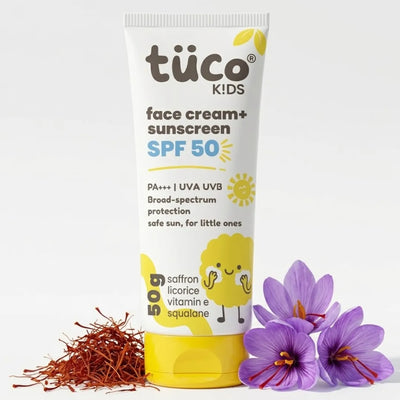
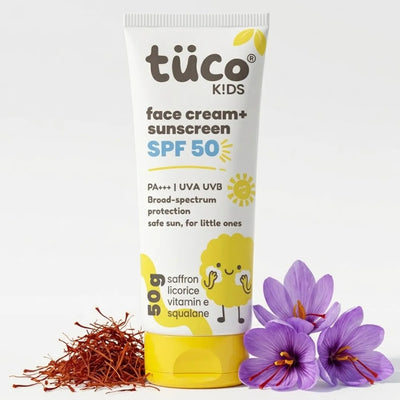
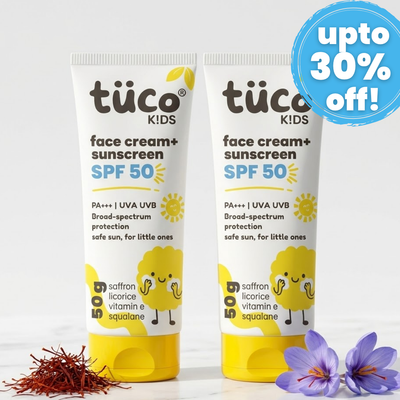
Tuco Kids tip: When choosing a sunscreen for your child, always check for both SPF and PA rating on the label — and look for a minimum of PA+++ for school-going children with regular outdoor exposure. For children who spend extended time outdoors, play sports, or live in high-UV cities, PA++++ sunscreen is the correct standard. All Tuco Kids SPF 50 products carry PA++++ — the highest available UVA protection.
Shop Sunscreen SPF 50 PA++++ →
What's in This Guide
- Quick Comparison: Tuco Kids Sunscreen Products
- What Does PA Mean in Sunscreen? The Simple Explanation
- UVB vs UVA: Why Both Ratings Matter for Your Child's Skin
- The PA Rating Scale: PA+ to PA++++ Explained with PPD Values
- Why PA++++ Matters More in India than Anywhere Else
- Why PA Rating Is Especially Important for Children's Skin
- How to Read SPF and PA Together on a Sunscreen Label
- PA+++ vs PA++++: When Does the Extra Plus Actually Matter?
- How to Read Any Sunscreen Label Correctly in 30 Seconds
- Frequently Asked Questions
- Related Reads
Quick Comparison: Tuco Kids Sunscreen Products
| Product | SPF + PA Rating | Best For | Shop |
|---|---|---|---|
| Sunscreen for Kids SPF 50 (50gm) | SPF 50 · PA++++ | Outdoor-active kids · Sports days · Summer · Ages 3–15 · Maximum UVA + UVB protection | Shop → |
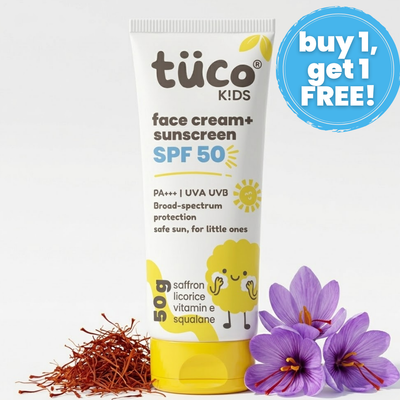
| Complete Sun Protection Kit (Sun Lotion + Sunscreen SPF 50) | SPF 50 · PA++++ | Full-body + face coverage · Summer holidays · Kids who spend extended time outdoors · Best value for complete UV protection | Shop → |
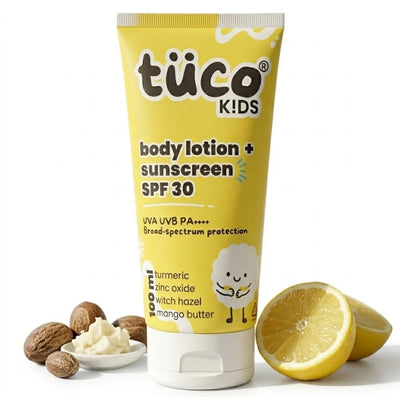
| Sunscreen for Kids SPF 30 (30gms) | SPF 30 · Broad-spectrum | Daily school days · Indoor-heavy routine · School bag reapplication · Ages 3–15 | Shop → |
| 3-in-1 Dull Skin Kit SPF 30 | SPF 30 · Broad-spectrum | UV-induced dullness · Sunscreen + Dull Skin Face Wash + Dull Skin Lotion · Reverses existing UV damage while protecting from new | Shop → |
| Haldi Kit SPF 30 | SPF 30 · Broad-spectrum | Daily SPF + Turmeric (haldi) active dull skin treatment · School-going kids · Complete morning routine | Shop → |
| Face Care Regimen | SPF 50 · PA++++ | Complete face routine · Cleanser + Treatment + SPF 50 · Ages 10–15 · Builds the full morning skincare habit | Shop → |
What Does PA Mean in Sunscreen? The Simple Explanation
PA sunscreen meaning: PA stands for Protection Grade of UVA. It is a rating system developed in Japan to measure how effectively a sunscreen blocks UVA rays — the longer-wavelength ultraviolet rays that penetrate deep into the skin's dermis (second layer).
- The plus signs represent the level of protection: one plus (PA+) is the lowest level; four pluses (PA++++) is the highest currently available. Each additional plus sign represents meaningfully higher UVA protection — not just marginally more
- The test behind the rating: PA ratings are measured using the Persistent Pigment Darkening (PPD) test — a laboratory method that measures how much UVA radiation a formulation can block before the skin begins to visibly darken. The PPD value is then converted into a PA level for labelling
- PA is a Japanese-origin system now used across Asia and increasingly in India: it was developed because SPF — which measures only UVB protection — was insufficient to communicate full UV protection to consumers. You will see it on most Indian, Korean, and Japanese sunscreens; European sunscreens use a different UVA measurement called the "UVA circle" or "UVA seal"
- PA is not the same as "broad spectrum": broad spectrum means the sunscreen protects against both UVA and UVB — but it doesn't tell you how well it protects against UVA. A sunscreen can be labelled broad spectrum and still have a low PA rating. PA rating gives you the specific level of UVA protection that "broad spectrum" alone cannot communicate
UVB vs UVA: Why Both Ratings Matter for Your Child's Skin
Understanding what is PA++++ in sunscreen starts with understanding why UVA requires its own separate rating in the first place — and how UVA damage is different from UVB damage.
| UVB Rays | UVA Rays | |
|---|---|---|
| What they cause | Sunburn, surface redness, blistering | Tanning, UV-induced dullness, uneven skin tone, hyperpigmentation, long-term collagen damage |
| Skin penetration depth | Epidermis (outer layer only) | Dermis (second layer — where collagen and melanocytes are) |
| Visible immediately? | Yes — sunburn appears within hours | No — damage is cumulative and silent; visible weeks or months later |
| Present year-round? | Peaks in summer, lower in winter | Year-round at near-constant intensity, including monsoon and winter |
| Penetrates glass and clouds? | Mostly blocked by glass and clouds | Penetrates glass windows and cloud cover — present indoors near windows and on overcast days |
| Relevant for Indian children? | Yes — especially in summer outdoor play | Yes — every school commute, every classroom window seat, every overcast day |
| Protected by SPF rating? | Yes — SPF measures UVB blockage specifically | No — SPF says nothing about UVA protection. PA rating is required |
| Protected by PA rating? | No — PA measures UVA blockage only | Yes — PA rating specifically measures UVA protection |
The critical takeaway for parents: SPF 50 protects against sunburn. It does not protect against the tanning, UV-induced dullness, and skin darkening that Indian parents actually observe in their children. That damage is driven by UVA — which is what the PA rating addresses. A sunscreen without a PA rating, or with a low PA rating, is only doing half the job regardless of how high the SPF number is.
The PA Rating Scale: PA+ to PA++++ Explained with PPD Values
Here is the complete PA rating in sunscreen scale — with the PPD values behind each level and what each means in practical terms for Indian children's skin.
| PA Rating | PPD Value | UVA Protection Level | What This Means for Your Child |
|---|---|---|---|
| PA+ | PPD 2–4 | Low UVA protection | Minimal — adequate only for very brief, incidental outdoor exposure. Not appropriate for school-going Indian children with daily outdoor commutes |
| PA++ | PPD 4–8 | Moderate UVA protection | Adequate for limited, short outdoor exposure in low-UV environments. Not recommended for India's UV Index of 8–11 |
| PA+++ | PPD 8–16 | High UVA protection | The minimum recommended for Indian school-going children. Provides meaningful protection against daily UV-induced dullness and tanning |
| PA++++ | PPD 16+ | Extremely high UVA protection | The highest available rating. Recommended for outdoor-active children, children in high-UV cities (Bengaluru, Chennai, Mumbai summer), and anyone using skin treatment products that increase UV sensitivity |
Practical guide: for most Indian school-going children, PA+++ is the acceptable minimum. PA++++ sunscreen is the recommended standard for children who play outdoor sports, live in South Indian cities with year-round high UV, or are in summer months (March to June). All Tuco Kids SPF 50 products carry PA++++ — matching the highest available UVA protection to the level that Indian sun conditions require.

Why PA++++ Matters More in India Than Anywhere Else
The PA++++ sunscreen meaning is particularly significant for Indian families — more so than for families in Europe or North America — for three reasons specific to India's geography and skin biology.
- India's UV Index is among the highest in the world: India's position close to the equator means UV radiation levels of 8–11 are standard across most cities for most of the year — classified as "Very High" to "Extreme" by the WHO. This sustained, intense UV exposure means the cumulative UVA dose Indian children receive in a school year is dramatically higher than children in temperate climates. The PA rating system was designed for exactly these conditions
- Indian skin tones are particularly vulnerable to UVA-driven pigmentation: Indian skin contains more active melanocytes (the cells that produce melanin, the skin's pigment). When UVA rays trigger melanin production, Indian skin tones develop visible pigmentation — tanning, uneven tone, and UV-induced dullness — more readily than lighter skin tones that might develop other UV-related issues instead. A high PA rating directly addresses this by blocking the UVA rays that trigger this melanin response before they reach the skin
- UVA is present year-round in India at consistent intensity: unlike UVB (which drops in winter and monsoon), UVA levels in India remain relatively constant across all seasons and weather conditions. UVA penetrates cloud cover — meaning a rainy July day in Mumbai carries almost the same UVA exposure as a clear June day. This makes daily PA protection non-negotiable in India, unlike in seasonal climates where winter sun is weak enough to manage with minimal sunscreen
For children in high-UV Indian cities: The Complete Sun Protection Kit — SPF 50 PA++++ Sunscreen + Sun Lotion — provides complete face and body UVA + UVB coverage for children in Bengaluru, Chennai, Hyderabad, Mumbai, and other high-UV cities. The kit covers the daily school face application and the full-body coverage needed for outdoor sports, summer camps, and holidays.
Shop Complete Sun Protection Kit →Why PA Rating Is Especially Important for Children's Skin
Every guide explaining what does PA++++ mean in sunscreen focuses on adults. Here is what is different about children — and why the PA rating matters even more for younger skin.
- Children's skin is thinner and more permeable: the outer protective layer (stratum corneum) is thinner in children than in adults, which means UV radiation — both UVB and UVA — penetrates more easily and causes proportionally more damage per unit of exposure. The same UV Index that causes moderate tanning in an adult may cause more significant UV-induced dullness in a 9-year-old
- Cumulative UV damage starts in childhood: research consistently shows that a significant proportion of a person's total lifetime UV exposure accumulates before age 18. UV-induced dullness and skin damage that shows up on adult skin in the 30s and 40s is the result of UV exposure that began in childhood and adolescence. PA protection in childhood is not cosmetic — it is preventive
- Children have years of Indian sun exposure ahead of them: a 7-year-old in Bengaluru has approximately 70 more summers of India's UV Index 10–11 conditions ahead. Starting PA++++ protection now changes the cumulative UV damage trajectory in a way that adult sunscreen cannot — adults are managing existing damage; parents protecting children are preventing damage from accumulating in the first place
- UV-induced dullness from school commutes is a specifically Indian childhood issue: Indian school children often spend 30–90 minutes daily commuting by auto, bus, or on foot in direct sun — typically between 7am–9am and 3pm–5pm, which are peak UV hours in India. Daily PA+++ or PA++++ protection on school commute days prevents the gradual UV-induced skin changes that most Indian parents eventually notice in their children by age 10–12
Already seeing UV-induced dullness in your child's skin? Sunscreen prevents new UV damage from accumulating — but the dullness that is already there needs active restoration alongside daily SPF. The Haldi Kit SPF 30 combines SPF 30 broad-spectrum sunscreen with a turmeric-based active routine formulated to help skin recover from existing UV-induced dullness, while the sunscreen prevents new damage from building further.
Shop Haldi Kit SPF 30 →How to Read SPF and PA Together on a Sunscreen Label
SPF and PA are not interchangeable — they measure two completely different threats. Understanding how to read them together is the key to choosing a sunscreen that gives complete protection.
| Label | What It Means | Is It Right for Indian Children? |
|---|---|---|
| SPF 50 PA++++ | ~98% UVB blocked + extremely high UVA protection (PPD 16+) | ✅ The best combination for outdoor-active Indian children |
| SPF 30 PA++++ | ~97% UVB blocked + extremely high UVA protection | ✅ Excellent for school days with moderate outdoor exposure |
| SPF 50 PA+++ | ~98% UVB blocked + high UVA protection (PPD 8–16) | ✅ Good — acceptable minimum for daily Indian use |
| SPF 50 (Broad Spectrum, no PA) | ~98% UVB blocked + UVA protection unspecified | ⚠️ Unknown UVA protection — not ideal for India |
| SPF 50 PA+ | ~98% UVB blocked + minimal UVA protection (PPD 2–4) | ❌ Inadequate UVA protection for Indian UV conditions |
| SPF 30 (no PA rating) | ~97% UVB blocked + UVA protection unknown | ⚠️ May not prevent tanning, UV-induced dullness, or pigmentation |
The rule to remember: for Indian children, look for both a high SPF (30 minimum, 50 for outdoor exposure) and a PA rating of PA+++ or higher. Without both, your child's sunscreen is protecting against only part of the UV spectrum — and the part it's missing (UVA) is responsible for most of the visible, cumulative skin changes Indian parents actually notice.
PA+++ vs PA++++: When Does the Extra Plus Actually Matter?
This is the question most competitor blogs don't answer clearly — and where parents understandably get confused. Here is the honest decision framework for what does PA+++ mean in sunscreen vs PA++++, in practical Indian terms.
- PA+++ is adequate for: regular school days where most time is spent indoors; children in North Indian cities with lower year-round UV (Delhi, Chandigarh, Jaipur in winter months); children aged 3–8 with limited independent outdoor time; SPF 30 broad-spectrum on non-sports school days
- PA++++ is the right choice when: your child plays outdoor sports (cricket, football, athletics, swimming) regularly; you live in a high-UV city (Bengaluru, Chennai, Hyderabad, Mumbai, Kochi); it is summer months March–June across India; your teenager is using acne treatment actives (AHAs, BHAs, retinoids) that increase UV sensitivity; your child has visible UV-induced skin changes already present that you want to stop getting worse
- The difference in numbers: PA+++ blocks PPD 8–16 (meaning your child's skin can receive 8–16 times more UVA before beginning to darken than without sunscreen); PA++++ blocks PPD 16+ (16 or more times more). In India's UV Index 9–11 conditions, this difference is meaningful for children with significant daily outdoor exposure
- For most Indian school-going children: PA++++ is the more sensible default — the marginal cost is zero (Tuco's SPF 50 carries PA++++ at the same price point as SPF 30) while the protection difference in Indian UV conditions is real and cumulative
How to Read Any Sunscreen Label Correctly in 30 Seconds
Once you understand the SPF + PA system, reading any sunscreen label becomes straightforward. Here is the complete checklist for choosing a broad spectrum sunscreen for kids in India:
- Check SPF: minimum SPF 30 for daily school use; SPF 50 for any outdoor activity or summer months. Higher SPF (50+) is safe and appropriate for children — there is no evidence of harm from using SPF 50 on children's skin
- Check PA rating: look for PA+++ or PA++++ on the label. If only "broad spectrum" appears without a PA rating, the UVA protection level is unspecified and may be insufficient for India
- Check "broad spectrum": confirms the sunscreen protects against both UVA and UVB — but always combine this with the PA rating check, since "broad spectrum" alone doesn't indicate how well it protects against UVA
- Check for oxybenzone and octinoxate: the two most common chemical UV filters associated with reactions in children's and sensitive skin. Avoid these for children under 12 particularly
- Check for synthetic fragrance ("parfum"): the most common contact allergen in skincare products; particularly problematic on children's more permeable skin
- Check age suitability: a product tested and formulated for children is a different product from an adult sunscreen in a smaller bottle. Always check that the product is dermatologist-tested for the child's age range

For existing UV-induced dullness + daily protection: The 3-in-1 Dull Skin Kit SPF 30 addresses both problems at once — broad-spectrum SPF 30 sunscreen prevents new UVA damage, while the Dull Skin Face Wash and Dull Skin Lotion work to restore skin from existing UV-induced dullness. The complete route for children whose skin already shows UV accumulation from months or years of outdoor school life.
Shop 3-in-1 Dull Skin Kit →Frequently Asked Questions
What does PA++++ mean in sunscreen?
PA++++ sunscreen meaning: PA stands for Protection Grade of UVA, and the four plus signs (++++) indicate the highest available level of UVA protection in the PA rating system. A PA++++ rating corresponds to a PPD (Persistent Pigment Darkening) value of 16 or higher — meaning your child's skin can receive 16 or more times the UVA exposure before beginning to darken, compared to unprotected skin. PA++++ is the recommended standard for India's year-round high UV conditions and for outdoor-active children.
What is the difference between PA+++ and PA++++ in sunscreen?
What does PA+++ mean in sunscreen: PA+++ corresponds to a PPD value of 8–16 (high UVA protection). PA++++ corresponds to PPD 16+ (extremely high UVA protection). The practical difference: for children in high-UV Indian cities who play outdoor sports or spend extended time in the sun, PA++++ provides meaningfully stronger UVA protection against tanning and UV-induced dullness. For mostly-indoor school days, PA+++ is the acceptable minimum.
Is PA rating the same as SPF?
No — they measure completely different things. SPF (Sun Protection Factor) measures protection against UVB rays — the rays that cause sunburn. PA rating measures protection against UVA rays — the rays that cause tanning, UV-induced dullness, hyperpigmentation, and deeper skin damage. You need both ratings on a sunscreen label for complete UV protection. A sunscreen with SPF 50 but no PA rating, or a low PA rating, is protecting against sunburn but leaving your child's skin exposed to UVA-driven tanning and dullness.
What does "broad spectrum" mean — is it the same as PA?
No. "Broad spectrum" means the sunscreen protects against both UVA and UVB rays — but it does not specify how well it protects against UVA. A sunscreen can be labelled broad spectrum and still have minimal UVA protection (PA+ level). The PA rating provides the specific level of UVA protection that "broad spectrum" alone cannot communicate. For Indian children, always check for both "broad spectrum" and a PA rating of PA+++ or higher.
Why is PA rating important for Indian skin specifically?
Three reasons: India's UV Index of 8–11 year-round means UVA exposure is among the highest in the world; Indian skin tones contain more active melanocytes that respond more readily to UVA-triggered pigmentation; and UVA is present at near-constant intensity throughout the year in India — including monsoon, winter, and on cloudy days — unlike UVB which peaks in summer. A high PA rating directly blocks the UVA rays responsible for the tanning and UV-induced dullness that Indian parents observe most commonly in their children.
Does PA rating matter if the sunscreen is already SPF 50?
Yes — absolutely. SPF 50 tells you only that the sunscreen blocks ~98% of UVB rays. It says nothing about UVA protection. A sunscreen can be SPF 50 with PA+ (minimal UVA protection) or SPF 50 with PA++++ (maximum UVA protection). The difference between those two products is enormous for Indian children's skin. SPF 50 without PA++++ prevents sunburn but does not prevent the tanning, UV-induced dullness, and pigmentation that UVA rays cause — which are the visible skin changes Indian parents actually notice.
Do children need PA++++ or is PA+++ enough?
PA+++ is the minimum acceptable for Indian school-going children on regular school days. PA++++ is the right choice for: children who play outdoor sports regularly, children in South Indian cities (Bengaluru, Chennai, Hyderabad, Kochi, Mumbai) where UV is high year-round, summer months across India, and any child whose skin already shows signs of UV-induced dullness or uneven tone from cumulative exposure. Tuco Kids SPF 50 carries PA++++ — the highest available UVA protection — at the same accessible price point as lower-rated alternatives.
Can UVA rays damage my child's skin indoors?
Yes. UVA rays penetrate both cloud cover and glass windows — a child sitting near a classroom window, traveling in a car, or sitting by a home window during study time is receiving UVA exposure even without any direct sunlight. This is particularly relevant for children who spend time near windows during the school day. Daily sunscreen application — even on indoor days — provides the PA protection that blocks this continuous low-level UVA accumulation.
What should I look for when buying sunscreen for kids in India?
The complete checklist for choosing a broad spectrum sunscreen for kids in India: (1) SPF 30 minimum, SPF 50 for outdoor activity; (2) PA+++ minimum, PA++++ for outdoor-active or high-UV-city children; (3) "broad spectrum" confirmed on label; (4) no oxybenzone, no synthetic fragrance, no alcohol denat; (5) non-comedogenic for children aged 10+ as puberty increases oil production; (6) dermatologist-tested specifically for the child's age range (not adult formulas used on children). All Tuco Kids sunscreens meet every point on this checklist.
Related Reads
- Best Sunscreen for Kids in India: SPF 30 vs SPF 50 — What Really Protects Your Child
- Best Sunscreen for Kids in India 2026: No White Cast, Safe from Age 2
- Which SPF Sunscreen Is Best for Teenage Girls? Guide for Oily, Dry or Sensitive Skin
- Best Sunscreens for Girls of Every Skin Type
- Best Sunscreen for Girls with Sensitive Skin: Gentle Care for Every Sunny Day
- The Best Sunscreens for Kids Aged 10 and Up: Top Picks for Ultimate Protection