



Sunscreen Does Not Cause Skin Cancer in Kids: Myth-Busting — Here's Why
If you've paused mid-application, sunscreen bottle in hand, wondering whether you're doing more harm than good — you're not alone. A wave of social posts questioning sunscreen and skin cancer has left many parents second-guessing a habit dermatologists have recommended for decades. Here's the short version: the claim that sunscreen causes skin cancer isn't supported by the dermatological consensus — and skipping it does far more damage to your child's skin over time than using it ever could.
In this guide, we'll unpack where the myth comes from, what actually protects kids from sun damage, the precautions worth knowing, and why a formula made specifically for children's skin — not a diluted adult one — is the safer call.
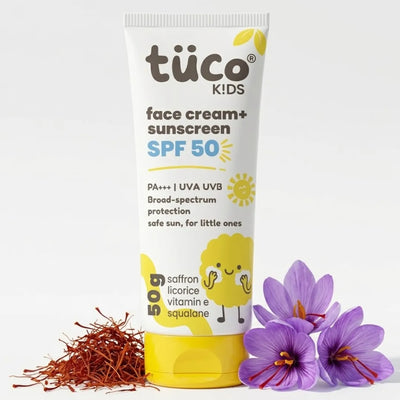
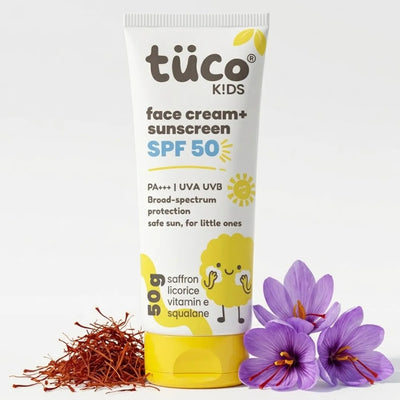
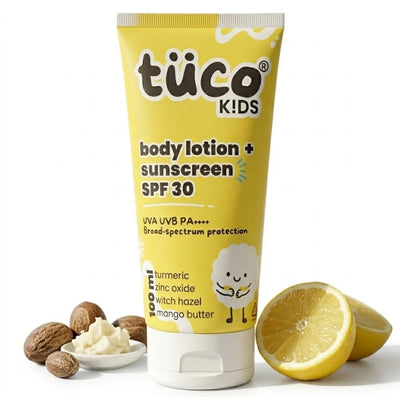
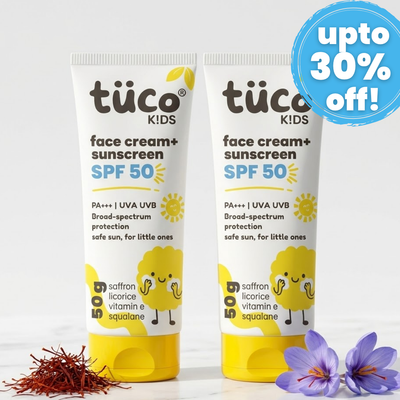
Quick tip: If your child is heading outdoors this week, start with a broad-spectrum, mineral-based formula built for young skin — like the Tuco Kids Sunscreen SPF 30. It's gentle enough for daily school-run use and reef-safe for beach days.

In this article:
- TL;DR — Sunscreen Myths vs. Facts at a Glance
- Where Did the "Sunscreen Causes Cancer" Myth Come From?
- What Actually Raises Skin Cancer Risk in Kids
- Why Sunscreen Is Essential for Growing Skin
- Precautions: Using Sunscreen the Right Way
- Reaction After Applying? Home Care vs. When to Call a Doctor
- Why "Made for Kids" Sunscreen Actually Matters
- Ingredients to Avoid in Sunscreens for Kids
- FAQs
- Related Reads
TL;DR — Sunscreen Myths vs. Facts at a Glance
| Ingredients | Tuco Product Solution | Key Product Features | Age-Wise Recommendation |
|---|---|---|---|
| Zinc oxide (mineral filter), aloe vera, no oxybenzone | Sunscreen for Kids SPF 30 | Lightweight, daily-wear, non-greasy | 3–15 years (school & daily outdoor use) |
| Zinc oxide, broad-spectrum, water-resistant base | Sunscreen for Kids SPF 50 | High protection for beach, pool & sports days | 5–15 years (extended outdoor exposure) |
| Licorice root, niacinamide, vitamin C | De-Tan Kit | Reverses sun tan & evens tone post-exposure | 6–15 years (post-summer / post-vacation care) |
| SPF 30 + brightening actives, 3-step regimen | 3-in-1 Dull Skin Kit SPF 30 | Cleanse, protect & repair in one routine | 4–15 years (dull, sun-exposed skin) |
| SPF 50 + face cream + cleanser regimen | Dull Face Kit SPF 50 | Complete daily face-care system | 5–15 years (daily protection + repair) |
Where Did the "Sunscreen Causes Cancer" Myth Come From?
The confusion usually traces back to three sources getting tangled together online:
- Older studies flagging that certain chemical UV filters (like oxybenzone) get absorbed into the bloodstream in measurable amounts — which sparked headlines, even though absorption alone doesn't equal harm.
- Isolated animal studies using extremely high, non-real-world doses of specific ingredients, misreported as proof that is sunscreen bad for you in normal use.
- A general wave of skepticism around anything "chemical," lumping safe, well-tested UV filters in with genuinely questionable ingredients.
Major dermatology and public health bodies worldwide continue to recommend daily sunscreen use as one of the most effective, low-risk ways to protect skin — including children's skin — from UV damage. The question of does sunscreen cause skin cancer has been studied extensively, and the answer, in short: no credible evidence supports it, while strong evidence supports the opposite — that unprotected UV exposure is a leading, preventable risk factor.
What Actually Raises Skin Cancer Risk in Kids
Instead of worrying about sunscreen and cancer, here's what's genuinely worth your attention:
- Cumulative, unprotected UV exposure — repeated sunburns in childhood are strongly linked to higher lifetime skin cancer risk.
- Peak-hour exposure — playgrounds, school sports, and pool days between 11am–3pm carry the highest UV intensity.
- Fair or sun-sensitive skin that burns easily and is left unprotected for long stretches.
- Skipping reapplication — a single morning layer doesn't hold up through a full day of sweat, water play, and towel-drying.
In other words, the real driver of sunscreen for skin cancer prevention isn't the product itself — it's whether it's being used consistently and correctly.
Why Sunscreen is Essential for Growing Skin
Kids' skin is thinner, produces less melanin protection, and spends far more time outdoors than most adults' — recess, PE, birthday parties, weekend cricket. That adds up to significantly more cumulative UV exposure by age 18 than most adults get in a decade. A few reasons daily protection matters:
- It prevents sunburn, which is uncomfortable in the short term and a real long-term risk factor.
- It reduces premature pigmentation, tanning, and uneven tone that can set in early.
- It builds a lifelong habit — kids who grow up applying sunscreen are far more likely to keep doing it as adults.
 Precautions: Using Sunscreen the Right Way
Most of the "side effects" parents worry about actually come from misuse, not the sunscreen itself. Keep these in mind:
- Patch-test new formulas on the inner wrist 24 hours before full-face use, especially for kids with sensitive or eczema-prone skin.
- Reapply every 2 hours, and immediately after swimming, sweating heavily, or towel-drying.
- Use a generous amount — most parents apply far less than the amount needed for full SPF protection.
- Avoid the eye area and lips; use a dedicated lip balm with SPF for those.
- For babies under 6 months, prioritize shade, hats, and clothing over sunscreen — check with your pediatrician for infant-specific guidance.
Followed this way, the effects of sunscreen on a child's skin are overwhelmingly protective, not harmful.
Reaction After Applying? Home Care vs. When to Call a Doctor
Occasionally a child's skin reacts — usually to fragrance or a specific chemical filter, not the concept of sunscreen itself. Here's how to tell what you're dealing with:
Mild redness or slight itching right after application, no swelling: Wash off with plain water, switch to a mineral-based (zinc oxide) formula, and skip fragranced products going forward.
Small bumps or a rash that shows up hours later, mildly itchy: This is often mild contact dermatitis. Discontinue the product, apply a fragrance-free moisturizer, and monitor for 24–48 hours.
Facial swelling, hives spreading beyond the application area, difficulty breathing, or a rash that worsens quickly: Stop use immediately and seek medical care — this can indicate a true allergic reaction and needs professional attention rather than home management.
Why "Made for Kids" Sunscreen Actually Matters
It's tempting to just share the family bottle, but a child's skin barrier is still developing — it's thinner, loses moisture faster, and reacts more readily to synthetic fragrance and harsh preservatives than adult skin. This is where the question of which sunscreen is best for kids actually has a real answer — not just "any SPF product."
So, are kids sunscreens different from adults? Yes — meaningfully:
- Kids' formulas typically lean on mineral filters like zinc oxide, which sit on the skin's surface rather than being absorbed.
- They're fragrance-free or very lightly scented, reducing the odds of irritation.
- They're formulated to be sweat- and water-resistant for active play, without feeling heavy or sticky.
And the reverse question — can sunscreen kids can be used for adults — generally, yes; a gentle, well-formulated kids' sunscreen works fine for sensitive adult skin too, just without the specific pediatric dermatologist testing.

Ingredients to Avoid in Sunscreens for Kids
When scanning labels, these are the categories worth double-checking before you buy:
- Oxybenzone & octinoxate: Common chemical UV filters that are more readily absorbed into the skin and have raised sensitivity concerns in young, developing skin.
- Synthetic fragrance ("Parfum"): A leading cause of contact irritation in kids. If a product doesn't name its scent ingredients, it's worth skipping for daily use.
- Parabens: Preservatives some parents prefer to avoid in products used daily on children.
- Alcohol-heavy sprays: Can be drying on a child's developing skin barrier, especially with repeated reapplication through the day.
- Mineral oil (paraffinum liquidum): Can feel heavy and clog pores during sweaty outdoor play.
Quick scan tip: Look for zinc oxide as an active ingredient, "fragrance-free" on the label, and dermatologist-tested claims backed by patch testing.
FAQs
Does sunscreen really cause cancer in kids?
No. There's no credible scientific evidence that sunscreen causes cancer. The consensus among dermatologists is the opposite — consistent sunscreen use reduces the cumulative UV damage that's linked to skin cancer risk later in life.
Can sunscreen be applied directly on small kids?
Yes, for children over 6 months, a mineral-based sunscreen can be applied directly to exposed skin. For babies under 6 months, doctors generally recommend shade and clothing first, with sunscreen used only on small exposed areas if needed.
Do kids in India need sunscreen even on cloudy days?
Yes. UV rays pass through cloud cover, and India's latitude means UV intensity stays relatively high year-round, especially between late morning and mid-afternoon.
Is sunscreen bad for a child's skin if used every day?
Daily use is not harmful when the formula is appropriate for kids — fragrance-free, mineral-based, and non-comedogenic. It's actually the recommended approach for consistent protection.
How do I apply sunscreen correctly on kids before school?
Apply a generous, even layer to face, neck, ears, and any exposed skin about 15–20 minutes before leaving the house, so it has time to settle before contact with clothing or bags.
Do kids' sunscreens work as well as adult ones?
Yes — kids' formulas provide the same level of SPF protection, just with gentler, lower-irritation ingredients suited to sensitive, developing skin.
What SPF is best for kids in India's climate?
SPF 30 works well for daily, everyday exposure like school runs, while SPF 50 is better suited for extended outdoor time — beach days, sports, or travel.
Can I use the family sunscreen on my child instead of buying a separate one?
You can, but a kids-specific formula is generally the safer default since it's built around a lower irritation profile — fewer synthetic fragrances, mineral filters, and gentler preservatives.
Related Reads
- Best Sunscreen for Kids in India: SPF 30 vs SPF 50 — What Really Protects Your Child
- Sunscreen for Babies and Toddlers (0–2 Years): What's Actually Safe to Use in India
- Does Sunscreen Block Vitamin D in Kids? What Indian Parents Should Know
- Best Sunscreen for Girls with Sensitive Skin: Gentle Care for Every Sunny Day
- What PA Ratings Mean in Sunscreen and When PA++++ Makes a Difference
- Which SPF Sunscreen Is Best for Teenage Girls?