








Do Kids Need to Wear Sunscreen at Home? Myth-Busting — Here's the Truth
"They're not even going outside today" is one of the most common reasons parents skip sunscreen — and it's easy to see why it feels logical. But if your child spends the morning near a sunny window, plays in the balcony, or does online school with a laptop by the glass, they may be getting more UV exposure than you'd expect. The real answer to should i apply sunscreen at home isn't a flat no — it depends on how much natural light your home lets in, and how long your child sits in it.
In this guide, we'll bust the biggest myths around indoor sun exposure, break down when sunscreen matters most by age, and help you build a routine that doesn't feel like overkill — just genuinely useful.
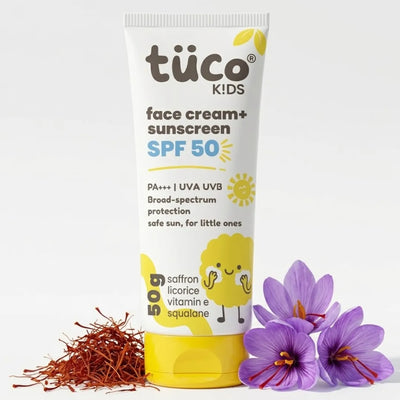
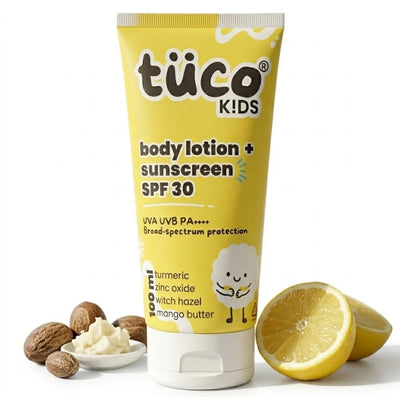
Quick tip: If your child spends time near windows, balconies, or does homework in bright rooms, a light daily layer of Tuco Kids Sunscreen SPF 30 in the morning is a simple, low-effort habit that covers you either way.

In this article:
- TL;DR — Indoor Sunscreen at a Glance
- The Myth: "I'm Indoors, So I Don't Need Sunscreen"
- When Indoor Sunscreen Actually Matters
- Age-Wise Guide: Does My Child Need It Today?
- Other Times Sunscreen Sneaks In as a Must
- Quick Self-Check: Skip It or Apply It?
- Choosing a Safe, Everyday Sunscreen for Kids
- FAQs
- Related Reads
TL;DR — Indoor Sunscreen at a Glance
| Ingredients | Tuco Product Solution | Key Product Features | Age-Wise Recommendation |
|---|---|---|---|
| Zinc oxide, aloe vera, fragrance-free base | Sunscreen for Kids SPF 30 | Lightweight, everyday wear, indoors or out | 3–15 years (daily indoor/light outdoor use) |
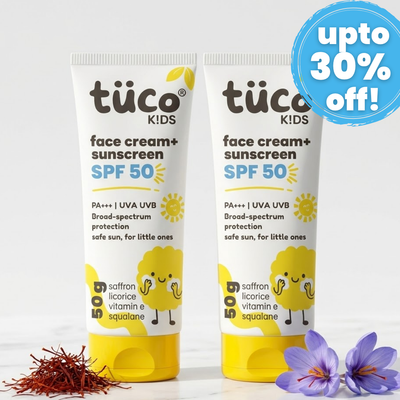
| Zinc oxide, broad-spectrum, water-resistant | Sunscreen for Kids SPF 50 | Higher protection for balconies, terraces & outdoor play | 5–15 years (extended near-window or outdoor time) |
| Licorice root, niacinamide, vitamin C | De-Tan Kit | Corrects tone if daily sun protection was missed | 6–15 years (post sun-exposure care) |
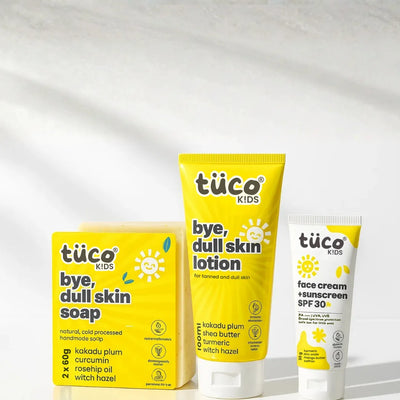
| SPF 30 + brightening actives, 3-step regimen | 3-in-1 Dull Skin Kit SPF 30 | Cleanse, protect & repair — good for daily indoor-heavy routines | 4–15 years |
| SPF 50 + face cream + cleanser regimen | Dull Face Kit SPF 50 | Complete daily face-care system, in or out of the house | 5–15 years |
The Myth: "I'm Indoors, So I Don't Need Sunscreen"
This is one of the most repeated pieces of sun-care advice — and it's only half true. Ordinary glass blocks most UVB rays (the kind that cause sunburn) but lets a large portion of UVA rays through. UVA is the ray type most associated with long-term skin aging and pigmentation — meaning a child sitting by a sunny window for hours, day after day, is still collecting exposure, just without the sunburn to warn you.
So is sunscreen necessary every single day regardless of plans? Not always at full intensity — but for kids who spend real time near natural light, it's a smart, low-effort habit rather than an overreaction.
When Indoor Sunscreen Actually Matters
You don't need to lather up for a dim hallway. But should we use sunscreen at home becomes a genuinely useful question in these situations:
- Sunny rooms and window seats — if your child does homework or plays near a bright, sun-facing window for an hour or more.
- Balconies and terraces — technically "at home," but essentially outdoor exposure with no shade.
- Homes with large glass doors or skylights — these let in significantly more UVA than a standard window.
- Car rides — car windows filter UVB well but let UVA through, so long drives count as sun exposure too.
For a child in a shaded, low-light room most of the day, sunscreen isn't essential. But most Indian homes get bright natural light for a good portion of the day — so the honest answer to should i wear sunscreen at home is usually "yes, in the morning, as a light daily habit."
 Age-Wise Guide: Does My Child Need It Today?
- 0–6 months: Prioritize shade and light clothing over sunscreen indoors; babies' skin is too delicate for regular product use at this stage. Keep them away from direct window light during peak hours.
- 6 months–3 years: A gentle, fragrance-free mineral sunscreen can be used on exposed skin if they spend time near bright windows or on balconies daily.
- 3–8 years: This is when routines set in. A morning application of SPF 30 before school or homework near windows is a solid daily default.
- 9–15 years: Older kids with longer screen time near windows, balcony hangouts, or after-school outdoor sports benefit from a higher-protection option like SPF 50 on active or outdoor-adjacent days.
Other Times Sunscreen Sneaks In as a Must
Beyond the obvious beach day, here are moments parents often overlook when thinking about why should we use sunscreen:
- Cloudy or overcast days — UV rays pass through cloud cover more than most parents realize.
- Swimming pool days, even indoor pools with skylights or glass roofing.
- Long car or bus rides to school, especially with a window seat.
- Winter outdoor play — UV exposure drops but doesn't disappear, and reflective surfaces like light-colored ground can bounce rays back up.
Building sunscreen into the same daily routine as brushing teeth removes the guesswork of deciding when should sunscreen be applied each morning.
Quick Self-Check: Skip It or Apply It?
Staying in a shaded, low-light room all day, no window seat, no balcony time: Sunscreen isn't essential today — a fragrance-free moisturizer is enough.
An hour or more near a sunny window, glass door, or on the balcony: Apply a light layer of SPF 30 in the morning — this is your everyday-habit zone.
Car rides, terrace play, or a bright day even without stepping fully outside: Go with SPF 50 and reapply if they're out there for more than two hours.
Existing rash, sunburn, or a skin condition flaring up: Hold off on new products and check in with your pediatrician or dermatologist before resuming sunscreen use.
Choosing a Safe, Everyday Sunscreen for Kids
Since indoor use is about building a light, daily habit — not heavy, sweat-proof protection for a beach day — the formula matters even more. Look for:
- Mineral filters (zinc oxide) — gentle enough for daily use without irritation.
- Fragrance-free formulas — daily wear means daily contact, so skip anything with added "parfum."
- Lightweight, non-greasy texture — so it doesn't feel heavy under a school uniform or during homework hours.
- Dermatologist-tested formulas suited to sunscreen for kids with sensitive skin.
This is also where a mineral sunscreen for kids tends to work better than heavier adult formulas — it sits comfortably on the skin all day without clogging pores during indoor play or study time.
 FAQs
FAQs
Should I apply sunscreen at home if my child isn't going outside?
Only if they're spending real time near bright windows, glass doors, or balconies. For rooms with minimal natural light, it's not necessary that day.
Can window glass block UV rays completely?
No. Standard glass blocks most UVB rays but allows a significant portion of UVA rays through, which is why prolonged window time still counts as sun exposure.
Is it necessary to apply sunscreen at home every single day?
Not every day for every child — it depends on how much natural light your home gets and how close your child sits to windows or glass doors. A light morning routine covers most cases without overdoing it.
Do I need sunscreen on cloudy or rainy days?
Yes, to some extent — UV rays pass through cloud cover, so a light layer during the day is still a reasonable habit, especially for kids near windows or outdoors briefly.
Should sunscreen be applied at night?
No — sunscreen is specifically for UV protection, which isn't relevant after dark. A gentle night moisturizer is the better choice for bedtime skincare.
Can adults use kids' sunscreen for a similar indoor routine?
Yes — a gentle, fragrance-free kids' formula works well for adults with sensitive skin who want a light, everyday layer too.
When should sunscreen be applied for the best protection?
Ideally 15–20 minutes before sun exposure — whether that's stepping outside or settling in near a sunny window — so it has time to sit on the skin properly.
Does my child need sunscreen for a car ride?
For short trips, it's optional. For longer drives with direct window sun, a light layer helps since car glass still lets UVA rays through.
Related Reads
- Best Sunscreen for Kids in India: SPF 30 vs SPF 50 — What Really Protects Your Child
- Sunscreen for Babies and Toddlers (0–2 Years): What's Actually Safe to Use in India
- Does Sunscreen Block Vitamin D in Kids? What Indian Parents Should Know
- Best Sunscreen for Girls with Sensitive Skin: Gentle Care for Every Sunny Day
- What PA Ratings Mean in Sunscreen and When PA++++ Makes a Difference
- Which SPF Sunscreen Is Best for Teenage Girls?