



Baby Cream vs Baby Lotion: Which Is Better for Winter?
Walk down any baby aisle and you will find both baby cream and baby lotion, often from the same brand, often with similar ingredient lists. They are not the same product, and in winter the difference matters. Choosing between them comes down to how dry the skin is, the weather and how your baby tolerates texture.
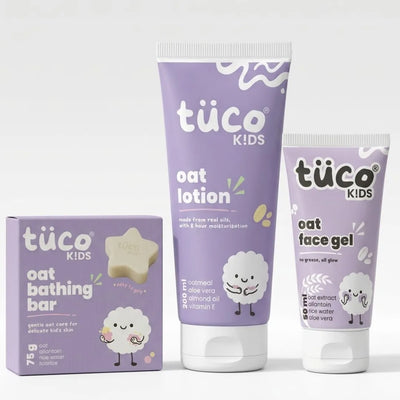
This guide explains what separates a cream from a lotion, how to pick the best baby cream or the best baby lotion for your situation, and when to use both. For toddlers aged 2 and up, a gentle oat-based kit is one simple option.
Shop 3-in-1 Oat Kit

Contents
- Cream vs Lotion at a Glance
- What Actually Separates Them
- Which Works Better in Winter
- How to Choose
- Using Both Together
- Ingredients Worth Knowing
- Common Moisturising Mistakes
- Adjusting Through the Season
- Quick Decision Guide
- When to See a Doctor
- FAQs
- Related Reads
Cream vs Lotion at a Glance
| Feature | Baby Cream | Baby Lotion |
|---|---|---|
| Texture | Thick, rich | Lighter, spreadable |
| Water vs oil | More oil, less water | More water, less oil |
| Best for | Very dry or cold-weather skin | Everyday, mild dryness |
| Absorption | Slower, stays longer | Quick, lighter feel |
What Actually Separates Them
Creams and lotions are both emulsions of oil and water, and the difference is the ratio. Lotions have more water and flow easily from a pump; creams contain more oil and sit in a jar or tube. That ratio decides how long the product lasts on skin. A water-heavy lotion absorbs quickly and then evaporates, while an oil-rich cream forms a more lasting layer.
It is a spectrum, not a rule. Some lotions are rich and some creams are light, so the texture and ingredient list tell you more than the word on the label.
Which Works Better in Winter
In winter, creams generally outperform lotions on dry, exposed skin because they slow water loss for longer. The cheeks, hands and any rough patches benefit from a cream, particularly before going outdoors. A lighter lotion is often enough for the body once humidity is moderate, or for babies who dislike a heavy feel.
Indoor heating complicates the picture: a warm room can dry the skin as much as the outdoors, so consistent application matters more than the product format.
How to Choose
Start with the skin. If it is tight and flaky, choose a cream. If it is mildly dry, a lotion applied twice a day may suffice. Check for fragrance-free, short ingredient lists and ingredients such as glycerin, shea butter and oats. Patch test on a small area for a day before using it widely.
The best baby cream and best baby lotion are the ones that your child tolerates, that you will apply consistently and that do not cause redness. A moderately priced simple product used faithfully beats an expensive one used occasionally.
Using Both Together
Many families use a lotion for the body and a cream for the face and hands. On very dry days, apply lotion first, then a thin layer of cream on top to seal it. This layering works well for cracked cheeks and the backs of the hands, which take the most abuse.
Ingredients Worth Knowing
Humectants such as glycerin draw water into the skin. Emollients such as shea butter and plant oils soften it. Occlusives such as petrolatum and beeswax seal it in. Creams usually contain more of the last two, which is why they feel richer and last longer.
Preservatives are needed in water-containing products, and a properly formulated product is safer than a homemade one. If your baby is sensitive, a short ingredient list and a patch test are your best guide.
Common Moisturising Mistakes
Applying to dry skin, using too little, and stopping when skin looks better are the common ones. Another is switching products often; skin takes a week or two to show whether something works.
Be consistent for two weeks with a single product before judging it, unless it causes redness or discomfort.
Adjusting Through the Season
Skin needs shift through winter. Early in the season, a lotion often suffices. In the coldest weeks, particularly in northern regions, creams for cheeks and hands become more important. As the weather warms, you can step back to a lotion again.
Watch the skin rather than the calendar. If cheeks begin to look rough or hands crack, step up to a cream; if skin feels greasy or breaks out, step down. Flexible routines work better than fixed ones, and the products can sit side by side in the same basket.
For babies who are very young, use only products labeled for their age, introduce one at a time and check with your pediatrician if you are unsure.
Quick Decision Guide
- Is the skin tight, rough or flaky? → Choose a cream and apply twice daily.
- Is it mildly dry and your baby dislikes heavy textures? → A lotion applied after baths is usually enough.
- Are cheeks chapped from outdoor exposure? → Use a cream on the face before going out.
- Is the product causing redness or stinging? → Stop and choose a fragrance-free option.
When to See a Doctor
See a doctor if dry skin is red, cracked or weepy, if it looks like eczema or does not improve within two weeks of consistent moisturising, or if a product causes swelling, hives or blistering.
FAQs
What is the difference between baby cream and baby lotion?
Creams contain more oil and last longer on skin; lotions contain more water and absorb faster.
Which is better for winter, cream or lotion?
Creams are usually better for very dry or exposed skin; lotions suit mild dryness.
What is the best baby cream?
A fragrance-free cream with a short ingredient list and ingredients such as shea butter or glycerin.
What is the best baby lotion?
A mild, fragrance-free lotion that absorbs well and is applied right after bathing.
Can I use baby cream on the face?
Yes, if it is fragrance-free and tolerated, though test a small area first.
Can I use both baby cream and lotion?
Yes, lotion for the body and cream for dry zones is a common approach.
How often should I apply baby moisturiser?
Twice daily in winter, and after every bath.
Is baby cream suitable for newborns?
Only use products labeled for your baby's age and check with your pediatrician for newborns.