



Best Winter Body Lotion for Kids in 2026
A good winter body lotion does a harder job than a summer one. Cold air strips moisture quickly, and a thin lotion that felt perfect in July often disappears from the skin within an hour. The right formula balances richness with comfort, and it needs to be gentle enough for a child's skin.
This guide explains what to look for, how a baby body lotion differs from one for older children, and how to apply lotion so it actually works. Our Deep Moisture Body Lotion for ages 3 and up is built for exactly this.
Shop Deep Moisture Body Lotion

Contents
- Quick Comparison
- What Makes a Winter Lotion Different
- Ingredients That Work
- Baby Body Lotion vs Kids Lotion
- How to Apply for Best Results
- How to Patch Test a New Lotion
- Fitting Lotion Into a School-Day Routine
- Winter Lotion Myths
- Quick Decision Guide
- When to See a Doctor
- FAQs
- Related Reads
Quick Comparison
| Product | Key Features | Best For | Age Range |
|---|---|---|---|
| Deep Moisture Body Lotion | Rich winter moisture | Everyday winter dryness | 3–15 years |
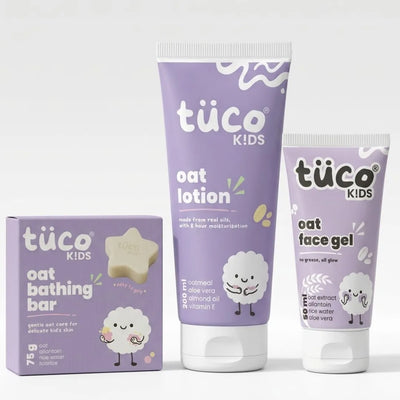
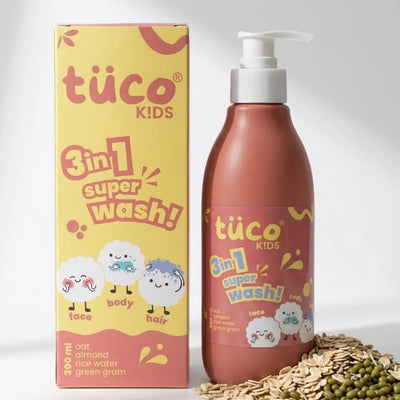
| 3-in-1 Oat Kit | Gentle moisturising step | Toddlers and sensitive skin | 2–15 years |
What Makes a Winter Lotion Different
A lotion is an emulsion of water and oils. Lighter lotions contain more water and absorb quickly, which is pleasant but gives short-lived hydration. Winter formulas carry more oils and butters and often a heavier occlusive component that slows water loss from the skin. The trade-off is texture: richer lotions take a little longer to rub in.
Winter lotion also needs to survive friction. Layers of clothing, scarves and woollens rub the skin, and a barrier that is replenished well resists that irritation better.
Ingredients That Work
Humectants such as glycerin pull water into the outer skin, emollients such as plant oils and butters smooth rough texture, and occlusives such as petrolatum or beeswax seal everything in. A formula that combines all three lasts through the day. Ceramides and oat extracts are common additions that support the barrier.
Avoid strong fragrance, colour and alcohol-heavy formulas, which can sting and dry the skin further. Skim the label for a short, clear ingredient list.
Baby Body Lotion vs Kids Lotion
A baby body lotion is formulated for newborn and infant skin, which has a thinner barrier and tolerates fewer additives. These products are typically fragrance-free and mild, with a lighter texture. A lotion for older children can be richer and handle more active use.
Tuco Kids' Deep Moisture Body Lotion is labeled for ages 3 and above, and the 3-in-1 Oat Kit for ages 2 and above. Neither is positioned as a newborn product, so for infants ask your pediatrician for an age-specific recommendation.
How to Apply for Best Results
Apply within three minutes of bathing, while the skin is slightly damp. Use enough: a thin film that disappears instantly is rarely enough in winter. Pay extra attention to elbows, knees, shins and hands, which dry fastest.
Reapply to dry zones during the day, and again at bedtime. For rough patches, a second layer on top of the first, a few minutes later, often outperforms a single heavy application.
How to Patch Test a New Lotion
Apply a small amount to the inner forearm once or twice a day for two days. If there is no redness, itching or swelling, it is reasonable to use more widely. This simple check prevents most product reactions and helps you separate a reaction to the lotion from other causes of irritation.
Introduce one new product at a time so you can tell which caused a problem. Switching several products at once makes it nearly impossible to identify the culprit.
Fitting Lotion Into a School-Day Routine
Consistency beats perfection. Moisturise after the morning wash if time allows, and always after the evening bath. Keep the lotion where children can see it, and let them apply it themselves with a quick check from you.
Make it a pairing: lotion goes on right after pyjamas are out, before the story. Habits attached to an existing routine tend to stick.
Winter Lotion Myths
A common belief is that a more expensive lotion is always better. In practice, price tracks branding, not necessarily performance; a simple formula with glycerin, an emollient and an occlusive does the same job. Another is that skin only needs lotion when it looks dry. By the time flaking is visible, the barrier is already compromised, so routine application is more effective than rescue application.
It is also a myth that applying lotion on top of dry skin is fine. Moisturiser works best on slightly damp skin, so the timing matters as much as the product. Finally, thicker is not automatically better. A lotion that feels too heavy tends to be skipped, and consistent use of a medium formula beats occasional use of a heavy one.
Quick Decision Guide
- Is the skin slightly dry? → A medium-weight lotion once or twice a day is enough.
- Is it rough or flaky? → Use a richer lotion twice daily and layer on rough areas.
- Is your child under 2? → Ask your pediatrician for an infant-specific product.
- Does a lotion sting or redden the skin? → Stop and switch to a fragrance-free option.
When to See a Doctor
See a doctor if dry skin becomes red, cracked, weepy or very itchy, if it looks like eczema or does not respond to two weeks of consistent moisturising, or if a product causes swelling, hives or blistering.
FAQs
What is the best winter body lotion for kids?
A rich, fragrance-light lotion with humectants, emollients and an occlusive, applied after bathing.
Is baby body lotion different from kids lotion?
Yes, baby lotions are milder and lighter, while kids' lotions can be richer.
How often should I apply body lotion in winter?
At least twice a day, with extra on dry zones.
Can I use adult lotion on my child?
It may contain fragrance or active ingredients that are too harsh for children.
Why does lotion feel sticky?
Richer winter formulas take longer to absorb; a thinner layer or applying on damp skin helps.
Is body lotion safe for the face?
Face skin is more sensitive, so a lighter face-specific formula is usually better.
Are oat-based lotions good for dry skin?
Oat is widely used for dry, reactive skin and is generally well tolerated.
When is the best time to moisturise?
Within three minutes of bathing, while the skin is still damp.