



Best Baby Body Wash for Winter
A good body wash cleans without leaving skin tight, and in winter that distinction matters more than any other time of year. Cold, dry air already pulls moisture from a baby's thin skin, and a harsh wash on top of that can leave it flaky, itchy and uncomfortable.
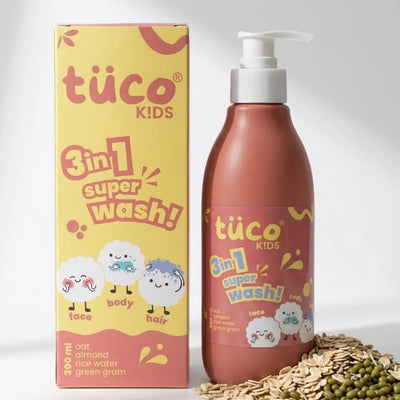
This guide explains what to look for in a body wash, what to avoid, and how to bathe a baby in cold weather. Tuco Kids does not make a newborn wash; for toddlers aged 2 and up, our Tulsi Body Wash offers a gentle cleansing and moisturising routine.
See Tulsi Body Wash

Contents
- What to Look For
- Why Winter Changes the Rules
- Ingredients That Matter
- What to Avoid
- Body Wash vs Soap
- A Winter Bath Routine
- After the Bath
- Why pH and Rinsing Matter
- Patch Testing and Introducing New Products
- Quick Decision Guide
- When to See a Doctor
- FAQs
- Related Reads
What to Look For
| Feature | Why It Matters | What to Look For |
|---|---|---|
| Mild cleansing base | Avoids stripping oils | Gentle surfactants, low foam |
| Fragrance-light | Reduces irritation | Fragrance-free or lightly scented |
| Moisturising ingredients | Offsets winter dryness | Glycerin, plant oils, oat |
| Skin-friendly pH | Protects the skin barrier | Near-neutral or mildly acidic |
Why Winter Changes the Rules
A baby's skin barrier is thinner and loses water faster than an adult's. In winter, low humidity and indoor heating speed that loss, so anything that removes more oil than necessary shows up quickly as dryness. A wash that was fine in July can feel too harsh in January.
The practical effect is that winter bathing needs to be shorter, cooler and gentler. The wash is only one part of that equation, but it is the part that touches every inch of skin.
Ingredients That Matter
Look for a short ingredient list built on a mild cleansing base. Glycerin attracts water, plant oils and butters soften, and oat extract is widely used for dry and sensitive skin. Soothing extras such as aloe or calendula are pleasant but secondary.
A short list from a transparent brand is a safer guide than a long list of exotic botanicals. If your baby has had a reaction before, take the old label to your pediatrician to narrow down culprits.
What to Avoid
Strong fragrance, colour, alcohol and harsh sulphates add irritation without benefit. Essential oils, even in natural washes, can irritate young skin. Antibacterial agents are unnecessary for healthy babies, and adult body washes are formulated for tougher skin.
Bubble baths look fun but often strip oils and irritate, particularly in girls' sensitive areas. Save them for later childhood, if at all.
Body Wash vs Soap
Liquid washes are easier to dose and rinse, and many are formulated at a skin-friendly pH. Bars can be gentle too, but traditional soap is more alkaline and can leave residue. Whichever you choose, the gentleness of the formula matters more than its format.
Use a small amount, only where needed, such as the neck folds, underarms and nappy area. Most of a baby's skin does not need soap at every bath.
A Winter Bath Routine
Two to three baths a week is often enough for young babies in winter. Keep the room warm, the water lukewarm and the bath to five to ten minutes. Rinse thoroughly and lift your baby out into a warm towel.
Pat dry gently instead of rubbing, and pay attention to folds where moisture can linger. Dress your baby quickly to avoid heat loss.
After the Bath
Apply a moisturiser within a few minutes, while the skin is still slightly damp, to trap water in. This step does more for winter dryness than the choice of wash. Choose a fragrance-free, age-appropriate product.
For toddlers, make it a routine with a story or song so it becomes something they look forward to. Consistency is what protects the skin.
Why pH and Rinsing Matter
Healthy skin has a mildly acidic surface of about pH 5, which supports the barrier and discourages harmful bacteria. Washes that are strongly alkaline disturb that balance, leaving skin tight and more reactive. Many baby washes are formulated closer to skin pH, which is one reason they feel gentler.
Rinsing is just as important as the wash itself. Residue left on skin acts as an irritant, particularly in the neck folds, behind the knees and in the nappy area. Rinse with plenty of lukewarm water and check folds before drying.
Patch Testing and Introducing New Products
Introduce one new product at a time and test a small amount on the inner forearm or behind the ear for a day before using it widely. Redness, itching or small bumps mean the product is not a good fit.
If your child has eczema or a history of sensitive skin, ask your pediatrician for recommendations rather than testing multiple products yourself.
Quick Decision Guide
- Is skin tight or flaky after baths? → Shorten baths, lower the temperature and switch to a milder wash.
- Is your baby under 2? → Ask your pediatrician for an age-appropriate product.
- Does a wash cause redness or itching? → Stop using it and choose a fragrance-free option.
- Is your child 2 or older with dry skin? → A gentle oat-based routine is a reasonable option.
When to See a Doctor
See a doctor if skin becomes red, cracked or weepy, if itching disturbs sleep, if rashes appear after starting a product and do not clear when you stop it, or if you notice eczema-like patches that do not improve with gentle care.
FAQs
What is the best baby body wash for winter?
A mild, fragrance-light wash with moisturising ingredients, used briefly in lukewarm water.
How often should I bathe my baby in winter?
Two to three times a week is often enough, with wipe-downs between baths.
Is body wash better than soap for babies?
Either works if gentle; choose by formula rather than format.
Can I use adult body wash on a baby?
It is not recommended, as adult formulas can be too harsh.
Are bubble baths safe for babies?
They can irritate and dry the skin, so avoid them for young children.
Does Tuco Kids have a newborn body wash?
No, our products are labeled for ages 2 and up, so ask your pediatrician for newborns.
Why is my baby's skin dry after a bath?
Hot water, long baths and harsh products strip oils; shorten baths and moisturise immediately.
Should I use moisturiser after every bath?
Yes, within a few minutes of drying, especially in winter.