




Winter Skin Care for Kids: A Complete Routine
When winter arrives, parents often notice the same small changes: cheeks look flaky after a bath, elbows feel rough, and skin that was comfortable a few weeks earlier suddenly seems itchy. These changes are not always a sign that a child needs more skincare products. Often, the more useful approach is to understand what winter does to the skin barrier and make a few practical adjustments.
A good winter skin care routine for children should be simple, consistent and suited to their age. It should help maintain moisture, reduce unnecessary irritation and protect exposed skin without introducing adult skincare habits that children do not need. This guide explains how to build a routine for bathing, moisturising and sun protection, with advice for dry and sensitive skin.
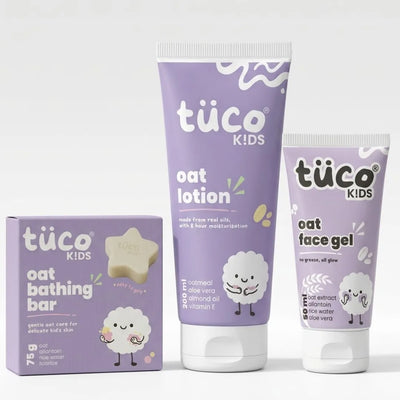
Explore the 3-in-1 Oat Kit

Contents
- The winter routine at a glance
- How winter affects children's skin
- The morning routine
- Bathing and cleansing
- Moisturising properly
- Sun protection in winter
- Adapting the routine
- Where Tuco Kids fits
- Common mistakes
- Quick decision guide
- When to see a doctor
- FAQs
- Related Reads
The winter skincare routine at a glance
| Step | Why it matters | What to do |
|---|---|---|
| Gentle cleansing | Removes dirt without unnecessary stripping | Use lukewarm water and a mild cleanser when needed |
| Moisturising | Helps reduce moisture loss and roughness | Apply after bathing and reapply to dry areas |
| Sun protection | Protects exposed skin from ultraviolet radiation | Use suitable sunscreen, clothing and shade |
| Observation | Helps identify persistent irritation or a changing condition | Notice recurring itch, redness, cracks or reactions |
How does winter affect children's skin?
The outer skin barrier helps retain water and protects against irritants. Cold air, low humidity, indoor heating and frequent bathing can increase moisture loss or disturb this barrier. The result may be tightness, flaking, rough patches or itching.
Children may also spend time in heated rooms, wear layers that rub against the skin or take longer, hotter baths when the weather is cold. These everyday habits can contribute to dryness. Children with eczema may be particularly affected because their skin barrier is already more vulnerable.
The important distinction is between ordinary seasonal dryness and an underlying skin condition. Mild dryness often improves with simple changes. Persistent inflammation, intense itching, cracking or recurring patches may need medical assessment rather than a longer skincare routine.
The morning routine
Start with the child's actual needs. Not every child needs a cleanser immediately after waking; lukewarm water may be enough if the face is clean and comfortable. If a cleanser is needed, choose one intended for the child's age and avoid vigorous rubbing.
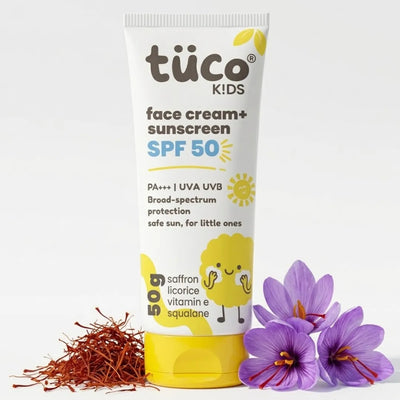
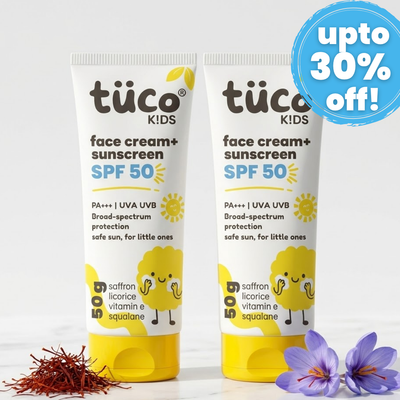
Apply a suitable moisturiser if the skin feels dry. On exposed skin, use broad-spectrum sunscreen with SPF 30 or higher, following the product's directions. Sunscreen is still relevant in winter, especially during outdoor play, school sports and trips to the mountains.
Clothing is another part of the routine. Soft layers can help keep children comfortable, while rough seams or fabrics that trap sweat may aggravate sensitive areas. Change damp clothing after outdoor play when practical.
Bathing and cleansing without stripping the skin
Long, hot baths can feel appealing in cold weather, but hot water may remove protective surface oils. Choose lukewarm water and keep baths reasonably short. Use cleanser where it is needed rather than scrubbing the entire body repeatedly.
After bathing, pat the skin dry with a soft towel. Rubbing can irritate dry areas. If your child swims regularly, rinse off pool water afterwards and moisturise if needed. Swimming does not automatically cause a skin condition, but chlorine and repeated exposure to water may contribute to dryness in some children.
For facial cleansing, avoid rough scrubs and strong adult products. A child's face generally does not need exfoliation or multiple cleansing steps to remain clean.
How to moisturise properly in winter
Moisturisers help by attracting water, softening the surface and slowing water loss. Apply one soon after bathing while the skin is slightly damp. Spread it gently across dry areas such as the shins, elbows, knees and hands.
Texture matters. A lotion is generally easier to spread over large areas, while a richer cream or ointment may be useful for persistent dryness. If the skin remains rough despite regular lotion use, consider whether a richer, age-appropriate emollient may be a better fit.
Fragrance-free products can be useful for children who react easily to skincare. However, no ingredient label guarantees that every child will tolerate a product. Introduce new products gradually, and stop using one that causes irritation.
Does children's skin need sun protection in winter?
Yes. Ultraviolet radiation does not disappear when the weather becomes cold. Children may spend hours outdoors during school activities, holidays or winter sports without feeling hot, so it is easy to overlook sun protection.
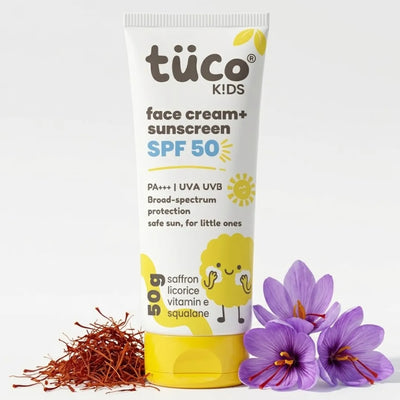
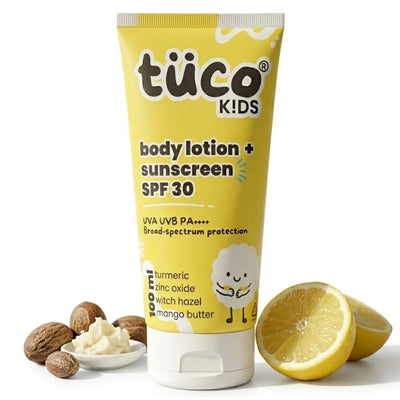
Use a suitable broad-spectrum sunscreen with SPF 30 or higher on exposed areas, following the label's instructions for application and reapplication. Hats, shade and protective clothing provide additional protection. For activities at higher altitude or around reflective surfaces, sun protection is especially worth considering.
Sunscreen does not replace moisturiser, and moisturiser does not replace sunscreen. Each has a different purpose. Keep the routine practical so that both steps are manageable.
Adapting the routine to different skin needs
For mild dryness: A gentle bath routine and regular moisturising may be enough. Observe whether tightness and flaking improve.
For sensitive skin: Reduce the number of products and consider fragrance-free options. Avoid introducing several new ingredients at once.
For eczema-prone skin: Moisturising is often important, but recurring inflammation may need a treatment plan. Follow professional guidance rather than assuming every flare is winter dryness.
For very young children: Check age labels carefully. Tuco Kids' listed skincare and haircare products do not include newborn products, and the 3-in-1 Bath Kit is listed for ages 3 to 15. Use age-appropriate care and seek paediatric advice for persistent infant skin problems.
Where Tuco Kids fits into the routine
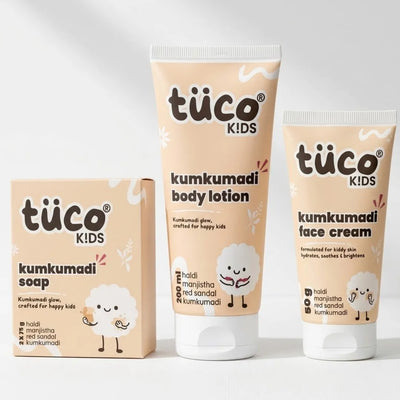
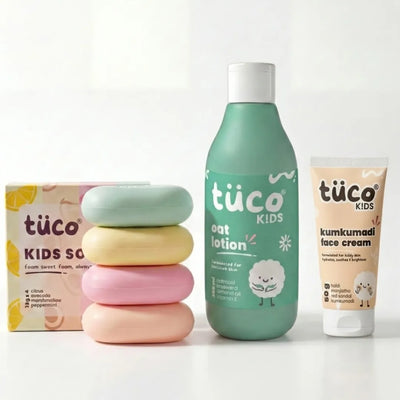
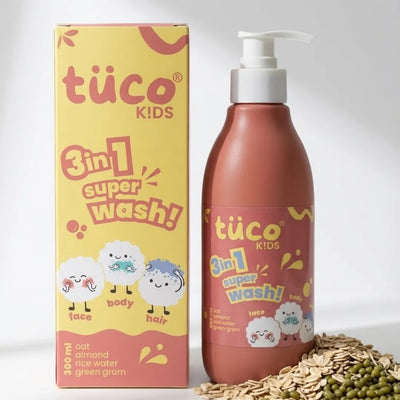
Tuco Kids' 3-in-1 Bath Kit includes Kumkumadi soap, lotion and face cream and is listed for ages 3 to 15. For families within that age range, it offers a coordinated set of daily-care products. The suitability of each component depends on the product directions and the child's skin.
Tuco Kids Deep Moisture Body Lotion, also listed for ages 3 to 15, is another option for everyday body moisturising. Neither product should be described as a treatment for eczema, infection or another diagnosed condition. If your child's skin remains inflamed or uncomfortable, seek appropriate advice.
Common winter skincare mistakes
Using very hot water: It can worsen moisture loss and leave the skin feeling tight.
Adding products whenever dryness appears: More products can mean more potential irritants. Start by adjusting bathing and moisturising habits.
Skipping sunscreen: Outdoor exposure still matters during colder months.
Scrubbing flakes away: Flaking may indicate irritation or a disrupted barrier. Friction can make it worse.
Ignoring recurring inflammation: Eczema and contact dermatitis may need more than cosmetic skincare.
Quick decision guide
- If the skin feels tight after bathing, shorten baths, reduce the temperature and moisturise afterwards.
- If the skin is mildly dry, start with a simple, age-appropriate moisturiser.
- If dryness persists despite a lotion, consider a richer emollient or seek advice about the cause.
- If a product causes irritation, stop using it and simplify the routine.
- If your child has recurring itchy or inflamed patches, ask a clinician whether eczema or another condition is involved.
- If your child is younger than the product's stated age range, do not assume it is suitable; choose an appropriate alternative.
When to see a doctor
Arrange medical advice if dryness is persistent, severe or accompanied by substantial itching, redness, cracking or disturbed sleep. Seek prompt care for spreading redness, warmth, pain, weeping skin or signs of infection.
For infants, recurrent rashes or persistent dryness should be discussed with a paediatrician. For children with eczema, ask whether their existing treatment plan needs adjustment. A skincare routine can support the barrier but should not replace treatment for an underlying condition.
Frequently asked questions
1. What is a good winter skincare routine for kids?
A practical routine includes gentle cleansing, moisturising when needed and sun protection on exposed skin. Keep the number of products manageable and adjust according to your child's skin.
2. Should children moisturise every day in winter?
Children who experience dryness may benefit from regular moisturising, particularly after bathing. The frequency depends on their skin and the product directions.
3. Can children use adult skincare products?
Not all adult products are suitable for children. Avoid strong exfoliants, anti-ageing ingredients and other active treatments unless specifically recommended for the child's needs.
4. Is sunscreen necessary during winter?
Yes. Ultraviolet radiation remains relevant during colder weather. Use appropriate sunscreen and protective clothing for outdoor activities.
5. Why does my child's skin itch more in winter?
Low humidity, hot baths and frequent washing can aggravate dryness. Eczema and other conditions may also worsen seasonally, so persistent itch deserves attention.
6. How can I care for sensitive skin in winter?
Keep the routine simple, use age-appropriate products and consider fragrance-free formulations. Stop any product that causes irritation.
7. Is the Tuco Kids 3-in-1 Bath Kit suitable for babies?
The kit is listed for ages 3 to 15. It should not be used or marketed as a newborn or infant product.
8. When does winter dryness need medical attention?
Seek advice if dryness is severe, persistent, painful, inflamed or accompanied by cracking, weeping or signs of infection.
Related Reads
- Best Winter Body Lotion for Kids
- Best Winter Face Cream for Kids
- Winter Face Wash for Kids
- Dry Skin in Winter: Causes and Treatment for Kids