



Dry Skin in Winter: Causes and Treatment for Kids
Dry skin in winter can start with a little tightness after a bath and progress to rough elbows, flaky shins or persistent itching. Parents often respond by applying more lotion, but the most useful solution depends on why the skin is dry in the first place. Understanding the difference between seasonal dryness and an inflammatory condition helps you choose a routine that supports your child's skin without adding unnecessary products.
Dry skin in winter is commonly associated with low humidity, hot bathing and disruption of the skin barrier. However, eczema, irritants and other conditions can produce similar symptoms. This guide explains the mechanisms behind winter dryness, practical treatment measures, mistakes to avoid and signs that your child needs professional care.
Explore Deep Moisture Body Lotion
Contents
- Quick comparison
- Why winter dryness develops
- Symptoms and warning signs
- Dry skin versus eczema
- How to care for dry skin
- Choosing moisturising ingredients
- Where Tuco Kids fits
- Mistakes to avoid
- Quick decision guide
- When to see a doctor
- FAQs
- Related Reads
Quick comparison: What may be causing the dryness?
| Possible cause | Typical clues | Useful next step |
|---|---|---|
| Seasonal dryness | Tightness, roughness or mild flaking, often after bathing | Gentler washing and regular moisturising |
| Eczema | Recurring itch, inflamed patches and flare-ups | Appropriate emollient routine and clinical advice |
| Contact irritation | Symptoms following a new soap, detergent or skincare product | Stop the suspected trigger and assess the reaction |
| Other skin conditions | Unusual distribution, persistent inflammation or symptoms that do not improve | Medical assessment |
Why does winter dryness develop?
The skin barrier limits water loss and protects against irritants. Cold air and low humidity can increase evaporation from the outer skin layer. Indoor heating may lower humidity further, while hot baths and harsh cleansers can remove surface oils that help maintain the barrier.
Once the barrier is disrupted, the skin may feel rough or tight and become more sensitive. Scratching can cause additional inflammation, which may lead to a cycle of itch and irritation. Children with eczema may experience more severe symptoms because their skin barrier is already less effective.
Environmental changes are only part of the explanation. A new detergent, fragranced soap, swimming routine or frequent handwashing can also contribute. Identifying these factors can be more effective than repeatedly switching moisturisers.
What does winter dry skin look and feel like?
Common signs include rough texture, fine flakes, tightness after bathing and mild itching. The skin may appear dull or ashy, especially where the surface is dry. Hands, shins, knees, elbows and cheeks can be affected, although the pattern varies between children.
More severe symptoms need a different approach. Deep cracks, persistent redness, substantial itch, bleeding or weeping skin may indicate inflammation or another condition. These signs should not be treated as ordinary dryness indefinitely.
Dry skin versus eczema: An important distinction
Ordinary dry skin is mainly a problem of moisture retention and may improve with gentler bathing and consistent moisturising. Eczema is an inflammatory condition that can involve dry skin but also causes itching, redness and recurring flares.
The two can overlap: a child with eczema may have very dry skin, and winter conditions may aggravate the condition. The presence of itching alone does not confirm eczema, but repeated itchy patches or symptoms that disturb sleep deserve assessment.
Contact dermatitis is another possibility. It occurs when the skin reacts to an irritant or allergen, and the affected area may correspond to where a product or material touches the skin. If a rash begins after introducing a new product, stop using it and consider whether it may be contributing.
How to care for dry skin in winter
Use lukewarm water
Choose shorter baths and showers rather than long, hot ones. Use a mild cleanser where needed, and avoid vigorous scrubbing. The goal is to clean the skin without removing more surface oils than necessary.
Moisturise soon after bathing
Pat the skin dry and apply moisturiser while it is still slightly damp. This helps retain water in the outer skin layer. Reapply to areas that become dry during the day, particularly after washing or swimming.
Choose a suitable texture
A lotion may work well for mild dryness because it spreads easily over large areas. If the skin remains rough, a richer cream or ointment may offer more substantial protection against water loss. Choose according to age, skin needs and comfort.
Reduce potential irritants
If the skin is sensitive, consider a fragrance-free cleanser and moisturiser. Avoid introducing several new products together, and stop using a product that causes increasing redness, itching or burning.
Protect the skin from environmental triggers
Dress children in comfortable fabrics, change out of wet clothes and use sunscreen on exposed skin outdoors. These steps will not cure every skin condition, but they can reduce avoidable irritation and support general skin health.
Choosing moisturising ingredients
Humectants such as glycerin help attract and retain water in the outer skin layer. Emollients soften rough skin and improve flexibility. Occlusive ingredients create a protective layer that slows water loss. Many moisturisers combine these functions.
For children who experience repeated irritation, a simple, fragrance-free formulation may be a useful starting point. Avoid assuming that a product is suitable simply because it contains botanical ingredients or is marketed as natural. The complete formulation and the child's tolerance matter.
For diagnosed eczema, a clinician may recommend a particular emollient or treatment plan. A general body lotion should not automatically replace that plan.
Where Tuco Kids fits
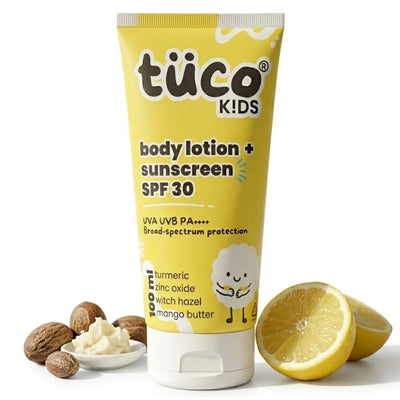
Tuco Kids Deep Moisture Body Lotion is listed for ages 3 to 15. It is an option for everyday body moisturising in children within that age range. Check the product label for directions, ingredients and precautions.
The lotion should not be represented as a cure for eczema, infection or persistent inflammation. If your child is very uncomfortable or the skin remains dry despite consistent care, consider whether a richer emollient or medical assessment is needed.
View Deep Moisture Body Lotion
Common mistakes to avoid
Taking very hot baths: Hot water can increase dryness and discomfort.
Applying moisturiser only when the skin flakes: Consistency may help prevent dryness from becoming more uncomfortable.
Using multiple products at once: This makes it harder to identify the cause of irritation.
Scrubbing rough patches: Friction can further disrupt the skin barrier.
Ignoring persistent itch: Recurring inflammation may require assessment and treatment beyond moisturising.
Quick decision guide
- If the skin is mildly rough or tight, try gentle bathing and an age-appropriate moisturiser.
- If the skin remains dry despite lotion, consider a richer emollient and review bathing habits.
- If dryness started after a new product, stop the suspected trigger and simplify the routine.
- If itching and redness keep returning, seek advice about eczema or contact dermatitis.
- If the skin is cracked, bleeding, weeping or painful, arrange medical assessment.
- If the child is below the stated age range of a product, do not assume that the formula is suitable.
When to see a doctor
Seek medical advice if dryness is persistent, severe or accompanied by significant itching, inflammation, cracking or disturbed sleep. Prompt assessment is appropriate for spreading redness, warmth, pain, weeping skin or signs of infection.
If your child has eczema, ask whether the current treatment plan needs adjusting. For infants, persistent dryness or a rash should be discussed with a paediatrician. Avoid unprescribed steroid creams or adult treatments.
Frequently asked questions
1. What causes dry skin in winter?
Low humidity, cold air, indoor heating, hot bathing and harsh cleansers can contribute to moisture loss and disruption of the skin barrier. Eczema and contact irritation may also worsen during winter.
2. What is the best treatment for winter dry skin in children?
For mild dryness, use lukewarm water, a gentle cleanser and an appropriate moisturiser. Persistent inflammation or severe symptoms may require medical assessment and targeted treatment.
3. How often should I moisturise my child?
Apply moisturiser after bathing and reapply whenever dry areas need it. Children with eczema may need a routine tailored to their condition.
4. Is lotion or cream better for winter dry skin?
Lotions are easier to spread over large areas, while creams and ointments are generally richer. The best option depends on the severity of dryness and the child's tolerance.
5. Can hot baths cause dry skin?
Yes. Hot water can remove protective surface oils and worsen moisture loss. Shorter, lukewarm baths are usually a better choice.
6. How do I know if dry skin is actually eczema?
Recurring itch, inflamed patches and repeated flare-ups may suggest eczema, but other conditions can look similar. A clinician can assess the skin and recommend appropriate care.
7. Can I use Tuco Kids Deep Moisture Body Lotion on babies?
The product is listed for ages 3 to 15. It should not be presented as suitable for newborns or infants under the stated age range.
8. When should I worry about winter dry skin?
Seek advice if dryness is persistent, severe, painful or accompanied by cracking, weeping, spreading redness or signs of infection.
Related Reads
- Best Winter Body Lotion for Kids
- Best Winter Moisturizer for Kids' Dry Skin
- Best Winter Face Cream for Kids
- Winter Skin Care for Kids: A Complete Routine