





Winter Face Wash for Kids: What to Look For
When winter arrives, a child's face may start feeling tight after washing, even if the same cleanser worked comfortably during warmer months. This does not necessarily mean that the child needs a more expensive face wash or an elaborate skincare routine. Often, the more useful question is whether the cleanser is removing more of the skin's protective oils than necessary. Choosing a suitable winter face wash means balancing cleanliness with the need to preserve the skin barrier.
Children's facial skin encounters sweat, dirt, sunscreen and everyday environmental exposure, but cleansing too aggressively can make dryness worse. This guide explains what a gentle cleanser should do, which product features matter, how to adapt a winter routine and when persistent facial irritation may need more than a change of face wash.
Explore the 3-in-1 Bath Kit
Contents
- Quick comparison
- Why cleansing can cause winter dryness
- What to look for in a cleanser
- Choosing for different skin needs
- How to wash a child's face
- Where Tuco Kids fits
- Mistakes to avoid
- Quick decision guide
- When to see a doctor
- FAQs
- Related Reads
Quick comparison: What type of cleanser is suitable?
| Cleanser type | Key features | Best for | What to check |
|---|---|---|---|
| Mild, soap-free cleanser | Designed to clean without excessive stripping | Everyday cleansing, especially with dry skin | Age suitability and ingredient list |
| Fragrance-free gentle wash | Reduces exposure to added fragrance | Children prone to irritation | Full formula and directions |
| Cream cleanser | Often has a richer feel than a foaming wash | Some children with dry skin | Whether it rinses comfortably and suits the skin |
| Strongly fragranced or exfoliating wash | May contain ingredients unnecessary for routine cleansing | Generally not the first choice for winter dryness | Potential irritation and age suitability |
Why can face washing cause winter dryness?
The skin barrier contains lipids that help hold water in the outer layer of skin. Cleansing removes dirt, sweat and other material, but some cleansers also remove more surface oil than the skin needs to lose. When this happens repeatedly, the face may become tight, flaky or more sensitive.
Winter can make the problem more noticeable because cold air and indoor heating contribute to moisture loss. Very hot water and long washing sessions add another source of irritation. A face that feels tight immediately after cleansing may be signalling that the routine is too harsh, not that the skin needs to be washed more thoroughly.
Children do not all need the same cleansing frequency. A child who has been outdoors, sweated heavily or worn sunscreen may need a proper evening cleanse. A child who has done very little to dirty the face may need only a gentle wash. The aim is to remove what needs removing without repeatedly stripping the skin.
What to look for in a winter face wash
A mild cleansing formula
Look for a cleanser intended for the face and suitable for your child's age. A gentle, soap-free formula can be useful for children prone to dryness. Foaming does not automatically mean a cleanser is harsh, and a low-foaming product is not automatically gentle; the overall formulation matters.
Clear ingredient information
Read the ingredient list rather than relying on claims such as “natural”, “deep cleansing” or “for winter”. Fragrance-free products can be a sensible choice for children who react easily to scented skincare. Avoid cleansers with exfoliating acids or strong active ingredients unless there is a specific reason to use them and appropriate guidance.
A comfortable finish
The skin should not feel painfully tight, burning or unusually dry after washing. If it does, reduce washing frequency where appropriate, use cooler water and reconsider the cleanser. Follow cleansing with a suitable moisturiser if the skin tends to become dry.
Choosing according to your child's skin needs
For ordinary skin: A mild cleanser used when needed may be sufficient. There is no need for multiple cleansing steps if the face is not exposed to heavy dirt or products.
For dry skin: Avoid long, hot washes and consider a gentle cleanser that does not leave the face tight. Moisturising after washing helps support the skin barrier.
For sensitive skin: A fragrance-free formula with a straightforward ingredient list may reduce potential irritants. Introduce products one at a time and stop using any product that causes a reaction.
For acne-prone skin in older children: Avoid harsh scrubbing and aggressive cleansers. If acne is persistent or distressing, seek age-appropriate advice instead of using adult-strength acne products without guidance.
How to wash a child's face in winter
Use lukewarm water and a small amount of an appropriate cleanser. Apply it gently with clean hands rather than a rough washcloth or exfoliating tool. Rinse thoroughly and pat the face dry with a soft towel.
Apply a suitable moisturiser soon afterwards if the skin tends to become dry. During the day, use broad-spectrum sunscreen with SPF 30 or higher on exposed skin, following the label directions. In the evening, remove sunscreen and accumulated dirt without repeating unnecessary cleansing steps.
If the child has been swimming or playing outdoors, adjust the routine to the actual exposure. After swimming, rinse away pool water and moisturise if needed. Avoid adding scrubs, masks or multiple active products merely because winter has arrived.
Where Tuco Kids fits
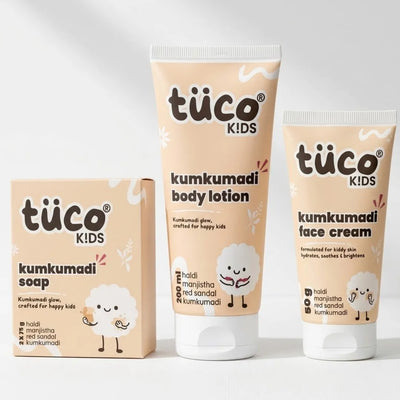
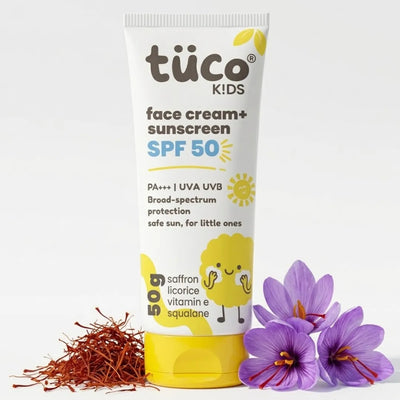
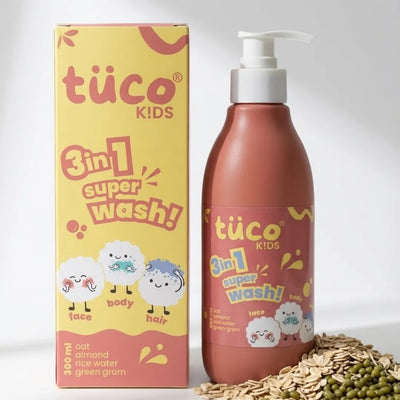
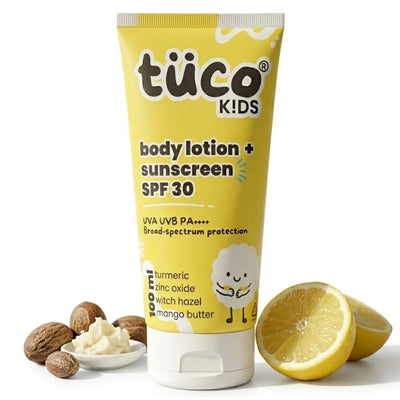
Tuco Kids offers a 3-in-1 Bath Kit containing Kumkumadi soap, lotion and face cream, listed for ages 3 to 15. The set may be convenient for families looking for coordinated daily-care products. However, it should not be presented as a specialised face wash for every skin type or as a treatment for a diagnosed skin condition.
Check the product directions to confirm the intended use of each component. If your child's face is very dry, reactive or inflamed, a mild cleanser selected for those needs may be more appropriate. The product should be judged by its actual use and your child's tolerance, not by the number of items in the kit.
Common face-washing mistakes
Using hot water: Hot water can worsen dryness. Lukewarm water is generally more comfortable for winter cleansing.
Scrubbing to remove flakes: Flaking can reflect a damaged skin barrier. Friction may increase irritation rather than improve the skin.
Washing repeatedly: More cleansing is not always better. Adjust frequency to dirt, sweat and sunscreen exposure.
Using adult exfoliating products: These may irritate young skin and are not necessary for ordinary winter dryness.
Skipping moisturiser when needed: Cleansing removes surface material, and moisturising afterwards can help maintain skin comfort.
Quick decision guide
- If the face feels tight after washing, use lukewarm water and reconsider the cleanser.
- If your child has sensitive skin, consider a gentle, fragrance-free formula appropriate for their age.
- If the face is not dirty or sweaty, avoid unnecessary repeated cleansing.
- If dryness persists despite a gentler routine, review the moisturiser and consider whether a skin condition is present.
- If redness, burning or itching develops after a new product, stop using it and assess possible irritation.
- If symptoms recur or worsen, seek professional guidance rather than introducing stronger cleansers.
When to see a doctor
Seek medical advice if facial dryness is persistent, severe or accompanied by recurring redness, cracking, swelling, significant itch or pain. A clinician can assess whether eczema, contact dermatitis or another condition is contributing.
Prompt assessment is appropriate for spreading redness, signs of infection or symptoms affecting the eyes. Avoid using medicated cleansers or prescription creams without guidance, particularly on a child's face.
Frequently asked questions
1. What is the best winter face wash for kids?
A mild, age-appropriate cleanser that removes dirt without leaving the face uncomfortably tight is a sensible choice. Children with sensitive skin may prefer a fragrance-free formula.
2. Should children wash their face twice a day?
It depends on the child's activities and skin. Evening cleansing may be useful after sunscreen or heavy dirt exposure, but repeated washing is not necessary for every child.
3. Can face wash cause dry skin?
Yes. Harsh cleansers, hot water and frequent washing can remove surface oils and worsen dryness. A gentler routine may help.
4. Is foaming face wash bad for children?
Not necessarily. Foaming alone does not determine whether a cleanser is harsh. Consider the formulation, age guidance and how the skin feels after use.
5. Should children moisturise after washing their face?
If the skin tends to become dry, applying an appropriate moisturiser after washing can help maintain comfort and support the skin barrier.
6. Can children use adult face wash?
Do not assume that adult products are appropriate for young skin. Avoid strong exfoliating or acne-focused products unless they are recommended for the child's specific needs.
7. Is the Tuco Kids 3-in-1 Bath Kit suitable for babies?
The kit is listed for ages 3 to 15. It should not be represented as a newborn or infant product.
8. What should I do if a face wash causes irritation?
Stop using it, gently rinse the skin and avoid introducing other new products while it settles. Seek medical advice if the reaction is severe, persistent or worsening.