



Turmeric (Haldi) for Kids' Winter Skin: Ayurvedic Benefits & Safe Use
Turmeric, or haldi, holds a place in Indian households that goes well beyond the kitchen — it's one of the most widely used natural ingredients in traditional Ayurvedic skincare, including for children, particularly during winter when skin needs extra support. Understanding the real turmeric benefits for skin for kids, alongside how to use it safely, helps parents decide whether this traditional remedy deserves a place in their child's winter skincare routine.
This guide looks specifically at how haldi for face use applies to children's more delicate skin, what the actual evidence supports, and the safety precautions worth knowing before trying it at home.
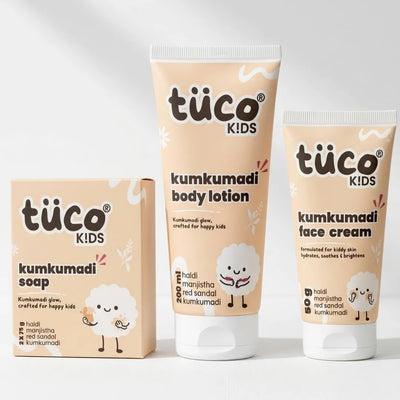
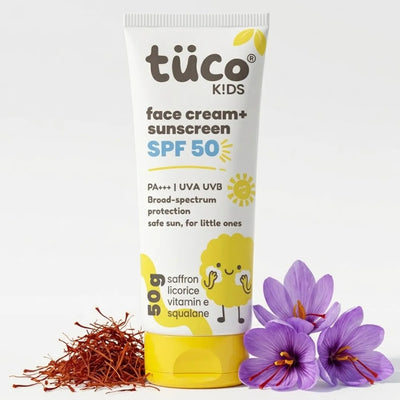
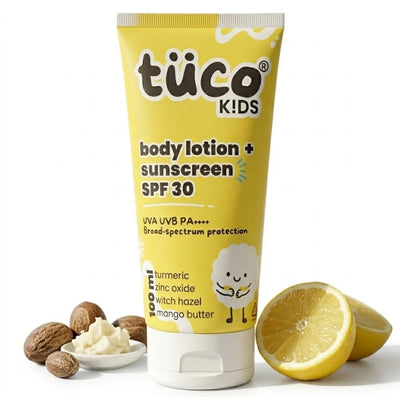
Tuco Kids tip: If you're cautious about using raw turmeric directly on a child's face due to staining or sensitivity concerns, a gentle, purpose-made moisturizer can provide similar soothing benefit without the mess or risk of skin discoloration.

Contents
- Turmeric for Kids' Skin at a Glance
- Turmeric's Traditional Role in Indian Skincare
- What the Evidence Actually Shows
- Is Turmeric Good for a Child's Skin Specifically?
- How to Use Turmeric Safely on Kids
- Addressing the Staining Concern
- Should You Try It on Your Child?
- When to Avoid Turmeric on Skin
- FAQs
- Related Reads
Turmeric for Kids' Skin at a Glance
| Consideration | What to Know |
|---|---|
| Traditional benefit | Believed anti-inflammatory and soothing properties |
| Best form for kids | Small amount mixed into a mild base, patch-tested |
| Main practical drawback | Yellow staining of skin and clothing |
| Alternative | Gentle, non-staining moisturizer for similar soothing benefit |
Turmeric's Traditional Role in Indian Skincare
Turmeric has been used in Indian households for generations, both in everyday skincare and prominently in pre-wedding "haldi" ceremonies, where it's applied specifically for its believed skin-brightening and purifying properties. In traditional Ayurvedic practice, turmeric is considered to have warming, purifying qualities, often mixed with other ingredients like milk, besan (gram flour), or sandalwood to create a paste applied to the skin. For kids specifically, turmeric has traditionally been used in small amounts, often mixed into bathing water or applied as a very diluted paste, rather than used as a standalone, concentrated treatment the way it might be for adults.
What the Evidence Actually Shows
Curcumin, turmeric's main active compound, has been studied for anti-inflammatory and antioxidant properties in various contexts, and some smaller studies suggest topical turmeric preparations may help with certain skin conditions in adults, though rigorous, large-scale research specifically on children's skin is much more limited. This means much of turmeric's reputation for skin benefits rests more heavily on long traditional use and preliminary adult-focused research than on robust pediatric-specific clinical evidence, which is worth keeping in mind as a realistic expectation rather than assuming it's been definitively proven for children specifically.
Is Turmeric Good for a Child's Skin Specifically?
For most kids with generally healthy skin, a well-diluted, properly patch-tested turmeric preparation is reasonably considered safe for occasional use, and many families have used it without issue as part of traditional skincare practices for generations. That said, children's skin is generally more sensitive and reactive than adult skin, meaning any turmeric preparation used on a child should be more diluted and used more cautiously than an adult version, with particular attention to how a specific child's skin responds. Answering "is turmeric good for skin" for a child ultimately depends more on that individual child's skin sensitivity than on a universal yes-or-no answer.
How to Use Turmeric Safely on Kids
Always patch-test any turmeric preparation on a small area of skin, waiting 24 hours to check for any redness, itching, or irritation before wider application. Using a very small amount mixed into a mild carrier like a bit of milk, yogurt, or a gentle moisturizer, rather than turmeric powder applied directly and concentrated, reduces both staining and irritation risk. Avoiding the eye area entirely and being especially cautious with any broken or irritated skin, where turmeric could cause more noticeable stinging or irritation than on healthy, intact skin, are both important precautions. Rinsing off any turmeric preparation after a short period (typically 10-15 minutes) rather than leaving it on for extended periods reduces both staining and any irritation risk from prolonged exposure.
Addressing the Staining Concern
Turmeric's most well-known practical drawback isn't a safety issue but a cosmetic one — its natural pigment stains skin, clothing, and household surfaces a distinct yellow that can take time to fade, which is a genuine, common frustration for parents trying it for the first time. Mixing turmeric with a base that includes a bit of besan (gram flour) can help reduce staining somewhat compared to turmeric mixed with only liquid ingredients. Doing any turmeric application over a towel or in a bathroom where staining is less of a concern, and choosing old clothing for the child during application, helps manage this practical downside without needing to avoid the ingredient altogether.
Should You Try It on Your Child?
Does your child have generally healthy, non-sensitive skin with no history of skin reactions? If yes, a well-diluted, patch-tested turmeric preparation used occasionally is a reasonable traditional option to try. Does your child have eczema, very sensitive skin, or a history of skin reactions to new products? If yes, proceed with extra caution or consider skipping turmeric in favor of gentler, more thoroughly tested alternatives. Is staining a significant practical concern for your household? If yes, a besan-based turmeric mix or a shorter application time can help, or a non-staining moisturizer may simply be more practical.
When to Avoid Turmeric on Skin
Any child with a known allergy or sensitivity to turmeric or related spices should avoid topical use entirely, and any previous reaction, even mild, is a reasonable signal to discontinue rather than experiment further. Broken skin, active eczema flares, or any open wounds are not good candidates for turmeric application, since the irritation risk is meaningfully higher on compromised skin than on healthy, intact skin. If a rash, unusual redness, or discomfort develops during or after use, discontinuing immediately and consulting a pediatrician if symptoms don't resolve quickly is the appropriate response.
FAQs
What are the real turmeric benefits for skin in kids?
Traditional use and some preliminary research point to anti-inflammatory and soothing properties, though robust pediatric-specific clinical evidence remains limited compared to the long history of traditional use.
Is haldi for face safe to use on children?
Generally yes in small, well-diluted, patch-tested amounts for kids with healthy skin, though children's more sensitive skin warrants more caution and dilution than an adult application.
Is turmeric good for skin conditions like eczema in kids?
It's not a substitute for medically recommended eczema treatment, and turmeric can actually be more irritating on already-compromised or broken skin, so it's best avoided during active flares.
How can I use turmeric for glowing skin on my child safely?
A small amount mixed into a mild base like milk or yogurt, patch-tested first and rinsed off after 10-15 minutes, is a reasonably safe traditional approach for occasional use.
What are the main haldi benefits for skin according to Ayurvedic tradition?
Ayurvedic tradition credits turmeric with purifying, brightening, and soothing qualities, historically used in both everyday skincare and ceremonial contexts like pre-wedding haldi rituals.
How do I avoid turmeric staining my child's skin and clothes?
Mixing turmeric with besan (gram flour) reduces staining somewhat, and applying it over a towel with older clothing on hand helps manage the mess without avoiding the ingredient entirely.
When should I avoid using turmeric on my child's skin?
Avoid it on broken skin, during active eczema flares, or if your child has any known sensitivity to turmeric or related spices, and discontinue immediately if any irritation develops.