



Shea Butter for Kids in Winter: Why It's a Great Natural Moisturizer
Shea butter has earned its reputation as one of the richest, most reliably effective natural moisturizers available, and winter — when skin needs maximum barrier support — is exactly when its particular strengths matter most. Understanding the real shea butter benefits for skin in kids helps parents decide whether this thick, nourishing ingredient deserves a spot in their child's winter routine.
This guide covers why shea butter works so well as a shea butter for dry skin solution, how to use it as a genuinely effective shea butter moisturizer, and practical guidance for using it on children specifically.
Tuco Kids tip: Shea butter's richness makes it especially well-suited to particularly dry areas like elbows, knees, and cheeks that catch the most wind exposure — pairing it with a lighter, everyday moisturizer for the rest of the body strikes a good balance.

Contents
- Shea Butter for Kids at a Glance
- What Makes Shea Butter Different From Other Moisturizers
- Why It Works So Well for Dry Skin
- Shea Butter Uses for Kids
- Face Use vs. Body Use
- Raw vs. Refined Shea Butter
- Is Shea Butter Right for Your Child?
- Safety Notes and Allergy Considerations
- FAQs
- Related Reads
Shea Butter for Kids at a Glance
| Area | Why Shea Butter Suits It | Age Recommendation |
|---|---|---|
| Elbows, knees, cheeks | Rich texture for high-exposure dry patches | 6 months+, patch-tested |
| General body moisturizing | Long-lasting barrier protection | 6 months+ |
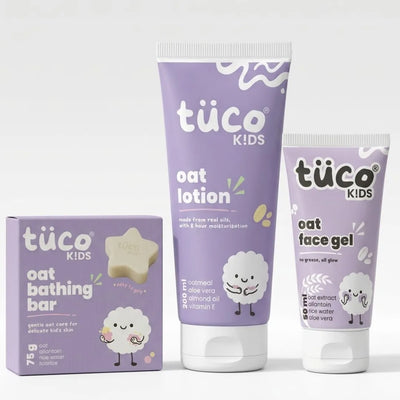
| Lighter, everyday facial use | Tuco 3-in-1 Oat Kit as a lighter alternative | Ages 3+ |
What Makes Shea Butter Different From Other Moisturizers
Shea butter's defining characteristic is its unusually high fatty acid content combined with a naturally solid, thick texture at room temperature, which melts on contact with skin, giving it a genuinely rich, occlusive quality that lighter oils and lotions simply don't replicate. This occlusive property means it forms a protective layer on skin's surface that helps prevent moisture loss, which is exactly the mechanism most needed to counter winter's drying effects. It also contains natural compounds with mild anti-inflammatory properties, which may contribute to its long-standing reputation for soothing already-irritated or chapped skin.
Why It Works So Well for Dry Skin
Shea butter's richness makes it particularly effective for genuinely dry, rough, or chapped skin — the kind winter weather commonly produces on exposed areas like cheeks, hands, elbows, and knees — in a way that lighter, water-based moisturizers often can't match for severe dryness. Its long-lasting protective barrier means a single application tends to provide moisture benefit for longer than lighter alternatives, which is practically useful for busy families who can't always manage frequent reapplication throughout a school day. For kids specifically prone to particularly stubborn dry patches each winter, shea butter's intensity is often exactly what's needed where a standard lotion falls short.
Shea Butter Uses for Kids
Beyond general moisturizing, shea butter is commonly used for chapped lips (in a balm form), cracked heels, dry elbows and knees, and windburned cheeks — all common winter complaints in kids that benefit from its particularly rich, protective texture. It's also sometimes used as a gentle massage butter, similarly to how oils are used, offering the combined benefit of moisture and the calming, bonding effect of massage itself. Some families use shea butter specifically as a nighttime treatment for stubborn dry patches, applying it before bed and allowing it to work overnight without the practical concern of greasiness during active daytime hours.
Face Use vs. Body Use
For body use, particularly on genuinely dry or rough areas like elbows and knees, shea butter's rich texture is a real advantage without much downside, since these areas have thicker skin less prone to feeling overwhelmed by a heavy product. For facial use, particularly for kids with normal-to-oily skin, shea butter's richness can feel heavier than ideal for daily use and may be better reserved for specific dry patches (windburned cheeks, for instance) rather than as an all-over facial moisturizer, where a lighter formulated product tends to feel more comfortable for regular use.
Raw vs. Refined Shea Butter
Raw, unrefined shea butter retains more of its natural nutrients and characteristic earthy scent, and many people prefer it for its more "natural" processing, though it can vary somewhat in texture and consistency batch to batch. Refined shea butter undergoes additional processing that removes much of the natural scent and can create a smoother, more consistent texture, though this processing may also reduce some of the beneficial natural compounds present in the raw form. For most winter skincare purposes on kids, either form works reasonably well, with the choice often coming down to personal preference around scent and texture consistency rather than a meaningful difference in core moisturizing benefit.
Is Shea Butter Right for Your Child?
Does your child have specific, stubborn dry patches (elbows, knees, cheeks) that a regular lotion doesn't seem to fully address? If yes, shea butter's richness is well-suited to exactly this kind of targeted, intensive moisturizing need. Is your child's skin generally oily or acne-prone even in winter? If yes, shea butter may feel too heavy for all-over facial use, though it can still work well for specific dry body areas. Are you looking for an everyday, lightweight facial moisturizer? If yes, a lighter formulated product may suit better than shea butter's characteristic richness. Does your child have a known nut allergy? If yes, note that while shea nuts are botanically distinct from tree nuts most commonly associated with allergies, checking with a pediatrician or allergist first is a reasonable precaution given some cross-reactivity has been documented in rare cases.
Safety Notes and Allergy Considerations
Shea butter is generally well-tolerated and considered hypoallergenic for most people, including children, though as with any new topical product, patch-testing on a small area of skin first and waiting 24 hours remains a sensible precaution. While shea nuts are botanically different from common tree nut allergens, some individuals with severe tree nut allergies have reported reactions, so checking with a pediatrician before use is reasonable if there's a significant nut allergy history in the family. If any irritation, redness, or breakout develops, discontinuing use and consulting a pediatrician if symptoms persist is the appropriate next step.
FAQs
What are the real shea butter benefits for skin in kids during winter?
Its high fatty acid content and occlusive texture create a protective barrier that reduces moisture loss, making it particularly effective for genuinely dry, chapped, or rough winter skin.
Is shea butter for dry skin better than regular lotion?
For genuinely stubborn dry patches, shea butter's richness often outperforms lighter lotions, though a standard lotion may feel more comfortable for everyday, all-over use.
What makes shea butter a good shea butter moisturizer choice for winter specifically?
Its long-lasting, protective barrier quality means a single application provides moisture benefit for longer than lighter alternatives, which matters more during winter's intensified dryness.
Is shea butter for face safe for kids, or is it too heavy?
It can feel heavy for daily all-over facial use, especially on normal-to-oily skin, but works well as a targeted treatment for specific dry patches like windburned cheeks.
What are common shea butter uses for kids in winter?
Chapped lips, cracked heels, dry elbows and knees, and windburned cheeks are among the most common uses, taking advantage of its particularly rich, protective texture.
Is raw or refined shea butter better for kids?
Both work reasonably well for winter skincare purposes; raw retains more natural nutrients and scent, while refined offers a smoother, more consistent, often less scented texture.
Are there allergy risks with shea butter for kids with nut allergies?
Shea nuts are botanically distinct from common tree nut allergens and shea butter is generally well-tolerated, but checking with a pediatrician first is reasonable if there's a significant nut allergy history.