



Heat Rashes in Children: Causes & Remedies
The moment the weather turns hot and sticky, tiny red bumps start showing up in the last places you'd expect to check — behind the knees, in neck folds, under a diaper. Heat rash is one of the most common summer skin issues in kids, and while it looks alarming, it almost always clears up fast once you know what's actually causing it and how to cool the skin down properly.
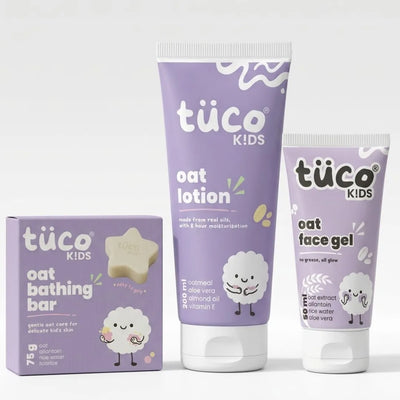
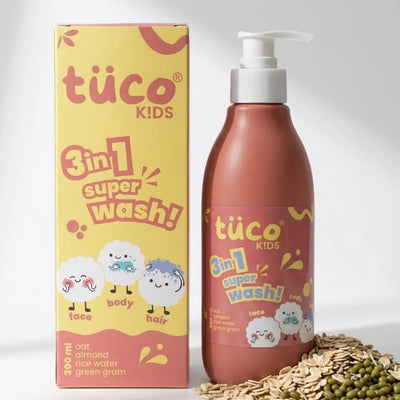
Tuco Kids tip: Skip heavy creams during an active flare — they can trap more heat against the skin. A light, barrier-friendly formula works far better. The 3-in-1 Oat Kit for Kids soothes irritated, overheated skin without adding any heaviness.
Shop the 3-in-1 Oat Kit →

Contents
- Quick Comparison: Best Tuco Products for Heat Rash
- What Causes Heat Rash in Kids?
- What Heat Rash Looks Like (and Where It Shows Up)
- Decision Tree: The Right Remedy by Rash Type
- What to Avoid During a Heat Rash Flare
- Preventing Heat Rash Before It Starts
- When to See a Doctor
- FAQs
- Related Reads
Quick Comparison: Best Tuco Products for Heat Rash
| Ingredients | Tuco Product Solution | Key Product Features | Age-wise Recommendation |
|---|---|---|---|
| Oat extract, aloe vera | 3-in-1 Oat Kit | Lightweight, barrier-repairing soap, lotion & face gel — calms itching without trapping heat | 2–15 years, best for active flares |
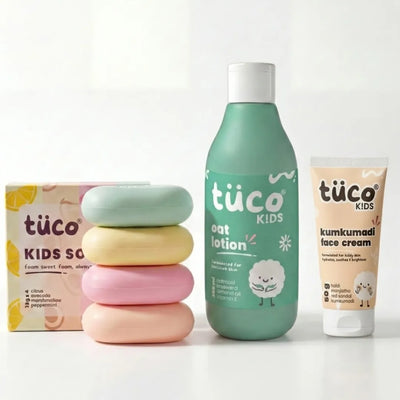
| Turmeric, almond oil | Kids Daily Soap + Kumkumadi Lotion | Gentle daily cleanse that clears sweat and residue without stripping skin | 3–15 years, daily prevention |
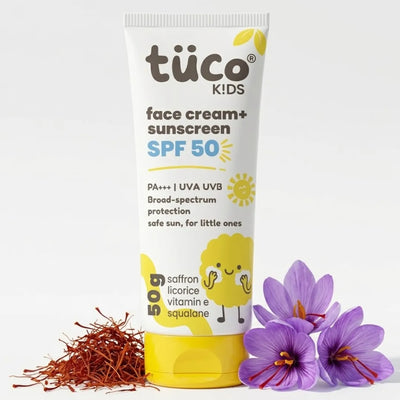
| SPF 30, turmeric, Kakadu Plum | 3-in-1 Dull Skin Kit (SPF 30) | Non-sticky sun protection — reduces overheating triggers on outdoor-active days | 4–15 years, for prevention during outdoor play |
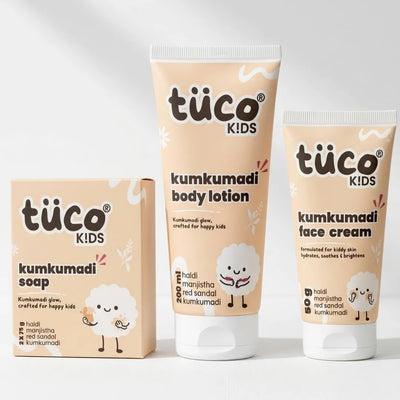
| Saffron, sandalwood, turmeric | 3-in-1 Kumkumadi Kit | Anti-inflammatory turmeric blend for skin left blotchy or uneven after a flare clears | 4–15 years, post-flare recovery |
Note: the rich Deep Moisture Body Lotion is great for winter dryness but not recommended during an active heat rash flare — save it for cooler months. Prices vary by pack size — tap any product name for live pricing.

What Causes Heat Rash in Kids?
- Heat rash happens when sweat gets trapped under the skin because a sweat duct is blocked or inflamed — the sweat can't evaporate, and the trapped moisture irritates the surrounding skin.
- Hot, humid weather is the classic trigger, but kids can also get it in cooler months if they're overdressed or if an ointment or heavy cream blocks the pores — this is a gap most heat rash content skips, and it's especially relevant for parents who assume rash-fighting means "more cream."
- Skin folds are the most common spot — neck creases, armpits, diaper area, and behind the knees — because trapped moisture and skin-on-skin rubbing make blocked ducts more likely there.
- Babies and toddlers are more prone to heat rash baby symptoms than older kids simply because they have more skin folds and less-developed sweat glands.
What Heat Rash Looks Like (and Where It Shows Up)
- Tiny, closely clustered red or clear bumps, sometimes described as looking like small blisters — on darker skin tones, the bumps may appear more grey, brown, or purple rather than red.
- Heat rash on face, especially the forehead, can happen in babies from oil or ointment residue in the hair rather than heat alone — worth checking if your baby's rash is isolated to that one spot.
- Common locations include heat rash on neck, chest, back, underarms, heat rash on arms and heat rash on legs, and the heat rash groin and diaper area.
- Some rashes itch intensely; others feel more like a prickly, stinging sensation without much itch at all — both are normal presentations of the same underlying cause.
- A milder form shows as tiny, fragile, clear bumps that break easily with barely any redness around them — this is the most common type in newborns and tends to clear the fastest.
Shop the 3-in-1 Oat Kit →

Decision Tree: The Right Remedy by Rash Type
- Did the rash appear after a hot, sweaty day outdoors or intense play? → This is classic prickly heat rash. Cool the skin first, then use a light, barrier-friendly cleanser rather than a heavy cream.
- Is the rash mostly in skin folds — neck, diaper area, behind the knees? → This points to friction plus trapped sweat. Keep the area dry and exposed to air when possible, and use a gentle, non-greasy lotion for heat rash rather than powder alone.
- Did the rash start after using a new ointment, sunscreen, or cough rub? → This could be a blocked-pore reaction to the product itself rather than heat — stop using it and switch to a lighter formula.
- Is the rash spreading, swelling, or does it look infected — pus, warmth, or increasing pain? → This goes beyond home care. See "When to See a Doctor" below.
What to Avoid During a Heat Rash Flare
- Skip thick, occlusive heat rash ointment-style products during an active flare — anything greasy or oil-heavy can block sweat ducts further and make the rash worse rather than better.
- Be cautious with baby powder for heat rash — talc-based powders can cake in skin folds when mixed with sweat, which sometimes irritates skin further; a light, breathable formula is usually the safer choice.
- Calamine lotion for heat rash is a common home suggestion for itch relief and can help in mild cases, but many parents look for something that also supports the skin barrier rather than just numbing the itch — that's the gap a purpose-built heat rash cream for kids fills.
- Avoid tight, synthetic clothing while the rash is active — it traps heat exactly where the skin needs airflow most.
Preventing Heat Rash Before It Starts
- Dress kids in loose, breathable, natural-fiber clothing during hot weather, and change out of sweaty clothes as soon as possible after outdoor play.
- Keep skin folds clean and dry with a gentle daily cleanse — the Kids Daily Soap + Kumkumadi Lotion routine clears sweat residue without leaving a heavy film behind.
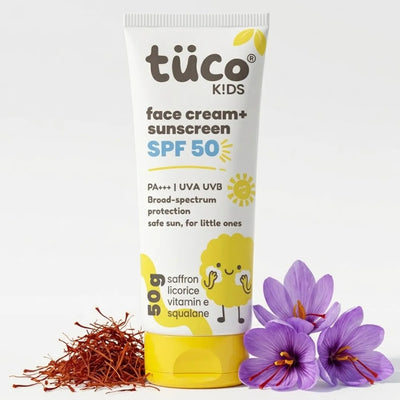
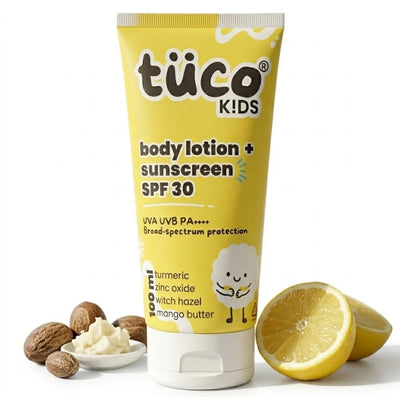
- For outdoor-heavy days, a non-sticky, non-comedogenic sunscreen reduces heat buildup on skin compared to thick, occlusive sun creams — the 3-in-1 Dull Skin Kit (SPF 30) was built with exactly this in mind.
- Keep kids hydrated and offer breaks in cool or air-conditioned spaces during peak heat hours, especially for babies and toddlers who can't regulate their own environment yet.
When to See a Doctor
Most heat rash clears on its own within a few days once the skin cools down. It's worth a doctor's visit instead of continuing home care if:
- The rash looks infected — increasing redness, warmth, swelling, or pus-filled bumps.
- Your child develops a fever alongside the rash.
- The rash doesn't improve after 3–4 days of consistent cooling and gentle care.
- You notice signs of an allergic reaction heat rash — rapid spreading, hives, or swelling around the eyes or lips — which needs different treatment than typical heat rash.
FAQs
What does heat rash look like on a child?
Small, closely clustered red or clear bumps that can resemble tiny blisters. On darker skin tones, the bumps may look grey, brown, or purple rather than red. It most often shows up on the neck, chest, back, and skin folds.
How long does heat rash last?
Most cases clear within a few days once the skin is kept cool and dry. If a rash lingers beyond 3–4 days or seems to be getting worse, it's worth checking with a doctor.
What is the fastest way to treat heat rash at home?
Move your child to a cool environment, remove excess or tight clothing, and gently cleanse the area before applying a light, non-greasy moisturizer. Avoid thick creams or ointments, which can trap more heat against the skin.
Is heat rash the same as an allergic reaction?
No — heat rash comes from blocked sweat ducts, while an allergic reaction involves the immune system and often spreads faster or comes with swelling and hives. If a rash is spreading rapidly or your child seems unwell, treat it as a possible allergic reaction and seek medical advice.
Can I use calamine lotion on my child's heat rash?
Calamine can help ease itching in mild cases, but it doesn't do much for the underlying skin barrier. A lightweight, barrier-supporting formula tends to give more complete relief alongside itch relief.
Is baby powder safe for heat rash?
Use it cautiously — powder can cake in skin folds when mixed with sweat, which sometimes makes irritation worse rather than better. A breathable, non-greasy lotion is often a gentler alternative.
Why does my baby get heat rash even in air conditioning?
Overdressing, heavy ointments, or lanolin-based products (common with breastfeeding) can block pores regardless of room temperature. Check what's touching your baby's skin, not just the room temperature.
Does heat rash need any medication?
Usually not — cooling the skin and gentle cleansing resolve most cases without medication. A doctor may recommend a topical treatment only if the rash is severe, infected, or not improving with home care.
Related Reads
- Worried About White Patches on Face of Child? Learn Causes, Treatments, and When to Consult a Dermatologist
- Best Face Cream for Kids in India: 6 Safe Picks for Soft, Glowing Skin
- 10 Best Organic Kids Skincare Brands in India (2026)
- Understanding the Causes of Dull Skin in Kids and Effective Treatments
- Child Skin Allergy Treatment at Home: Safe and Effective Remedies Every Parent Can Try
- Best Cream for Face Glow for Kids Skin Care
- Skin Allergy Cream for Children: Top Soothing Options and How to Apply Them Safely
- Cocoa Butter: Uses, Benefits & Side Effects
- The Power of Turmeric: An Ancient Remedy for Kids' Skin Issues