



Cocoa Butter: Uses, Benefits & Side Effects
A patch of rough, reddened skin after bath time is one of the first things parents notice — and cocoa butter is often the first thing reached for, because it's rich, natural, and has been a nursery-shelf staple for generations. But cocoa butter isn't automatically the right call for every child's skin, and using it the wrong way (or on the wrong skin type) can trigger the very irritation you're trying to fix.
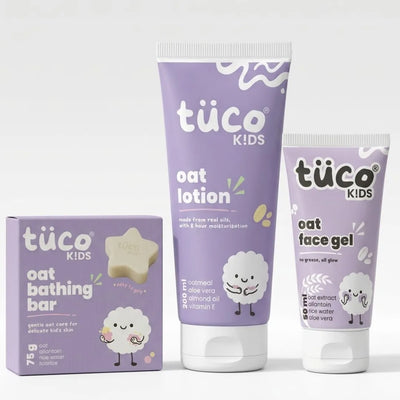
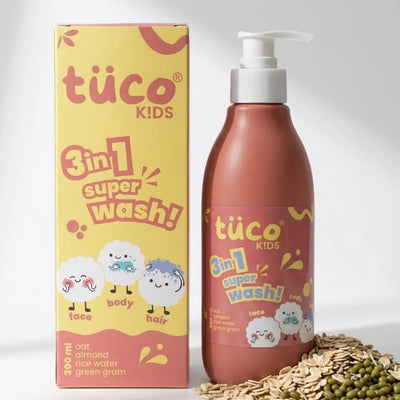
Tuco Kids tip: If your child's skin reacts easily or already shows signs of eczema, a lighter, barrier-repairing formula tends to work better than pure cocoa butter. The 3-in-1 Oat Kit for Kids is built specifically for reactive, flaky skin without the pore-clogging risk raw cocoa butter can carry.
Shop the 3-in-1 Oat Kit →

Contents
- Quick Comparison: Best Tuco Products for Cocoa-Butter-Type Dryness
- What Is Cocoa Butter, and What Is It Good For?
- Can I Use Cocoa Butter Body Lotion on My Child's Face?
- Cocoa Butter Rash: What an Allergic Reaction Looks Like
- Cocoa Butter and Eczema in Kids
- How to Patch Test Before Using It on Your Child
- When to See a Doctor
- FAQs
- Related Reads
Quick Comparison: Best Tuco Products for Cocoa-Butter-Type Dryness
| Product Name | Key Features | Best For | Shop |
|---|---|---|---|
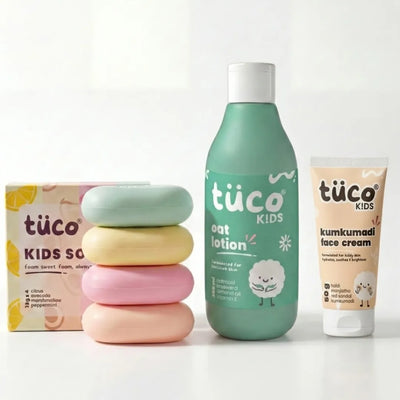
| Kids Daily Soap | Gentle, sulphate-free everyday cleanser that won't strip natural oils | Daily bath-time routine, all skin types | Shop Now → |
| 3-in-1 Oat Kit | Oat extract + aloe vera; barrier-repair soap, lotion & face gel for reactive, flaky skin | Rashes, eczema-prone or easily irritated skin | Shop Now → |
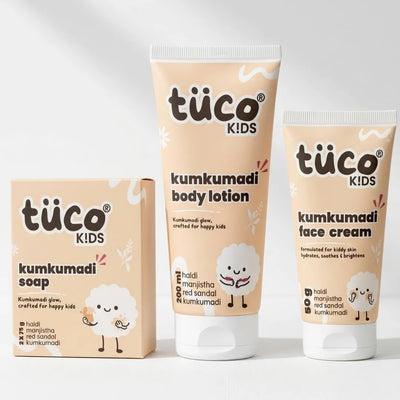
| 3-in-1 Kumkumadi Kit | Saffron, sandalwood & turmeric blend for nourishment without heavy occlusive butters | Everyday glow and hydration maintenance | Shop Now → |
| Kids Daily Soap + Kumkumadi Lotion | Lightweight lotion pairing that moisturizes without the pore-clogging risk of raw cocoa butter | Kids who want a lotion feel, minus the greasy residue | Shop Now → |
| Acne Face Gel for Kids | Non-comedogenic face gel — the safer alternative to cocoa butter for acne-prone or oily-faced kids | Face use, breakout-prone skin | Shop Now → |
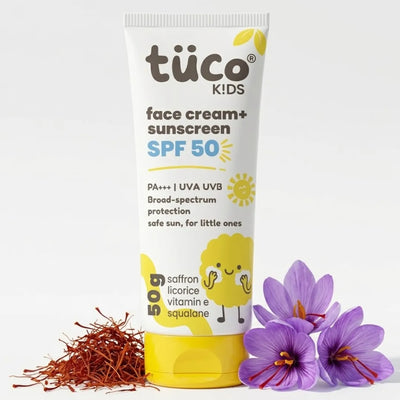
| 3-in-1 Dull Skin Kit (SPF 30) | Turmeric & Kakadu Plum with sun protection — for dryness paired with sun exposure | Outdoor-active kids, dull or uneven-toned skin | Shop Now → |
 What Is Cocoa Butter, and What Is It Good For?
- Cocoa butter is a plant fat pressed from roasted cocoa beans. It's rich in fatty acids and sits on top of the skin as an occlusive, sealing in whatever moisture is already there rather than adding new hydration.
- That's why a cocoa butter body lotion feels instantly rich — it forms a protective layer, which is genuinely useful for very dry elbows, knees, and shins.
- The trade-off: because it's so occlusive, it can trap sweat, oil, and bacteria against the skin if applied to areas that are already congested — which matters more for a child's thinner, more reactive skin than it does for an adult's.
Can I Use Cocoa Butter Body Lotion on My Child's Face?
- Most dermatology guidance treats this as a "use with caution" ingredient for the face rather than an outright no — but for kids specifically, the calculus leans more cautious.
- Cocoa butter is comedogenic, meaning it can clog pores. A body-strength formula on a child's face — especially around the nose, chin, and forehead, where oil glands are more active — raises the chance of small bumps or breakouts.
- If your child already deals with breakouts, a purpose-built acne face gel for kids is a non-comedogenic swap that won't undo bath-time cleansing.
- For dry-but-clear facial skin, a lighter oat-based formula from the 3-in-1 Oat Kit gives similar softness to cocoa butter without sitting as heavily on the face.
Shop Acne Face Gel for Kids →

Cocoa Butter Rash: What an Allergic Reaction Looks Like
- A true cocoa butter rash is a form of allergic contact dermatitis. It typically shows up 48–72 hours after the first application — not instantly — which is why parents sometimes miss the connection to a new lotion.
- Look for reddened skin with small, intensely itchy bumps at the exact spot the product was applied. In more sensitive skin, this can progress to dry patches or mild blistering.
- Once a child develops a reaction to cocoa butter, it tends to recur every time that product is used again — and the reaction often appears faster on repeat exposure.
- True allergy is uncommon, but it's more likely in children who already have eczema or a compromised skin barrier, since reactive skin is more prone to flagging new ingredients as irritants.
Cocoa Butter and Eczema in Kids
- Is cocoa butter good for eczema? It's genuinely mixed — the occlusive layer can help seal in moisture between flare-ups, but the same richness can irritate skin during an active flare, when the barrier is already compromised.
- Does cocoa butter help eczema in every case? No — for kids with eczema-prone or highly reactive skin, a lighter, oat-based formula tends to calm irritation more reliably than a heavy cocoa butter lotion, which can feel occlusive to the point of trapping heat and sweat.
- If your family has been searching "cocoa butter for eczema" hoping for a single fix, the more reliable approach is a barrier-repair routine — gentle cleanser, lukewarm baths, and a fragrance-light moisturizer applied immediately after bathing.
- The 3-in-1 Oat Kit was built around this gap — oat extract is one of the few ingredients dermatologists consistently recommend for eczema-prone skin, without the comedogenic risk that comes with cocoa butter.
How to Patch Test Before Using It on Your Child
- Apply a small amount of the product to the inside of your child's elbow or wrist and leave it uncovered for 48 hours before using it anywhere else.
- Check the spot at 24 and 48 hours — remember, cocoa butter reactions often take 2–3 days to show up, so a same-day check isn't enough on its own.
- If there's no redness, bumps, or itching after 48 hours, it's reasonable to introduce the product into the regular routine, starting with one small area before full-body use.
- Skip the patch test step by choosing a formula already designed for sensitive skin — the Kids Daily Soap is formulated to be gentle enough for daily use from the start.
When to See a Doctor
Most dryness and mild irritation improves within a week of switching to a gentler routine. See a pediatrician or dermatologist instead of continuing home care if:
- A rash appears with blistering, oozing, or skin that's broken from scratching.
- Redness spreads beyond the area the product touched, or your child develops swelling around the eyes or lips.
- Itching is intense enough to disrupt sleep.
- Symptoms don't improve — or get worse — after stopping the product for a few days.
FAQs
Can I use cocoa butter body lotion on my face?
You can, but with caution — cocoa butter is comedogenic and can clog pores, so it's better suited to the body than the face, especially for kids with acne-prone or oily-T-zone skin. A lighter, non-comedogenic face gel is the safer everyday choice.
Is cocoa butter good for eczema?
It's a mixed answer. Cocoa butter can help seal in moisture between flare-ups, but its heavy, occlusive texture can feel irritating on actively inflamed skin. Many parents find a lighter oat-based formula more reliable for eczema-prone skin.
What does a cocoa butter rash look like?
Reddened skin with small, intensely itchy bumps exactly where the product was applied, sometimes with dryness or mild blistering. It usually appears 48–72 hours after application rather than immediately.
Does cocoa butter help eczema in kids specifically?
It can help maintain hydration in skin that's already calm, but it's not the first choice during an active flare. A gentler, fragrance-light barrier-repair routine tends to work better for reactive, eczema-prone skin.
Can cocoa butter cause acne or clog pores?
Yes — cocoa butter is comedogenic, meaning it can trap oil and dead skin cells in pores. This matters most on the face and in areas prone to breakouts; the body is generally more tolerant of it.
How do I know if my child is allergic to cocoa butter versus just having dry skin?
Dry skin looks flaky, rough, or tight and improves quickly with moisturizer. An allergic reaction looks like localized redness with itchy bumps that shows up 48–72 hours after applying a new product and recurs with reuse. If you're unsure, stop the product and check with a doctor.
Is cocoa butter lotion safe for babies and toddlers?
It's generally considered safe in small amounts, but toddler skin is thinner and more reactive than older children's, so a patch test is especially important. Many parents prefer a lighter, purpose-built formula for this age group rather than a heavy cocoa butter lotion.
Related Reads
- Worried About White Patches on Face of Child? Learn Causes, Treatments, and When to Consult a Dermatologist
- Best Face Cream for Kids in India: 6 Safe Picks for Soft, Glowing Skin
- 10 Best Organic Kids Skincare Brands in India 2026
- Understanding the Causes of Dull Skin in Kids and Effective Treatments