



Skin Allergy Cream for Children: Top Soothing Options and How to Apply Them Safely
Not every red, itchy patch on a child's skin needs a medicated cream — but knowing which ones do is the difference between quick relief and a reaction that lingers for days. This guide covers what actually goes into a good skin allergy cream for kids, when a gentle soothing option is enough, and when it's time for something stronger.
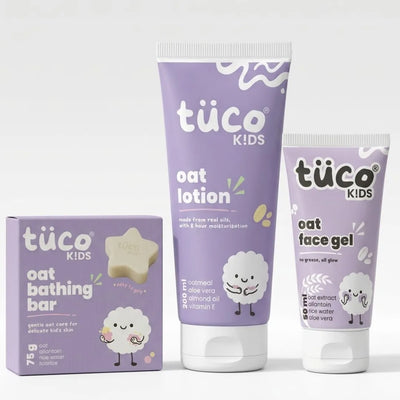
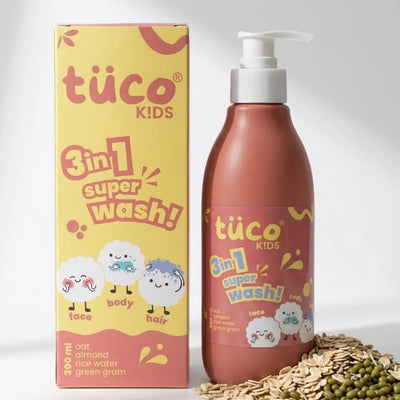
Tuco Kids tip: For mild, everyday irritation, a fragrance-free kids skin allergy lotion built around oat and aloe calms redness without the risk of overusing a medicated product.
Shop 3-in-1 Oat Kit →

Contents
- Quick Comparison: Tuco Products for Soothing Reactive Skin
- Soothing Cream vs. Medicated Cream: What's the Difference?
- What to Look for in a Kids' Allergy Cream
- Cream vs. Lotion vs. Ointment: Which Texture Do You Need?
- Common Triggers Behind Reactions
- How to Apply an Allergy Cream Safely
- Face vs. Body: Different Rules Apply
- When You Actually Need a Medicated Option
- FAQs
- Related Reads
Quick Comparison: Tuco Products for Soothing Reactive Skin
| Product Name | Key Features | Price | Shop |
|---|---|---|---|
| 3-in-1 Oat Kit | Oat- and aloe-based bathing bar, lotion & face gel — best skin allergy ointment for kids alternative for daily, non-medicated use | Rs. 699 | Shop Now → |
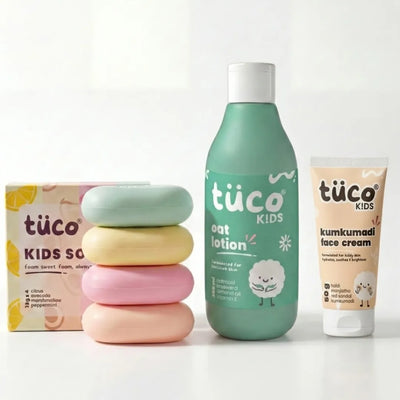
| Kids Daily Soap | Fragrance-light, sulphate-free everyday bar — reduces the chance of a new reaction while skin heals | Rs. 350 | Shop Now → |
| Acne Face Gel | Aloe vera & tea tree gel for preteens/teens — a genuine baby skin allergy cream for face alternative isn't this — see the note below on facial products | Rs. 349 | Shop Now → |
| 3-in-1 Bath Kit | Daily soap, lotion & face cream — a complete gentle routine for prevention | Rs. 699 | Shop Now → |
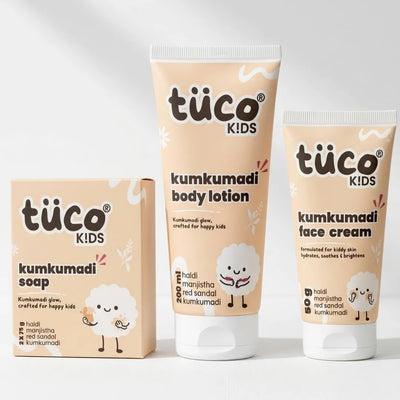
| 3-in-1 Kumkumadi Kit | Saffron & sandalwood routine for uneven tone left behind after a reaction heals | Rs. 699 | Shop Now → |
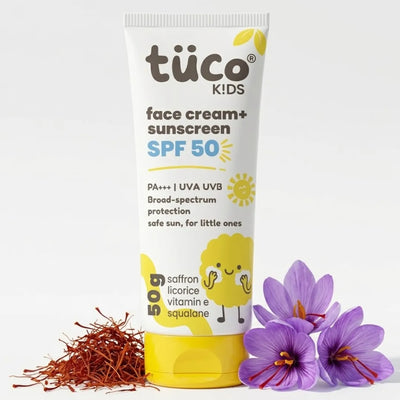
| 3-in-1 Dull Skin Kit (SPF 30) | Soap, sunscreen & face wash for kids whose reactions flare with sun exposure | Rs. 699 | Shop Now → |
 Soothing Cream vs. Medicated Cream: What's the Difference?
- A skin allergy cream for kids can mean two very different things: a gentle, fragrance-free moisturizer that soothes and supports the skin barrier, or a medicated product (like hydrocortisone) that actively treats inflammation.
- Tuco Kids makes the first kind — soothing, barrier-supportive skincare built around oat, aloe, and gentle plant actives. It's genuinely useful for prevention and mild irritation, but it isn't a substitute for a medicated skin allergy ointment for kids when one's actually needed.
- Searches for a kids skin allergy cream or a kids skin allergy ointment are often really two different needs bundled into one search — a soothing lotion for prevention and daily comfort, versus an actual anti-inflammatory ointment for an active flare-up.
- A good rule of thumb: if a reaction is mild, recently started, or you're trying to prevent one after removing a trigger, a soothing product is the right first step. If a reaction is already inflamed, spreading, or has been present for several days, that's when a pharmacist- or doctor-recommended medicated option becomes the better call.
What to Look for in a Kids' Allergy Cream
- For everyday soothing use, look for a best cream for skin allergy itching for kids that lists oat extract, aloe vera, or colloidal oatmeal near the top of the ingredient list — these are the most consistently effective calming actives for reactive skin.
- Avoid synthetic fragrance and dyes in any cream for kids skin allergy — these are common secondary irritants that can worsen an already-reactive area.
- A lotion for skin allergy for kids should absorb without a heavy, occlusive residue — a lighter formula is easier to reapply frequently, which matters more for consistent relief than one thick application.
- For the best lotion for skin allergy for kids, check that it's specifically formulated for children rather than a diluted adult product — a child's thinner skin barrier absorbs more of whatever's applied.
- The best cream for kids skin allergy won't be the same for every child — what soothes one reaction can occasionally irritate another, which is why patch-testing a new product matters even for gentle formulas.
- Ceramides and niacinamide are worth checking for too — both support the skin barrier directly rather than just sitting on the surface, which matters for skin that keeps reacting rather than a one-off irritation.
- Preservative type matters more than people expect: some preservatives used to extend shelf life (certain parabens, formaldehyde-releasers) are themselves known irritants, so "preservative-free" or a shorter, simpler preservative system is worth prioritizing for reactive skin specifically.
 Cream vs. Lotion vs. Ointment: Which Texture Do You Need?
- Lotions are the lightest, water-based texture — they absorb fastest and work well for daily prevention or mild, widespread dryness and irritation across large areas like arms and legs.
- Creams sit between lotions and ointments — thicker, more oil than water, and better suited to more localized, moderately dry or irritated patches that need a bit more staying power than a lotion offers.
- Ointments are the thickest and most occlusive, usually petroleum- or oil-based with little to no water content — they seal in moisture most effectively but can feel heavy, and are typically reserved for the driest, most stubborn patches rather than everyday use across the whole body.
- As a rough guide: reach for a lotion for daily prevention, a cream for an active but mild reaction, and reserve an ointment-style product for small, particularly stubborn areas rather than full-body application.
Common Triggers Behind Reactions
- New personal care products: a recently switched soap, shampoo, sunscreen, or laundry detergent is the most common identifiable trigger — residue left on skin or fabric after washing is easy to overlook.
- Seasonal and environmental factors: pollen, heat and sweat, dry winter air, and chlorine from pools can all trigger or worsen reactions independent of any product change.
- Fabric and friction: synthetic or rough fabrics, tight elastic, and even certain fabric dyes can cause a localized contact reaction that looks similar to a product allergy.
- Food-related reactions: some skin reactions — hives especially — can be linked to food without any digestive symptoms at all, which makes them easy to miss as a trigger unless you're specifically tracking what was eaten before a flare.
Shop 3-in-1 Oat Kit →

How to Apply an Allergy Cream Safely
- Do a patch test on a small area first if it's a new product, especially if your child's skin is already reacting to something — wait 24 hours before applying more broadly.
- Apply to clean, dry skin with clean hands, using gentle patting motions rather than rubbing, which can further irritate an already-sensitive area.
- For an ointment for kids skin allergy specifically (as opposed to a lighter lotion), a thin layer is usually enough — ointments are more concentrated and occlusive, so more isn't better.
- For a skin allergy lotion for kids, a thin, even layer applied 2–3 times daily tends to work better than one thick application, since it keeps the skin consistently supported rather than saturated once and left to dry out again.
- If using any medicated cream alongside a soothing moisturizer, apply the medicated product first and let it absorb before layering a moisturizer on top — check with a pharmacist on the specific timing for the product you're using.
Face vs. Body: Different Rules Apply
- Facial skin is thinner and more sensitive than body skin, so a baby skin allergy cream for face should generally be lighter and lower-irritant than what you'd use on arms or legs.
- Never apply a medicated cream intended for the body onto a child's face without specific guidance — facial skin absorbs more, and eye-area proximity adds risk with certain actives.
- For reactive facial skin in preteens or teens dealing with both irritation and breakouts, a targeted gel with aloe and tea tree tends to work better than a heavier body lotion, which can feel occlusive on facial skin.
When You Actually Need a Medicated Option
A soothing, non-medicated moisturizer is the right first step for most mild reactions. It's time to talk to a pharmacist or doctor about a medicated cream instead of continuing with skincare alone if:
- The area is significantly inflamed, swollen, or has been present for more than a few days without improvement.
- Itching is intense enough to disrupt sleep or has led to broken skin from scratching.
- The reaction keeps recurring in the same area despite avoiding known triggers.
- There are signs of infection — increasing warmth, oozing, or spreading redness — which needs medical attention rather than a moisturizer.
And separately from any of the above: if a reaction ever comes with difficulty breathing, facial or throat swelling, or widespread hives alongside vomiting or dizziness, that's a medical emergency — call for emergency help immediately rather than reaching for any cream at all.
FAQs
What's the best cream for skin allergy itching in kids?
For mild, everyday itching, an oat- and aloe-based lotion applied consistently tends to work as well as many over-the-counter options, without the risk of overuse that comes with medicated products. For more significant or persistent itching, a pharmacist can recommend an appropriate medicated option.
Is a skin allergy cream for child different from an adult version?
Yes — children's formulas are typically lower in concentration and skip actives that are standard in adult products, since a child's thinner skin barrier absorbs more of whatever's applied. Always check that a product is specifically labeled for children rather than assuming a diluted adult version is equivalent.
What's the difference between a cream, lotion, and ointment for skin allergies?
Lotions are the lightest and absorb fastest, making them good for daily prevention across large areas. Creams are thicker and better for moderate, localized irritation. Ointments are the most occlusive and best reserved for small, stubborn patches rather than everyday full-body use.
How long should I try a soothing cream before switching to something medicated?
If a mild reaction hasn't improved within 3–5 days of consistent, gentle care, that's a reasonable point to check in with a pharmacist about whether a medicated option would help move things along faster.
Can food cause skin allergy reactions in kids without stomach symptoms?
Yes — hives or general skin irritation can be the only visible sign of a food-related reaction in some children, without any digestive upset at all. If reactions seem to follow a pattern around specific meals, it's worth tracking and mentioning to a doctor.
Can I use the same allergy cream on my child's face and body?
Not always — facial skin is thinner and more sensitive, so a product formulated for body use may be too heavy or irritating on the face. Check whether a product is specifically labeled safe for facial use before applying it there.
How often should I apply a skin allergy lotion?
Two to three times daily in a thin layer generally works better than one thick application, since it keeps skin consistently supported. Reapply after washing the area, since water removes most of what was previously applied.
Is it safe to use hydrocortisone cream on a child?
Low-strength hydrocortisone is commonly used for children under guidance from a pharmacist or doctor, but it shouldn't be used for extended periods without medical advice, especially on the face. It's a genuinely different category from a daily moisturizer and worth discussing dosing and duration with a professional.
What ingredients should I avoid in a kids' skin allergy cream?
Synthetic fragrance, dyes, and sulphates are the main ones to avoid, since they're common secondary irritants that can worsen an already-reactive area rather than calm it. Checking the full ingredient list matters more than trusting a "hypoallergenic" label alone.
Can a moisturizer alone treat a skin allergy, or do I need medication?
It depends on severity — mild, recently-started irritation often responds well to a consistent, gentle moisturizing routine alone. More inflamed, persistent, or recurring reactions typically need an actual medicated treatment, which a moisturizer can support but not replace.
How do I know if my child needs a doctor instead of just a cream?
If a reaction doesn't improve after several days of consistent care, keeps recurring, shows signs of infection, or is ever accompanied by breathing difficulty or facial swelling, that's the point to involve a doctor or seek emergency care rather than continuing to try creams at home.
Related Reads
- Worried About White Patches on Face of Child? Learn Causes, Treatments, and When to Consult a Dermatologist
- Best Face Cream for Kids in India: 6 Safe Picks for Soft, Glowing Skin
- 10 Best Organic Kids Skincare Brands in India (2026)
- Understanding the Causes of Dull Skin in Kids and Effective Treatments