



Eczema in Kids: Causes and Care
A child's skin barrier is thinner, drier, and far more reactive than an adult's — and for kids prone to eczema, that barrier struggles to hold onto moisture even on an ordinary day. That's why the same soap, weather, or fabric that does nothing to you can leave your child red, itchy, and scratching within hours. The good news: once you know what triggers a flare and how to respond, most mild-to-moderate eczema in kids can be managed calmly at home.
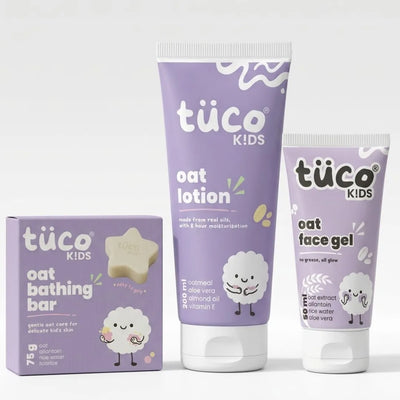
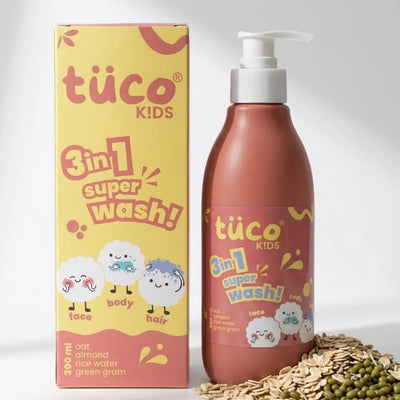
Tuco Kids tip: For eczema-prone skin, oat-based formulas are one of the most reliable first steps — the oat extract calms irritation while still repairing the barrier. Our 3-in-1 Oat Kit is built around exactly this, for daily use on reactive, flare-prone skin.
Shop the 3-in-1 Oat Kit →

Contents
- Quick Comparison: Best Tuco Products for Eczema-Prone Skin
- What Eczema Looks Like on a Child
- What Causes Eczema in Kids?
- Good vs. Bad Ingredients for Eczema-Prone Skin
- Decision Tree: Home Remedies by Symptom
- When to See a Doctor
- FAQs
- Related Reads
Quick Comparison: Best Tuco Products for Eczema-Prone Skin
| Ingredients | Tuco Product Solution | Key Product Features | Age-wise Recommendation |
|---|---|---|---|
| Oat extract, aloe vera | 3-in-1 Oat Kit | Barrier-repair bathing bar, lotion & face gel — the closest fit for flare-prone, reactive skin | 2–15 years, best for toddlers |
| Shea butter, almond oil, aloe vera | Deep Moisture Body Lotion | Richest formula in the range — for the tight, cracked-dry patches eczema often leaves behind | 3–15 years |
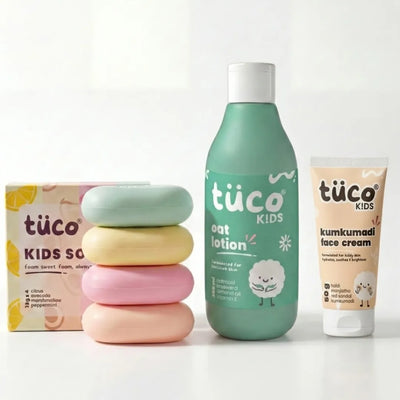
| Turmeric, Kakadu Plum, almond oil | 3-in-1 Bath Kit | Gentle daily soap, lotion & face cream — for maintaining skin between flare-ups | 3–15 years |
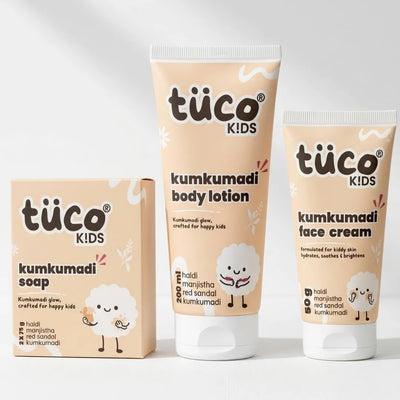
| Saffron, sandalwood, turmeric | 3-in-1 Kumkumadi Kit | Best once a flare has settled but left behind dullness or uneven tone | 4–15 years |
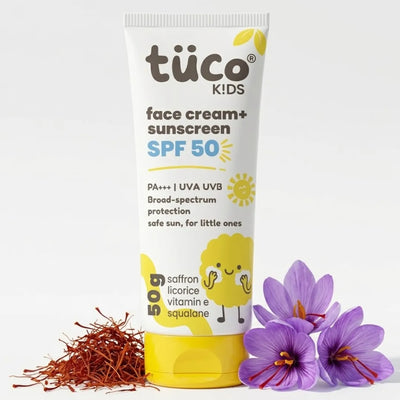
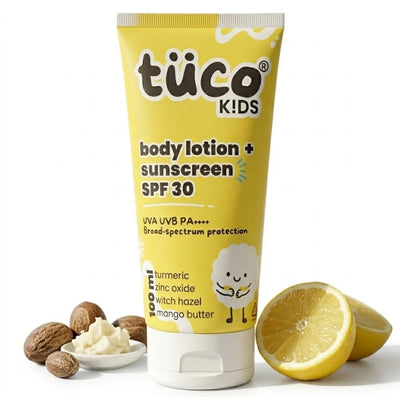
| SPF 30, turmeric, Kakadu Plum | 3-in-1 Dull Skin Kit (SPF 30) | Useful when healed patches need sun protection so they don't darken further | 4–15 years |

What Eczema Looks Like on a Child
- Dry, rough, red patches that feel warm or slightly raised, usually starting as small areas before spreading.
- In babies, patches typically show up on the cheeks, forehead, or scalp; in older kids, they cluster in the elbow creases, behind the knees, on the wrists, and around the neck.
- Intense itching that's often worse at night — many parents first notice eczema because their child is scratching in their sleep.
- Over time, repeatedly scratched skin can look thicker, darker, or slightly scarred — this is the skin's response to constant irritation rather than a new problem on its own.
- Mild eczema in kids usually stays as small, dry, faintly red patches with occasional itching, while more significant flares involve larger areas, oozing, or skin that's cracked and sore.
What Causes Eczema in Kids?
- At its core, eczema causes in kids almost always trace back to one thing: a skin barrier that can't hold onto moisture the way it should, letting irritants in and water out more easily than normal skin.
- Genetics play a real role — atopic eczema in kids is more common when a parent has eczema, asthma, or seasonal allergies, since these conditions share an underlying tendency toward barrier sensitivity.
- Everyday triggers matter just as much as genetics: hot baths, fragranced soaps, wool or synthetic fabrics, sweat, and harsh detergents can all set off a flare in a child who's already prone to one.
- Weather swings are a major factor too — dry winter air and indoor heating pull moisture from the skin, while summer heat and sweating can irritate it from the opposite direction.
- Hand eczema in kids often has its own specific triggers — frequent handwashing, sanitizer use, and water exposure at school or during play strip the hands faster than any other part of the body.
- Certain foods, such as cow's milk, eggs, or nuts, are linked to flares in some children, though this varies a lot from child to child and isn't the case for most kids with eczema.
Good vs. Bad Ingredients for Eczema-Prone Skin
Choosing the right skincare for eczema face and body routine matters as much as any remedy — the wrong ingredient can undo a week of progress overnight.
- Good ingredients: colloidal oatmeal (calms inflammation and forms a protective layer), shea butter and almond oil (deeply moisturizing without clogging pores), aloe vera (soothing for active itching), and ceramide-supporting oils that help rebuild the barrier.
- Bad ingredients: added fragrance and dyes, sulphates (SLS/SLES) that strip natural oils, high alcohol content, and harsh foaming agents — all of which can turn a mild flare into a worse one.
- When looking for the best skincare for eczema, favor thick creams or balms over thin lotions — the extra richness holds moisture in longer, especially through the night.
- For skincare for eczema prone skin specifically, patch-test any new product on a small area for 2–3 days before applying it more broadly, since even "natural" ingredients can occasionally trigger a reaction.
Shop the 3-in-1 Oat Kit →

Decision Tree: Home Remedies by Symptom
- Is the patch dry, faintly red, and only mildly itchy? → This is typically mild eczema in kids. A gentle oat-based wash followed by a rich moisturizer, applied twice daily, usually calms it within a few days.
- Is the itching intense enough to wake your child at night? → Keep nails trimmed short, dress your child in soft cotton, and apply a thicker layer of moisturizer before bed to reduce overnight scratching.
- Is the flare limited to the hands, especially after washing or sanitizer use? → For hand eczema in kids, apply a rich cream after every handwash and keep a travel-size moisturizer in their school bag for reapplication.
- Is the flare on the face, especially the cheeks? → Switch to a lighter, face-specific gel rather than a heavier body lotion, since facial skin is thinner and more reactive.
- Wondering how to treat eczema in kids at the very first sign of a flare? → Start with a lukewarm bath under 10 minutes, pat (don't rub) the skin dry, and apply moisturizer within 3 minutes of getting out — this "soak and seal" window is when skin absorbs the most moisture.
- Looking for home remedies for eczema in kids beyond moisturizing? → A cool, damp compress on an itchy patch for a few minutes can calm active itching, and keeping the child's room cool and humidified helps prevent new flares from starting.
- Is the patch oozing, crusted, or spreading quickly? → This goes beyond home care — see "When to See a Doctor" below.
When to See a Doctor
Most mild eczema responds to a consistent, gentle routine within 1–2 weeks. It's worth a doctor's visit instead of continuing home care alone if:
- The skin is oozing, crusted, or has yellow-ish scabbing, which can signal an infection needing prescription treatment.
- Itching is severe enough to disrupt sleep most nights or has led to broken, bleeding skin from scratching.
- The flare keeps spreading despite 2–3 weeks of consistent moisturizing and gentle cleansing.
- Your child also has signs of a food reaction alongside the flare, such as swelling, hives, or digestive upset — this needs a doctor's input to identify the trigger safely.
FAQs
What is the main cause of eczema in kids?
At the root of almost every case is a skin barrier that can't retain moisture as well as it should, which lets irritants in and dries the skin out faster than normal. Genetics, weather, and everyday irritants like harsh soap all build on top of this underlying barrier weakness.
How to treat eczema in kids at home?
Short, lukewarm baths with a fragrance-free cleanser, followed by a rich, barrier-repairing moisturizer applied within 3 minutes of getting out, resolve most mild flares within 1–2 weeks. Consistency day after day matters more than any single product.
Is eczema in kids contagious?
No — eczema is not contagious and can't be passed to another child through contact. It's related to a child's own skin barrier and, often, their family history of allergies or sensitive skin.
What triggers eczema flare-ups the most?
Hot baths, fragranced products, sweat, rough fabrics, and dry winter air are among the most common everyday triggers. Identifying which of these affects your child specifically makes it much easier to prevent the next flare rather than just treating it after it starts.
Does eczema in kids go away with age?
Many children see their eczema improve significantly by school age, and some outgrow it by puberty, though a smaller number continue to have flares into adulthood. Either way, a good daily skincare routine reduces how often and how severely flares happen along the way.
How is hand eczema in kids different from regular eczema?
Hand eczema is driven mainly by frequent water exposure, handwashing, and sanitizer use rather than the broader triggers behind body eczema. It usually needs more frequent reapplication of a rich cream throughout the day, especially after washing.
What ingredients should I avoid in skincare for eczema-prone skin?
Added fragrance, dyes, sulphates, and high alcohol content are the most common culprits that worsen eczema-prone skin. Sticking to fragrance-free, sulphate-free formulas with soothing ingredients like oat and aloe reduces the chances of a product triggering a new flare.
Can diet cause eczema in kids?
For some children, foods like cow's milk, eggs, or nuts are linked to flares, but this isn't the case for most kids with eczema. If you notice a clear pattern between a specific food and flares, it's worth discussing with your doctor rather than removing foods on your own.
Related Reads
- Worried About White Patches on Face of Child? Learn Causes, Treatments, and When to Consult a Dermatologist
- Best Face Cream for Kids in India: 6 Safe Picks for Soft, Glowing Skin
- 10 Best Organic Kids Skincare Brands in India (2026)
- Understanding the Causes of Dull Skin in Kids and Effective Treatments
- Child Skin Allergy Treatment at Home: Safe and Effective Remedies Every Parent Can Try
- Skin Allergy Cream for Children: Top Soothing Options and How to Apply Them Safely
- Cocoa Butter: Uses, Benefits, Side Effects
- The Power of Turmeric: An Ancient Remedy for Kids' Skin Issues