



Best Winter Face Cream for Kids
Winter can leave a child's cheeks feeling rough, tight or uncomfortable, especially after bathing or spending time outdoors. Facial skin is exposed to wind, changing temperatures, frequent washing and environmental irritants, so the moisturiser that works well on the body may not always be the most comfortable choice for the face. Choosing the best winter face cream for children starts with understanding the skin's needs rather than looking for the thickest or most heavily marketed formula.
A good winter routine should keep the skin comfortable without introducing unnecessary products. The right choice depends on your child's age, sensitivity, existing skin conditions and how much dryness they experience. This guide explains what to look for in a children's face moisturiser, how to distinguish dryness from irritation and where a simple daily routine can help.
Explore the Kumkumadi Kit

Contents
- Quick comparison
- Why facial skin gets dry in winter
- What to look for in a face cream
- Understanding ingredients
- Choosing for different skin needs
- Where Tuco Kids fits
- A simple winter face routine
- Mistakes to avoid
- Quick decision guide
- When to see a doctor
- FAQs
- Related Reads
Quick comparison: Which face moisturiser should you consider?
| Option | Key features | Best for | Age guidance |
|---|---|---|---|
| Tuco Kids 3-in-1 Bath Kit | Includes soap, lotion and face cream | Families wanting a coordinated daily-care kit | 3–15 years |
| Fragrance-free cream | Often useful when reducing potential irritants is a priority | Sensitive or dry skin | Check label |
| Richer emollient cream | Helps soften roughness and reduce moisture loss | Persistent dryness, if suitable | Check label and medical advice if needed |
Why does a child's face get dry in winter?
The skin's outer barrier helps retain water and protect against irritants. Cold weather, low humidity, wind and indoor heating can contribute to moisture loss. Washing with hot water or harsh cleansers can further disrupt the barrier, leaving the face feeling tight or looking flaky.
The cheeks are particularly exposed during outdoor activities. Children may also wipe their noses repeatedly when they have a cold, causing friction around the nose and upper lip. Saliva around the mouth can irritate the skin, especially when a child frequently licks their lips.
Not every dry patch is caused by weather. Eczema, contact dermatitis and other skin conditions can resemble ordinary winter dryness. If a child's cheeks are repeatedly inflamed, itchy or cracked, a standard face cream may not be sufficient.
What to look for in a winter face cream
A formula intended for the face
Facial products should be selected for the intended area and age range. A body lotion may be fine for the body but should not automatically be used around the eyes or on irritated facial skin. Follow the product label.
Moisturising ingredients
Humectants help attract water, emollients soften the skin and occlusive ingredients slow water loss. A balanced formulation can offer more useful support than a product selected solely because it feels thick.
Minimal unnecessary irritation
For children who react easily to skincare, a fragrance-free formula may be a sensible starting point. Fragrance is not automatically unsuitable for every child, but reducing potential irritants can simplify the process of identifying triggers.
Comfortable texture
The cream should spread easily without making the child's skin uncomfortable. A lighter cream may work for mild dryness; persistent rough patches may benefit from a richer emollient. Avoid layering multiple products unless there is a clear reason.
Understanding common ingredients
Glycerin is a humectant that helps the outer skin layer retain water. Emollients soften rough areas and improve flexibility. Occlusive ingredients, such as petrolatum, form a protective film that reduces evaporation. Many moisturisers combine these functions.
Ingredient lists should be considered as a whole. A highlighted botanical ingredient does not establish that a product will be more effective or less irritating. Even a product described as natural or gentle may not suit every child.
Avoid using adult anti-ageing creams, exfoliating acids, retinoids, skin-lightening products or strong acne treatments on children without appropriate medical advice. These are not necessary for ordinary winter dryness and can irritate young skin.
Choosing according to your child's skin needs
For mild dryness: Begin with gentle cleansing and a suitable everyday moisturiser. Apply after washing and observe whether the tightness improves.
For sensitive skin: Consider a fragrance-free formula with a straightforward ingredient list. Introduce one new product at a time so that any reaction is easier to identify.
For eczema-prone skin: Moisturising is an important part of many eczema routines, but active inflammation may require treatment beyond a cosmetic face cream. Follow the child's existing care plan.
For very young children: Age guidance matters. Tuco Kids' listed 3-in-1 Bath Kit is intended for ages 3 to 15 and should not be represented as a newborn or infant product.
Where Tuco Kids fits into a winter routine
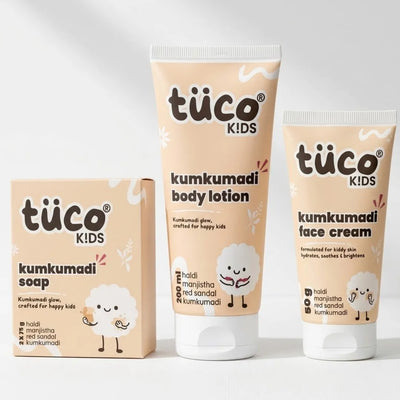
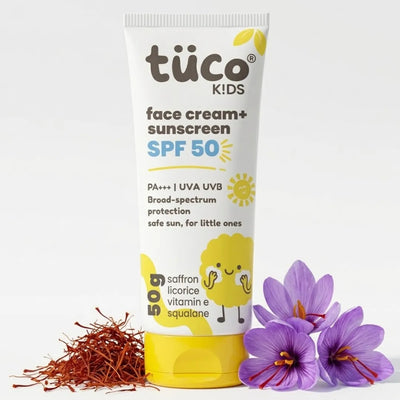
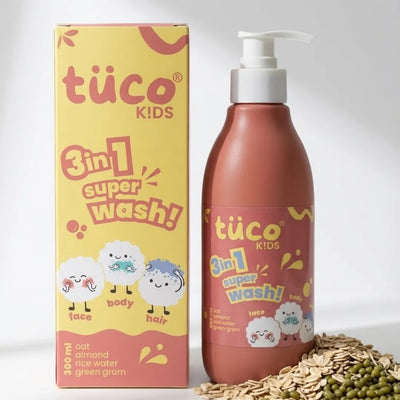
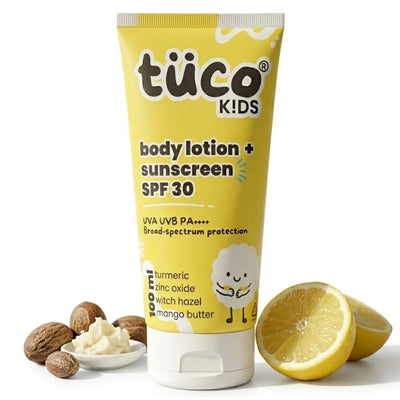
Tuco Kids offers a 3-in-1 Bath Kit containing Kumkumadi soap, lotion and face cream, listed for children aged 3 to 15. It may be convenient for parents who prefer a coordinated set of daily-care products rather than choosing each item separately.
Convenience does not remove the need to check suitability. Review the ingredient list and directions, especially if your child has a history of irritation. The kit should be viewed as a skincare option, not as a treatment for eczema, infection or persistent inflammation.
See the Kumkumadi Kit
A simple winter face-care routine
In the morning, wash the face with lukewarm water or a mild cleanser when needed. Avoid scrubbing with rough cloths. Apply a suitable moisturiser if the skin feels dry, then use broad-spectrum sunscreen with SPF 30 or higher on exposed skin, following the label directions.
In the evening, remove dirt and sunscreen gently. Pat the face dry and moisturise while the skin is slightly damp. If a child has irritation around the nose or mouth, look for contributing factors such as frequent wiping, saliva or a newly introduced product.
There is no need to introduce several serums, exfoliants or face masks to manage winter dryness. Children generally benefit from a simple, age-appropriate routine. Consistency and tolerance matter more than the number of steps.
Common mistakes parents should avoid
Using the thickest cream automatically: A heavier texture is not always more suitable. Choose according to the level of dryness and how comfortably the child tolerates the product.
Exfoliating flaky skin: Flakes may indicate a disrupted barrier. Scrubbing can increase irritation rather than solve the underlying problem.
Ignoring the sunscreen step: Winter does not eliminate ultraviolet exposure. Sun protection remains useful for outdoor activities.
Changing several products at once: If irritation develops, it becomes difficult to identify the cause. Introduce products gradually.
Assuming all redness is dryness: Persistent inflammation, itch or cracking may suggest eczema or contact dermatitis and deserve appropriate assessment.
Quick decision guide
- If your child's face feels tight after bathing, use lukewarm water and apply a suitable moisturiser afterwards.
- If the skin is sensitive or reacts to fragrance, consider a fragrance-free formula with clear age guidance.
- If the cheeks are rough but not inflamed, try a consistent, simple moisturising routine.
- If redness, itching or cracking keeps returning, seek advice about possible eczema or contact dermatitis.
- If your child is under three, do not assume the Tuco Kids 3-in-1 Bath Kit is suitable; it is listed for ages 3 to 15.
- If a product causes a rash or stinging, stop using it and review the ingredients and possible triggers.
When to see a doctor
Arrange medical advice if facial dryness is persistent, painful, recurrent or accompanied by substantial itching, swelling, cracking or weeping. Seek prompt assessment for spreading redness, signs of infection or symptoms affecting the eyes.
If you suspect eczema or a reaction to a product, a clinician can help identify the likely cause and suggest appropriate care. Avoid using steroid creams or adult active skincare products on a child's face without guidance.
Frequently asked questions
1. What is the best winter face cream for kids?
The best choice depends on the child's age, skin sensitivity and degree of dryness. Look for an age-appropriate formula that moisturises comfortably and does not irritate the skin.
2. Can children use adult face cream?
Not every adult product is suitable for children. Avoid assuming that anti-ageing, exfoliating, skin-lightening or acne products are appropriate for young skin. Check the intended use and age guidance.
3. Should I apply face cream every day in winter?
If your child's skin becomes dry, regular moisturising can help maintain comfort. Apply after washing and adjust according to the child's needs and the product directions.
4. Is a thick cream better for winter?
A richer cream can help with persistent dryness because it may reduce water loss more effectively, but a lighter formula may be sufficient for mild dryness. Comfort and skin tolerance matter.
5. Can face cream treat eczema?
Moisturisers support the skin barrier and may form part of eczema care, but active inflammation can require additional treatment. Follow a clinician's advice if eczema is suspected or already diagnosed.
6. Is Tuco Kids' 3-in-1 Bath Kit suitable for toddlers?
The kit is listed for ages 3 to 15. Do not assume it is suitable for children younger than three or for newborns and infants.
7. Should children use sunscreen in winter?
Yes, exposed skin can still receive ultraviolet radiation in winter. Broad-spectrum sunscreen with SPF 30 or higher, along with shade and protective clothing, can help protect the skin outdoors.
8. Why is my child's face still flaky after moisturising?
The formula may not be sufficient, or the flaking may be related to eczema, irritation or another skin condition. Avoid scrubbing and seek advice if symptoms persist or worsen.
Related Reads
- Best Winter Body Lotion for Kids
- Best Winter Moisturizer for Kids' Dry Skin
- Winter Skin Care for Kids
- Dry Skin in Winter: Causes and Treatment for Kids