



Best Winter Body Lotion for Kids: Complete Buying Guide
When the weather turns cooler, your child may start complaining that their legs feel itchy after a bath, their elbows feel rough or their skin looks ashy by the end of the day. These changes are common in winter, but they are not simply a sign that the skin needs a thicker layer of any lotion. Choosing the winter body lotion for your child means understanding why moisture escapes from the skin, what different moisturising ingredients do and how often to apply them.
Children's skin can become uncomfortable when cold air, indoor heating, hot baths and frequent washing disrupt its protective barrier. A useful lotion helps replenish moisture and reduce water loss without making everyday care unnecessarily complicated. This guide explains what parents should look for, how to choose for different skin needs and how Tuco Kids' Deep Moisture Body Lotion fits into a winter routine.
Explore Deep Moisture Body Lotion

Contents
- Quick comparison: Choosing a winter body lotion
- Why children's skin gets dry in winter
- How body lotion works
- What to look for in a lotion
- Understanding moisturising ingredients
- Choosing by age and skin needs
- Where Tuco Kids fits
- A practical winter routine
- Common mistakes to avoid
- Quick decision guide
- When to see a doctor
- Frequently asked questions
- Related Reads
Quick comparison: What should you choose?
The best lotion depends on your child's skin and the weather. A light formula may be comfortable for ordinary dryness, while a richer cream or ointment may be more useful for persistent rough patches. Check the full ingredient list and age guidance rather than relying on a product's name alone.
| Option | Key features | Best for | Age guidance |
|---|---|---|---|
| Tuco Kids Deep Moisture Body Lotion | A body moisturiser intended for children's winter skincare | Everyday winter moisturising | 3–15 years |
| Fragrance-free cream | Often richer than lotion and may contain ingredients that support the skin barrier | Persistent dryness or sensitive skin | Choose an age-appropriate formula |
| Ointment-based moisturiser | Creates a more substantial barrier that slows water loss | Very dry, localised areas when suitable | Check age suitability and clinical advice if needed |
| Fragrance-free emollient recommended for eczema | Selected for the child's skin condition and tolerance | Eczema-prone or repeatedly inflamed skin | Follow professional and label guidance |
Why does children's skin get dry in winter?
The outermost layer of skin, called the stratum corneum, acts as a protective barrier. It contains skin cells held together by lipids, including ceramides, cholesterol and fatty acids. This structure helps keep water inside the skin while limiting the entry of irritants.
When the surrounding air is cold and dry, water can evaporate from the skin more readily. Indoor heating may reduce humidity further. Frequent washing, harsh cleansers and long hot baths can also remove some of the surface oils that help the barrier function properly.
The result is not always obvious at first. Skin may begin to feel tight after bathing, then become rough, flaky or itchy. Children who already have eczema or naturally sensitive skin may be more affected because their skin barrier is less effective at retaining moisture.
There is an important distinction between ordinary winter dryness and an inflammatory skin condition. Mild dryness may improve with consistent moisturising and gentler bathing. Red, intensely itchy, cracked or recurring patches may need more than a standard body lotion.
How does a body lotion help?
Moisturisers work through a combination of effects. Humectants attract and hold water in the outer skin layer. Emollients soften rough areas and help improve the feel of the skin. Occlusive ingredients form a surface layer that slows water loss.
Many products combine more than one type of ingredient. Their performance also depends on the formulation: two lotions with similar headline ingredients may feel different or behave differently on the skin because the concentrations, supporting ingredients and overall texture are not the same.
A lotion is usually lighter and easier to spread over large areas than a thick cream or ointment. That can make it convenient for daily use after a bath. However, if a child's skin remains very dry despite regular application, a richer moisturiser may be more suitable.
More product is not automatically better. Applying a comfortable, appropriate moisturiser consistently is generally more useful than layering multiple products with overlapping purposes. If a lotion stings, produces a rash or makes the skin increasingly uncomfortable, stop using it and reassess the choice.
What to look for in the best winter body lotion for kids
1. Age-appropriate labelling
Always check the recommended age range on the packaging. A product designed for older children should not automatically be used on a newborn or young infant. Children's skincare products vary in formulation and intended use, and infant skin needs particular care.
2. Moisturising ingredients
Look for a formulation that helps relieve dryness rather than relying on claims such as “winter protection” alone. Humectants, emollients and occlusive ingredients serve different functions, so a combination may be helpful. The complete ingredient list gives a clearer picture than a single highlighted ingredient.
3. A formula your child tolerates
Fragrance can be pleasant, but some children find fragranced products irritating, particularly if their skin is already sensitive. If your child has eczema or a history of reactions, a fragrance-free option may be a sensible starting point. “Natural” and “hypoallergenic” are not guarantees that a product will suit every child.
4. Texture that fits your routine
A lotion that spreads easily may be more practical for daily application to the arms, legs and torso. A thicker cream may be preferable when dryness is more pronounced. The right choice is one that meets your child's needs and is comfortable enough to use consistently.
5. Clear directions and transparent claims
Read the label for the intended body areas, directions, warnings and storage instructions. Avoid assuming that a body lotion is automatically suitable for the face, lips, broken skin or areas affected by a diagnosed skin condition.
Understanding common moisturising ingredients
Knowing what ingredient categories do can help you compare products without being distracted by marketing language.
Humectants
Humectants, such as glycerin, help attract and retain water in the outer skin layer. They can improve hydration, but their performance depends on the whole formula and the surrounding conditions. A humectant-containing lotion may also include emollients and occlusive ingredients to help reduce water loss.
Emollients
Emollients soften and smooth the skin by filling spaces between dry surface cells and improving flexibility. They can make rough areas feel more comfortable and help the skin surface feel less uneven.
Occlusive ingredients
Occlusives create a protective film that slows evaporation. Petrolatum is a familiar example. Richer formulations often feel heavier because they leave a more noticeable layer on the skin, which can be useful for very dry areas but may be less comfortable for everyday use over the whole body.
Fragrance and potential irritants
Fragrance is not automatically harmful, and many children tolerate fragranced products. However, when a child experiences recurrent irritation, simplifying the routine and choosing fragrance-free products may help reduce potential triggers. Avoid adding essential oils or homemade mixtures simply because they are described as natural.
Choosing by age and skin needs
Newborns and infants under two
Do not assume that a lotion intended for older children is appropriate for a newborn or infant. Tuco Kids' listed winter body lotion is for ages 3 to 15, so it should not be presented as an infant product. For very young babies, use only skincare appropriate for their age and seek advice from a paediatrician if persistent dryness or a rash is present.
Preschool children
For children aged three and above, consider their usual skin condition, bathing habits and tolerance of the formula. Choose an age-appropriate moisturiser and apply it after bathing. If the child has recurrent itchy patches, do not treat every flare as ordinary dryness.
School-age children and pre-teens
Children who spend time outdoors, swim frequently or wash their hands and bodies often may need moisturising at more than one point in the day. A convenient lotion can help them maintain a routine independently, with parental supervision when necessary.
Children with sensitive or eczema-prone skin
Start with a simple routine and avoid changing multiple products at once. A fragrance-free emollient may be a better fit than a heavily fragranced lotion. If the skin is inflamed, cracked or persistently itchy, ask a clinician about a suitable moisturiser and treatment plan.
Where Tuco Kids Deep Moisture Body Lotion fits
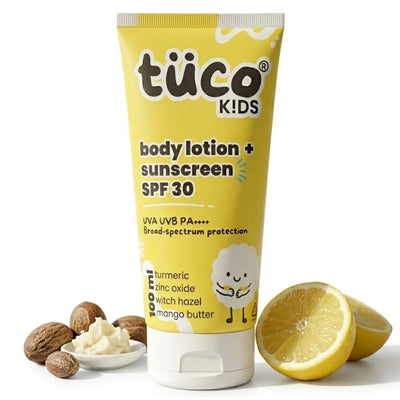
Tuco Kids offers a Deep Moisture Body Lotion listed for children aged 3 to 15. It is one option for parents looking for an everyday winter body moisturiser within that age range.
Choose it based on the child's age, the level of dryness and the product label. Do not assume that a body lotion treats eczema, infection or another diagnosed skin condition simply because it is designed for winter moisturising. If your child has unusually reactive skin, review the ingredient list and stop using the product if irritation develops.
View Tuco Kids Body Lotion
A practical winter body-care routine
During bath time
Use lukewarm rather than very hot water, and keep baths reasonably short. Choose a mild cleanser and avoid repeatedly washing areas that are not dirty. Hot water can feel comforting in winter, but it may worsen dryness by removing protective oils from the skin.
Immediately after bathing
Pat the skin dry, leaving it slightly damp, and apply moisturiser soon afterwards. This helps retain some of the water present on the skin. Spread the lotion gently rather than rubbing dry areas vigorously.
During the day
Reapply when the skin feels dry, particularly after washing or swimming. Pay attention to shins, elbows, knees and hands, which may become rough during colder weather. Clothing and indoor heating can affect comfort too, so avoid excessively hot rooms and choose comfortable fabrics if friction is a problem.
At bedtime
Check whether particular areas remain rough or itchy. A richer product may be useful for localised dryness if it is appropriate for your child. If the skin is red, cracked, weeping or persistently itchy, seek guidance rather than treating the problem as a routine moisturising issue.
Common winter moisturising mistakes
Using very hot water: Hot baths may feel relaxing, but they can aggravate dryness. Lukewarm water is usually kinder to the skin barrier.
Applying lotion only when skin looks flaky: Dryness can begin with tightness or discomfort before visible flakes appear. A consistent routine may be more helpful than waiting for symptoms to become obvious.
Assuming a higher price means a better formula: Price alone does not establish suitability. Age guidance, ingredients, skin tolerance and texture are more useful comparison points.
Using body lotion everywhere: Body products are not necessarily intended for the face, lips or broken skin. Follow the product directions and use a suitable product for each area.
Confusing dryness with eczema: Eczema can involve dryness, but it also causes inflammation and recurring itch. Persistent symptoms may require treatment beyond moisturising.
Switching products too quickly: Constantly introducing new formulas makes it harder to identify what suits your child. Keep the routine simple and change one product at a time where possible.
Quick decision guide
- If your child has mild dryness without a rash, try an age-appropriate moisturiser and apply it consistently after bathing.
- If the skin feels tight after hot baths, reduce the water temperature, shorten bathing time and moisturise immediately afterwards.
- If the skin is very rough or remains dry despite lotion, consider whether a richer cream or ointment would be more suitable.
- If your child has eczema or recurrent irritation, prioritise a suitable emollient and seek advice on managing inflammation.
- If the product causes stinging, redness or a new rash, stop using it and review the ingredients and possible triggers.
- If your child is under three, do not use Tuco Kids Deep Moisture Body Lotion on the assumption that it is suitable; check the age guidance and select an appropriate alternative.
When to see a doctor
Seek medical advice if dryness is persistent, severe, repeatedly returns or is accompanied by substantial itching, redness, cracking, bleeding or disturbed sleep. Weeping skin, spreading redness, warmth, pain or signs of infection also warrant prompt assessment.
For a child with known eczema, follow the clinician's care plan and ask for a review if the usual routine no longer helps. For infants and young babies, seek paediatric advice when dryness is persistent or accompanied by a rash. Ordinary moisturiser can support the skin barrier, but it should not replace treatment for an underlying condition.
Frequently asked questions
1. What is the best winter body lotion for kids?
The best option is age-appropriate, comfortable to apply and suited to your child's level of dryness. Look at the ingredients, directions and skin tolerance rather than relying only on marketing claims. A lotion may suit ordinary dryness, while persistent symptoms may need a richer emollient or professional advice.
2. How often should I apply body lotion in winter?
Applying moisturiser after bathing is a useful starting point. Reapply when needed, especially after washing or swimming or when the skin feels dry. Children with eczema may need a more individualised routine based on their clinician's advice.
3. Should I apply lotion to damp skin?
Yes, applying moisturiser soon after bathing, while the skin is slightly damp, helps retain moisture. Pat the skin dry first rather than rubbing it vigorously, then spread the product gently.
4. Is lotion or cream better for children's winter dryness?
Lotions are generally lighter and easier to spread over large areas. Creams and ointments are usually richer and may be more effective for persistent dryness. The right choice depends on the child's skin, comfort and tolerance.
5. Can I use adult body lotion on my child?
Do not assume that every adult lotion is suitable for children. Check the intended age range, ingredients and directions. Products with strong fragrance or active ingredients may not be appropriate for a child's skin, especially if it is sensitive.
6. Is Tuco Kids Deep Moisture Body Lotion suitable for babies?
The product is listed for ages 3 to 15. It should not be presented as a newborn or infant lotion. For younger babies, choose age-appropriate care and ask a paediatrician about persistent dryness or irritation.
7. Can body lotion treat eczema?
Moisturisers and emollients help support the skin barrier and are often part of eczema care, but ordinary body lotion may not control inflammation on its own. Follow a clinician's treatment plan if your child has eczema or recurring itchy patches.
8. Why is my child's skin still dry after applying lotion?
The formula may be too light, the routine may not be consistent, or hot baths and harsh cleansers may be contributing. Persistent dryness can also indicate eczema or another skin condition. Review the routine and seek advice if the problem continues.
Related Reads
- Best Winter Face Cream for Kids
- Best Winter Moisturizer for Kids' Dry Skin
- Winter Skin Care for Kids: A Complete Routine
- Dry Skin in Winter: Causes and Treatment for Kids