



Aloe Vera Gel for Kids' Winter Skin Care: Benefits & DIY Uses
Aloe vera's soothing reputation is well known, but its usefulness for winter skincare specifically is sometimes overlooked in favor of heavier, more obviously "moisturizing" ingredients. Understanding the real aloe vera benefits for skin in kids — particularly its lightweight hydration and calming properties — helps parents see where it fits well in a winter routine, and where a richer product might serve better.
This guide covers how aloe vera gel for face use applies to children specifically, practical DIY approaches using fresh aloe vera, and how to combine it effectively with other winter skincare essentials.
Tuco Kids tip: Aloe vera's light, quick-absorbing texture makes it a good daytime option under clothing or before school, while a richer moisturizer can be reserved for bedtime when a heavier feel isn't a practical concern.

Contents
- Aloe Vera for Kids at a Glance
- What Aloe Vera Actually Offers Skin
- Why It's Useful Specifically in Winter
- Fresh Aloe Vera vs. Packaged Gel
- How to Use Aloe Vera Gel on Face
- Simple DIY Combinations Worth Trying
- Is Aloe Vera Enough on Its Own for Winter?
- Safety Considerations for Kids
- FAQs
- Related Reads
Aloe Vera for Kids at a Glance
| Use Case | Why Aloe Vera Helps | Age Recommendation |
|---|---|---|
| Mild irritation or windburn | Cooling, soothing effect | 1+ years, patch-tested |
| Light daytime hydration | Quick-absorbing, non-greasy | 1+ years |
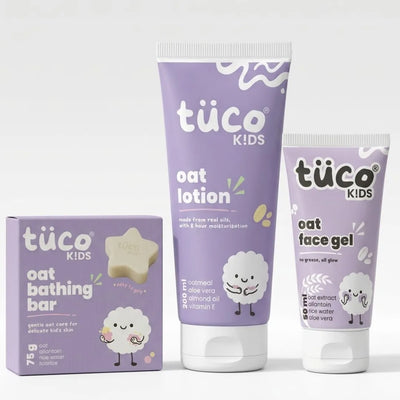
| Deeper winter dryness needs | Tuco 3-in-1 Oat Kit for richer, all-day support | Ages 3+ |
What Aloe Vera Actually Offers Skin
Aloe vera gel, extracted from the inner leaf of the aloe plant, contains a high water content along with compounds that have documented soothing and mild anti-inflammatory properties, which is why it's long been used for sunburn, minor irritation, and general skin calming. Its high water content gives it a genuinely hydrating quality, though this hydration is lighter and less occlusive than richer oils or butters, meaning it works somewhat differently than a heavy winter moisturizer even though both address dryness in their own way. This lightness is both aloe vera's key strength and its main limitation for winter use specifically.
Why It's Useful Specifically in Winter
Windburn — the red, irritated, slightly stinging skin that develops from cold wind exposure on cheeks and exposed skin — responds particularly well to aloe vera's cooling, soothing properties, making it a genuinely useful winter-specific remedy beyond general moisturizing. For kids who find heavier winter products uncomfortable during the day, particularly under clothing or before school, aloe vera's fast-absorbing, non-greasy texture offers a lighter alternative that still provides some hydration benefit without the heaviness. It also works well as a calming follow-up after time spent outdoors in cold, windy conditions, addressing both the dryness and any associated mild irritation in one step.
Fresh Aloe Vera vs. Packaged Gel
Fresh aloe vera, extracted directly from a leaf, contains the plant's full complement of natural compounds without added preservatives or stabilizers, though it has a shorter shelf life and can vary somewhat in consistency and potency between plants. Packaged aloe vera gel products offer more consistency and convenience, though it's worth checking ingredient lists, since some commercial products contain a relatively small percentage of actual aloe vera alongside various additives, fragrances, or alcohol that can be more drying or irritating than beneficial, particularly for a child's sensitive skin. For kids specifically, a high-percentage, fragrance-free, alcohol-free aloe vera product, or fresh aloe vera itself when available, tends to be the gentler, more genuinely beneficial choice.
How to Use Aloe Vera Gel on Face
For fresh aloe vera, slicing open a leaf and using a spoon to scoop out the clear inner gel, applying a thin layer directly to clean skin, is the simplest approach, though washing off any yellow-tinged outer leaf residue first (which can be irritating) is an important step many people skip. For packaged gel, a small amount applied to clean, slightly damp skin, patted in rather than rubbed vigorously, helps it absorb evenly without excessive friction on a child's face. Applying it as a first step before a richer moisturizer, rather than as a complete standalone solution for very dry winter skin, often gives the best combined result of aloe vera's soothing quality and a heavier product's longer-lasting moisture barrier.
Simple DIY Combinations Worth Trying
Aloe vera gel mixed with a small amount of almond oil combines aloe's soothing, lightweight hydration with almond oil's richer moisturizing and vitamin E content, creating a slightly more substantial option than aloe vera alone without the heaviness of a pure oil or butter. A small amount of aloe vera applied after a turmeric-based treatment can help soothe any mild warmth or tingling some kids experience from turmeric application, combining two traditional ingredients for a gentler combined effect. These combinations work best when each ingredient has been individually patch-tested first, since combining untested ingredients makes it harder to identify which one caused any reaction, should one occur.
Is Aloe Vera Enough on Its Own for Winter?
Does your child have mild, general dryness without significant flaking or discomfort? If yes, aloe vera alone, used consistently, may provide sufficient light hydration. Does your child have more significant, stubborn dry patches or visible flaking? If yes, aloe vera works better as a soothing first step followed by a richer moisturizer rather than as a standalone solution. Is windburn or mild irritation from cold exposure the primary concern? If yes, aloe vera's cooling, soothing properties are particularly well-suited to this specific issue. Is your child dealing with a diagnosed skin condition like eczema? If yes, aloe vera can be a gentle complement but shouldn't replace any pediatrician-recommended treatment.
Safety Considerations for Kids
Aloe vera is generally well-tolerated by most people, including children, but allergic reactions, while uncommon, can occur, making a patch test on a small area of skin a sensible precaution before broader facial application. The yellow sap found just beneath the outer skin of the aloe leaf (distinct from the clear inner gel) can be irritating and even has laxative properties if ingested, so thoroughly cleaning fresh aloe vera before use and keeping it away from a child's mouth is an important practical precaution. If any redness, itching, or irritation develops after use, discontinuing and consulting a pediatrician if symptoms don't resolve quickly is the appropriate response.
FAQs
What are the real aloe vera gel for face benefits for kids in winter?
Its cooling, soothing properties work particularly well for windburn and mild irritation, while its light hydrating quality suits daytime use, though it's lighter than a richer winter moisturizer.
What are the general aloe vera benefits for skin beyond winter dryness?
Its documented soothing and mild anti-inflammatory properties make it useful for sunburn, minor irritation, and general skin calming across seasons, not just winter-specific dryness.
How to use aloe vera gel on face for a young child?
A thin layer of fresh or packaged aloe vera gel applied to clean, slightly damp skin, ideally as a first step before a richer moisturizer for significant dryness, works well for most kids.
What are the real aloe vera gel benefits compared to a regular moisturizer?
Aloe vera offers lighter, faster-absorbing hydration with soothing properties, while a regular moisturizer typically provides longer-lasting, more substantial moisture barrier support for deeper dryness.
Is fresh aloe vera for face better than packaged gel for kids?
Fresh aloe vera avoids potential additives found in some packaged products, though a high-percentage, fragrance-free, alcohol-free packaged gel is a reasonable and more convenient alternative.
Can aloe vera alone handle severe winter dryness in kids?
Not usually on its own — aloe vera works best as a soothing first step or light daytime option, paired with a richer moisturizer for genuinely significant dry patches.
Are there safety risks with aloe vera for kids?
Allergic reactions are uncommon but possible, and the yellow sap beneath the outer leaf (distinct from the clear gel) can be irritating, so thorough cleaning of fresh aloe vera before use matters.