



Almond Oil for Kids in Winter: Benefits, Uses & Safety Tips
Almond oil, or badam oil, is one of the most consistently recommended natural oils for winter skincare, valued across both traditional practice and modern dermatology for its lightweight texture and genuinely useful nutrient profile. Understanding the real almond oil benefits for skin in kids, along with how to use it correctly, helps parents decide whether it deserves a place in their child's winter routine.
This guide covers what badam oil for skin actually offers, how it compares to other winter oils, and practical guidance on how to use almond oil for face and body safely on children.
Tuco Kids tip: Almond oil works well as a pre-bath massage oil, but following up with a proper post-bath moisturizer helps lock in that hydration rather than letting it evaporate along with bathwater.

Contents
- Almond Oil for Kids at a Glance
- Why Almond Oil Works Well for Winter Skin
- Benefits of Almond Oil for Face
- Benefits for Body and Hair
- How to Use Almond Oil for Face and Body
- Sweet Almond Oil vs. Bitter Almond Oil
- Is Almond Oil Right for Your Child?
- Safety Precautions and Allergy Risk
- FAQs
- Related Reads
Almond Oil for Kids at a Glance
| Use Case | How Almond Oil Helps | Age Recommendation |
|---|---|---|
| Dry facial skin | Lightweight moisture, vitamin E content | 1+ years, patch-tested |
| Body dryness | Massage oil, absorbs without heavy residue | 1+ years, patch-tested |
| Dry hair ends | Light conditioning, reduces breakage | 2+ years |
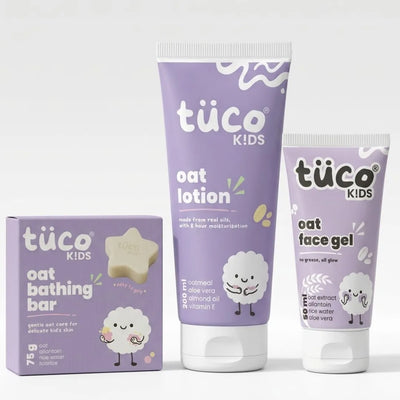
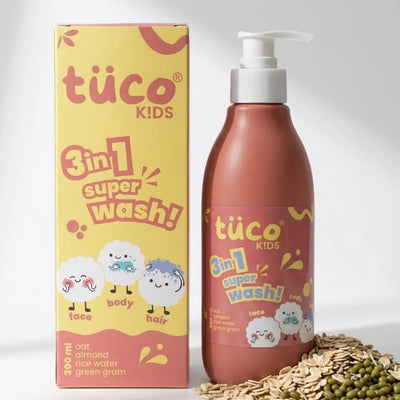
| Locking in moisture after oil | Tuco 3-in-1 Oat Kit as follow-up moisturizer | Ages 3+ |
Why Almond Oil Works Well for Winter Skin
Almond oil contains a genuinely useful combination of fatty acids and vitamin E, both of which support skin barrier function and help retain moisture — properties that matter more during winter, when skin is actively losing moisture to dry air at a faster rate than usual. Its relatively light texture compared to heavier oils means it absorbs reasonably well without leaving as thick or greasy a residue, which many parents and kids alike find more comfortable for regular use than richer alternatives. Unlike some more ceremonial or occasion-specific ingredients, almond oil's mild, generally well-tolerated profile makes it a practical everyday winter option for many families.
Benefits of Almond Oil for Face
For facial skin specifically, almond oil's light texture is a real advantage over heavier body oils, since facial skin can feel uncomfortably greasy or become more prone to congestion with a richer product. The vitamin E and fatty acid content help support the skin's natural barrier, potentially reducing the flaking and rough texture that commonly develops on a child's face during winter months. Its gentle, generally hypoallergenic profile (though not risk-free — more on allergy considerations below) makes it a reasonable option for the more sensitive skin found on a young child's face compared to body skin.
Benefits for Body and Hair
As a body moisturizing oil, almond oil works well applied post-bath while skin is still slightly damp, helping to trap in some of that moisture rather than letting it evaporate immediately. For hair, particularly the ends which tend to be driest and most prone to winter breakage, a small amount of almond oil can provide light conditioning benefit without the heaviness some other oils bring, making it a reasonable complement to a broader winter hair care routine. Its versatility across face, body, and hair is part of what makes almond oil a practical single-oil solution for families wanting to simplify their winter routine.
How to Use Almond Oil for Face and Body
For facial use, a very small amount — a few drops warmed between the palms — applied gently after cleansing, ideally while skin is still slightly damp, helps maximize absorption without overloading sensitive facial skin. For body use, slightly more oil can be applied post-bath in a gentle massaging motion, which also provides the circulation benefits associated with massage more broadly. Always patch-testing on a small area first, particularly for a child using almond oil for the first time, remains an important precaution regardless of how mild the oil's general reputation is.
Sweet Almond Oil vs. Bitter Almond Oil
Sweet almond oil, the type almost universally used in skincare, is distinct from bitter almond oil, which contains compounds that can be toxic and is not intended for skincare or topical use at all — this distinction matters enough to check labels carefully when purchasing, since the two are derived from different almond varieties. Cold-pressed, unrefined sweet almond oil generally retains more of its natural nutrient content compared to heavily processed or refined versions, making it the preferable choice when available, though refined versions remain generally safe for topical use as well.
Is Almond Oil Right for Your Child?
Does your child have a known tree nut allergy, or a family history of nut allergies? If yes, avoid almond oil entirely and choose a non-nut-derived alternative like sunflower or coconut oil instead. Does your child have generally dry, non-reactive skin without known allergies? If yes, almond oil, patch-tested first, is a reasonable and well-regarded winter option. Are you looking for a single oil that works across face, body, and hair? If yes, almond oil's versatility makes it a practical simplifying choice. Is your child's skin very oily or acne-prone even in winter? If yes, a lighter option or none at all on the face specifically may suit better, reserving almond oil for body use.
Safety Precautions and Allergy Risk
Almond oil is derived from tree nuts, and while topical use doesn't carry the same risk profile as ingestion for most people, children with known or suspected tree nut allergies should avoid almond oil entirely as a precaution, given that allergic skin reactions, while less common than ingestion-related reactions, are still possible. Always patch-testing on a small area of skin and waiting 24 hours before broader application is the standard, sensible precaution for any child trying almond oil for the first time, regardless of known allergy status. If any redness, itching, or swelling develops, discontinuing use immediately and consulting a pediatrician, particularly if there's any known nut allergy history in the family, is the appropriate response.
FAQs
What are the real almond oil benefits for skin in kids during winter?
Its combination of fatty acids and vitamin E supports skin barrier function and moisture retention, while its lightweight texture makes it comfortable for regular use without heavy residue.
Is almond oil for face safe for young children?
Generally yes for kids without tree nut allergies, applied in small amounts and patch-tested first, though children with known or suspected nut allergies should avoid it entirely.
Is badam oil for skin the same as regular almond oil?
Yes — badam is the Hindi word for almond, and badam oil refers to the same sweet almond oil commonly used in skincare, distinct from toxic bitter almond oil.
What are the benefits of almond oil for face specifically versus body?
Its light texture suits facial skin particularly well since it absorbs without heavy greasiness, while the same properties also work well for body moisturizing, just with slightly more oil typically used.
How to use almond oil for face on a young child?
A few drops warmed between the palms, applied gently to slightly damp skin after cleansing, maximizes absorption without overloading a child's more delicate facial skin.
Is sweet almond oil different from bitter almond oil, and does it matter?
Yes, significantly — bitter almond oil contains potentially toxic compounds and isn't meant for skincare, while sweet almond oil is the safe, widely used variety for topical application.
What safety precautions should I take before using almond oil on my child?
Avoid it entirely if there's any tree nut allergy history, and always patch-test on a small area of skin, waiting 24 hours to check for reaction before broader use.