






Winter Skincare for Kids in Bangalore, Chennai & Hyderabad: What's Actually Different from North India
Search for winter skincare bangalore and most of what comes up was written with Delhi or Mumbai winters in mind — rich creams, heavy oils, advice built around genuinely cold, heater-heated air. South india winter skin care needs to start from a different set of facts, even though the goal — protecting a child's skin barrier through a drier few months — doesn't change.
What follows isn't just a lighter version of a North Indian routine. Winter skin care for kids south india actually calls for is shaped by three regional facts that rarely make it into generic winter content: how the region's climate transitions, how much air conditioning changes the picture, and how much Bangalore, Chennai, and Hyderabad genuinely differ from each other despite all being called "mild."

Tuco Kids tip: South Indian winters are drier than they feel — the absence of visible cold doesn't mean your child's skin isn't losing moisture.
Contents
- TLDR: Quick Comparison
- How South Indian Winters Actually Differ from North India
- Bangalore, Chennai & Hyderabad: What Actually Sets Them Apart
- A Routine Sized to Match, Not Copied from Elsewhere
- Planning Around the South Indian Winter Calendar
- When to See a Doctor
- FAQs
- Related Reads
| Ingredients | Tuco Product Solution | Key Product Features | Best For |
|---|---|---|---|
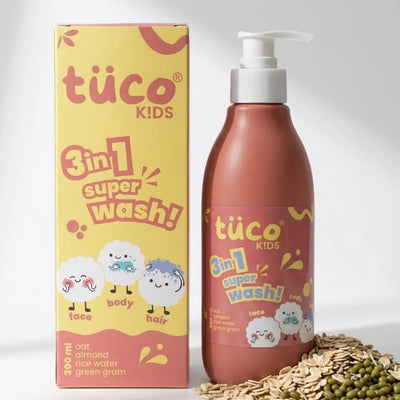
| Turmeric, Kakadu Plum, almond oil | 3-in-1 Bath Kit | Everyday soap, lotion, and face cream routine | Mild South Indian winters, daily use |
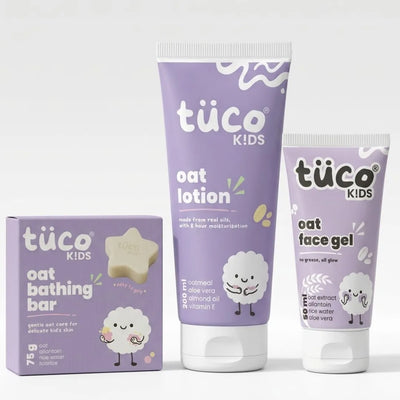
| Oat extract, aloe vera | 3-in-1 Oat Kit | Lightweight, gentle formula for AC-exposed skin | Toddlers, AC-heavy households |
| Shea butter, almond oil, aloe vera | Deep Moisture Body Lotion | Richer option for the driest weeks or AC-heavy homes | Noticeably dry patches |
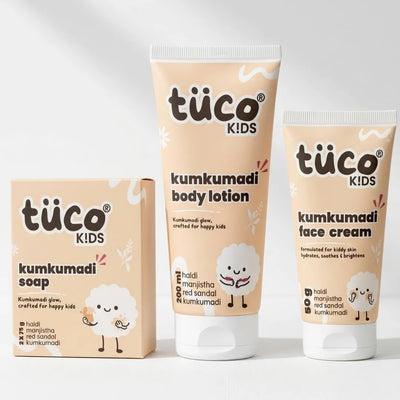
| Saffron, sandalwood, turmeric | 3-in-1 Kumkumadi Kit | Lightweight face care suited to milder climates | Everyday face care |
How South Indian Winters Actually Differ from North India
North Indian winters bring genuinely cold air, and cold air holds less moisture than warm air by nature — add a heater, which warms that air further without adding moisture back, and the result is aggressively dry indoor conditions. South India rarely gets cold enough for any of that first step to happen. Bangalore, Chennai, and Hyderabad stay relatively mild through winter, and most homes don't run heaters at all, which is exactly why so many parents here assume winter skincare simply doesn't apply to them.
The gap in that assumption is that relative humidity still drops across the region in winter, independent of temperature, and it's compounded by something North Indian winter advice never has to account for: air conditioning that runs nearly year-round in South Indian homes, cars, and schools. AC doesn't just make a room feel cooler — it actively pulls moisture out of the air as part of how it cools, which gives South India a second, artificial drying mechanism that has nothing to do with the season "feeling" cold. So the two climates arrive at similar skin outcomes — dry, tight, sometimes flaking skin — through genuinely different routes, which is exactly why a routine copied wholesale from North Indian advice tends to either overshoot (too rich, too heavy) or undershoot (skipped entirely because "it's not cold enough to matter").
Shop 3-in-1 Oat Kit →
Bangalore, Chennai & Hyderabad: What Actually Sets Them Apart
Even within "mild South Indian winter," the three cities don't behave identically, and the differences are worth knowing rather than treating the region as one uniform climate. Bangalore sits at a meaningfully higher elevation than Chennai or Hyderabad, which is why its winter mornings and evenings run noticeably cooler and drier than the other two — the temperature swing between a Bangalore morning and afternoon is often the largest of the three cities, and that daily swing itself is part of what stresses skin, not just the average temperature.
Hyderabad, further inland and away from the coast, tends to run drier overall than Chennai through December and January, without Bangalore's elevation-driven morning chill. Chennai is the outlier in the other direction: its coastal position keeps average humidity higher, but that humidity is inconsistent, fluctuating with sea breezes and shifting quickly through the day — and Chennai's heavier reliance on AC to manage its higher baseline heat means kids there can spend more cumulative hours in dry, conditioned air than the "humid coastal city" reputation would suggest. In all three, the actual driver isn't cold — it's some combination of drier air, bigger daily temperature swings, and AC exposure, in different proportions city to city.
A Routine Sized to Match, Not Copied from Elsewhere
Because none of these three cities produce North Indian-level dryness, the routine doesn't need North Indian-level intensity. A gentle, non-foaming cleanser followed by a lightweight, non-greasy moisturizer covers most days across all three cities. Where they diverge is in when to add more: Bangalore households benefit from paying attention to those cooler mornings and evenings specifically, Hyderabad from a slightly richer formula through the driest inland weeks, and Chennai from treating AC exposure as seriously as outdoor weather, since it's doing more of the drying there than the climate itself is.
Lip care gets skipped more often here than it should, specifically because parents don't associate chapped lips with a "mild" winter — but lip skin is thin regardless of location, and it reacts to low humidity and AC exposure exactly the way it would to cold, dry air anywhere else. A simple, ingestion-safe balm applied through the season closes a gap that's easy to overlook precisely because nothing about South Indian winter looks dramatic.
Planning Around the South Indian Winter Calendar
South India's mild winter typically runs from late November through February, though the exact timing shifts by city and year — Chennai's tail end of the Northeast monsoon can push its driest stretch slightly later than Bangalore's or Hyderabad's. Rather than waiting for visible dryness, it's worth starting a light routine as soon as mornings and evenings begin feeling noticeably cooler, usually a few weeks before the driest stretch actually arrives. That head start matters more here than in a genuinely cold climate, since the dryness is subtler and easier to miss until skin already looks flaky.
As the season eases into March, most families can taper back to a warm-weather routine, though kids with naturally sensitive skin, or households running AC year-round regardless of season, may be better served keeping a light moisturizing habit going continuously rather than treating it as a winter-only fix.
When to See a Doctor
Most South Indian winter dryness responds to a simple, consistent lightweight routine within 1–2 weeks. See a doctor if skin cracks or bleeds, shows signs of infection, or doesn't improve despite consistent care.
FAQs
Do kids in Bangalore really need a winter skincare routine?
Yes — Bangalore's elevation gives it the biggest daily temperature swing of the three cities, and that swing, combined with drier mornings and evenings, is enough to dry skin even without extreme cold.
Is south india winter skin care different from what's needed in Delhi?
Yes, meaningfully — South Indian dryness comes from lower relative humidity and AC use rather than cold air, so lighter, more frequently applied products work better than the rich formulas suited to North Indian winters.
Which South Indian city has the driest winter climate for skin?
Bangalore and Hyderabad tend to run drier than Chennai in absolute terms, though Chennai's heavier AC use can offset that difference for kids who spend a lot of time indoors.
Is winter skincare bangalore advice different from advice for Hyderabad?
The core routine is similar, but Bangalore's advice should weight the cooler morning-and-evening window more heavily, while Hyderabad's should account for a drier baseline through the whole day.
How is winter skin care for kids south india affected by AC specifically?
AC condenses moisture directly out of the air it cools, which is a stronger and more direct drying mechanism than the seasonal humidity dip alone — households with heavy AC use should treat it as part of their winter routine, not separate from it.
Can I use the same products year-round in South India?
A lightweight daily formula often works year-round, with a richer option added during each city's driest weeks specifically.
How long should a South Indian winter routine last each year?
Roughly late November through February, though it's worth adjusting the exact window based on how a given city's season is actually behaving that year.
Related Reads
- Lip Balm for Kids: Gentle Lip Care Tips for Young Skin
- Best Body Wash for Kids in India: 6 Gentle Picks That Make Bath Time Easier
- The Power of Turmeric: An Ancient Remedy for Kids' Skin Issues
- 10 Best Moisturizing Soaps in India for Dry Skin
- Best Kids Soap in India: Gentle, Safe, and Effective Options for Kids