



Winter Essentials for Kids' Skin: Complete Shopping Guide
Building a complete winter skincare shopping list doesn't have to be complicated, but it helps to understand why a single all-purpose lotion rarely covers everything. From a winter face cream for kids to the right baby lotion for winter, different areas of skin genuinely need different formulas — not just different marketing.
This guide rounds up the essentials — including the best lip balm for winter and a good winter body cream for kids — so you can shop once and be set for the whole season instead of scrambling as dryness appears.
Tuco Kids tip: A complete winter routine covers face, body, and lips — skipping any one of the three leaves an easy entry point for dryness.
Contents
- TLDR: Quick Comparison
- Why Face, Body, and Lips Need Different Formulas
- Building Your Winter Kit Step by Step
- Shopping Well, by Age and by Ingredient
- When to Start Shopping Each Season
- When to See a Doctor
- FAQs
- Related Reads
| Ingredients | Tuco Product Solution | Key Product Features | Age-wise Recommendation |
|---|---|---|---|
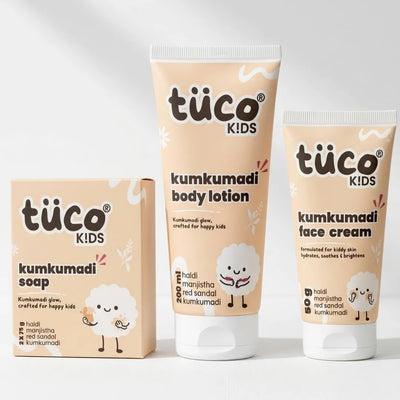
| Saffron, sandalwood, turmeric | 3-in-1 Kumkumadi Kit | Face cream and finishing care | 4–15 years |
| Shea butter, almond oil, aloe vera | Deep Moisture Body Lotion | Richest body cream, best for driest patches | 3–15 years |
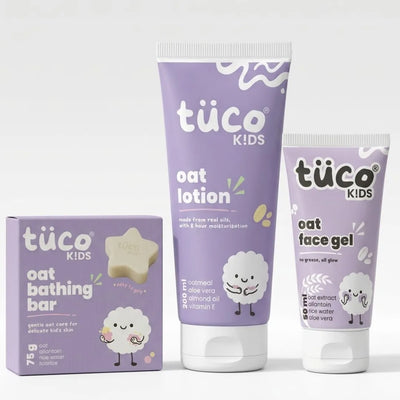
| Oat extract, aloe vera | 3-in-1 Oat Kit | Gentlest option, best for toddlers and reactive skin | 2–15 years |
| Beeswax, shea butter (lip care) | The Nothing Lip Balm | What to look for in the best lip balm for winter | All ages |
Why Face, Body, and Lips Need Different Formulas
Skin thickness varies more across the body than most parents realize. Facial skin runs thinner than skin on the arms or legs and is exposed to wind and temperature swings almost constantly, which is why a dedicated, lighter winter face cream for kids tends to perform better than a heavy body lotion applied to the face. Body skin, covering the largest surface area, can handle — and needs — a richer, more occlusive formula, which is exactly what a good winter body cream for kids with shea butter or almond oil is built for. Lips sit at the far end of that spectrum: no oil glands at all, the thinnest skin on the body, and constant exposure, which is why the best lip balm for winter looks completely different from either — small, portable, ingestion-safe, and reapplied often rather than applied once a day.
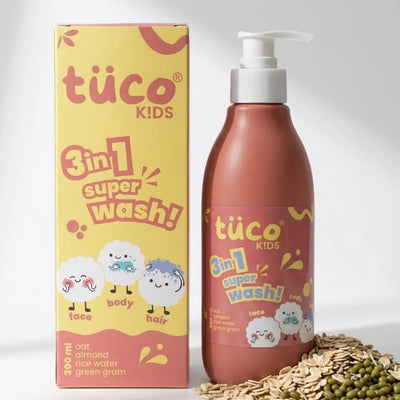
For younger kids specifically, a dedicated, fragrance-free baby lotion for winter matters even more, since infant skin is thinner across the board and loses moisture faster than an older child's. A gentle, non-foaming cleanser rounds things out — without it, bath time quietly undoes the benefit of everything applied afterward.
Shop Deep Moisture Body Lotion →

Building Your Winter Kit Step by Step
Start with the basics: a gentle cleanser and a rich body lotion cover the largest surface area and the most common source of winter dryness. Add a dedicated face cream next, since facial skin often shows dryness first and most visibly. A good lip balm rounds out full-body coverage, and if your child has particularly reactive or sensitive skin, an oat-based formula makes a gentle addition or complement to richer products, especially right after a bath.
You don't need to buy everything at once — starting with cleanser and body lotion, then adding face cream and lip balm over the following weeks, still gets you to full coverage without an overwhelming first purchase.
Shop 3-in-1 Oat Kit →

Shopping Well, by Age and by Ingredient
Newborns and infants do best with the gentlest, most fragrance-free options across the board, applied generously and often, since their skin barrier is still developing. Toddlers, who move constantly between indoor and outdoor conditions, tend to do well with oat-based products, since their skin is often the most reactive. School-age kids can generally move to richer formulas, and are often old enough to help apply their own products — a small independence that tends to make the habit stick.
Across every category, a few ingredients consistently earn their place: shea butter and almond oil form a protective layer that slows moisture loss in both face and body creams, oat extract calms reactive or sensitive skin without added fragrance, and beeswax remains a lip-care staple for its gentle, ingestion-safe sealing properties. Skip anything built around added fragrance, alcohol, or foaming sulfates — these work directly against the moisture-retention goal your kit is built around, and packaging appeal is a poor substitute for actually reading the ingredient list.
When to Start Shopping Each Season
The best time to buy your winter kit is a few weeks before temperatures actually drop, which gives you time to build the habit before dryness has a chance to set in. Watch for the first signs that indoor heating has started running regularly — that's usually the earliest cue your child's skin will need extra support. It's also worth checking supply levels partway through the season, since face and lip products in particular tend to run out faster than expected with consistent daily use.
When to See a Doctor
A well-stocked winter skincare kit resolves most seasonal dryness within 1–2 weeks of consistent use. See a doctor if skin cracks or bleeds, shows signs of infection, or if a consistent routine using appropriate products doesn't help after 2–3 weeks.
FAQs
What's the most important winter skin care product to buy first?
A rich body lotion, since it covers the largest surface area and addresses the most common source of winter dryness.
Is a separate winter face cream for kids really necessary?
Yes — facial skin is thinner and more constantly exposed than body skin, so a lighter, dedicated formula tends to work better than a body lotion alone.
What should I look for in the best lip balm for winter?
Fragrance-free, ingestion-safe ingredients like beeswax and shea butter, in a format your child can carry and reapply easily.
How is a winter body cream for kids different from a regular lotion?
Winter formulas tend to be richer and more occlusive, designed specifically to counter the moisture loss caused by cold, dry air.
Can one baby lotion for winter cover the whole family?
A gentle, fragrance-free formula often works well across ages, though older or less sensitive skin may benefit from a richer option.
How many products do I really need for a complete winter kit?
A cleanser, body lotion, face cream, and lip balm cover the essentials — four products is typically enough for full coverage.
When should I start shopping for winter skincare essentials?
A few weeks before the weather turns cold, so your routine is already in place before dryness has a chance to set in.
Related Reads
- Lip Balm for Kids: Gentle Lip Care Tips for Young Skin
- Best Body Wash for Kids in India: 6 Gentle Picks That Make Bath Time Easier
- The Power of Turmeric: An Ancient Remedy for Kids' Skin Issues
- 10 Best Moisturizing Soaps in India for Dry Skin
- Best Kids Soap in India: Gentle, Safe, and Effective Options for Kids