






Why South Indian Winters Still Dry Out Kids' Skin (Even Without the Cold)
Every December, the same conversation plays out in households across Bangalore, Chennai, and Hyderabad: a child's cheeks or knuckles start looking chalky and rough, and a parent's first instinct is to rule out winter as the cause. "It's not even cold," they'll say. But dry skin without cold weather is one of the more common — and more misunderstood — seasonal patterns in South India. The temperature isn't the trigger. Something quieter is.
Understanding what's actually going on makes the fix a lot simpler, so before getting into routines and products, it's worth spending a moment on the "why."
Tuco Kids tip: It's humidity, not temperature, that determines how much moisture your child's skin loses each day — and South India's humidity really does drop in winter, even when it doesn't feel like it.

Contents
- TLDR: Quick Comparison
- Why Skin Dries Out Without Cold Weather
- Why South India Specifically Gets Dry Without Getting Cold
- Why Kids' Skin Reacts Faster Than Adults'
- What It Actually Looks Like
- A Routine That Matches the Real Cause
- When to See a Doctor
- FAQs
- Related Reads
| Ingredients | Tuco Product Solution | Key Product Features | Best For |
|---|---|---|---|
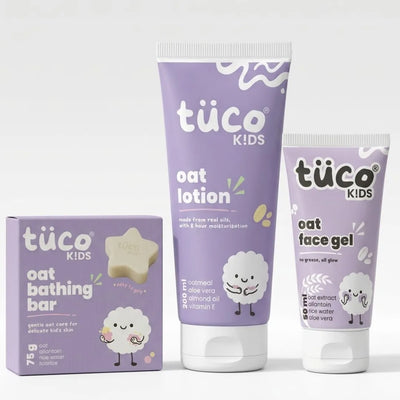
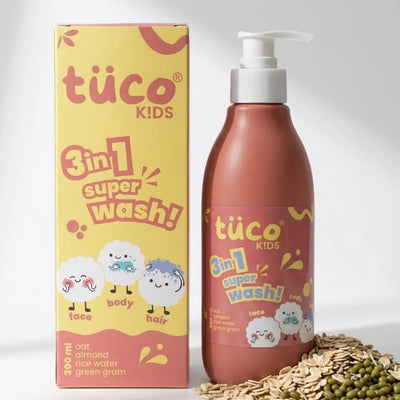
| Oat extract, aloe vera | 3-in-1 Oat Kit | Lightweight, barrier-supporting daily formula | Everyday low-humidity dryness |
| Turmeric, Kakadu Plum, almond oil | 3-in-1 Bath Kit | Complete daily soap and lotion routine | General maintenance |
| Shea butter, almond oil, aloe vera | Deep Moisture Body Lotion | Richer formula for the driest weeks | Noticeably dry patches |
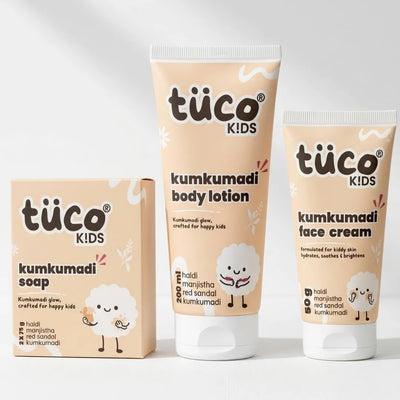
| Saffron, sandalwood, turmeric | 3-in-1 Kumkumadi Kit | Lightweight face care | Daily facial dryness |
Why Skin Dries Out Without Cold Weather
Skin loses water to the air around it constantly, all year round. What changes with the seasons is the rate. Moisture moves from wherever it's more concentrated to wherever it's less concentrated — from your child's skin, which is mostly water, out into the surrounding air, whenever that air is drier. This exchange has nothing to do with whether the air feels cold. A room can sit at a perfectly comfortable 24°C and still be dry enough to pull noticeable moisture out of skin over the course of a day.
This is why the "no cold, no problem" assumption doesn't hold up. What actually matters is relative humidity — how much water vapor the air is holding compared to how much it could hold — and that number drops in South India during winter months just as reliably as temperatures drop further north. It's simply a quieter, less visible kind of change, so winter dryness without heating tends to go unnoticed until skin is already flaking.
Why South India Specifically Gets Dry Without Getting Cold
North India's winter dryness is easy to explain: cold air holds less moisture than warm air by default, and heaters compound the effect further by warming that already-dry air even more. South India skips the cold part almost entirely — but it doesn't skip the dry part.
The Northeast monsoon that brings rain to parts of Tamil Nadu through October and November typically tapers off by December, and the months that follow — the core of the region's mild winter — see a genuine drop in rainfall and ambient humidity across Bangalore, Chennai, and Hyderabad alike. Layered on top of that seasonal dip is a second, artificial source of dry air: air conditioning, which runs nearly year-round in South Indian homes, offices, cars, and classrooms. AC units cool a room by pulling moisture out of the air, which means a space that feels pleasantly cool can also be quietly drying out everyone inside it, kids included, regardless of what the weather is doing outdoors.
Why Kids' Skin Reacts Faster Than Adults'
This is the part most parents haven't heard, and it explains why kids often show dryness before anyone else in the house does. A child's outermost skin layer — the barrier that actually holds moisture in — is thinner than an adult's and takes years to fully mature. On top of that, children have a much higher surface-area-to-body-weight ratio than adults, meaning proportionally more skin is exposed to the drying air relative to their size.
The result is that low humidity skin kids issues tend to appear earlier and more visibly than the equivalent dryness in a parent's own skin — even though both are being exposed to the same room, the same AC, the same season. It isn't that kids are fragile in some vague sense; it's a fairly specific structural difference in how much water their skin loses per hour compared to an adult's.
What It Actually Looks Like
It rarely starts dramatically. The first sign is usually skin that feels slightly rough to the touch, especially on cheeks, hands, and the backs of knees or elbows — areas with less natural oil production and more everyday exposure. Lips often look a little duller than usual before any visible peeling begins. Because none of this comes with the obvious cold-weather cues parents are trained to watch for, it's easy to write off as "just how his skin is" rather than something seasonal and specific. Left alone, mild roughness can progress to fine cracking, particularly on hands that get washed often and lips that get licked when they feel tight.
A Routine That Matches the Real Cause
Since the cause is moisture loss rather than cold exposure, the fix doesn't need to be intensive — it needs to be consistent. A gentle, non-stripping cleanser followed by a light daily moisturizer, applied while skin is still slightly damp, covers most of what a South Indian winter actually demands. Ingredients like oat extract and aloe vera hydrate well without feeling heavy in warmer weather, which matters here more than in a genuinely cold climate. Save a richer, more occlusive formula for the driest stretches of the season, or for kids who spend long hours in AC-heavy environments like school or a long commute.
Lips and hands deserve slightly more attention than the rest of the body, simply because they're thinner-skinned and more exposed — a quick reapplication after handwashing, and a balm kept somewhere accessible, closes most of the remaining gap.
Shop Deep Moisture Body Lotion →

When to See a Doctor
Most of this resolves within a week or two of consistent, light moisturizing. It's worth a pediatrician's opinion if skin cracks deeply enough to bleed, if there's spreading redness or any sign of infection, or if a consistent routine simply isn't making a difference after a couple of weeks — that pattern suggests something beyond ordinary seasonal dryness is going on.
FAQs
If it's not cold, why does it feel like a "winter" problem at all?
Because the underlying cause — a seasonal drop in humidity — happens to coincide with the same months that bring cold weather elsewhere in the country. The label describes the calendar, not the mechanism.
What causes low humidity skin kids issues in South India specifically?
The Northeast monsoon's retreat by December, combined with near-constant AC use across homes, schools, and cars, together drop indoor and outdoor humidity enough to matter, even without any real cold.
Does a humidifier actually make a difference here?
In AC-heavy homes, yes, noticeably. In households that don't run AC much, a consistent topical routine usually does the job on its own.
Is this the same as eczema?
Not usually. Ordinary seasonal dryness responds quickly to moisturizing and doesn't typically involve significant redness or itching. If it does, that's worth mentioning to a doctor rather than assuming it's the same thing.
Which South Indian city sees this the most?
Bangalore and Hyderabad tend to run drier than coastal Chennai during these months, though AC exposure can make winter dryness without heating a factor in any of the three regardless of outdoor humidity.
How can I tell if it's really low humidity and not something else?
Low-humidity dryness typically responds well to consistent moisturizing within 1–2 weeks. If it doesn't budge, that's a reasonable point to check in with a doctor.
Does this go away on its own once summer starts?
The seasonal dip in humidity does ease, but for kids who are consistently AC-exposed, a light moisturizing habit is worth keeping up year-round rather than treating it as a winter-only fix.