



Why is My Child's Skin so Dry and Flaky? Causes & Remedies
A child's skin barrier is thinner and loses moisture faster than an adult's — which is exactly why the same weather that leaves you feeling fine can leave your child's cheeks, arms, and legs scaly and rough within days. The pattern is usually predictable once you know what to look for, and it responds fast to the right routine.
Tuco Kids tip: A rich, purpose-built Deep Moisture Body Lotion applied right after bath time locks in far more moisture than any lotion applied later in the day.
Shop Deep Moisture Body Lotion →

Contents
- Quick Comparison: Best Tuco Products for Dry, Flaky Skin
- What Dry, Flaky Skin Looks Like on a Child
- What Causes Dry, Flaky Skin in Kids?
- Weather-by-Weather: Why It Happens
- Decision Tree: Home Remedies by Cause
- When to See a Doctor
- FAQs
- Related Reads
Quick Comparison: Best Tuco Products for Dry, Flaky Skin
| Ingredients | Tuco Product Solution | Key Product Features | Age-wise Recommendation |
|---|---|---|---|
| Shea butter, almond oil, aloe vera | Deep Moisture Body Lotion | Richest formula in the range — built specifically for winter-level dryness | 3–15 years |
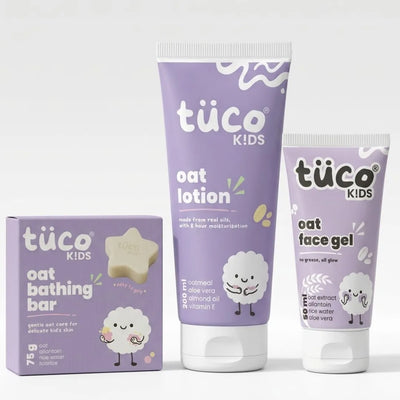
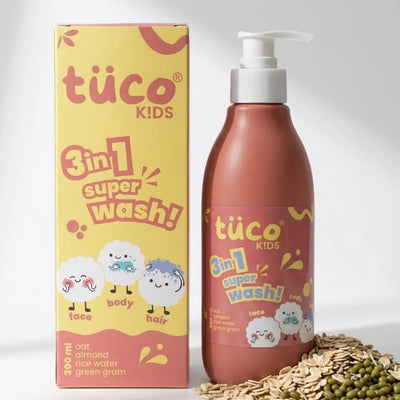
| Oat extract, aloe vera | 3-in-1 Oat Kit | Barrier-repair bathing bar, lotion & face gel — best for flaky, reactive skin | 2–15 years, best for toddlers |
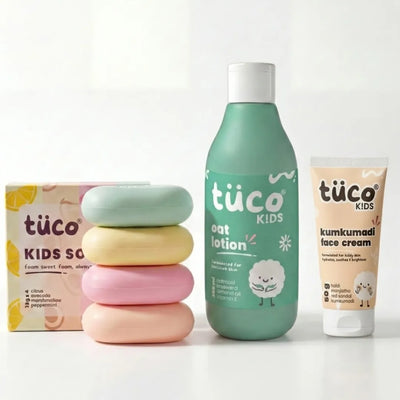
| Turmeric, Kakadu Plum, almond oil | 3-in-1 Bath Kit | Daily soap, lotion & face cream — a complete everyday moisture routine | 3–15 years |
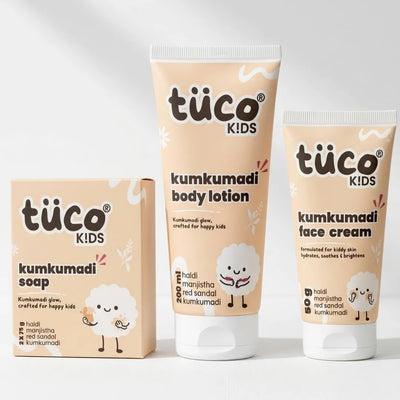
| Saffron, sandalwood, turmeric | 3-in-1 Kumkumadi Kit | Best when dryness has left behind dullness or uneven tone | 4–15 years |
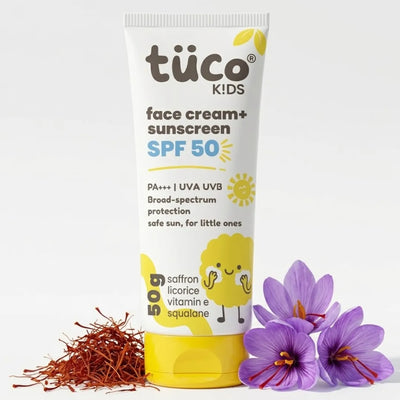
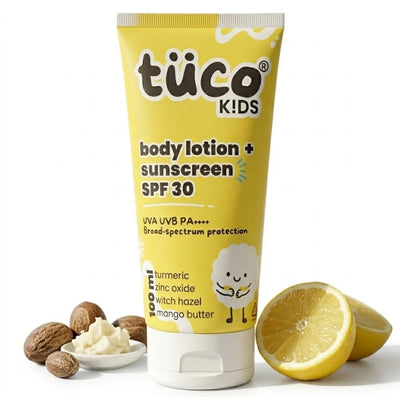
| SPF 30, turmeric, Kakadu Plum | 3-in-1 Dull Skin Kit (SPF 30) | Best if dryness is paired with regular sun exposure | 4–15 years |
What Dry, Flaky Skin Looks Like on a Child
- Fine, powdery flaking or visible white patches, most common on cheeks, shins, elbows, and knees.
- Skin that looks slightly grey or ashy before it starts peeling — often the earliest visible sign.
- Rough, sandpapery texture when you run a hand over the skin, even if it doesn't look obviously dry.
- Tightness that your child might describe as itchy or uncomfortable, especially right after a bath.
What Causes Dry, Flaky Skin in Kids?
- What causes dry skin in kids most commonly is simply a thinner skin barrier that loses moisture faster than an adult's — this alone explains most everyday dryness without any other factor involved.
- Hot baths and harsh, foaming soaps strip natural oils faster than a child's skin can replace them.
- Does dry skin cause itching in kids? Yes — as the skin barrier weakens, nerve endings become more exposed, which is why dry skin and itching so often show up together.
- Chlorine from swimming pools and prolonged sun exposure both accelerate moisture loss on top of whatever's already happening seasonally.
Weather-by-Weather: Why It Happens
- Why does a child's skin get dry in winter? Cold outdoor air holds less moisture, and indoor heating strips humidity further — the combination pulls water out of skin faster than it can be replenished, which is why how to treat a child's dry skin in winter at home is one of the most common seasonal questions parents search.
- Summer heat and AC exposure: constant switching between hot, sweaty outdoor air and cold, dry AC air is surprisingly similar in effect to winter dryness — many parents don't expect summer dryness, but it's common.
- Monsoon and humidity: counterintuitively, high humidity combined with frequent showering after getting wet in rain can also over-strip skin if a harsh cleanser is used each time.
Shop Deep Moisture Body Lotion →

Decision Tree: Home Remedies by Cause
- Is the dryness worse after baths, and does your child take long, hot baths? → Switch to lukewarm water under 10 minutes, and apply a rich moisturizer within 3 minutes of getting out — this alone resolves most bath-related dryness within a week.
- Is the pattern seasonal — worse specifically in winter or with AC exposure? → How to cure a child's dry skin in this case usually just means switching to a richer, more occlusive lotion during that season rather than changing the whole routine.
- Is the dryness limited to the face, with flaking around the nose or cheeks? → A lighter, oat-based face-specific product tends to work better than a heavier body lotion, which can feel too rich for facial skin.
- Is the dryness paired with visible redness, cracking, or bleeding? → This goes beyond routine home care — see "When to See a Doctor" below.
When to See a Doctor
Most dry, flaky skin responds to a consistent routine within 1–2 weeks. It's worth a doctor's visit instead of continuing home care if:
- Skin is cracked, bleeding, or open, which raises infection risk.
- Patches look red, thickened, or weepy rather than simply dry and flaky — this can indicate eczema needing a different treatment approach than routine dryness.
- Itching is intense enough to disrupt sleep or has led to visible scratching that's broken the skin.
- A good moisturizing routine hasn't improved anything after 2–3 weeks of consistent use.
FAQs
Why is my child's skin so dry and flaky?
The most common reason is a thinner skin barrier combined with an environmental trigger — hot baths, harsh soap, winter air, or chlorine exposure. Most cases resolve with a gentler cleanser and consistent moisturizing rather than needing anything more involved.
How to treat a child's dry skin at home?
Shorter, lukewarm baths with a sulphate-free cleanser, followed by a rich moisturizer applied within 3 minutes of getting out, resolves most cases within 1–2 weeks. Consistency matters more than any single "best" product.
What causes dry skin on a child's face specifically?
Facial skin is thinner than body skin, so it dries out faster and shows flaking sooner. Frequent face-touching, wiping, and outdoor exposure all compound this — a lighter, face-specific moisturizer usually works better than a body lotion here.
How to apply moisturizer on a child's skin correctly?
Apply within 3 minutes of bath time while skin is still slightly damp — this traps existing moisture rather than just adding a new layer on top of already-dry skin. A second application before bed helps for particularly dry patches.
Does dry skin cause itching in kids?
Yes — as the skin barrier weakens, nerve endings become more exposed and reactive, which is why dryness and itching so commonly show up together. Treating the dryness itself usually resolves the itching without needing a separate product.
Why does a child's skin get so dry in winter?
Cold air holds less moisture, and indoor heating lowers humidity further — together they pull water from skin faster than a normal routine can replace it. Switching to a richer lotion during winter months, rather than a lightweight one, closes that gap.
How to cure dry skin on a child's legs specifically?
Legs have fewer natural oil glands than the face, which is why they're often the driest spot on a child's body. A thicker body lotion, applied generously right after bathing, tends to work better on legs than a lighter facial-style product.
Related Reads
- Best Body Wash for Kids India: Sulphate-Free, Allergy-Safe Picks
- Choosing the Best Body Wash for Kids: A Parent's Handbook
- Best Soaps for Kids in India: 5 Gentle Picks That Are Safe for Your Child's Skin
- Best Kids Soap in India: Gentle, Safe, and Effective Options for Kids
- Best Body Lotion for Kids in India: 6 Moisturisers That Actually Keep Skin Soft All Day