





Why is my Child's Leg Skin Peeling? Causes & Remedies for Parents
Peeling skin on a child's legs looks alarming the first time you notice it — but in the vast majority of cases, it's your child's skin repairing itself after everyday dryness, friction, or a mild sunburn. The tricky part for parents is telling that apart from the rarer cases where peeling is a sign of something that needs a doctor's attention. This guide walks through both, so you know exactly what you're looking at.
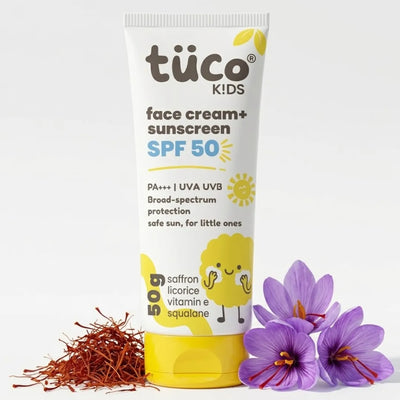
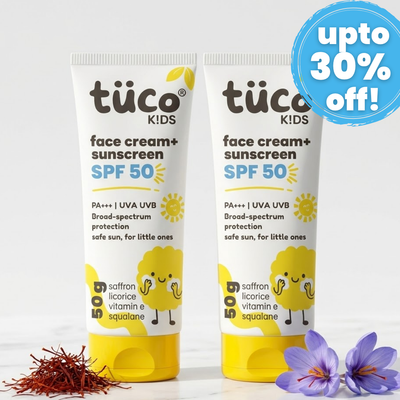
Tuco Kids tip: If sun exposure is part of the picture, daily best sunscreen for dry skin use is the single most effective way to prevent this cycle from repeating all summer.
Shop 3-in-1 Dull Skin Kit (SPF 50) →

Contents
- Quick Comparison: Solutions by Cause
- Decision Tree: What's Causing the Peeling?
- Cause 1: Simple Dry Skin (Most Common)
- Cause 2: Sunburn Peeling
- Cause 3: Friction, Sweat & Contact Irritation
- When to See a Doctor
- FAQs
- Related Reads
Quick Comparison: Solutions by Cause
| Ingredients | Tuco Product Solution | Key Product Features | Age-wise Recommendation |
|---|---|---|---|
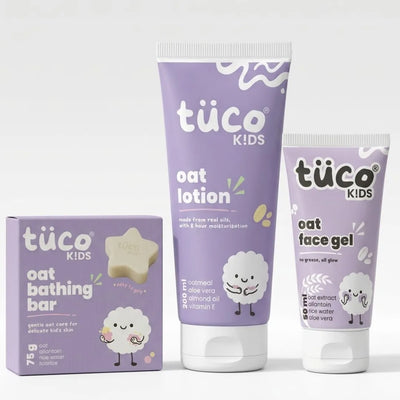
| Oat extract, aloe vera | 3-in-1 Oat Kit | Barrier-repair bathing bar, lotion & face gel — best for genuine dry-skin peeling | 2–15 years, especially toddlers |
| SPF 30, turmeric, Kakadu Plum | 3-in-1 Dull Skin Kit (SPF 30) | Sunscreen + soap + face wash — prevents and treats sunburn-related peeling | 4–15 years |
| Saffron, sandalwood, turmeric | 3-in-1 Kumkumadi Kit | Evens out patchy tone left behind after peeling has healed | 4–15 years |
| Turmeric, Kakadu Plum, almond oil | 3-in-1 Bath Kit | Daily soap, lotion & face cream — everyday prevention routine | 3–15 years |
| Mild surfactants, glycerin | Kids Daily Soap | Gentle everyday base cleanser — the safe default while investigating a cause | 2–15 years |
Decision Tree: What's Causing the Peeling?
- Was there a fever in the last 1–2 weeks, and is the peeling starting at the fingertips or toes? → This combination needs a doctor's evaluation promptly — see the "When to See a Doctor" section below.
- Was there recent sun exposure, and is the skin red or was it recently red before peeling? → Likely sunburn peeling — see Cause 2.
- Is the peeling limited to areas of friction (behind knees, ankles, inner thighs) with dry, flaky skin and no spreading redness? → Likely simple dry skin — see Cause 1.
- Is there a rash, blistering, spreading redness, or fluid oozing alongside the peeling? → This warrants a doctor's look rather than home treatment — see "When to See a Doctor."
- Was there recent contact with new soap, detergent, sunscreen, or fabric? → Possible contact irritation — see Cause 3.

Cause 1: Simple Dry Skin (Most Common)
What it looks like: Fine, powdery flaking or larger patches of skin lifting at the edges, usually on the shins, knees, and ankles. Skin often looks slightly grey or ashy before it peels, especially in winter or after long baths.
Why it happens: A child's skin barrier is thinner than an adult's and loses moisture faster, which is why dry skin shows up so easily on legs — a body area with fewer oil glands than the face. Hot baths, harsh soaps, and dry winter air all accelerate it.
First-line home remedies:
- Switch to a cleanser for dry skin that's sulphate-free rather than a harsh, foaming bar.
- Apply a moisturizer for dry skin within 3 minutes of bath time, while skin is still slightly damp — this locks in far more moisture than applying it later.
- Keep baths under 10 minutes and use lukewarm rather than hot water.
- A thicker body lotion for dry skin at bedtime helps overnight, when skin does most of its repair work.
Shop 3-in-1 Oat Kit →

Cause 2: Sunburn Peeling
What it looks like: Skin that was pink or red 2–7 days earlier now peels in larger sheets, sometimes starting at the site of the worst burn. It's rarely itchy but can be tender to the touch.
Why it happens: Peeling is the skin's way of shedding UV-damaged cells. Children's skin is more UV-sensitive than adult skin at every age, and has essentially no natural defence before age 3.
First-line home remedies:
- Keep the area cool and well hydrated with a fragrance-free face wash for dry skin and body cleanser combination for the next few washes.
- Resist the urge to pick at loosening skin — it protects the newly exposed layer underneath and picking increases infection risk.
- Apply a gentle best moisturizer for dry skin generously until peeling resolves, usually within a week.
- Once healed, uneven tone sometimes lingers for a few weeks — a best body lotion for dry skin with saffron and turmeric can help even that out.
Prevention matters more here than treatment: consistent daily sunscreen — reapplied every 2 hours outdoors and after swimming — is what actually breaks this cycle, rather than treating the peeling after each occurrence.
Cause 3: Friction, Sweat & Contact Irritation
What it looks like: Peeling concentrated at specific spots — behind the knees, where socks or shoes rub, or anywhere a new product touched the skin recently. Often mildly itchy or slightly red at the edges.
Why it happens: Repeated friction from play, sweat trapped by non-breathable fabric, or a reaction to a new soap, detergent, or sunscreen can all irritate the surface enough to trigger peeling as it heals. On feet specifically, this pattern is sometimes "sweaty sock syndrome" — dry, shiny peeling from repeated wet-dry cycles in shoes.
First-line home remedies:
- Identify and pause any newly introduced product (soap, sunscreen, detergent) for a few days to see if peeling improves.
- Switch to breathable cotton socks and rotate shoes to let them fully dry between wears if skin peeling on feet or foot skin peeling is the pattern you're seeing.
- A fragrance-free dry skin treatment soap reduces the chance of further irritation while the area heals.
- If skin peeling on hands or skin peeling on fingers follows frequent handwashing, a thick best hand creams for dry skin-style barrier balm after each wash helps more than one application a day.
When to See a Doctor
Most peeling resolves with the home care above. But a few specific patterns are worth a same-week (or same-day) doctor visit, because they point toward causes that need more than moisturizer:
- Peeling that starts at the fingertips or toes, 1–3 weeks after a fever — this pattern shows up after several childhood illnesses, including some that need prompt medical follow-up. It's worth mentioning the timeline and pattern specifically when you call your pediatrician, not just describing "peeling skin."
- Peeling accompanied by ongoing fever, rash spreading beyond the peeling area, red eyes, or a swollen tongue — these combined signs warrant urgent same-day medical attention rather than a wait-and-see approach.
- Peeling with blistering, oozing, or increasing redness/warmth — this can indicate a skin infection, particularly if your child has been scratching the area.
- Peeling that's widespread across the whole body rather than localized — localized leg peeling is almost always benign; widespread peeling is a different picture that a doctor should assess.
- Peeling that doesn't improve after 1–2 weeks of consistent home care, or that keeps recurring in the same spot without an obvious trigger.
If none of these apply and your child is otherwise well — eating, playing, and behaving normally — localized dry, sunburn, or friction-related peeling on the legs is very unlikely to need anything beyond the home care above.
FAQs
Why is my child's leg skin peeling for no obvious reason?
The most common cause is simply dry skin — a child's skin barrier loses moisture faster than an adult's, and legs have fewer natural oil glands than the face. Check whether it's worse after baths, in winter, or after time in air conditioning, since all three point toward dryness rather than anything else.
Is peeling skin on a child's legs contagious?
Not on its own. Peeling itself isn't contagious — but if the underlying cause is a fungal infection (like athlete's foot, more common on feet than legs) or certain viral illnesses, the underlying cause could be, even though the visible peeling isn't what spreads.
How long does sunburn peeling usually last on a child?
Typically 5–7 days from when the peeling starts, which is usually 2–7 days after the actual sunburn. Consistent moisturizing and avoiding further sun exposure during this window helps it resolve without complications.
Should I moisturize peeling skin or let it fall off naturally?
Moisturize — don't try to speed up or pick at the peeling. A good dry skin moisturizer supports the new skin underneath and reduces the itching that often leads kids to pick, which raises infection risk.
What's the difference between dry skin peeling and something more serious?
Simple dry-skin peeling is localized, matches areas of friction or dryness, and isn't accompanied by fever, spreading rash, or the child feeling unwell. Peeling paired with any of those additional signs — especially recent fever — is worth a doctor's assessment rather than home treatment alone.
Can the wrong soap cause my child's legs to peel?
Yes — sulphate-heavy soaps and body washes strip natural oils faster than a child's skin can replace them, which can trigger or worsen peeling. Switching to a milder, fragrance-light formula is often enough to break the cycle within a couple of weeks.
Does peeling skin on a child's feet always mean athlete's foot?
No — dry skin, sunburn, blisters, and "sweaty sock syndrome" (peeling from repeated sweat and shoe friction) are all more common causes of peeling skin on feet in kids than fungal infection. Athlete's foot usually comes with itching and redness between the toes specifically, rather than general sole or heel peeling.
Related Reads
- Best Body Wash for Kids India: Sulphate-Free, Allergy-Safe Picks
- Choosing the Best Body Wash for Kids: A Parent's Handbook
- Best Soaps for Kids in India: 5 Gentle Picks That Are Safe for Your Child's Skin
- Best Kids Soap in India: Gentle, Safe, and Effective Options for Kids
- Best Body Lotion for Kids in India: 6 Moisturisers That Actually Keep Skin Soft All Day