



What is TFM in Kids' Soap? Why is it Important
Flip over almost any bar soap in India and you'll find a small "TFM: XX%" printed near the ingredient list — a number most parents skip right past. But TFM is actually one of the most useful, objective things you can check before putting a soap on a child's skin, and it takes about five seconds once you know what to look for.
Tuco Kids tip: Look for Grade 1 TFM (76%+) paired with a sulphate-free formula — the Kids Daily Soap is built to both standards.
Shop Kids Daily Soap →

Contents
- Quick Comparison: Tuco Products by Cleansing Need
- What Is TFM, and What's the Full Form?
- How Is TFM Measured and Regulated in India?
- How Much TFM Should a Kids' Soap Have?
- What Does TFM Actually Do for Skin?
- Decision Tree: Is This Soap Right for My Child?
- FAQs
- Related Reads
Quick Comparison: Tuco Products by Cleansing Need
| Ingredients | Tuco Product Solution | Key Product Features | Age-wise Recommendation |
|---|---|---|---|
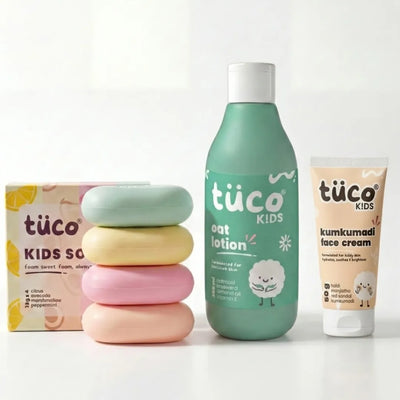
| Mild surfactants, glycerin | Kids Daily Soap | High-TFM, sulphate-free everyday bar — the simplest starting point | 2–15 years |
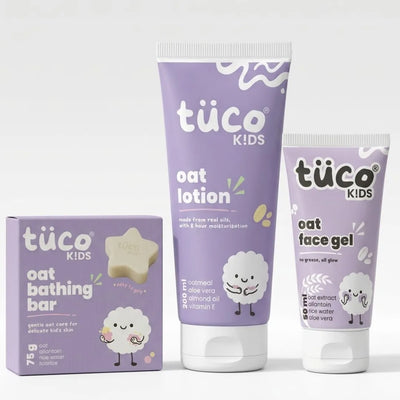
| Oat extract, aloe vera | 3-in-1 Oat Kit | High-TFM bathing bar plus barrier-repair lotion and face gel — best for dry or reactive skin | 2–15 years, best for toddlers |
| Turmeric, Kakadu Plum, almond oil | 3-in-1 Bath Kit | Soap, lotion & face cream — a complete everyday routine built on the same soap base | 3–15 years |
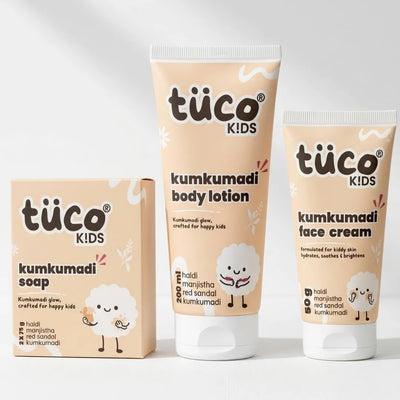
| Saffron, sandalwood, turmeric | 3-in-1 Kumkumadi Kit | Ayurvedic soap, lotion & face cream for dullness and uneven tone | 4–15 years |
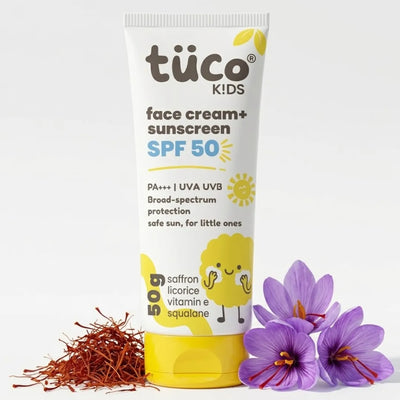
| SPF 30, turmeric, Kakadu Plum | 3-in-1 Dull Skin Kit (SPF 30) | Soap, sunscreen & face wash for kids who are outdoors daily | 4–15 years |
What Is TFM, and What's the Full Form?
- TFM stands for Total Fatty Matter — the percentage of a bar soap that's actual fatty, cleansing material, as opposed to water, filler, or synthetic detergent added to bulk up the bar cheaply.
- What is the meaning of TFM in bath soap, practically? It's a rough proxy for quality and gentleness — a higher percentage generally means more of the bar is genuine soap, and less is filler that can leave skin feeling stripped.
- The role of TFM in soap isn't about fragrance, color, or marketing claims — it's a hard number tied to what the bar is actually made of, which is why it's regulated rather than left to brand discretion.

How Is TFM Measured and Regulated in India?
- TFM is measured in a lab by extracting and weighing the actual fatty acid content of a soap sample, expressed as a percentage of the bar's total weight.
- Who certifies TFM in soap? The Bureau of Indian Standards (BIS) regulates it under IS 2888, and manufacturers are required to test and print the TFM percentage on the packaging.
- Where to check the TFM percentage on soaps: look at the back of the wrapper, usually near the ingredient list — it's typically printed as "TFM: XX%" and is a mandatory disclosure, not an optional marketing claim.
- BIS grades soap into three tiers: Grade 1 (76% TFM and above), Grade 2 (70% and above), and Grade 3 (60% and above). Anything below Grade 3 generally isn't classified as a proper toilet soap under Indian standards.
How Much TFM Should a Kids' Soap Have?
- What should the minimum TFM in soap be for children? Aim for Grade 1 — 76% or higher — since a child's skin barrier has less tolerance for the fillers and harsher synthetic detergents that a lower TFM often signals.
- What TFM value should a bathing soap have if it's specifically for daily use on sensitive or young skin? The same Grade 1 benchmark applies, ideally paired with a sulphate-free surfactant base rather than just a high TFM number alone.
- TFM isn't the only signal worth checking — a high-TFM soap can still carry synthetic fragrance, harsh dyes, or preservatives that irritate a child's skin, so it's one part of the picture rather than the whole answer.
- What oils decrease a soap's TFM? Cheap filler oils, added talc, and excess water content are the usual culprits — manufacturers sometimes use these to cut costs, which lowers both the TFM and the overall quality of the bar.
Shop Kids Daily Soap →

What Does TFM Actually Do for Skin?
- Higher TFM means more of the bar is genuine cleansing fat, which lathers and rinses more gently than a filler-heavy formula that relies on harsher detergents to compensate.
- For a child specifically, this translates to less post-bath tightness and dryness — a common complaint with low-TFM, high-filler soaps that strip more natural oil than they should.
- It does not mean a high-TFM soap will address dullness, tan, or dryness on its own — TFM is about cleansing gentleness, not a treatment property. For dullness or tan specifically, a dedicated leave-on treatment like the 3-in-1 Kumkumadi Kit does more of that work than the soap step alone.
Decision Tree: Is This Soap Right for My Child?
- Is the TFM percentage printed on the wrapper at all? If not, that's a transparency gap worth treating with caution — BIS requires it to be disclosed.
- Is it Grade 1 (76%+)? If yes, move to the next check. If it's Grade 2 or 3, consider it a lower-priority pick for daily use on a child, even if the price is more attractive.
- Does the ingredient list also show sulphates, parabens, or synthetic fragrance high up the list? If yes, a high TFM alone won't offset those — look for a genuinely sulphate-free alternative instead.
- Does your child have specific concerns (dryness, dullness, sun exposure)? A high-TFM soap handles the cleansing step well across the board, but pair it with a targeted lotion or treatment for anything beyond basic cleansing.
FAQs
What is TFM in soap?
TFM stands for Total Fatty Matter — the percentage of a soap bar that's genuine fatty, cleansing material rather than water, filler, or added detergent. It's a standard quality metric regulated by the Bureau of Indian Standards.
What is the full form of TFM in soap?
Total Fatty Matter. It's sometimes seen written out in full on premium soap packaging, though most brands just print the abbreviation and percentage.
Which soaps have the highest TFM in India?
Rather than chasing a specific highest number, check the wrapper directly — TFM is required to be printed on the packaging, so the most reliable answer is on the product itself, not in a general ranking. For kids specifically, Grade 1 (76%+) combined with a sulphate-free formula is the standard worth prioritizing.
How does a kids' soap's TFM compare to popular adult soaps like Dove or Lifebuoy?
Many mass-market adult soaps sit in the Grade 2 range (roughly 70–75% TFM), and some medicated or antibacterial bars run lower still, since added actives can reduce the fatty content. A soap built specifically for children's skin should be held to the higher Grade 1 standard, since a child's skin barrier tolerates filler and harsh detergents less well than adult skin does.
Who certifies the TFM percentage on a soap?
The Bureau of Indian Standards (BIS) sets the testing and labeling requirements under IS 2888. Manufacturers are required to test and disclose the TFM percentage on the packaging as part of compliance.
Does a higher TFM mean a soap is automatically better for kids?
Not entirely on its own — TFM measures cleansing gentleness, not overall formulation quality. A high-TFM soap that still contains synthetic fragrance or harsh preservatives isn't automatically the safest choice; check TFM and the ingredient list together.
What ingredients lower a soap's TFM?
Filler ingredients like talc, added synthetic detergents in place of true fatty-acid soap base, and excess water content all pull TFM down. Soaps that lean on these to hit a lower price point often also carry more of the harsher surfactants worth avoiding for kids.
Which soap is best for a school-going kid based on TFM?
A Grade 1 (76%+) TFM soap that's also sulphate-free holds up better across a full day of sweat, sunscreen, and outdoor play than a lower-TFM bar, which tends to leave skin feeling stripped by evening.
Related Reads
- Best Body Wash for Kids India: Sulphate-Free, Allergy-Safe Picks
- Choosing the Best Body Wash for Kids: A Parent's Handbook
- Best Soaps for Kids in India: 5 Gentle Picks That Are Safe for Your Child's Skin
- Best Kids Soap in India: Gentle, Safe, and Effective Options for Kids
- Best Body Lotion for Kids in India: 6 Moisturisers That Actually Keep Skin Soft All Day