



What Are the Best Tear-Free, Mild Soaps and Body Washes for Kids?
If bath time ends in tears, red patches, or a "why does his skin look dry again" moment — the culprit is usually the product, not the child. Most soaps and body washes marketed as "gentle" or "for kids" in India still lean on sulphates and synthetic fragrance to do the heavy lifting, and children's skin — up to 30% thinner than an adult's, with a barrier that doesn't fully mature until around age 12 — absorbs that damage fast.

This guide breaks down what actually makes a soap or body wash tear-free and mild, which ingredients to avoid, and how to pick between a bar and a wash for your child's age and skin type.
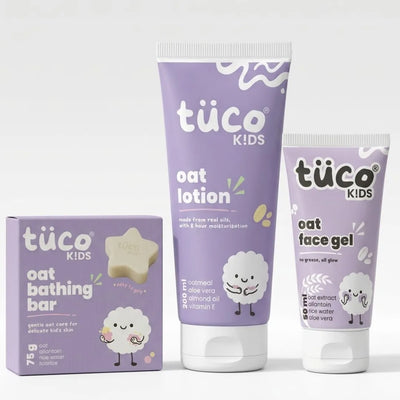
Tuco Kids tip: If your child's skin gets dry or itchy after bath time, the 3-in-1 Oat Kit pairs an oat-based bathing bar with a lotion and face gel built specifically for sensitive, easily-irritated skin.
Shop 3-in-1 Oat Kit →
Contents
- Quick Comparison: Best Kids Soaps & Body Washes
- Soap Bar vs. Body Wash: Which Is Actually Milder?
- Ingredients to Avoid in Kids' Soaps and Body Washes
- Best Picks for Sensitive Skin and Toddlers
- Age-by-Age: What to Use When
- The Tuco Kids Bath & Body Range
- FAQs
- Related Reads
Quick Comparison: Best Kids Soaps & Body Washes
| Product | Key Features | Price | Shop |
|---|---|---|---|
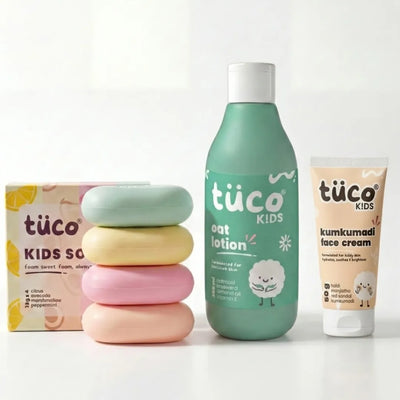
| Kids Daily Soap | Mild, sulphate-free everyday bar for daily use across all skin types | Rs. 350 | Shop Now → |
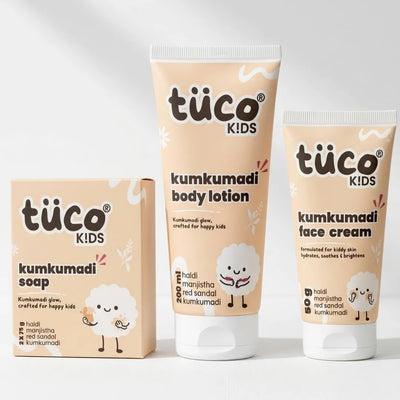
| 3-in-1 Kumkumadi Kit | Ayurvedic soap, lotion & face cream with saffron and sandalwood for dull, tanned skin | Rs. 699 | Shop Now → |
| 3-in-1 Oat Kit | Oat-based bathing bar, lotion & face gel — the mildest option for sensitive or eczema-prone skin | Rs. 699 | Shop Now → |
| 3-in-1 Bath Kit | Daily soap, Kumkumadi lotion & face cream in one routine — the closest thing to a complete body wash system | Rs. 699 | Shop Now → |
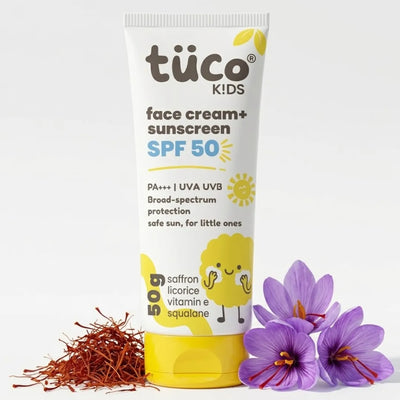
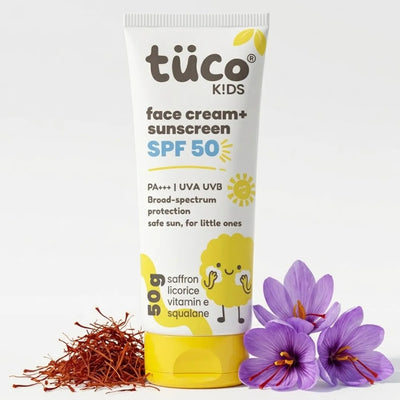
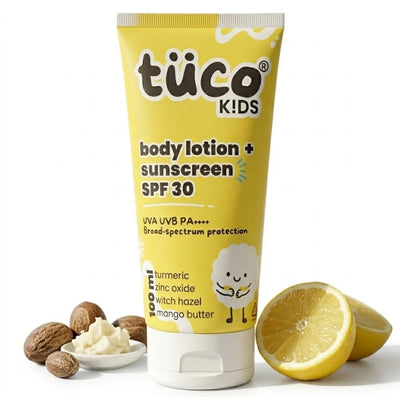
| 3-in-1 Dull Skin Kit (SPF 30) | Soap, sunscreen & face wash for kids with tan or patchy, uneven skin from outdoor play | Rs. 699 | Shop Now → |
Soap Bar vs. Body Wash: Which Is Actually Milder?
- Most families in India switch from a best soap for kids to a best body wash for kids somewhere between ages 5 and 8 — mostly because a wash is easier for a child to use independently.
- Neither format is automatically gentler. What matters is the surfactant and the pH — traditional bar soaps often sit at pH 9–10, well above a child's naturally acidic skin (around 5.5), while a poorly formulated body wash for kids can be just as stripping if it's built on SLS/SLES.
- A well-made mild soap for kids — pH-balanced, sulphate-free, fragrance-light — is just as good as any wash, and is often easier to travel with.
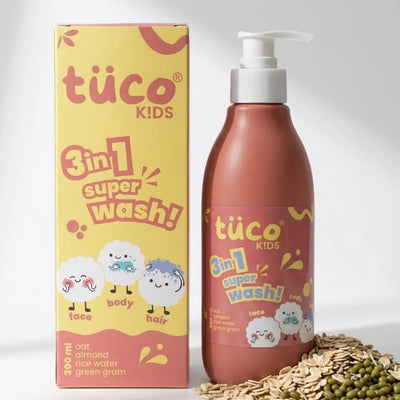
- For a family-friendly body wash that everyone from toddlers to teens can share, look for one formula that doesn't need a separate "sensitive skin" and "everyday" version.
Ingredients to Avoid in Kids' Soaps and Body Washes
Competitor research across dermatologist-reviewed guides consistently flags the same handful of culprits — here's what to actually check on the label before buying any body wash for kids:
- SLS / SLES (sodium lauryl/laureth sulphate): the most common foaming agent, and the single biggest trigger for dryness and eczema flare-ups in kids under 10.
- Parabens (methylparaben, propylparaben): preservatives linked to hormone disruption at high cumulative exposure — not banned in India, so check the label yourself.
- Synthetic "fragrance" or "parfum": a single listing can hide thousands of undisclosed chemicals and is a leading cause of contact dermatitis in children.
- Mineral oil (paraffinum liquidum): forms an occlusive layer that clogs pores and crowds out the plant-based moisturisers that actually nourish growing skin.

Best Picks for Sensitive Skin and Toddlers
- For a soap for sensitive skin for kids, oat extract is one of the best-researched calming ingredients — it soothes irritation while helping repair the skin's moisture barrier, which is exactly why it's the base of the best kids soap for sensitive skin in Tuco's range.
- A genuine best soap for toddlers with sensitive skin should skip essential oils and synthetic fragrance entirely — toddler skin barriers are still maturing and react faster to both.
- If your child's skin flares up seasonally, a kids soap for sensitive skin built around oat and aloe tends to outperform generic "gentle" labels, since it's targeting the irritation directly rather than just removing harsh ingredients.
- For eczema-prone skin specifically, a genuine diagnosis is worth a dermatologist's input — but for general sensitive skin and dryness, the best body washes for children with sensitive skin lean on oat, colloidal ingredients, and a pH close to 5.5.
Shop 3-in-1 Oat Kit →
Age-by-Age: What to Use When
| Age Group | What to Use | Avoid |
|---|---|---|
| Toddlers (2–4 years) | Mild bar soap, fragrance-free, pH-balanced | SLS, essential oils, strong scents |
| 5–8 years | Transitioning to independent body wash, sulphate-free | Adult body washes, alcohol-based rinses |
| 9–15 years (teens) | Body wash addressing sweat, outdoor grime, and mild tan | Harsh antibacterial soaps, heavy fragranced washes |
For active, best kid-friendly body washes effective gentle for children across this whole range tend to share one thing: a short ingredient list built around one or two named actives rather than a long chain of synthetic additives.
The Tuco Kids Bath & Body Range
- For everyday cleansing across all ages, the safest soap for kids frequent use is the Kids Daily Soap — a simple, sulphate-free bar built for daily wear and tear.
- For dull or uneven skin tone from outdoor play, the 3-in-1 Kumkumadi Kit pairs a saffron-and-sandalwood soap with a matching lotion and face cream.
- For a genuinely safest body wash for kids and teens to share across siblings of different ages, the 3-in-1 Bath Kit bundles daily soap, lotion, and face cream into one routine.
- For a dermatologist-approved soap for kids approach to sensitive or reactive skin specifically, the Oat Kit is the most targeted option in the range.
- For kids who spend hours outdoors and come home visibly tanned or patchy, the 3-in-1 Dull Skin Kit (SPF 30) combines cleansing with sun protection in one step.
FAQs
Is body wash or soap bar better for kids?
Neither format wins automatically — a well-formulated bar and a well-formulated wash can be equally mild. What actually matters is whether the product is sulphate-free and pH-balanced close to 5.5. Bars tend to travel better; washes are easier for young kids to use independently once they're old enough to pump their own product.
How often should kids bathe with soap or body wash?
Once daily is enough for most children, with a second wash only after heavy sweating from sports or swimming. Over-washing with any cleanser — even a mild one — can strip more oil than the skin can replace, especially in dry winter months.
What ingredients should I avoid in kids' soap and body wash?
Sulphates (SLS/SLES), parabens, synthetic fragrance listed simply as "parfum," and mineral oil are the four to actively check for. None of these are banned for children's products in India, so reading the ingredient list yourself remains the most reliable check.
Is a sulphate-free body wash actually necessary, or is it marketing?
It's a genuine difference, not just marketing. Sulphates create a satisfying lather but strip the skin's natural oils more aggressively than plant-derived cleansers — for children under 10, whose skin barrier is still developing, this matters more than it does for adults.
Can I use my own adult body wash on my child?
It's best avoided as a regular habit. Adult formulas are typically higher in fragrance concentration and often contain actives (exfoliants, stronger surfactants) formulated for thicker adult skin, which can irritate a child's thinner barrier even if it feels fine on your own skin.
Is this kind of soap safe for kids with eczema-prone or very sensitive skin?
Oat-based, fragrance-free formulas are commonly recommended for eczema-prone skin since they calm irritation without added actives that can trigger flare-ups. For an actual eczema diagnosis, it's worth checking with a dermatologist on what else might help alongside a gentle cleanser.
What's the difference between "natural" and dermatologist-tested claims on kids' soap?
"Natural" is an unverified marketing term in India with no regulatory standard behind it — always check the actual ingredient list rather than the label claim. "Dermatologist-tested" typically means the product has been patch-tested on human volunteers, which is a more concrete signal, though it's still worth confirming what specific skin types were tested.
Related Reads
- Best Body Wash for Kids India: Sulphate-Free, Allergy-Safe Picks
- Choosing the Best Body Wash for Kids: A Parent's Handbook
- Best Soaps for Kids in India: 5 Gentle Picks That Are Safe for Your Child's Skin
- Best Kids Soap in India: Gentle, Safe, and Effective Options for Kids
- Best Body Lotion for Kids in India: 6 Moisturisers That Actually Keep Skin Soft All Day