



Newborn Winter Skincare: First Winter Essentials Checklist
A newborn's first winter brings a genuinely different set of skin care needs than an older child's — newborn dry skin develops faster and needs gentler handling, simply because newborn skin is still developing its own protective barrier.
Tuco Kids tip: Always confirm a product's labeled age range genuinely covers a newborn before using it — not every "gentle" formula is suited to skin this young.
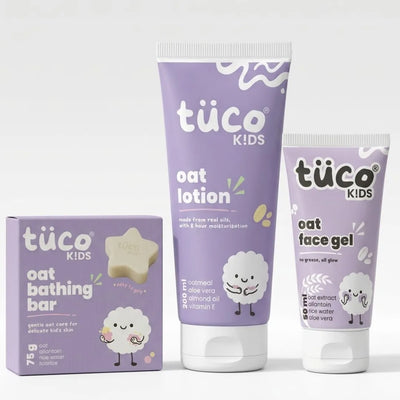
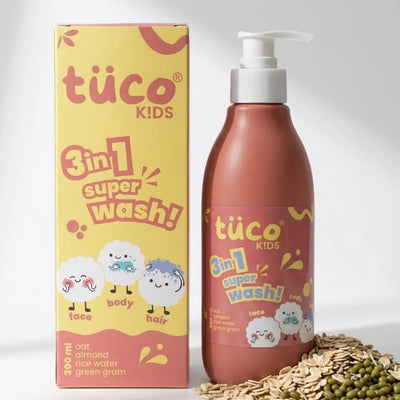
Shop 3-in-1 Oat Kit →

Contents
- Quick Comparison: Winter Essentials by Age
- Why Newborn Skin Needs Different Winter Care
- The First Winter Essentials Checklist
- Bathing a Newborn in Winter
- Dressing a Newborn Without Overheating
- Common Newborn Winter Skin Issues
- Building a Simple Daily Routine
- Building a Baby Skin Care Routine Beyond the First Winter
- Quick Recap
- When to See a Doctor
- FAQs
- Related Reads
Quick Comparison: Winter Essentials by Age
| Ingredients | Tuco Product Solution | Key Product Features | Age-wise Recommendation |
|---|---|---|---|
| Oat extract, aloe vera | 3-in-1 Oat Kit | Gentlest formula in the range — closest fit once a baby is old enough for a labeled product | 2–15 years, best for toddlers |
| Shea butter, almond oil, aloe vera | Deep Moisture Body Lotion | Rich formula for once your baby reaches the labeled age range | 3–15 years |
| Turmeric, Kakadu Plum, almond oil | 3-in-1 Bath Kit | Complete routine once bathing frequency increases past the newborn stage | 3–15 years |
Note: Tuco Kids products are labeled for specific age ranges — always check that a product's stated range genuinely covers your newborn before use, and consult your pediatrician for guidance on skincare products in the earliest weeks specifically.
Why Newborn Skin Needs Different Winter Care
A newborn's skin barrier is still developing in the weeks and months after birth, which means it loses moisture to dry winter air considerably faster than an older child's more mature skin does. Baby dry skin in the newborn stage often shows up as fine flaking, especially around the hands, feet, and face, and while this is usually harmless and self-resolving, it's still worth gentle, consistent care rather than assuming it will simply pass unaddressed. Newborn skin is also considerably more sensitive to fragrance and harsh ingredients than older kids' skin, which makes ingredient choice even more important during this stage.
The First Winter Essentials Checklist
A genuinely useful newborn skincare kit for a baby's first winter is simpler than most product lists suggest: a mild, fragrance-free cleanser for occasional bathing, a gentle moisturizer labeled specifically for the youngest age range available, soft, breathable cotton layers for dressing, a humidifier for the nursery if indoor air runs dry, and a soft cap or bonnet for outdoor trips, since newborns lose disproportionate heat through their heads. Resist the urge to over-buy scented "baby" products marketed heavily during winter — simplicity and gentleness matter far more than a long ingredient list at this stage.
Bathing a Newborn in Winter
Newborns don't need daily baths — two to three times a week is generally sufficient and actually better for skin, since more frequent bathing can strip the natural oils newborn skin depends on more heavily than older kids' skin does. Keep bath water comfortably warm rather than hot, keep bathing sessions brief, and dry gently with a soft towel rather than rubbing, which can irritate delicate newborn skin. Moisturizing within a few minutes of bathing, while skin is still slightly damp, matters just as much for a newborn as for an older child, if not more.
Dressing a Newborn Without Overheating
A common instinct is to over-bundle a newborn in winter, but overheating can actually contribute to skin irritation, including heat rashes, even in cold weather, particularly if a baby is layered heavily indoors near a heater. Layering — a soft cotton base layer with additional layers that can be removed as needed — works better than one thick layer, since it lets a caregiver adjust quickly to the actual room or outdoor temperature rather than guessing. Checking the back of a newborn's neck for warmth (rather than judging by hands or feet, which run naturally cooler) is a more reliable way to gauge whether a baby is appropriately dressed.
Common Newborn Winter Skin Issues
Mild flaking and dryness, particularly on hands, feet, and the face, are extremely common in the first weeks of a newborn's life regardless of season, and winter conditions can extend or mildly worsen this. Cradle cap — flaky, sometimes yellowish patches on the scalp — is also common during colder months and is generally harmless, typically resolving with gentle care over weeks to months. Chapped cheeks from cold outdoor air exposure are common too, especially for newborns taken outside for pediatrician visits or family outings during peak winter.
Building a Simple Daily Routine
A workable newborn winter routine doesn't need to be elaborate: bathe two to three times weekly with a mild, fragrance-free cleanser, moisturize daily (more often on visibly dry areas like hands and cheeks) with a gentle, age-appropriate formula, dress in adjustable cotton layers, and keep nursery air humidified if it runs particularly dry. Consistency matters more than complexity — a simple routine followed every day outperforms an elaborate one used inconsistently.
Building a Baby Skin Care Routine Beyond the First Winter
The habits established during a baby's first winter tend to carry forward naturally into a broader baby skin care routine for the months and years ahead — a mild cleanser, consistent gentle moisturizing, and attentive fabric choices remain relevant well past the newborn stage, even as products themselves may change as your baby grows into toddlerhood. As a baby moves past the earliest weeks, it's worth periodically reassessing whether products are still the right fit for their current age and skin needs, rather than sticking with the exact newborn-stage routine indefinitely. This is also a good time to introduce products specifically labeled for the next age bracket, once your baby genuinely reaches it.
Quick Recap
A newborn's first winter calls for a simple, gentle routine: infrequent, brief, lukewarm baths; a mild fragrance-free cleanser; a gentle age-appropriate moisturizer; breathable cotton layering; and humidified nursery air if needed. Mild flaking, cradle cap, and chapped cheeks are all common and usually resolve with basic gentle care — the goal is consistency and simplicity, not an elaborate product routine.
New parents navigating a first winter with a newborn often feel pressure to buy an extensive range of products, but the essentials really are minimal: something gentle to cleanse, something gentle to moisturize, warm breathable layers, and attentiveness to how your specific baby's skin responds. Building confidence with this simple foundation makes it much easier to expand thoughtfully as your baby grows, rather than starting with an overwhelming routine that's hard to maintain consistently.
When to See a Doctor
Mild newborn dryness and flaking are generally normal and typically improve within the first few weeks without specific treatment. See a doctor if skin shows signs of infection like increasing redness, warmth, swelling, or discharge, if a rash spreads rapidly or looks unusual, if your baby seems uncomfortable, feverish, or unwell alongside any skin changes, or if you're simply unsure — a pediatrician is always the right first call for anything newborn-specific, and it's always appropriate to check rather than guess at this age.
FAQs
Why does my newborn have dry skin in winter?
A newborn's skin barrier is still developing and loses moisture to dry winter air faster than an older child's, which commonly shows up as mild flaking, especially on hands, feet, and face.
How often should I bathe my newborn in winter?
Two to three times a week is generally sufficient — more frequent bathing can strip the natural oils newborn skin relies on more heavily than older kids' skin.
What should be in a newborn winter skincare routine?
A mild, fragrance-free cleanser, a gentle age-appropriate moisturizer, soft cotton layers for dressing, and a humidifier for the nursery if the air runs dry.
Is peeling or flaking skin normal for a newborn in winter?
Yes, it's very common in the early weeks and generally resolves on its own with gentle care, though winter conditions can mildly extend it.
How do I know if my newborn is dressed warmly enough in winter?
Check the back of the neck for warmth rather than hands or feet, which naturally run cooler — this gives a more reliable read on whether your baby is comfortable.
Can newborns get overheated even in cold weather?
Yes — over-bundling indoors, especially near a heater, can lead to overheating and even heat rash, so layering that can be adjusted matters more than one thick layer.
What's a common newborn skin issue in winter besides dry skin?
Cradle cap, a flaky scalp condition, and chapped cheeks from outdoor cold exposure are both common and generally manageable with gentle, consistent care.
When should I take my newborn to the doctor for a skin issue?
If there are signs of infection, a rapidly spreading or unusual-looking rash, or if your baby seems unwell alongside skin changes — and any time you're simply unsure.
Do I need different products for my newborn's face versus body?
Not necessarily at the newborn stage — a single, gentle, fragrance-free product suitable for the whole body is generally fine, though the face may benefit from slightly more frequent light moisturizing since it's more exposed to outdoor air.
How do I know when my baby has outgrown newborn-specific products?
Check the labeled age range on each product regularly, and transition to the next age bracket once your baby genuinely reaches it, rather than continuing newborn formulas indefinitely out of habit.
Is it okay to use adult-formulated products on a newborn in a pinch?
It's best avoided — adult products are typically formulated with a different balance of ingredients and fragrance levels than newborn skin can comfortably tolerate, even ones marketed as "gentle."
Does my newborn need a different routine for indoor versus outdoor time?
Not a fundamentally different routine, but reapplying a small amount of moisturizer to exposed skin like cheeks and hands before heading outdoors adds a useful extra layer of protection against wind and cold.
How can I tell if a new product is irritating my newborn's skin?
Watch for increased redness, small bumps, or fussiness specifically after application — introducing one new product at a time makes it much easier to identify the cause if a reaction does occur.