



Newborn & Baby Dry Skin: Complete Care Guide
Nearly every newborn goes through a dry, peeling phase in the first couple of weeks — it's often just leftover vernix shedding and a brand-new skin barrier adjusting to open air for the first time. But newborn dry skin that continues well past those first few weeks, or shows up later in infancy, usually points to something more fixable: bath habits, product choice, and moisture routine.
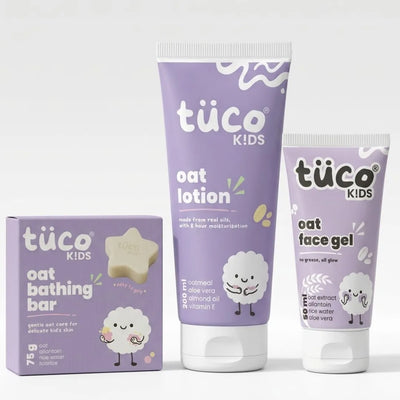
Tuco Kids tip: Once your baby is old enough for a labeled skincare product, start with the gentlest option available — the Oat Kit is built around barrier-repair ingredients rather than a long list of actives.
Shop Oat Kit →

Contents
- Quick Comparison: Best Tuco Products for Baby Dry Skin
- Newborn Peeling vs. Later Baby Skin Dryness
- What Causes Baby Skin Dryness
- Baby Dry Skin Treatment: A Step-by-Step Routine
- Decision Tree: Building the Right Routine
- Ingredients: What Helps and What to Avoid
- Preventing Dryness Before It Starts
- When to See a Doctor
- FAQs
- Related Reads
Quick Comparison: Best Tuco Products for Baby Dry Skin
| Ingredients | Tuco Product Solution | Key Product Features | Age-wise Recommendation |
|---|---|---|---|
| Oat extract, aloe vera | 3-in-1 Oat Kit | Barrier-repair bathing bar, lotion & face gel — the gentlest starting point for baby skin | 2–15 years, best for toddlers |
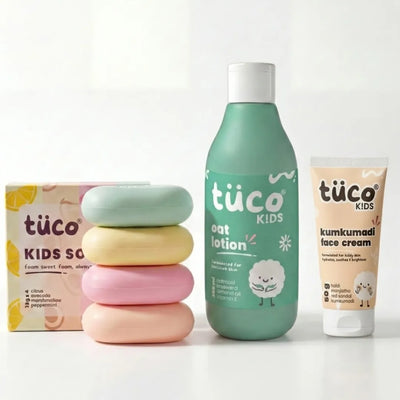
| Turmeric, Kakadu Plum, almond oil | 3-in-1 Bath Kit | Daily soap, lotion & face cream — a complete everyday moisture routine | 3–15 years |
| Shea butter, almond oil, aloe vera | Deep Moisture Body Lotion | The richest formula in the range — for stubborn, recurring dryness | 3–15 years |
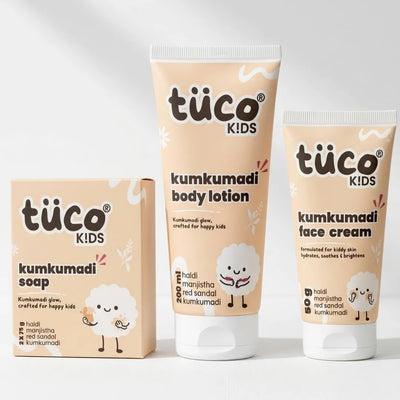
| Saffron, sandalwood, turmeric | 3-in-1 Kumkumadi Kit | Best once dryness has cleared and skin needs an even-tone finishing touch | 4–15 years |
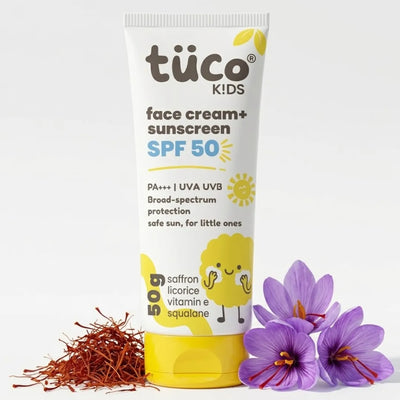
| SPF 30, turmeric, Kakadu Plum | 3-in-1 Dull Skin Kit (SPF 30) | Best once dryness is paired with regular outdoor sun exposure | 4–15 years |
Newborn Peeling vs. Later Baby Skin Dryness
- In the first 1–3 weeks: mild peeling, especially on the hands, feet, and ankles, is extremely common and typically resolves on its own as the skin barrier finishes adjusting to life outside the womb.
- After the newborn phase: baby dry skin that shows up later is usually driven by external factors — bath habits, weather, and product choice — rather than the natural newborn adjustment period.
- Ongoing or worsening baby skin dryness past the first month is the point where a proper routine, rather than "waiting it out," makes the real difference.
- Both phases can look similar — fine flaking, slightly rough texture — but the newborn phase is self-limiting, while later dryness responds directly to changes in your care routine.
What Causes Baby Skin Dryness
- A baby's skin barrier is still developing through the first year or two, holding onto moisture far less effectively than older kids' skin — this alone explains most everyday dryness without any other factor involved.
- Frequent bathing with hot water or a foaming, fragranced soap strips natural oils faster than a baby's skin can replace them.
- Seasonal changes — winter cold, indoor heating, or air conditioning — pull moisture from skin faster than usual, often showing up as dryness within just a few days of a weather shift.
- New fabrics, detergents, or a recently introduced skincare product can trigger reactive dryness that looks identical to weather-related dryness but resolves once the irritant is removed.
- A gap most generic parenting content misses: over-bathing (more than necessary "just to be safe") is just as common a cause as under-moisturizing — daily baths aren't required for most babies and can actually work against skin comfort.
- Hard water, common in many households, can also leave behind mineral residue that dries out skin over repeated washes — something worth considering if dryness persists despite an otherwise gentle routine.
Shop Oat Kit →

Baby Dry Skin Treatment: A Step-by-Step Routine
- Step 1 — Shorten bath time. Keep baths under 10 minutes with lukewarm, not hot, water — this alone preserves significantly more of the skin's natural oils.
- Step 2 — Use a mild, fragrance-free cleanser. Avoid foaming, sulphate-heavy soaps, which strip oils faster than a baby's skin can replace them.
- Step 3 — Pat dry, don't rub. Gently patting leaves a thin layer of moisture behind for the moisturizer to lock in, rather than removing it with friction.
- Step 4 — Moisturize within 3 minutes of bathing. This "soak and seal" window traps far more moisture than applying lotion after skin has already started to dry.
- Step 5 — Reduce bath frequency if needed. Most babies don't need a daily full bath — 3–4 times a week, with spot-cleaning in between, is often gentler on developing skin.
- Step 6 — Reassess after 1–2 weeks. Most cases of everyday baby dry skin treatment show visible improvement within this window if the routine is followed consistently.
Shop 3-in-1 Bath Kit →

Decision Tree: Building the Right Routine
- Is dryness worse right after bath time, especially with long or hot baths? → Shorten baths and lower the water temperature first — this resolves a large share of everyday cases within a week.
- Is the pattern seasonal — worse in winter or after AC/heater exposure? → Switch to a richer, more occlusive lotion during that season; the Deep Moisture Body Lotion is built for exactly this.
- Is dryness limited to the face, especially cheeks or chin? → Use a lighter, face-specific product rather than a heavy body lotion, which can feel too rich for facial skin.
- Did dryness start right after switching soap, detergent, or a new product? → Remove the suspected irritant first before adding new treatments.
- Is skin red, thickened, weepy, or cracked rather than simply dry and flaky? → This goes beyond routine home care — see "When to See a Doctor" below.
Shop Deep Moisture Body Lotion →
Ingredients: What Helps and What to Avoid
- Look for: oat extract and aloe vera for barrier repair, shea butter and almond oil for deeper moisture, and mild, low-foaming cleansers that don't strip natural oils.
- Avoid: sulfates, synthetic fragrance, dyes, and alcohol-based products — common irritants that can turn simple dryness into a more stubborn, reactive pattern.
- Always patch-test a new product on a small area first, especially for very young babies — even gentle, naturally derived ingredients can occasionally cause a reaction.
- For babies under one year, confirm the product's labeled age range before use, and check with your pediatrician if you're at all unsure — a quick question costs nothing and adds real peace of mind.
- Consistency in ingredients matters more than switching frequently — repeatedly changing formulas to "find the fix" often reintroduces new potential irritants before the current routine has had a fair chance to work.
Preventing Dryness Before It Starts
- Keep baths short and lukewarm. Under 10 minutes with warm, not hot, water preserves far more natural oil than a longer, hotter soak.
- Choose fragrance-free laundry detergent for baby clothes. Residue from strongly scented detergents is a commonly overlooked trigger for dryness, especially where fabric sits closest to skin.
- Run a humidifier during dry seasons. Indoor heating and air conditioning both lower humidity, and a humidifier in the nursery can meaningfully reduce how often dryness reappears.
- Dress in breathable, soft fabrics. Cotton and other soft, breathable materials reduce friction that can aggravate already-dry patches.
- Stick with one gentle routine rather than rotating products. Skin needs a few consistent days to respond to any given formula — switching frequently makes it harder to tell what's actually working.
Shop Oat Kit →
When to See a Doctor
Most baby dry skin improves within 1–2 weeks of a consistent, gentle routine. It's worth a doctor's visit instead of continuing home care alone if:
- Skin is cracked, bleeding, or open, raising the risk of infection.
- Patches look red, thickened, or weepy rather than simply dry and flaky — a pattern that can point to eczema needing a different treatment approach.
- Your baby seems unusually fussy, uncomfortable, or is scratching enough to break the skin.
- A consistent, gentle routine hasn't improved anything after 2–3 weeks of use.
- Dryness appears alongside a fever, rapidly spreading rash, or any other symptom that feels out of the ordinary.
FAQs
Is newborn dry skin normal?
Yes — mild peeling in the first 1–3 weeks is extremely common as leftover vernix sheds and the skin barrier adjusts to open air. It typically resolves on its own without needing treatment.
What causes baby dry skin after the newborn phase?
External factors like hot baths, harsh soap, seasonal weather changes, and new fabrics or detergents are the most common causes of dryness that shows up after the initial newborn adjustment period.
What's the best baby dry skin treatment?
Shorter, lukewarm baths, a mild fragrance-free cleanser, and moisturizing within 3 minutes of bathing are the most effective first steps. Most cases improve noticeably within 1–2 weeks of consistent care.
How can I reduce baby skin dryness long-term?
Consistency matters more than any single product — shorter baths, prompt moisturizing, and a humidifier during dry seasons all reduce how often dryness returns.
Is it safe to moisturize a newborn's skin?
Many gentle, baby-specific formulas are designed for use once labeled appropriate, but always check the product's age range and consider a quick check with your pediatrician for babies under a few months old.
How often should I bathe my baby if their skin is dry?
Most babies don't need a daily full bath — 3 to 4 times a week, with spot-cleaning in between, is often gentler on developing, dry-prone skin.
What's the difference between newborn peeling and eczema?
Newborn peeling is typically dry, flaky, and resolves within a few weeks without treatment. Eczema tends to look red, thickened, or weepy, is often itchier, and doesn't resolve on its own without a consistent care routine.
When should I take my baby to the doctor for dry skin?
See a doctor if skin is cracked, bleeding, red, or weepy, or if a consistent gentle routine hasn't helped after 2–3 weeks. These signs suggest something beyond routine dryness.
It's worth remembering that a baby's skin continues developing its natural barrier function well into the toddler years, so occasional dry spells even with a good routine in place aren't a sign that anything has gone wrong. The goal is reducing frequency and severity over time, not achieving zero dryness ever again — most families find that by the second or third season of consistent care, flare-ups become noticeably shorter and milder. Most parents find that once they settle on one gentle, consistent routine, dry skin stops being a recurring worry and becomes an occasional, easily-managed nuisance instead. The goal isn't finding one perfect product on the first try — it's giving a genuinely gentle formula enough consistent use to actually show what it can do.
Keeping a small, dedicated set of gentle products just for your baby, separate from anything used elsewhere in the household, also helps avoid the occasional mix-up that can lead to an unsuitable formula ending up on delicate skin. Every baby's skin settles into its own rhythm eventually, and most of what feels stressful in the early months smooths out with time and a bit of routine. Trust that small, consistent changes — not dramatic overhauls — are what move the needle most reliably.