



How to Remove Dullness from Kid's Face Naturally
Sun exposure during school drop-offs, weekend cricket, or a beach trip does more to a child's face than just a tan — it's usually why parents start noticing their child's skin looking flat, dry, or lifeless rather than bright. The good news: unlike adult skin, a child's skin renews itself faster, so natural, consistent care tends to show results within weeks.
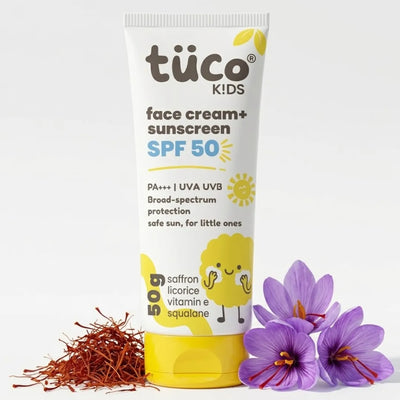
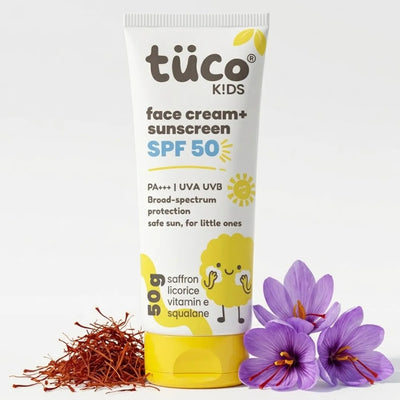
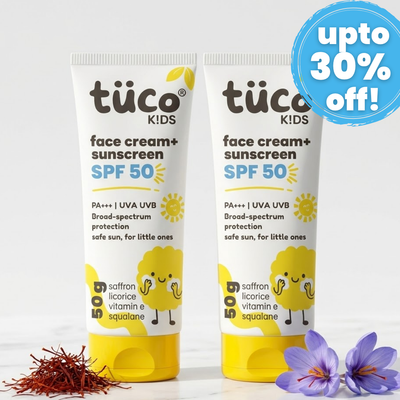
Tuco Kids tip: Daily SPF is the single biggest lever for preventing new dullness while treating the old — the 3-in-1 Dull Skin Kit (SPF 50) combines both in one routine.
Shop 3-in-1 Dull Skin Kit →

Contents
- Quick Comparison: Best Tuco Products for Dullness
- What Dullness Actually Looks Like on a Child's Face
- What Causes Dullness in Kids?
- Bad Ingredients to Avoid
- Good Ingredients That Actually Work
- Decision Tree: Natural Remedies by Cause
- When Dullness Needs a Doctor's Look
- FAQs
- Related Reads
Quick Comparison: Best Tuco Products for Dullness
| Ingredients | Tuco Product Solution | Key Product Features | Age-wise Recommendation |
|---|---|---|---|
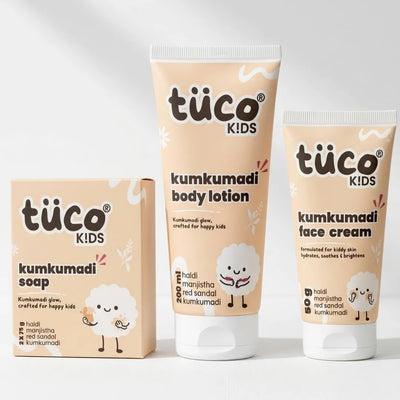
| Saffron, sandalwood, turmeric | 3-in-1 Kumkumadi Kit | Leave-on treatment cream built specifically to reverse dullness overnight | 4–15 years |
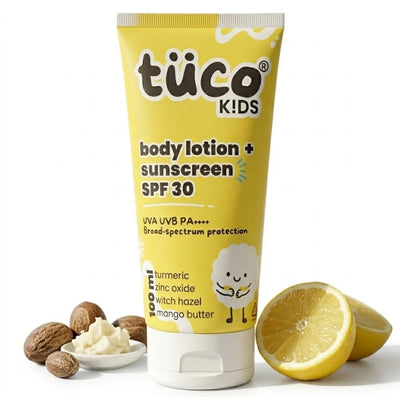
| SPF 30, turmeric, Kakadu Plum | 3-in-1 Dull Skin Kit (SPF 30) | Treats existing dullness while preventing new sun-related damage | 4–15 years |
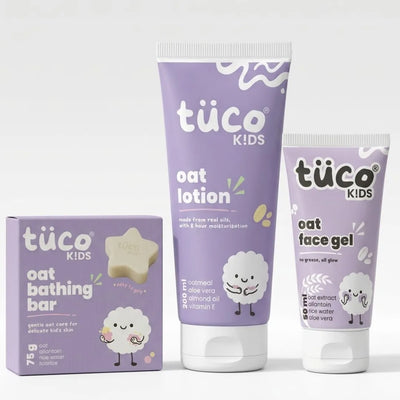
| Oat extract, aloe vera | 3-in-1 Oat Kit | Best when dullness is paired with dryness or sensitivity, not just tan | 2–15 years, best for toddlers |
| Turmeric, Kakadu Plum, almond oil | 3-in-1 Bath Kit | Daily maintenance routine once dullness has already improved | 3–15 years |
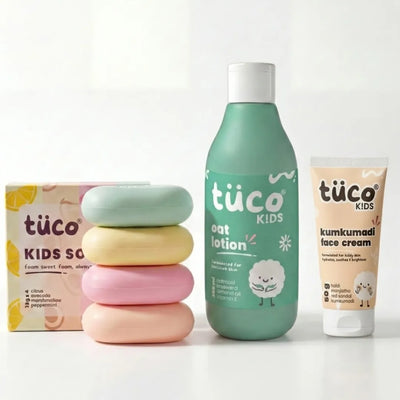
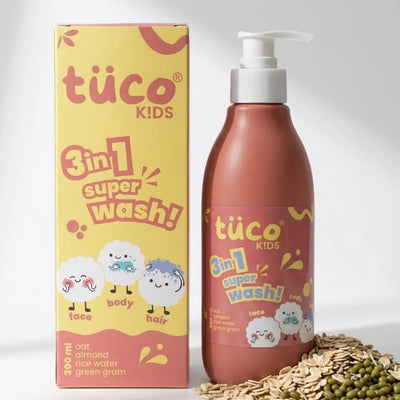
| Mild surfactants, glycerin | Kids Daily Soap | Gentle everyday cleanser — the safe cleansing base for any dullness routine | 2–15 years |
What Dullness Actually Looks Like on a Child's Face
- Skin that looks flat, grey, or lacking its usual glow — even when your child seems otherwise healthy and energetic.
- Rough or slightly bumpy texture, especially across the cheeks and forehead, from a buildup of dead skin cells that haven't shed properly.
- Patchy or uneven tone, often more noticeable around the mouth, nose, or areas that get the most sun exposure during outdoor play.
- Skin that looks tired or lifeless in photos, even in good lighting — a common cue parents notice before they can articulate exactly what's changed.
What Causes Dullness in Kids?
- Why does a child's face look dull most often comes down to a buildup of sweat, sunscreen residue, and outdoor grime that isn't fully cleansed off by evening — this is the single most common cause in active kids.
- What causes dull skin on a kid's face beyond grime buildup: unprotected sun exposure is a major factor, since UV damage visibly flattens skin's natural glow over repeated exposure.
- Dehydration plays a bigger role than most parents expect — kids often don't drink enough water during active play, and dry, under-hydrated skin reads as dull rather than just dry.
- Diet can factor in too — skin that looks consistently dull despite a good skincare routine is sometimes linked to low intake of fruits, vegetables, and overall hydration rather than a product problem.
- Seasonal changes matter — why does a kid's skin get dull in winter is a common seasonal pattern, since indoor heating and cold, dry air both reduce skin's natural moisture.

Bad Ingredients to Avoid
- Kojic acid and synthetic bleaching agents: found in products marketed as "brightening" that actually work by suppressing melanin rather than treating buildup — not appropriate for children's skin, and can increase sun sensitivity.
- Harsh sulphates (SLS/SLES): compensate for weak formulas with aggressive foaming, stripping the skin barrier and often making dullness worse rather than better.
- Mineral oil: sits on top of skin rather than absorbing, trapping the very buildup you're trying to clear.
- Synthetic fragrance: a common trigger for irritation on a child's already-compromised skin barrier, which can compound the dull, uneven look.
Good Ingredients That Actually Work
- Turmeric: a traditional anti-inflammatory that helps calm irritation while supporting an even, healthy-looking tone over consistent use.
- Saffron and sandalwood: Ayurvedic staples for restoring radiance — the core of a genuine how to brighten a child's face naturally routine.
- Kakadu Plum: one of the highest natural vitamin C sources available, supporting skin's own renewal process rather than masking dullness superficially.
- Aloe vera: lightweight hydration that helps with the dehydration-driven dullness common in active kids without leaving residue.
Shop 3-in-1 Kumkumadi Kit →

Decision Tree: Natural Remedies by Cause
- Is the dullness mainly on sun-exposed areas (cheeks, nose, forehead) after outdoor play? → Sun-related dullness. Prioritize daily SPF plus a saffron-turmeric treatment cream at night; expect improvement in 3–4 weeks.
- Does the dullness come with visible flakiness or rough texture, worse in winter? → Dehydration-driven dullness. An oat- and aloe-based moisturizer, applied while skin is still damp after washing, tends to resolve this faster than a "brightening" product.
- Is the dullness paired with a buildup feeling — skin that feels grimy by evening despite a morning wash? → Cleansing-gap dullness. A gentle evening cleanse, not just a morning one, is often the missing step.
- Has dullness appeared suddenly alongside fatigue, paleness, or reduced appetite? → This combination is worth mentioning to a pediatrician rather than treating as a skincare issue alone — see the section below.
When Dullness Needs a Doctor's Look
Most dullness in kids is cosmetic and responds to consistent home care within a month. It's worth a pediatrician visit instead of continuing home treatment if:
- Dullness or paleness appears alongside fatigue, low appetite, or reduced activity levels — this combination can sometimes point to something beyond skincare, like a nutritional deficiency, worth a simple check.
- Skin tone changes are patchy with clearly defined borders rather than an overall flat look — this pattern is different from ordinary dullness and worth a dermatologist's assessment.
- There's accompanying rash, itching, or skin that looks inflamed rather than simply flat.
- A consistent routine hasn't shown any improvement after 4–6 weeks.
FAQs
How can I remove dullness from my child's face naturally?
Consistency matters more than any single product: a gentle cleanse morning and evening, a saffron-turmeric treatment cream at night, and daily SPF during the day address the three most common causes together — buildup, lack of renewal, and ongoing sun damage.
Why does my child's skin look dull even with a skincare routine?
The most common reason is an incomplete routine — cleansing without a treatment step, or treatment without daily SPF, lets one cause keep working against the other two. Dehydration and diet are also worth checking if the routine itself looks solid.
What causes dull skin in kids?
Sweat, sunscreen residue, and pollution buildup from daily outdoor play are the most common causes, followed by unprotected sun exposure and dehydration. Diet and seasonal dryness play a smaller but real role too.
How long does it take to see results from a natural dullness treatment?
Most parents notice visible improvement around week 3–4 with consistent nightly treatment and daily SPF, following skin's natural 28-day renewal cycle. Skipping days, especially with SPF, slows this down more than skipping the treatment cream occasionally.
Can diet affect how dull a child's skin looks?
Yes, to some degree — low water intake and a diet light on fruits and vegetables can make skin look flatter and less bright, independent of what skincare products are being used. It's worth checking hydration and diet if a good routine isn't showing expected results.
Why does a child's face look dull in winter specifically?
Cold, dry air and indoor heating both pull moisture from skin faster than in warmer months, and dehydrated skin reads as dull rather than simply dry. A richer moisturizer and consistent hydration during winter usually resolves this pattern.
Is it safe to use a "brightening" treatment on a child's face?
It depends entirely on what's doing the brightening. Ingredients like saffron, turmeric, and vitamin C-rich botanicals work by supporting skin's own renewal and are appropriate for kids; ingredients like kojic acid or synthetic bleaching agents work by suppressing pigment and should be avoided.
Related Reads
- Best Body Wash for Kids India: Sulphate-Free, Allergy-Safe Picks
- Choosing the Best Body Wash for Kids: A Parent's Handbook
- Best Soaps for Kids in India: 5 Gentle Picks That Are Safe for Your Child's Skin
- Best Kids Soap in India: Gentle, Safe, and Effective Options for Kids
- Best Body Lotion for Kids in India: 6 Moisturisers That Actually Keep Skin Soft All Day