



Home Remedies for Dry Skin in Toddlers & Kids
Before you reach for anything new, it helps to know that most dry skin in children home remedies work because they do one of two things really well: they add moisture back, or they stop it from escaping in the first place. Bath temperature, timing, and a handful of simple ingredients matter more than any single miracle product — and once you get those basics right, most everyday dryness clears up within a week.
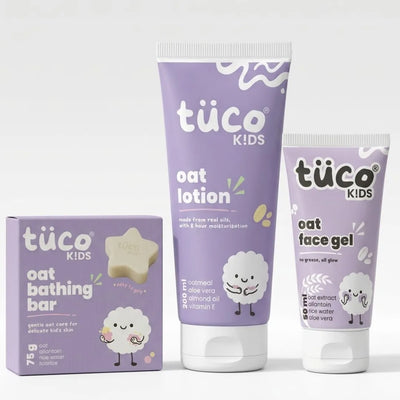
Tuco Kids tip: If you only make one change this week, make it this one — apply a barrier-repair moisturizer within 3 minutes of bath time, every single time, without skipping days. The Oat Kit is built specifically to lock in that moisture on reactive, easily-dried skin.
Shop Oat Kit →

Contents
- Quick Comparison: Best Tuco Products for Dry Skin
- What Dry Skin Looks Like in Toddlers vs. Babies
- Home Remedies That Actually Work
- Decision Tree: Which Remedy Fits the Cause
- DIY Ingredients: What Helps and What to Avoid
- Age-Wise Remedy Tips: Babies vs. Toddlers
- When Home Remedies Aren't Enough
- FAQs
- Related Reads
Quick Comparison: Best Tuco Products for Dry Skin
| Ingredients | Tuco Product Solution | Key Product Features | Age-wise Recommendation |
|---|---|---|---|
| Oat extract, aloe vera | 3-in-1 Oat Kit | Barrier-repair bathing bar, lotion & face gel — a packaged version of the classic oatmeal-bath remedy | 2–15 years, best for toddlers |
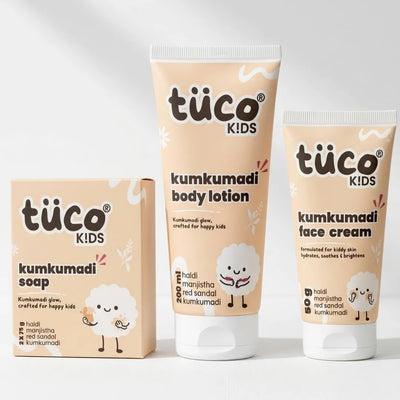
| Saffron, sandalwood, turmeric | 3-in-1 Kumkumadi Kit | Best once dryness has cleared and left behind dullness or uneven tone | 4–15 years |
| Shea butter, almond oil, aloe vera | Deep Moisture Body Lotion | The richest formula in the range — for when simple home remedies aren't quite enough | 3–15 years |
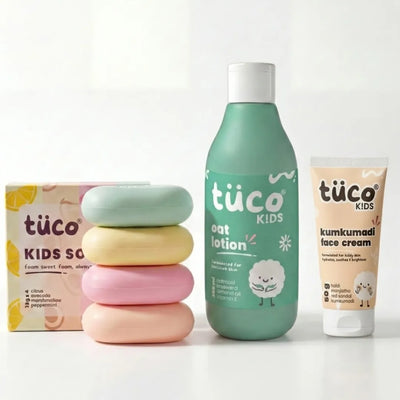
| Turmeric, Kakadu Plum, almond oil | 3-in-1 Bath Kit | Daily soap, lotion & face cream — a complete everyday moisture routine | 3–15 years |
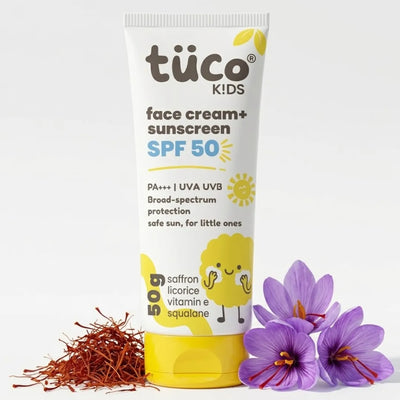
| SPF 30, turmeric, Kakadu Plum | 3-in-1 Dull Skin Kit (SPF 30) | Best if dryness is paired with regular outdoor sun exposure | 4–15 years |

What Dry Skin Looks Like in Toddlers vs. Babies
- In babies: fine, powdery flaking or a slightly rough texture on the cheeks, arms, and legs — often the first sign, showing up before any obvious redness.
- In toddlers: rougher, sandpapery patches on elbows, knees, and shins, which tend to worsen with more active play and outdoor exposure at this age.
- Both age groups can show tightness after bath time, sometimes expressed as fussiness during dressing or diaper changes rather than a clear complaint.
- Ordinary dryness feels rough and flaky to the touch, while skin that feels thicker, warmer, or looks red and weepy points to something beyond simple dryness — more on that distinction later.
Home Remedies That Actually Work
- Shorter, lukewarm baths. Keeping baths under 10 minutes with warm (not hot) water is the single highest-impact change — hot water strips natural oils faster than a child's skin can replace them.
- The 3-minute moisturizing window. Applying moisturizer within 3 minutes of getting out of the bath, while skin is still slightly damp, traps far more moisture than applying it later once skin has dried.
- Oatmeal in bathwater. Finely ground oats (colloidal oatmeal) added to bathwater has a genuinely calming, barrier-supporting effect on dry, reactive skin — this is the classic remedy that products like the Oat Kit are built to replicate consistently, without measuring out loose oats each time.
- A gentle pre-bath oil massage. A light coconut or almond oil massage 15–20 minutes before bathing softens rough patches and adds a protective layer before water contact.
- Pat dry, don't rub. Rubbing with a towel creates friction on already-sensitive skin; gently patting leaves a thin layer of moisture behind for the moisturizer to seal in.
- A humidifier in dry seasons. Indoor heating and air conditioning both lower humidity, pulling moisture from skin faster than usual — a humidifier in the child's room can meaningfully reduce how often dry patches appear.
- A gap most home-remedy articles skip: over-washing hands and face throughout the day (common with toddlers who eat messily or explore constantly) can undo the benefits of a good bath-time routine — spot-cleaning with a damp cloth is often gentler than a full extra wash.
Shop Oat Kit →
Decision Tree: Which Remedy Fits the Cause
- Is the dryness worse right after bath time, especially with long or hot baths? → Shorten baths and lower the water temperature first — this alone resolves a large share of everyday cases within a week.
- Is the pattern seasonal — worse in winter or after AC/heater exposure? → Add a humidifier and switch to a richer, more occlusive lotion during that season rather than changing the whole routine.
- Is the dryness limited to the face, especially cheeks or chin? → Use a lighter, face-specific product rather than a heavy body lotion, which can feel too rich for facial skin.
- Did the dryness start after a new soap, detergent, or fabric? → Remove the suspected trigger first — simplifying the routine often clears things up faster than adding more remedies on top.
- Is the patch red, thickened, weepy, or cracked rather than simply dry and flaky? → This goes beyond home remedies — see "When Home Remedies Aren't Enough" below.
Shop 3-in-1 Bath Kit →

DIY Ingredients: What Helps and What to Avoid
- Genuinely helpful: colloidal oatmeal, aloe vera, coconut oil, almond oil, and shea butter — all well-tolerated, moisture-locking ingredients with a long track record for baby skin care home remedies.
- Use with caution: essential oils, even "natural" ones, can be too strong for a young child's skin — if using any DIY oil blend, keep concentrations very low and always patch-test first.
- Avoid in both DIY and store-bought products: sulfates, synthetic fragrance, dyes, and alcohol-based ingredients, which strip or irritate skin rather than support it.
- Homemade remedies work best as a supplement to, not a replacement for, a consistent daily moisturizing routine — a one-off oatmeal bath helps, but the real change comes from doing the basics every day.
- If you'd rather skip the DIY measuring and mixing, a pre-formulated version of these same ingredients — like the 3-in-1 Bath Kit's turmeric and Kakadu Plum blend — delivers the same benefit with more consistent results wash after wash.
- Store any DIY mixtures (oil blends, oat mixtures) in small batches rather than large ones — homemade preparations without preservatives can degrade or grow bacteria within a few days, especially in a warm bathroom environment.
Shop Deep Moisture Body Lotion →
Age-Wise Remedy Tips: Babies vs. Toddlers
- For babies under 1 year: keep everything simple — lukewarm baths kept short, a gentle pat dry, and a light, fragrance-free moisturizer. Effective dry skin remedies for babies this young rely on consistency rather than variety; introduce one product at a time and watch for a few days before adding anything else.
- For babies 1–2 years: a pre-bath oil massage becomes easier to incorporate as babies get more tolerant of handling, and this is often when parents can start layering in a slightly richer moisturizer if dryness has been persistent.
- For toddlers 2–4 years: increased outdoor play and more frequent hand-washing mean reapplying moisturizer at points beyond just after bathing is often necessary — keep a travel-size option on hand for midday touch-ups.
- For kids 4 years and up: involving them in the routine (letting them help apply lotion, choosing which product to use) tends to improve consistency, since older kids are more likely to actually follow through with a habit they feel part of.
- Across every age, the most reliable home remedies for baby dry skin and toddler dryness alike come down to the same few basics: shorter lukewarm baths, prompt moisturizing, and simple, fragrance-free ingredients used consistently rather than occasionally.
Shop 3-in-1 Dull Skin Kit (SPF 30) →

When Home Remedies Aren't Enough
Most dry skin in toddlers and kids responds to a consistent, gentle routine within 1–2 weeks. It's worth a doctor's visit instead of continuing home care alone if:
- Skin is cracked, bleeding, or open, which raises the risk of infection.
- Patches look red, thickened, or weepy rather than simply dry and flaky — a pattern that can point to eczema needing a different treatment approach.
- Your child seems unusually uncomfortable or is scratching enough to break the skin.
- A consistent, gentle routine hasn't improved anything after 2–3 weeks of use.
- Any DIY remedy seems to be causing irritation rather than helping — stop use immediately and switch to a simpler, fragrance-free routine.
- Dryness keeps returning in the same spot within days of clearing up, despite consistent care — a recurring pattern like this is worth mentioning to a pediatrician even if each individual flare seems mild on its own.
FAQs
What are the best home remedies for dry skin in children?
Shorter, lukewarm baths, moisturizing within 3 minutes of bathing, and adding colloidal oatmeal to bathwater are the most effective first-line remedies. Most cases improve noticeably within a week of consistent use.
What dry skin remedies are safe for babies specifically?
Gentle, fragrance-free options like a light coconut oil massage before bathing and a barrier-repair moisturizer applied right after are generally safe for babies old enough for a labeled product. Always patch-test anything new first.
What are good baby skin care home remedies for everyday use?
A consistent routine matters more than any single remedy — short lukewarm baths, prompt moisturizing, and avoiding harsh soaps cover most everyday dryness without needing anything elaborate.
How can I make a home remedy for baby dry skin using ingredients I already have?
A small amount of finely ground oats added to bathwater, or a light coconut oil massage before bathing, are both simple, well-tolerated options using common household ingredients.
How often should I apply a home remedy or moisturizer for dry skin?
At least once daily, ideally within a few minutes of bath time. Particularly dry patches may benefit from a second light application before bed.
Are essential oils safe as a home remedy for a child's dry skin?
They can be too strong for young skin in most concentrations. If used at all, keep them highly diluted and always patch-test first — milder options like coconut or almond oil are generally a safer default.
When do home remedies stop being enough for my child's dry skin?
If skin is cracked, bleeding, red, or weepy, or if a consistent routine hasn't helped after 2–3 weeks, it's time to move beyond home remedies and check with a doctor.
Can dry skin in toddlers be prevented, not just treated?
Yes — consistent short, lukewarm baths, prompt moisturizing, a humidifier during dry seasons, and avoiding harsh soaps all reduce how often dry patches show up in the first place.
Dry skin in toddlers and kids is one of the most common things parents deal with, and it's rarely a sign of anything serious. Most cases respond to the same handful of habits — shorter lukewarm baths, prompt moisturizing, and simple, consistent ingredients — rather than needing a constant search for the next "miracle" remedy. Giving one gentle routine a genuine two-week trial, rather than switching every few days, is usually what makes the real difference between skin that's occasionally dry and skin that stays comfortable through every season.