



Face Cream for Kids: Best Picks for Dry & Sensitive Skin
Facial skin ages differently than the rest of the body from day one — it's thinner, gets more sun and air exposure, and shows dryness faster than skin on the arms or legs. That's true whether you're looking for a face cream for 10 year old dealing with post-play dryness or the gentlest possible option for a much younger sibling. A body lotion applied to the face "because it's what's on hand" is one of the most common, easily-fixed skincare mistakes parents make.
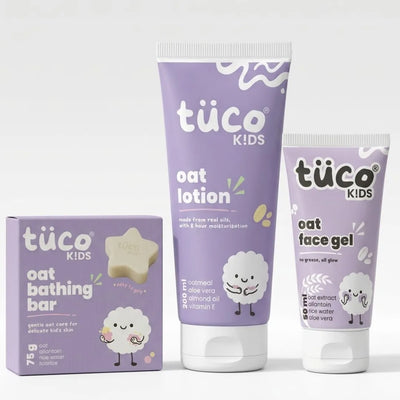
Tuco Kids tip: Facial skin does best with a lighter, purpose-built formula rather than a heavy body cream — the Oat Kit's face gel is calming enough for daily use on reactive skin.
Shop Oat Kit →

Contents
- Quick Comparison: Best Tuco Face Creams for Kids
- Why Facial Skin Needs a Different Formula
- Best Picks by Age Group
- What to Look For — and What to Avoid
- Decision Tree: Choosing the Right Face Cream
- How to Apply Face Cream for Best Results
- Face Cream Myths Worth Clearing Up
- When to See a Doctor
- FAQs
- Related Reads
Quick Comparison: Best Tuco Face Creams for Kids
| Ingredients | Tuco Product Solution | Key Product Features | Age-wise Recommendation |
|---|---|---|---|
| Oat extract, aloe vera | 3-in-1 Oat Kit | A calming face gel built for reactive, easily irritated skin — the gentlest option in the range | 2–15 years, best for toddlers |
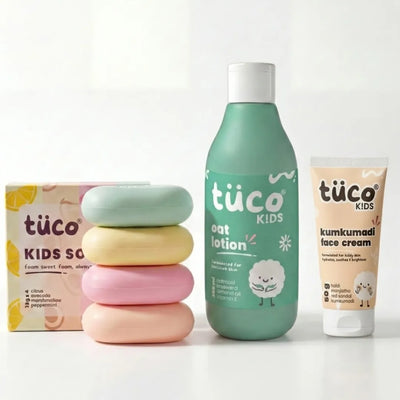
| Turmeric, Kakadu Plum, almond oil | 3-in-1 Bath Kit | Includes a dedicated everyday face cream alongside soap and body lotion | 3–15 years |
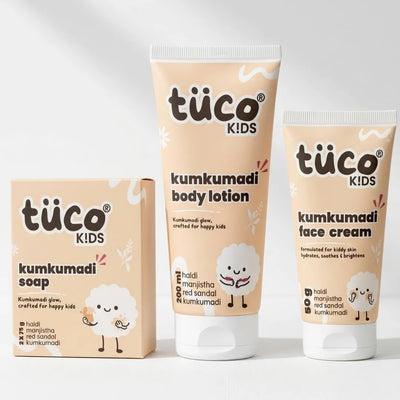
| Saffron, sandalwood, turmeric | 3-in-1 Kumkumadi Kit | Best for older kids wanting an even-tone, slightly more indulgent face routine | 4–15 years |
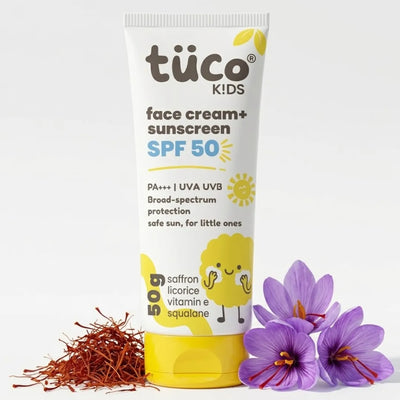
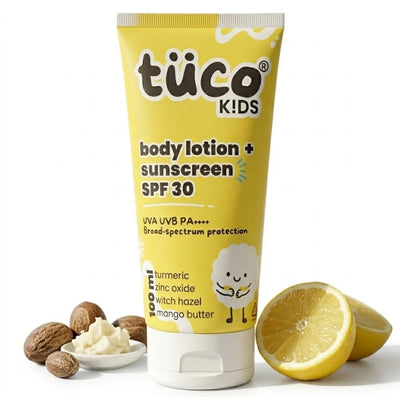
| SPF 30, turmeric, Kakadu Plum | 3-in-1 Dull Skin Kit (SPF 30) | Best for outdoor-active kids who need moisture and sun protection together | 4–15 years |
| Shea butter, almond oil, aloe vera | Deep Moisture Body Lotion | Best kept to the body — richer than most kids' skin needs on the face | 3–15 years |

Why Facial Skin Needs a Different Formula
- Facial skin is thinner than skin on the arms, legs, or torso, so it loses moisture faster and shows dryness or irritation sooner.
- It gets more daily exposure — sun, wind, wiping, and touching — than skin covered by clothing most of the day.
- Heavier body lotions, especially rich ones meant for elbows and knees, can feel too occlusive on facial skin and occasionally contribute to clogged pores or a greasy feel.
- A face cream formulated specifically for kids' facial skin balances lightness with real moisture support, which is a distinction most generic "kids moisturizer" round-ups skip entirely.
- Facial skin also reacts faster to environmental shifts — the first day of a cold snap or a sudden jump in humidity often shows up on the face before it's visible anywhere else on the body, making it a useful early signal for adjusting the broader skincare routine.
Best Picks by Age Group
- Toddlers (2–4 years): Skin at this age is at its most reactive — a simple, barrier-repair face gel with minimal ingredients is the safest starting point.
- Younger school-age (5–9 years): A complete daily face cream, paired with matching soap and body lotion, keeps the routine simple while covering everyday dryness from school and outdoor play.
- Older kids (10+ years, like a face cream for 10 year old): Skin starts producing more oil around this age for some kids, so a slightly more balanced, tone-evening formula tends to fit better than the richest options in the range.
- Outdoor-active kids of any age: Prioritize a face formula that pairs moisture with SPF, since facial skin gets the most consistent sun exposure of any area on the body.
- Kids transitioning between seasons or climates: A slightly richer formula for colder, drier months and a lighter one for warmer, humid stretches helps facial skin stay comfortable year-round rather than sticking to one formula regardless of conditions.
Shop 3-in-1 Bath Kit →

What to Look For — and What to Avoid
- Look for: oat extract and aloe vera for barrier support, turmeric and Kakadu Plum for gentle brightening, and lightweight textures that absorb without leaving a heavy residue.
- For genuinely sensitive skin: a short, fragrance-free ingredient list matters more than any single "hero" ingredient — simplicity reduces the chance of a reaction.
- Avoid: sulfates, synthetic fragrance, dyes, and alcohol-based ingredients, all common irritants for facial skin specifically.
- If you're comparing the best cream for infant dry skin for facial use, confirm the product's labeled age range first — many formulas are designed from around age 2 onward rather than from birth.
- A genuinely good face cream should list its full ingredient panel clearly — vague "gentle formula" marketing without an ingredient breakdown is worth treating with some skepticism.
Shop Oat Kit →
Decision Tree: Choosing the Right Face Cream
- Is your child's skin reactive or prone to flares? → Start with the simplest, most barrier-focused option — fewer ingredients means fewer potential triggers.
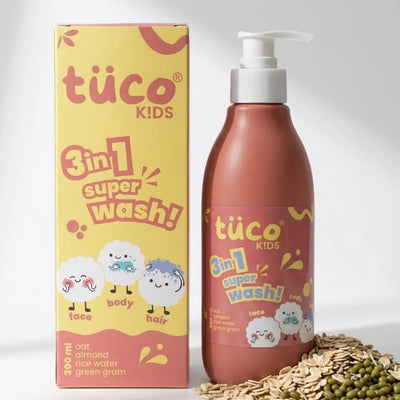
- Do you want one product covering cleansing, body, and face together? → A 3-in-1 system simplifies the routine and avoids mismatched ingredients between separate products.
- Is your child older and starting to show slightly oilier or duller-looking skin? → A tone-evening, slightly more balanced formula tends to fit better than the richest barrier-repair options.
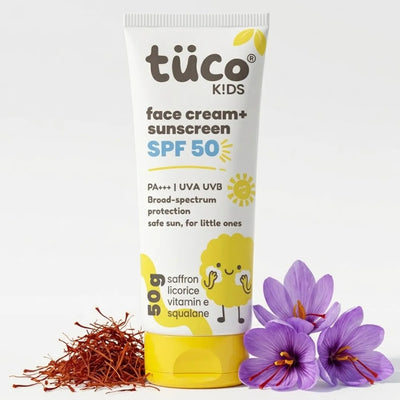
- Does your child spend a lot of time outdoors? → Choose a face formula that pairs moisture with SPF so sun protection isn't a separate, easily-skipped step.
- Is baby skin still very young — baby skin under a labeled age range? → Check the product's minimum age before use, and consider a quick pediatrician check for anything used on a very young infant's face for the first time.
Shop 3-in-1 Kumkumadi Kit →
How to Apply Face Cream for Best Results
- Apply to clean, slightly damp skin. Right after washing the face is the ideal window — moisturizer applied to damp skin locks in more hydration than applying to fully dry skin.
- Use a small, dime-sized amount. Facial skin needs far less product than the body — over-applying can leave a heavy, greasy feel without adding extra benefit.
- Apply with gentle, upward strokes rather than rubbing vigorously, which reduces unnecessary friction on delicate facial skin.
- Reapply after water exposure. Swimming, face-washing, or a lot of wiping during the day can all strip moisture — a light reapplication helps maintain comfort.
- Give a new product 1–2 weeks before judging results. Facial skin often needs a short adjustment period, and switching too quickly makes it hard to tell what's actually working.
- Layer sunscreen on top, not underneath. If your child's routine includes both a face cream and a separate sunscreen, apply the moisturizer first and let it absorb before adding sunscreen as the final step.
Shop 3-in-1 Bath Kit →
Face Cream Myths Worth Clearing Up
- "Kids don't need face cream if they're not visibly dry." Prevention matters as much as treatment — a light daily moisturizer helps maintain the skin barrier before dryness becomes visible, rather than only reacting once it appears.
- "Richer always means better for dry skin." On facial skin specifically, a formula that's too rich can feel heavy or contribute to clogged pores without actually delivering better hydration than a well-formulated lighter option.
- "Anti-aging ingredients are fine in small amounts for kids." Actives like retinoids or strong acids, common in adult anti-aging creams, aren't appropriate for children's skin regardless of concentration — kids' formulas should stick to barrier-supporting, non-active ingredients.
- "One face cream works the same for every child." Skin type, activity level, and climate all affect what a specific child's face actually needs — a formula a friend swears by may not suit your child's skin the same way.
- "Face cream and body lotion are basically the same thing." Facial skin is thinner and more exposed, and formulas built specifically for the face tend to balance lightness and moisture differently than body-focused products.
Shop Oat Kit →
When to See a Doctor
Most facial dryness and mild irritation improve within 1–2 weeks of a gentle, consistent routine. It's worth a doctor's visit instead of continuing to try new creams if:
- Skin becomes red, thickened, or weepy rather than simply dry or mildly rough.
- A new face cream seems to trigger a reaction — increased redness, bumps, or irritation rather than improvement.
- Dryness or irritation persists despite 2–3 weeks of consistent, gentle care.
- You notice signs of infection — warmth, swelling, or pus-filled bumps — anywhere the cream has been applied.
FAQs
What's a good face cream for a 10 year old with dry skin?
A lightweight, non-greasy formula with barrier-supporting ingredients like aloe vera or Kakadu Plum works well at this age, especially one that also addresses tone evenness as skin starts to change slightly heading into the tween years.
What's the best cream for infant dry skin on the face?
Always check the labeled age range first — many gentle face creams are designed from around age 2 onward. For younger infants, a quick check with your pediatrician before introducing a new product is a sensible extra step.
Can I use regular body lotion on my child's face?
It's better to use a face-specific formula when possible — body lotions are often richer than facial skin needs and can feel heavy or occasionally contribute to clogged pores.
How is baby skin different from a toddler's or older child's skin?
Baby skin is thinner and more permeable, holding onto moisture less effectively, which is why most face creams recommend gentler formulas and lower minimum age ranges for infants specifically.
How often should kids use face cream?
Once or twice daily works well for most kids — once in the morning and again after washing up in the evening, especially for skin prone to dryness.
What ingredients should I avoid in a kids' face cream?
Sulfates, synthetic fragrance, dyes, and alcohol-based ingredients are the most common irritants for facial skin. A short, recognizable ingredient list is generally a safer bet.
Does my child need a separate sunscreen and face cream, or can one product do both?
A formula that combines moisture and SPF simplifies the routine and makes it more likely sun protection actually gets applied consistently, rather than being treated as a separate, skippable step.
When should I take my child to a doctor about their face cream or facial skin?
See a doctor if skin becomes red, thickened, or weepy, if a new product seems to trigger a reaction, or if dryness persists despite 2–3 weeks of consistent, gentle care.
The right face cream is less about finding a single "best" product and more about matching a light, purpose-built formula to your child's specific skin needs, then applying it consistently. A simple, well-chosen routine tends to outperform an elaborate one that's only used occasionally, and giving each new product a genuine two-week trial before switching is usually the fastest path to finding what actually works for your child's skin, rather than judging a formula after just a day or two of use.