



Eczema in Kids: Symptoms, Triggers & Skincare Routine
Not every red, itchy patch on a child's skin is the same thing — a lot of parents lump any dry skin rash eczema together, but knowing the actual pattern makes treatment far more effective. Eczema (atopic dermatitis) is one of the most common chronic skin conditions in childhood, and while it can look alarming during a flare, most kids manage it well with the right daily routine.
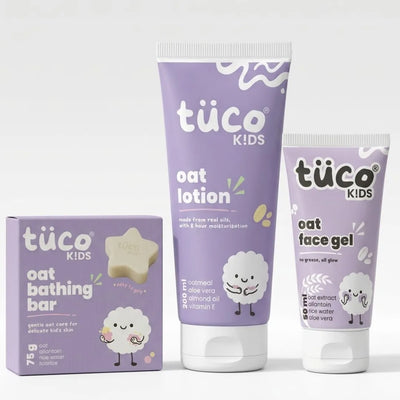
Tuco Kids tip: The single most effective first step for reactive, flare-prone skin is switching to the gentlest possible formula — the Oat Kit is built specifically for barrier repair on sensitive, easily irritated skin.
Shop Oat Kit →

Contents
- Quick Comparison: Best Tuco Products for Eczema-Prone Skin
- Symptoms: What Eczema Looks Like in Kids
- Common Triggers for Flares
- Building a Daily Skincare Routine
- Decision Tree: Managing a Flare
- Ingredients: What Helps and What to Avoid
- Common Eczema Myths Worth Clearing Up
- When to See a Doctor
- FAQs
- Related Reads
Quick Comparison: Best Tuco Products for Eczema-Prone Skin
| Ingredients | Tuco Product Solution | Key Product Features | Age-wise Recommendation |
|---|---|---|---|
| Oat extract, aloe vera | 3-in-1 Oat Kit | Barrier-repair bathing bar, lotion & face gel — the gentlest first step for eczema-prone skin | 2–15 years, best for toddlers |
| Shea butter, almond oil, aloe vera | Deep Moisture Body Lotion | The richest formula in the range — for stubborn, recurring dry patches between flares | 3–15 years |
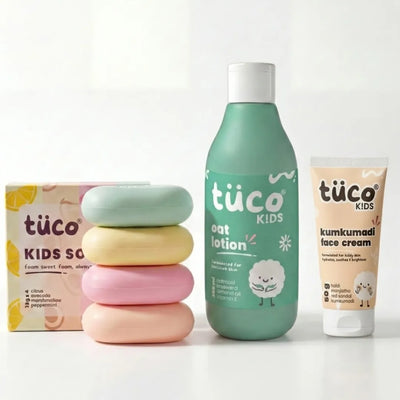
| Turmeric, Kakadu Plum, almond oil | 3-in-1 Bath Kit | Daily soap, lotion & face cream — a complete, gentle everyday routine | 3–15 years |
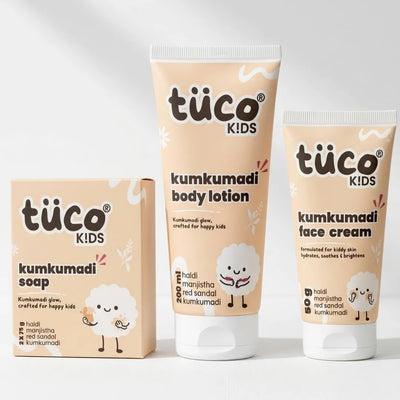
| Saffron, sandalwood, turmeric | 3-in-1 Kumkumadi Kit | Best once a flare has calmed and left behind dullness or uneven tone | 4–15 years |
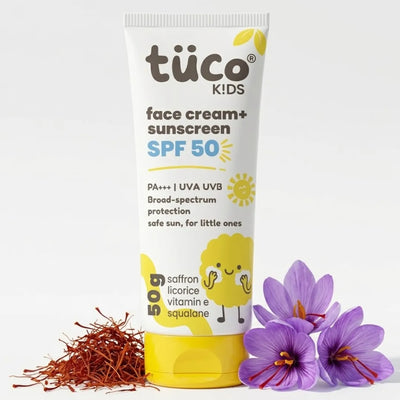
| SPF 30, turmeric, Kakadu Plum | 3-in-1 Dull Skin Kit (SPF 30) | Best if eczema-prone skin also gets regular outdoor sun exposure | 4–15 years |

Symptoms: What Eczema Looks Like in Kids
- Dry, red or discolored patches — pink to red on lighter skin, grey to purple on deeper skin tones — often in the same spots repeatedly.
- Intense itching, frequently worse than the patch looks, sometimes disrupting sleep or leading to visible scratch marks.
- In infants, patches typically appear on the cheeks, forehead, and scalp, sometimes looking oozy or crusted during an active flare.
- In older kids, the classic pattern shifts to flexural areas — the creases of elbows and behind the knees — along with wrists, ankles, and sometimes the neck.
- An accurate way to think about eczema dry skin treatment starts with recognizing that this isn't ordinary dryness — it's a chronic, flare-and-remit pattern that responds to consistent barrier support rather than a one-time fix.
Common Triggers for Flares
- Harsh soaps and sulfates strip natural oils faster than eczema-prone skin can replace them, often triggering a flare within a day or two of use.
- Hot bath water has a similar effect — even a few minutes longer in a hot bath can be enough to set off increased dryness and itching.
- Sweat, wool, and synthetic fabrics create friction and trap heat against the skin, both of which commonly trigger flares in active kids.
- Seasonal dryness from winter air or indoor heating/AC pulls moisture from skin faster than a normal routine can replace it.
- Stress and illness can trigger flares indirectly by affecting overall inflammation levels in the body.
- A gap most generic eczema content skips: food triggers are far less common in most children than parents assume — environmental and product-based triggers are usually the more actionable place to start.
- Chlorinated pool water is another commonly overlooked trigger — a quick rinse and moisturize immediately after swimming can prevent a flare that might otherwise show up the next day.
Shop 3-in-1 Bath Kit →

Building a Daily Skincare Routine
- Bathe smart, not necessarily less. Short, lukewarm baths (under 10 minutes) with a mild, fragrance-free cleanser are generally fine daily — what happens right after matters more than bath frequency alone.
- Moisturize within 3 minutes of bathing, every time. This "soak and seal" habit locks in far more moisture than applying lotion later.
- Reapply on flare-prone spots midday if needed. Elbow creases, behind the knees, and cheeks in babies often benefit from a second light application, especially during dry seasons.
- Dress in soft, breathable fabrics. Cotton reduces friction against sensitive skin far better than wool or rough synthetic blends.
- Keep a simple flare log. Noting what changed before a flare — a new product, a hot week, more sweat from play — helps a pattern emerge after a few cycles.
- Trim nails short to reduce damage from scratching during an itchy flare.
Shop Oat Kit →
Decision Tree: Managing a Flare
- Is the flare mild — dry, slightly red patches without cracking or oozing? → A consistent, gentle moisturizing routine is usually enough. Apply a rich, fragrance-free moisturizer at least twice daily.
- Did the flare start right after a new soap, detergent, or fabric? → Remove the suspected trigger first before adding new treatments.
- Is the flare seasonal — worse in winter or after AC/heater exposure? → Switch to a richer, more occlusive moisturizer during that season and consider a humidifier.
- Is your child scratching enough to cause visible skin breakdown? → Keep nails trimmed, moisturize more frequently, and use light, breathable clothing over the area.
- Has a consistent routine been in place for 2–3 weeks with no improvement, or is it getting worse? → Move to "When to See a Doctor" below — persistent or worsening flares often benefit from a prescription-strength option a pediatrician or dermatologist can provide.
Ingredients: What Helps and What to Avoid
- Look for: oat extract and aloe vera for calming and barrier repair, shea butter and almond oil for deeper moisture, and mild, low-foaming cleansers.
- Avoid: sulfates, synthetic fragrance, dyes, and alcohol-based products — common irritants that can turn a mild flare into a more stubborn one.
- Petroleum jelly or a thin, gentle occlusive layer applied right after bathing helps seal in moisture before it evaporates.
- Always patch-test a new product first, especially during an active flare — even naturally derived formulas can occasionally cause a reaction on already-compromised skin.
- Effective, long-term eczema in kids treatment comes down to consistency more than variety — repeatedly switching products to "find the fix" often reintroduces new potential irritants before the current routine gets a fair chance.
Shop Deep Moisture Body Lotion →

Common Eczema Myths Worth Clearing Up
- "Eczema means poor hygiene." Eczema is a skin barrier condition, not a cleanliness issue — over-washing can actually worsen it by stripping natural oils faster than the skin can replace them.
- "It's always caused by food allergies." Food triggers are far less common than parents often assume — environmental and product-based triggers (soap, heat, fabric) are usually more relevant for most kids.
- "Kids always outgrow it completely." Many children see major improvement by school age, but some continue having occasional flares into later childhood — that doesn't mean the routine has failed.
- "Natural products are always safer for eczema." "Natural" isn't a regulated term, and some natural ingredients (including certain essential oils) can still irritate. Checking the actual ingredient list matters more than the label.
- "More moisturizer always helps more." Consistency and the right ingredients matter more than sheer quantity — a thin, even layer applied regularly outperforms an occasional heavy application.
Shop Oat Kit →
When to See a Doctor
Many mild-to-moderate eczema flares improve within 2–3 weeks of a gentle, consistent routine. It's worth a doctor's visit instead of continuing home care alone if:
- Patches are spreading, becoming more inflamed, or oozing rather than staying dry and scaly.
- Scratching has broken the skin, raising the risk of a secondary infection.
- Itching is intense enough to disrupt sleep or daily activities despite a gentle routine.
- There's no improvement after 2–3 weeks of consistent, gentle care.
- You're unsure whether it's eczema or a related condition like dermatitis in children from a different cause — a dermatologist can confirm the diagnosis and, if needed, prescribe something stronger than what's available over the counter.
FAQs
What does eczema look like in kids?
Dry, red or discolored, itchy patches, often in the same spots repeatedly. In infants it typically appears on the cheeks and scalp; in older kids it shifts to elbow and knee creases, wrists, and ankles.
What triggers eczema flares in children?
Harsh soaps, hot baths, sweat, rough fabrics, seasonal dryness, and stress are the most common triggers. Environmental and product-based triggers are usually more relevant than food for most kids.
Is dry skin rash eczema the same as regular dry skin?
Not exactly — eczema has an underlying skin barrier weakness that causes recurring, cyclical flares, while regular dry skin is usually a temporary response to weather or products without that same chronic pattern.
What's the best eczema dry skin treatment for kids?
A consistent daily routine — short lukewarm baths, moisturizing within 3 minutes, and gentle, fragrance-free products — is the most effective first-line approach for mild-to-moderate eczema.
How is dermatitis in children different from eczema?
"Dermatitis" is a broader term covering any skin inflammation, while eczema (atopic dermatitis) is a specific, chronic type linked to a weakened skin barrier and often a family history of allergies or asthma.
Can eczema in kids be cured, or only managed?
Many children see significant improvement or outgrow eczema by school age, but while active, it's generally managed rather than "cured" — a consistent routine keeps flares infrequent and mild.
How often should I moisturize a child with eczema?
At least twice a day, ideally within a few minutes of bathing. More frequent application during an active flare can help reduce itching and speed recovery.
When should I take my child to a doctor for eczema treatment?
See a doctor if patches are spreading, oozing, or the skin is broken from scratching, if itching disrupts sleep, or if a gentle routine hasn't helped after 2–3 weeks.
It also helps to remember that flares aren't a sign of failure — even with an excellent routine, occasional flares are part of how eczema behaves, triggered by factors that aren't always fully within your control, like a sudden weather shift or an illness passing through school. Tracking patterns over months, rather than judging a routine after just one flare, gives a much clearer picture of what's actually working. Living with a child's eczema usually becomes far less stressful once you find a routine that works and stick with it — most families settle into a predictable rhythm of gentle daily care punctuated by the occasional, manageable flare rather than a constant, unpredictable battle.
Sharing what you learn with grandparents, caregivers, or your child's school can also help — consistent care across every environment your child spends time in makes a real difference, since a single harsh soap at daycare can undo days of careful routine at home. Every family's eczema journey looks a little different, and what works for one child may need adjusting for another, even within the same household. Staying observant, patient, and consistent tends to matter far more in the long run than finding any single "perfect" product.