



Best Winter Face Cream for Kids in 2026
Finding the right winter face cream for kids can make the difference between a happy, comfortable season and weeks of red, tight, flaky cheeks. Here's how to choose the best winter face cream for kids this year — and why a face formula isn't just a smaller version of a body lotion.
Tuco Kids tip: A face cream with turmeric and Kakadu Plum supports the skin barrier while gently nourishing delicate winter cheeks.
Contents
- Quick Comparison: Best Tuco Winter Face Creams
- What to Look for in a Winter Face Cream
- Face Cream vs. Body Cream: Why They're Not Interchangeable
- How to Apply for Best Results
- Choosing a Face Cream by Age
- When to See a Doctor
- FAQs
- Related Reads
Quick Comparison: Best Tuco Winter Face Creams
| Ingredients | Tuco Product Solution | Key Product Features | Age-wise Recommendation |
|---|---|---|---|
| Turmeric, Kakadu Plum, almond oil | 3-in-1 Bath Kit | Includes a daily face cream alongside soap and body lotion for a complete routine | 3–15 years |
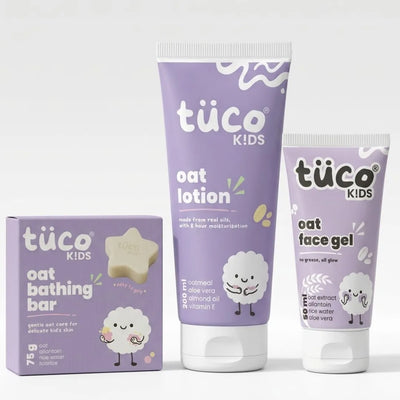
| Oat extract, aloe vera | 3-in-1 Oat Kit | Includes a calming face gel — best for reactive, easily irritated winter skin | 2–15 years, best for toddlers |
| Shea butter, almond oil, aloe vera | Deep Moisture Body Lotion | Rich enough to double as a face and body cream for the driest patches | 3–15 years |
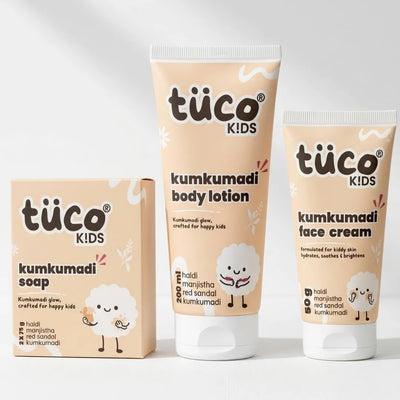
| Saffron, sandalwood, turmeric | 3-in-1 Kumkumadi Kit | A finishing face cream once winter dryness has calmed | 4–15 years |
What to Look for in a Winter Face Cream
Occlusive, barrier-supporting ingredients like shea butter and almond oil sit on top of the skin to lock in moisture through cold, dry days, and they matter more on the face than almost anywhere else. Facial skin actually has more oil glands than skin on the arms or legs — it's the T-zone that gets oily fastest — but it's also thinner and constantly exposed to wind and temperature swings, so it can dry out and turn oily-and-irritated at the same time in winter. That's why a good winter face cream for kids is formulated lighter and non-comedogenic rather than simply "extra rich" — a heavy, pore-clogging texture can trigger small bumps around the nose and chin even while cheeks stay dry. Fragrance-light formulas matter too, since a child's face is more sensitive than the rest of the body, and it's always worth confirming a product's labeled age range matches your child before buying.
Face Cream vs. Body Cream: Why They're Not Interchangeable
A dedicated face cream is formulated to be lighter and less likely to clog pores, since facial skin is thinner, has more active oil glands, and is more exposed to the elements than skin covered by clothing. A winter body cream for kids is usually richer and heavier by design, meant for larger areas like arms, legs, and hands that need longer-lasting protection and don't carry the same breakout risk. In a pinch, a very rich body lotion can double as a spot treatment for stubborn dry patches on the face, but using it as a daily face cream risks the same clogged-pore issue a heavy formula causes anywhere on the T-zone. Using the right product for the right area avoids both under-moisturizing the body and over-moisturizing sensitive facial skin.
How to Apply for Best Results
Cleanse gently first with a mild face wash or the daily soap from a combined kit, which removes dirt without stripping natural oils the cream is meant to preserve. Apply while skin is still slightly damp — this locks in noticeably more moisture than applying to fully dry skin — using a thin, even layer rather than a heavy one, since more product doesn't add benefit once skin is adequately covered. Reapply after outdoor exposure on especially cold or windy days, when wind accelerates moisture loss on exposed cheeks faster than usual. Using an adult face cream on a child is a common misstep worth avoiding, since adult formulas are often too heavy or contain actives not suited to young skin — and don't skip the cream on "not-so-cold" days, since indoor heating alone is often enough to dehydrate skin regardless of outdoor temperature.
Shop 3-in-1 Oat Kit →

Choosing a Face Cream by Age
Toddlers between two and four should get the gentlest, most fragrance-light formulas, since facial skin is especially reactive at this age. Kids from about four to eight can move to a slightly richer formula, particularly if they spend a lot of time outdoors. From eight onward, kids can often help apply their own face cream, which is a good opportunity to build a habit that lasts well beyond winter. A winter face cream for kids dry skin specifically needs at least twice-daily use, and pairing it with a humidifier at home addresses both the topical and environmental sides of winter dryness at once.
Shop Deep Moisture Body Lotion →
When to See a Doctor
Most winter facial dryness responds well to a consistent cream routine within 1–2 weeks. See a doctor if cheeks look cracked, bleeding, or show signs of infection, if redness is significant or accompanied by intense itching, or if a consistent routine for 2–3 weeks shows no improvement — that pattern can sometimes point to eczema rather than simple seasonal dryness.
FAQs
What's the best winter face cream for kids?
A rich, fragrance-light formula with turmeric, Kakadu Plum, or shea butter provides strong barrier support while remaining gentle enough for daily facial use.
How often should I apply winter face cream on my child?
At least twice daily — morning and night — with an extra midday application after outdoor play on especially cold or windy days.
What's the difference between a winter face cream and a winter body cream for kids?
Face creams are lighter and less pore-clogging for sensitive, oil-gland-rich facial skin, while body creams are richer and designed for larger areas like arms and legs.
Can I use a winter face cream for kids with dry skin every day?
Yes, daily use is recommended during winter months, since consistent moisturizing is more effective than occasional heavy applications.
Is it safe to use the same cream on my toddler and older child?
Always check the product's labeled age range first — gentler, oat-based formulas are generally better suited to toddlers with more reactive skin.
Why does my child's face get drier than the rest of their body in winter?
Facial skin is thinner and more constantly exposed to wind and cold air, which makes it lose moisture faster than skin covered by clothing.
What if my child's face cream causes small bumps or breakouts?
Discontinue use and try a lighter, non-comedogenic formula — some richer creams can be too heavy for certain skin types, especially around the T-zone.
Related Reads
- Best Body Wash for Kids in India: 6 Gentle Picks That Make Bath Time Easier
- The Power of Turmeric: An Ancient Remedy for Kids' Skin Issues
- 10 Best Moisturizing Soaps in India for Dry Skin
- Best Kids Soap in India: Gentle, Safe, and Effective Options for Kids
- Lip Balm for Kids: Gentle Lip Care Tips for Young Skin