



Best Winter Bath & Skincare Tips for Kids
Most parents building a winter skin care routine for kids focus entirely on which products to buy, and overlook the thing that determines whether those products actually work: what happens in the bathtub. Water temperature, soak length, and the few minutes right after getting out matter as much as any lotion on the shelf — sometimes more.
Paired with a few genuinely useful baby skin care home remedies, bath time can shift from being a hidden source of winter dryness to your single best defense against it.
Tuco Kids tip: The three minutes right after bath time are the most important moment in your entire winter skincare routine — that's when moisturizer works best.
Contents
- TLDR: Quick Comparison
- Why Hot Water Works Against You
- Building the Routine Around the Bath
- Home Remedies Worth Adding
- Adjusting by Age
- When to See a Doctor
- FAQs
- Related Reads
| Ingredients | Tuco Product Solution | Key Product Features | Age-wise Recommendation |
|---|---|---|---|
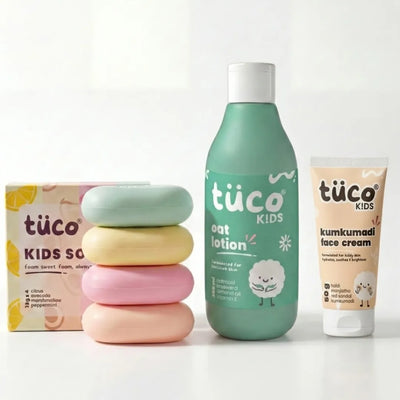
| Turmeric, Kakadu Plum, almond oil | 3-in-1 Bath Kit | Daily soap, lotion, and face cream in one routine | 3–15 years |
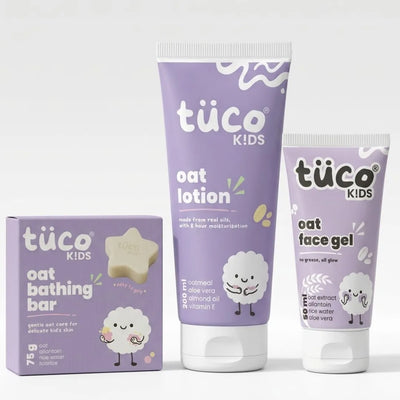
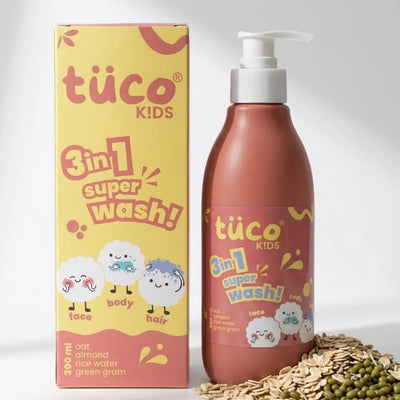
| Oat extract, aloe vera | 3-in-1 Oat Kit | Best for sensitive or reactive skin, gentle on toddlers | 2–15 years |
| Shea butter, almond oil, aloe vera | Deep Moisture Body Lotion | Richest post-bath moisturizer for very dry skin | 3–15 years |
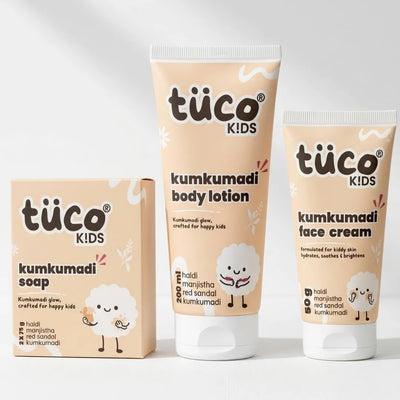
| Saffron, sandalwood, turmeric | 3-in-1 Kumkumadi Kit | Finishing touch once sensitivity has calmed | 4–15 years |
Why Hot Water Works Against You
A hot bath feels wonderful on a cold evening, which is exactly why the habit is so hard to break — and exactly why it's worth understanding what's actually happening to skin while it soaks. The outermost layer of skin is held together by a thin layer of natural lipids, essentially a mix of oils that cement skin cells in place and keep water from escaping. Hot water is far more effective than lukewarm water at dissolving and washing away those lipids, which is the same reason hot water cuts through grease on dishes so well. The trade-off is that skin loses its natural water barrier faster than a room-temperature soak would ever cause it to.
Soak length compounds the same effect — even in lukewarm water, ten or fifteen extra minutes gives skin more time to lose moisture into the bathwater around it. A shorter, lukewarm bath followed immediately by moisturizer beats a long, hot, leisurely one for almost every winter skin care routine for kids, even though it can be a hard sell to a child who loves bath time.
Shop 3-in-1 Oat Kit →

Building the Routine Around the Bath
A good routine starts with a gentle, non-foaming cleanser instead of a harsh soap that strips even more natural oil than the hot water already has. The single highest-leverage habit is applying a rich moisturizer within about three minutes of getting out of the bath, while skin is still slightly damp — moisturizer works by sealing in existing water, so it performs dramatically better on damp skin than on skin that's already air-dried.
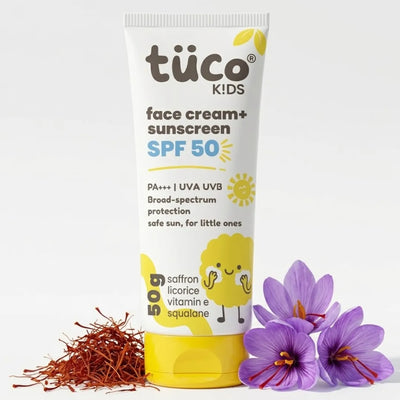
Beyond the bath itself, reapply lotion to hands throughout the day, especially after washing, and add a protective layer before outdoor exposure. Timing and consistency, more than any single product, are what separate a routine that actually works from one that just looks thorough on paper. Bathing every other day, rather than daily, is often gentler on winter skin too, as long as each bath is followed by thorough moisturizing.
Shop Deep Moisture Body Lotion →

Home Remedies Worth Adding
Alongside a good product routine, a few simple baby skin care home remedies genuinely help. Running a humidifier overnight counters the drying effect of indoor heating and gives skin hours to recover while your child sleeps. Soft, breathable layers — nothing rough like wool worn directly against skin — reduce the friction-related irritation that compounds dryness. Patting skin dry with a soft towel rather than rubbing avoids unnecessary irritation right before moisturizing, and encouraging regular water intake through the day supports skin health from the inside as well.
None of these replace a direct moisturizing routine, but together they close the small gaps a product alone can't reach.
Adjusting by Age
Newborns and infants do best with brief, gentle baths, the mildest cleansers, and the richest, most barrier-supporting lotions — their skin barrier is still developing and loses moisture fastest of any age group. Toddlers, whose skin is highly reactive but increasingly exposed to the elements through play, tend to respond well to oat-based formulas that hydrate without irritating. School-age kids can generally move to richer, shea-butter-based products, especially if they spend long stretches outdoors. Products can be shared across siblings for the core routine, but richness should still track each child's individual sensitivity rather than a one-size-fits-all rule.
When to See a Doctor
Most winter skin concerns respond well to adjusted bath habits and consistent moisturizing within one to two weeks. See a doctor if skin cracks or bleeds, shows signs of infection such as increasing redness or warmth, or if dryness doesn't improve after 2–3 weeks of a consistent routine.
FAQs
What's the ideal water temperature for a winter bath?
Lukewarm — hot water dissolves the natural oils that hold skin's water barrier together, which is what makes it feel so drying afterward despite feeling comforting in the moment.
How long should a winter bath be?
Around 10 minutes or less helps limit moisture loss, especially when followed immediately by a rich moisturizer.
What baby skin care home remedies actually work?
Running a humidifier, dressing in soft breathable layers, and applying moisturizer within minutes of bathing are simple, genuinely effective habits.
Should I bathe my child every day in winter?
Every other day with a short, lukewarm bath is often gentler than daily bathing, as long as you moisturize thoroughly afterward.
How soon after bathing should I apply lotion?
Within about three minutes, while skin is still slightly damp — this timing captures noticeably more moisture than applying to already-dry skin.
Can a humidifier replace a good skincare routine?
No, but it's a valuable complement — a humidifier supports skin between applications, it doesn't replace direct moisturizing.
Does a winter skin care routine for kids need to change with age?
Yes — younger, more reactive skin generally needs gentler products, while older kids can typically move to richer formulas.
Can swimming or chlorinated pools affect the routine?
Yes, chlorinated water can dry out skin further — a thorough rinse and immediate moisturizing afterward helps offset the added dryness.
Related Reads
- Best Body Wash for Kids in India: 6 Gentle Picks That Make Bath Time Easier
- The Power of Turmeric: An Ancient Remedy for Kids' Skin Issues
- 10 Best Moisturizing Soaps in India for Dry Skin
- Best Kids Soap in India: Gentle, Safe, and Effective Options for Kids
- Lip Balm for Kids: Gentle Lip Care Tips for Young Skin