





Best Remedies for Baby Dry Skin Patches in 2026
A baby's skin is roughly 30% thinner than an adult's and loses moisture far faster, which is exactly why baby dry skin patches show up so quickly — sometimes within a day or two of a weather change, a new soap, or extra time in AC or heating. The good news is that most patches are simple dryness, not a medical condition, and they respond well to the right routine within a week or so.
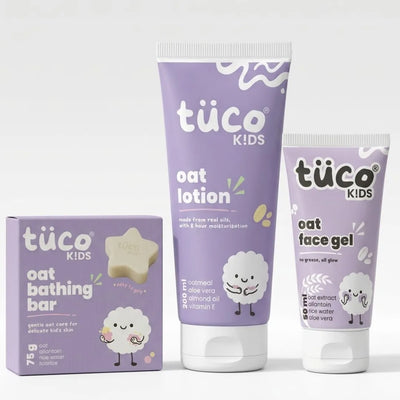
Tuco Kids tip: Start with the gentlest possible formula — a barrier-repair Oat Kit is built specifically for reactive, easily-dried baby and toddler skin.
Shop Oat Kit →

Contents
- Quick Comparison: Best Tuco Products for Baby Dry Skin Patches
- What Dry Skin Patches Look Like on a Baby
- Baby Dry Skin on Face: What's Different
- What Causes Dry Skin Patches in Babies
- Decision Tree: Home Remedies by Cause
- The Right Ingredients — and What to Avoid
- Preventing Dry Patches Before They Start
- When to See a Doctor
- FAQs
- Related Reads
Quick Comparison: Best Tuco Products for Baby Dry Skin Patches
| Ingredients | Tuco Product Solution | Key Product Features | Age-wise Recommendation |
|---|---|---|---|
| Oat extract, aloe vera | 3-in-1 Oat Kit | Barrier-repair bathing bar, lotion & face gel — the gentlest starting point for reactive, patchy skin | 2–15 years, best for toddlers |
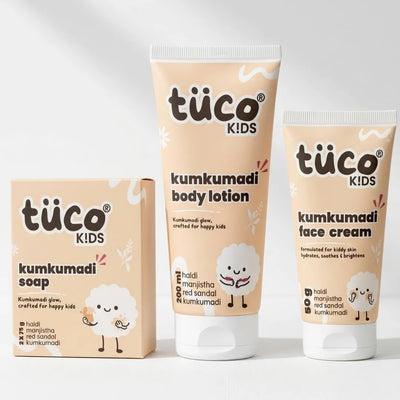
| Saffron, sandalwood, turmeric | 3-in-1 Kumkumadi Kit | Best once patches have cleared and left behind dullness or uneven tone | 4–15 years |
| Shea butter, almond oil, aloe vera | Deep Moisture Body Lotion | Richest formula in the range — built for stubborn, recurring dry patches | 3–15 years |
| Turmeric, Kakadu Plum, almond oil | 3-in-1 Bath Kit | Daily soap, lotion & face cream — a complete everyday moisture routine | 3–15 years |
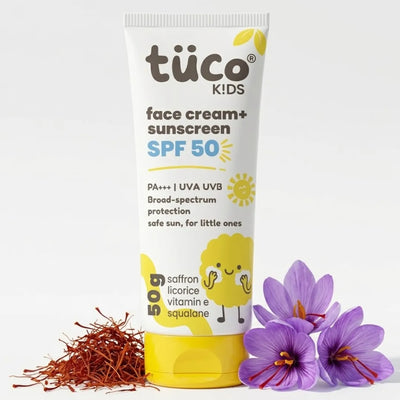
| SPF 30, turmeric, Kakadu Plum | 3-in-1 Dull Skin Kit (SPF 30) | Best if dryness is paired with regular outdoor sun exposure | 4–15 years |

What Dry Skin Patches Look Like on a Baby
- Rough, slightly raised texture that feels different under your fingers than the surrounding skin — often the first sign before any visible color change appears.
- Fine, powdery flaking or light scaling, most common on cheeks, arms, legs, and the backs of hands — areas most exposed to air and friction from clothing.
- A slightly lighter or greyish tone on the patch compared to surrounding skin, sometimes with a subtle pink or reddish tinge if the area has been rubbed or scratched.
- Tightness that shows up as fussiness during diaper changes or dressing, especially if the patch is somewhere clothing rubs against it repeatedly.
- If you've been searching for dry patches on baby skin pictures to compare against what you're seeing, the most reliable at-home check isn't visual alone — run a clean finger gently over the area; ordinary dryness feels rough and flaky, while eczema-type patches tend to feel thicker, warmer, and more textured.
Baby Dry Skin on Face: What's Different
- Facial skin is thinner than skin on the arms or legs, so baby dry skin on face tends to show up faster and look more noticeable than dryness elsewhere on the body.
- Drooling, frequent wiping, and constant contact with bibs or clothing all add extra friction to facial skin, which is a factor competitors rarely mention despite it being one of the most common everyday triggers.
- Cheeks and the chin area are the most common spots, since they're exposed to the most air, saliva, and fabric contact throughout the day.
- A lighter, face-specific formula generally works better here than a heavier body lotion, which can feel too rich and occasionally clog delicate facial pores.
What Causes Dry Skin Patches in Babies
- A baby's skin barrier is still developing in the first year or two, which means it holds onto moisture far less effectively than older kids' or adult skin — this alone explains most everyday dryness without any other factor involved.
- Frequent bathing with hot water or a foaming, fragranced soap strips natural oils faster than a baby's skin can replace them.
- Seasonal changes — winter cold, indoor heating, or air conditioning — pull moisture from the skin faster than usual, showing up as patches within just a few days of a weather shift.
- New fabrics, detergents, or a recently introduced skincare product can trigger reactive dryness that looks identical to weather-related patches but resolves once the irritant is removed.
- A gap most generic parenting articles miss: teething can indirectly worsen facial dryness, since increased drooling adds extra moisture-then-evaporation cycles on the chin and cheeks throughout the day.
Shop Oat Kit →

Decision Tree: Home Remedies by Cause
- Is the dryness worse after bath time, and are baths long or with hot water? → Shorten baths to under 10 minutes with lukewarm water, and apply a rich moisturizer within 3 minutes of drying off — this alone resolves most bath-related dryness within about a week.
- Is the pattern seasonal — worse specifically in winter or after AC/heater exposure? → Switch to a richer, more occlusive lotion during that season rather than overhauling the entire routine; the Deep Moisture Body Lotion is built for exactly this.
- Is the dryness limited to the face, especially cheeks or the chin? → A lighter, face-specific product from the Oat Kit tends to work better than a heavier body lotion, which can feel too rich for a baby's facial skin.
- Did the dryness start right after switching soap, detergent, or a new skincare product? → Remove the suspected irritant first before adding new treatments — sometimes simplifying the routine clears things up faster than layering on more products.
- Is the patch red, thickened, weepy, or cracked rather than simply dry and flaky? → This goes beyond routine home care — see "When to See a Doctor" below.
Shop 3-in-1 Bath Kit →
The Right Ingredients — and What to Avoid
- Look for: oat extract and aloe vera for barrier repair, shea butter and almond oil for deeper moisture retention, and mild, low-foaming cleansers that don't strip natural oils with every wash.
- Avoid: sulfates, synthetic fragrance, dyes, and alcohol-based products — all common irritants that can turn simple dryness into a more stubborn, reactive patch.
- Always patch-test a new product on a small area first, especially for very young babies — even naturally derived ingredients can occasionally cause a reaction on newly forming skin.
- For babies under one year, check that any product is specifically labeled as suitable for that age range before use, and when in doubt, a quick check with your pediatrician costs nothing and adds real peace of mind.
- Consistency in ingredients matters more than switching products frequently — repeatedly changing formulas to "find the fix" often reintroduces new potential irritants before the current routine has had a fair chance to work.
Shop 3-in-1 Bath Kit →

Preventing Dry Patches Before They Start
- Keep baths short and lukewarm. Under 10 minutes with water that's warm rather than hot preserves far more of the skin's natural oils than a longer, hotter soak.
- Moisturize within the first 3 minutes after bathing. Skin that's still slightly damp absorbs moisturizer more effectively than skin that's had time to fully dry out, which is why timing matters as much as the product itself.
- Choose fragrance-free laundry detergent for baby clothes. Residue from strongly scented detergents is a commonly overlooked trigger for both facial and body dryness, especially in areas where fabric sits closest to skin.
- Run a humidifier during dry seasons. Indoor heating and air conditioning both lower humidity indoors, and a humidifier in the nursery can meaningfully reduce how often patches reappear.
- Stick with one gentle routine rather than rotating products. Skin needs a few consistent days to respond to any given formula — switching frequently makes it harder to tell what's actually working.
- Dress in breathable, soft fabrics. Cotton and other soft, breathable materials reduce the friction that can aggravate already-dry patches, particularly around the cheeks, neck, and diaper area.
Shop Oat Kit →
When to See a Doctor
Most baby dry skin patches respond to a consistent, gentle routine within 1–2 weeks. It's worth a doctor's visit instead of continuing home care alone if:
- The patch is cracked, bleeding, or open, which raises the risk of infection.
- Skin looks red, thickened, or weepy rather than simply dry and flaky — this can point to eczema, which needs a different treatment approach than routine dryness.
- Your baby seems unusually fussy, uncomfortable, or is scratching enough to break the skin.
- A consistent, gentle routine hasn't improved anything after 2–3 weeks of use.
- Patches appear alongside a fever, rash spreading rapidly, or any other symptom that feels out of the ordinary.
FAQs
What causes dry skin patches on a baby?
A baby's skin barrier is still developing and loses moisture much faster than older skin, so everyday triggers like hot baths, harsh soap, seasonal weather changes, or new fabrics can quickly show up as dry patches.
What do dry patches on baby skin actually look like?
They typically appear as rough, slightly raised areas with fine, powdery flaking, often on the cheeks, arms, or legs. The skin may look slightly lighter or greyish compared to the surrounding area, without redness or thickening.
How can I tell if it's just dry skin or something like eczema?
Simple dryness feels rough and flaky to the touch, while eczema-type patches tend to feel thicker, warmer, and more textured, often with visible redness or a weepy appearance. When unsure, a gentle, fragrance-free routine is safe to try either way before deciding whether to see a doctor.
Why does my baby have dry skin specifically on their face?
Facial skin is thinner and gets more exposure to drooling, wiping, and fabric friction from bibs and clothing, which speeds up moisture loss compared to skin elsewhere on the body.
What are safe home remedies for baby dry skin?
Shorter, lukewarm baths, a mild fragrance-free cleanser, and a rich moisturizer applied within 3 minutes of bath time are the most effective first steps. Most patches improve noticeably within a week of consistent care.
Is it safe to use lotion on a newborn's face?
Many gentle, baby-specific formulas are designed for facial use, but always check the product's labeled age range first, and consider a quick check with your pediatrician for babies under a few months old, especially for first-time use.
How often should I moisturize my baby's dry skin?
Applying moisturizer at least once a day, ideally right after bath time while skin is still slightly damp, helps lock in moisture. Particularly dry patches may benefit from a second light application before bed.
When should I take my baby to the doctor for dry skin patches?
See a doctor if patches are cracked, bleeding, red, thickened, or weepy, or if a consistent gentle routine hasn't helped after 2–3 weeks. These signs suggest something beyond routine dryness that needs a closer look.
Most parents find that once they settle on one gentle, consistent routine, dry patches stop being a recurring worry and become an occasional, easily-managed nuisance instead. The goal isn't to find one perfect product on the first try — it's to give a genuinely gentle formula enough consistent use to actually show what it can do, rather than judging results after just a day or two.