



Best Moisturizer for Kids with Sensitive Skin
Not every moisturizer that works on adult skin belongs anywhere near a child's — sensitive, reactive skin needs fewer ingredients, gentler cleansers, and formulas built for a thinner, faster-drying skin barrier. If you've been comparing the best moisturizer for baby dry skin against a dozen near-identical bottles, the ingredient list matters far more than the packaging — and a handful of formulas consistently outperform the rest for genuinely sensitive skin.
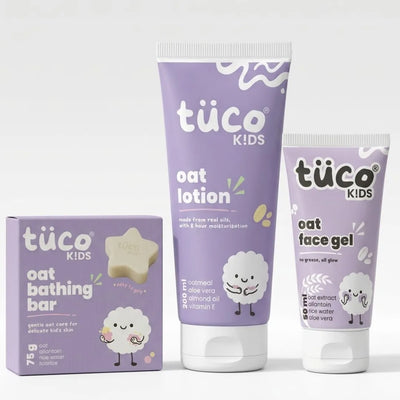
Tuco Kids tip: For reactive, easily-irritated skin, start with the simplest possible formula — the Oat Kit is built around barrier-repair ingredients rather than a long list of actives.
Shop Oat Kit →

Contents
- Quick Comparison: Best Tuco Moisturizers for Sensitive Skin
- Best Moisturizers for Kids with Sensitive Skin, Ranked
- What to Look For in a Sensitive-Skin Moisturizer
- Decision Tree: Which Moisturizer Fits Your Child
- A Note on Newborns and Very Young Infants
- How to Apply Moisturizer for Maximum Effect
- When to See a Doctor
- FAQs
- Related Reads
Quick Comparison: Best Tuco Moisturizers for Sensitive Skin
| Ingredients | Tuco Product Solution | Key Product Features | Age-wise Recommendation |
|---|---|---|---|
| Oat extract, aloe vera | 3-in-1 Oat Kit | Barrier-repair bathing bar, lotion & face gel — the top pick for reactive, sensitive skin | 2–15 years, best for toddlers |
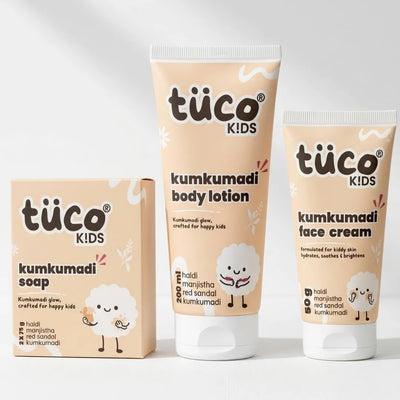
| Saffron, sandalwood, turmeric | 3-in-1 Kumkumadi Kit | Best once sensitivity has calmed and skin needs an even-tone finishing touch | 4–15 years |
| Shea butter, almond oil, aloe vera | Deep Moisture Body Lotion | The richest formula in the range — best for the driest, most stubborn patches | 3–15 years |
| Turmeric, Kakadu Plum, almond oil | 3-in-1 Bath Kit | Daily soap, lotion & face cream — a complete, everyday sensitive-skin routine | 3–15 years |
| SPF 30, turmeric, Kakadu Plum | 3-in-1 Dull Skin Kit (SPF 30) | Best if sensitive skin also gets regular outdoor sun exposure | 4–15 years |

Best Moisturizers for Kids with Sensitive Skin, Ranked
- 1. 3-in-1 Oat Kit — Best Overall. Oat extract is one of the most well-tolerated barrier-repair ingredients available, and this kit pairs it with aloe vera in a bathing bar, lotion, and face gel — a complete, low-irritant system rather than a single product doing all the work.
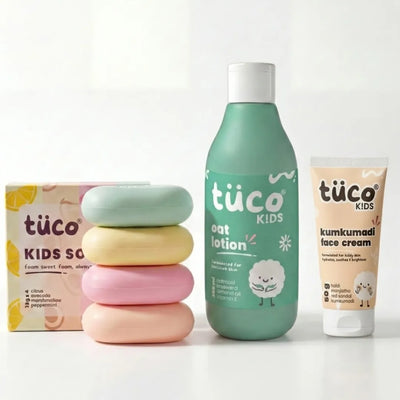
- 2. 3-in-1 Bath Kit — Best Everyday Routine. For families that want one consistent system for daily use, this kit's turmeric and Kakadu Plum blend covers cleansing, body moisture, and face care without needing to layer multiple separate products.
- 3. Deep Moisture Body Lotion — Best for Stubborn Dryness. This is the richest formula in the range, best reserved for patches that don't fully resolve with a lighter daily lotion, or for particularly dry seasons.
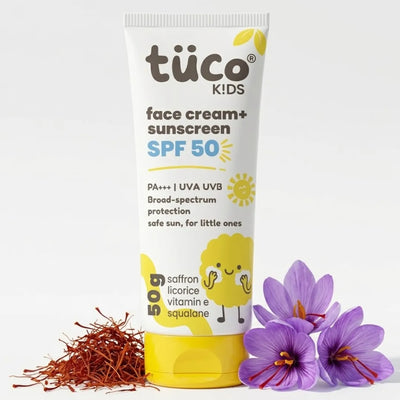
- 4. 3-in-1 Dull Skin Kit (SPF 30) — Best for Outdoor-Active Kids. Combines moisture with sun protection, which matters more for sensitive skin than people often realize — sun exposure can worsen an already-compromised skin barrier.
- 5. 3-in-1 Kumkumadi Kit — Best Finishing Touch. Not a first-line pick for active sensitivity, but a strong choice once skin has calmed down and you want to address dullness or uneven tone left behind.
Shop Oat Kit →
What to Look For in a Sensitive-Skin Moisturizer
- Fewer ingredients, not more actives. A short, recognizable ingredient list is a better sign for sensitive skin than a formula packed with trending actives — every added ingredient is another potential trigger.
- Barrier-repair ingredients: oat extract, aloe vera, and ceramide-supporting oils help rebuild the skin's natural moisture barrier rather than just sitting on top of it temporarily.
- Fragrance-free, not just "lightly scented." Even natural fragrance can be a trigger for genuinely reactive skin — this is a detail most competitor round-ups gloss over by recommending anything labeled "gentle" without checking for hidden fragrance.
- Avoid: sulfates, parabens, synthetic dyes, and alcohol-based ingredients, all of which can strip or irritate an already-sensitive barrier.
- A genuine moisturizer for baby dry skin should list its full ingredient panel clearly on the product page — if a listing is vague about what's actually inside, that's worth treating as a red flag before buying.
Decision Tree: Which Moisturizer Fits Your Child
- Is your child's skin reactive, easily irritated, or prone to flares? → Start with the Oat Kit — its short, barrier-focused ingredient list is the lowest-risk option for genuinely sensitive skin.
- Do you want one product that covers cleansing, body, and face in a single routine? → The 3-in-1 Bath Kit simplifies things without sacrificing gentleness.
- Have you tried a lighter lotion without much improvement on stubborn dry patches? → Step up to the Deep Moisture Body Lotion, which is formulated to be more occlusive and longer-lasting on skin.
- Does your child spend a lot of time outdoors? → Choose the Dull Skin Kit with SPF 30 so moisture and sun protection are handled together rather than as two separate steps.
- Is skin currently calm, and you're looking to address dullness or uneven tone rather than active dryness? → The Kumkumadi Kit is the better fit at this stage, rather than a heavier barrier-repair formula.
Shop Deep Moisture Body Lotion →

A Note on Newborns and Very Young Infants
- Newborn skin is even thinner and more permeable than a toddler's, which is why most gentle skincare lines — including formulas built for "kids" broadly — are labeled for use from around age 2 onward rather than from birth.
- If you're searching for the best cream for newborn dry skin, always check the labeled age range on any product first, and for babies under a few months old, a quick check with your pediatrician before introducing a new formula is a smart, low-effort step.
- For infants old enough for a labeled formula, the same principles apply as for toddlers: short ingredient lists, no added fragrance, and consistent application right after bathing.
- Patch-testing on a small area of skin — like the inner forearm — 24 hours before full use is a simple way to catch a potential reaction early, especially for a baby's first time using any new product.
- If you're specifically comparing options for the best cream for infant dry skin, prioritize formulas explicitly labeled for the age you're shopping for over ones simply marketed with "gentle" or "natural" language, which aren't regulated terms and can vary widely between brands.
- Packaging matters more than people expect for consistent use — a pump or easy-open lid encourages more frequent, generous application than a tub that's fiddly to open during a rushed bedtime routine, which quietly affects how well any moisturizer performs in real daily use.
Shop 3-in-1 Bath Kit →

How to Apply Moisturizer for Maximum Effect
- Time it right — within 3 minutes of bathing. Skin that's still slightly damp absorbs moisturizer far more effectively than skin that's had time to fully dry out, which is why timing matters as much as the formula itself.
- Use enough product. Many parents under-apply moisturizer, using a thin, quick swipe rather than a generous layer — sensitive skin generally needs more product, applied more thoroughly, than typical skin.
- Pat, don't rub, into dry patches. Rubbing can create friction that irritates already-sensitive areas; a gentle patting motion helps the product absorb without added stress on the skin.
- Reapply after water exposure. Swimming, extra baths, or a lot of hand-washing during the day all strip moisture — a quick reapplication afterward keeps the barrier from drying out again.
- Stick with one product for at least two weeks before judging results. Skin needs a consistent trial period to show real improvement — switching formulas every few days makes it hard to tell what's actually working.
- Keep the room humidity in mind. A humidifier during dry seasons or in air-conditioned rooms reduces how much work the moisturizer alone has to do to keep skin comfortable.
Shop Oat Kit →
When to See a Doctor
Most sensitive, dry skin responds well to a consistent, gentle moisturizing routine within 1–2 weeks. It's worth a doctor's visit instead of continuing home care alone if:
- Skin is cracked, bleeding, or open, raising the risk of infection.
- Patches look red, thickened, or weepy rather than simply dry and flaky — a pattern that can point to eczema needing a different treatment approach.
- Your child seems unusually uncomfortable, fussy, or is scratching enough to break the skin.
- A consistent, gentle routine hasn't improved anything after 2–3 weeks of use.
- A new moisturizer seems to be causing a reaction — redness, bumps, or increased irritation — rather than helping.
FAQs
What is the best moisturizer for baby dry skin?
Formulas built around barrier-repair ingredients like oat extract and aloe vera, with short, fragrance-free ingredient lists, tend to work best for genuinely dry or sensitive baby skin, since they support the skin barrier rather than just sitting on top of it.
How often should I use moisturizer for baby dry skin?
At least once daily, ideally applied within a few minutes of bath time while skin is still slightly damp. Particularly dry patches may benefit from a second light application later in the day.
What's the best cream for infant dry skin on the face specifically?
A lighter, face-specific formula generally works better than a heavier body lotion, which can feel too rich for delicate facial skin and occasionally clog pores.
What's the best cream for newborn dry skin?
Always check the labeled age range on a product before use, since many gentle formulas are designed from around age 2 onward. For babies under a few months old, a quick check with your pediatrician before trying a new product is a sensible extra step.
How do I know if a moisturizer is truly gentle enough for sensitive skin?
Check for a short, recognizable ingredient list, no added fragrance, and no sulfates, parabens, or dyes. A clear, fully listed ingredient panel on the product page is also a good sign of transparency.
Can I use the same moisturizer on my baby's face and body?
You can, but a lighter, face-specific formula often works better on facial skin, which is thinner and more prone to irritation than skin on the arms or legs.
Is natural or organic always better for sensitive baby skin?
Not necessarily — "natural" and "organic" aren't strictly regulated terms, and some natural ingredients (including certain essential oils) can still cause irritation. Checking the actual ingredient list matters more than the marketing language on the front of the bottle.
When should I see a doctor about my baby's dry skin instead of trying another moisturizer?
See a doctor if skin is cracked, bleeding, red, or weepy, or if a consistent gentle routine hasn't helped after 2–3 weeks. These signs suggest something beyond routine dryness that a new moisturizer alone likely won't resolve.
Most parents shopping for sensitive skin end up trying two or three moisturizers before finding the one that genuinely works, and that's normal — every child's skin barrier is a little different. The pattern that tends to hold true across almost every case, though, is that simpler formulas with fewer, well-chosen ingredients outperform anything with a long list of trending actives. Starting with a gentle, barrier-focused option and giving it a real two-week trial is usually a faster path to comfortable skin than jumping between products every few days.