



Best Body Wash for Kids with Sensitive Skin
The cleanser touching your child's skin every single day matters more than almost any other product in the routine — used once, a harsh soap is a minor annoyance, but used daily, it's often the actual root cause of dryness, irritation, or recurring rashes. If you're comparing kids body wash for sensitive skin, the ingredient list deserves more attention than the scent or packaging.
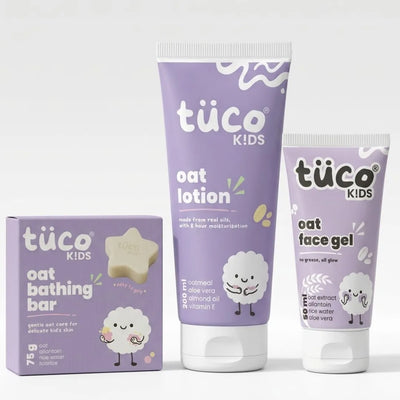
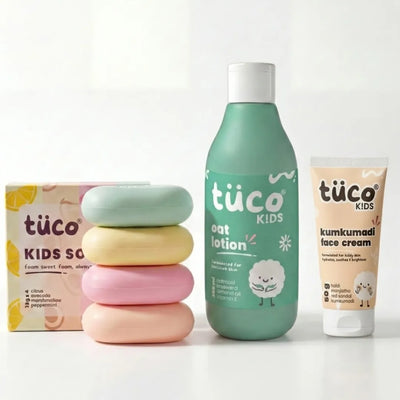
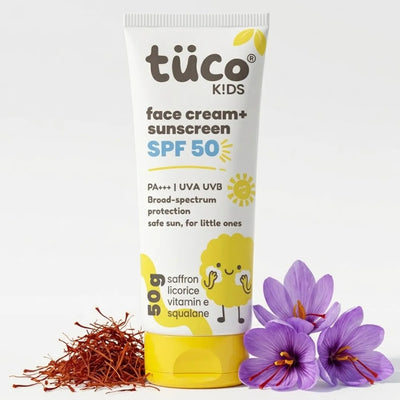
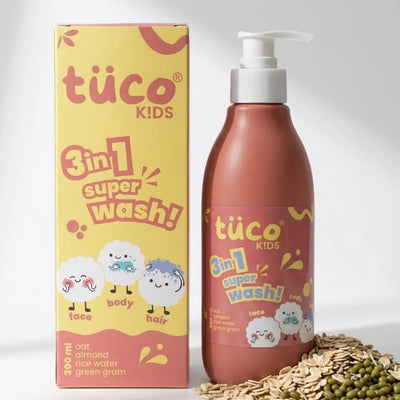
Tuco Kids tip: A genuinely mild, low-foaming formula is the single biggest lever for sensitive skin — the 3-in-1 Bath Kit pairs a gentle daily soap with matching lotion and face cream.
Shop 3-in-1 Bath Kit →

Contents
- Quick Comparison: Best Tuco Body Wash Options
- Why Body Wash Choice Matters More Than You'd Think
- What to Look For in a Gentle Formula
- Signs Your Current Body Wash Is Too Harsh
- Decision Tree: Choosing the Right Formula
- Building a Gentle Bath-Time Routine
- Body Wash Myths Worth Clearing Up
- Bar Soap vs. Liquid Wash vs. Foam: Does Format Matter?
- When to See a Doctor
- FAQs
- Related Reads
Quick Comparison: Best Tuco Body Wash Options
| Ingredients | Tuco Product Solution | Key Product Features | Age-wise Recommendation |
|---|---|---|---|
| Turmeric, Kakadu Plum, almond oil | 3-in-1 Bath Kit | Daily soap, lotion & face cream — the most complete everyday sensitive-skin system | 3–15 years |
| Oat extract, aloe vera | 3-in-1 Oat Kit | A barrier-repair bathing bar — the gentlest pick for reactive, easily irritated skin | 2–15 years, best for toddlers |
| Shea butter, almond oil, aloe vera | Deep Moisture Body Lotion | Pairs with any gentle wash for extra moisture support after washing | 3–15 years |
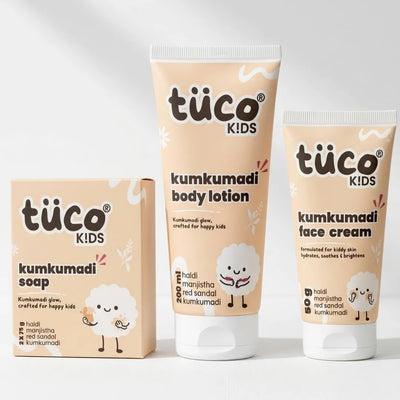
| Saffron, sandalwood, turmeric | 3-in-1 Kumkumadi Kit | A festive, ritual-style wash-and-care set for once skin is calm and balanced | 4–15 years |
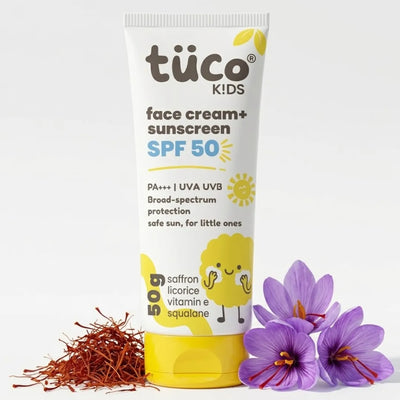
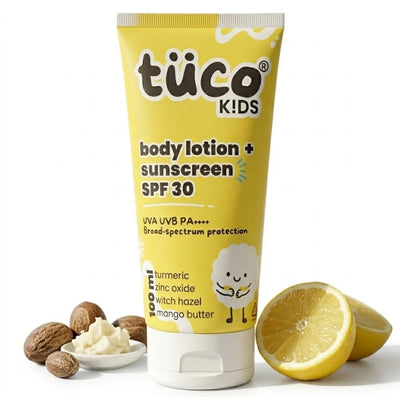
| SPF 30, turmeric, Kakadu Plum | 3-in-1 Dull Skin Kit (SPF 30) | Best if daily washing needs to pair with regular outdoor sun exposure | 4–15 years |

Why Body Wash Choice Matters More Than You'd Think
- A body wash touches every inch of skin, every single day — small irritant effects compound over weeks in a way a once-off product never would.
- Foaming agents (often sulfates) create the "clean" lathery feeling people expect, but they're also one of the most common reasons for stripped, tight-feeling skin after a bath.
- Fragrance is the single most common hidden irritant in body washes marketed as "gentle" — a product can be sulfate-free and still cause reactions purely from added scent.
- Most competitor round-ups for the best soap for sensitive skin kids rank purely on brand recognition or price — checking the actual ingredient panel tells a more useful story than either.
- Water temperature and washcloth texture add to the effect of the wash itself — a rough washcloth or loofah can undo the benefit of an otherwise gentle formula by adding unnecessary friction to the skin.
What to Look For in a Gentle Formula
- Sulphate-free, low-foaming base. A gentler cleansing agent won't lather as dramatically, but that's a feature, not a downside — heavy foam usually means more stripping, not more cleaning.
- Fragrance-free or very lightly scented. Even natural fragrance can be a trigger for genuinely reactive skin.
- Calming, barrier-supportive ingredients: oat extract, aloe vera, and Kakadu Plum help skin retain moisture through the wash rather than stripping it away.
- A short, recognizable ingredient list — every added ingredient is another potential trigger, so simpler formulas tend to be safer bets for sensitive skin.
- Avoid: sulfates, parabens, synthetic dyes, and alcohol-based ingredients, all of which are more likely to irritate than clean effectively.
Shop Oat Kit →

Signs Your Current Body Wash Is Too Harsh
- Skin feels tight or squeaky right after a bath — a classic sign of a formula stripping too much natural oil.
- Redness or a rash appearing shortly after bathing, especially in skin folds where product can linger longer during rinsing.
- Increased dryness despite regular moisturizing — if lotion isn't keeping up, the wash step is often the real culprit, not the moisturizer.
- Heavy fragrance lingering on skin or towels long after bathing, which suggests a formula relying on strong scent rather than gentle cleansing.
Decision Tree: Choosing the Right Formula
- Is your child's skin generally reactive or prone to flares? → Start with the gentlest possible option, ideally fragrance-free with a short ingredient list.
- Do you want one complete system rather than mixing separate products? → A 3-in-1 kit covering soap, lotion, and face care in one line simplifies the routine and reduces the chance of mismatched ingredients.
- Is your child mainly dealing with dryness rather than active irritation? → Pair a gentle wash with a richer follow-up lotion for extra moisture support.
- Does your child spend a lot of time outdoors after bathing? → Consider a routine that pairs washing with SPF, so sun protection isn't a separate, easily-skipped step.
- Is skin calm and balanced, and you're just maintaining that? → A slightly more indulgent, festive formula works well here without needing the strictest barrier-repair option.
Shop 3-in-1 Bath Kit →
Building a Gentle Bath-Time Routine
- Keep baths short and lukewarm. Under 10 minutes with warm, not hot, water preserves far more natural oil than a longer, hotter soak.
- Use a small amount of a mild wash rather than a heavy, all-over lather — a light coating is enough to clean without over-stripping.
- Rinse thoroughly. Leftover product residue, especially in skin folds, is a common and overlooked irritation source.
- Pat dry, don't rub — friction on already-clean, damp skin can cause unnecessary irritation.
- Moisturize within 3 minutes of bathing to lock in the moisture the wash step left behind.
Shop Deep Moisture Body Lotion →
Body Wash Myths Worth Clearing Up
- "More lather means cleaner skin." Foam level is a function of surfactant strength, not cleaning power — a low-foaming wash can clean just as effectively while being far gentler on sensitive skin.
- "Kids need antibacterial soap for proper hygiene." Antibacterial formulas are rarely necessary for everyday use and can be more stripping than a standard gentle cleanser, without meaningful added benefit for typical daily hygiene.
- "If it smells nice, it's fine for sensitive skin." Fragrance — even pleasant, "natural-smelling" fragrance — is one of the most common hidden irritants, regardless of how mild the scent seems.
- "Baby wash and kids' body wash are interchangeable at any age." Formulas do shift as kids age, and using an infant formula on much older, more active kids (or vice versa) isn't necessarily wrong, but checking the labeled range helps match the formula to actual skin needs.
- "Natural or herbal automatically means gentler." Some natural ingredients, including certain essential oils, can still irritate sensitive skin — checking the specific ingredient list is more reliable than the "natural" label alone.
Shop 3-in-1 Bath Kit →
Bar Soap vs. Liquid Wash vs. Foam: Does Format Matter?
- Bar soap: Traditional bars, especially low-foaming, moisturizing ones, can be very gentle and tend to have shorter, simpler ingredient lists than many liquid formulas — worth considering if a liquid wash hasn't worked well.
- Liquid body wash: Easier to control the amount used per bath, which helps avoid over-application. Look for pump or squeeze packaging that dispenses a consistent, small amount each time.
- Foaming pump formulas: Popular for younger kids because they're fun and easy to use, but check that the foam comes from a gentle surfactant base rather than harsher sulfates just to achieve that texture.
- Bath additives (oils, oat-based soaks): Not a replacement for a proper cleanser but a good complement, especially for very dry or reactive skin during flare periods.
- The format matters less than the ingredient list underneath it — a gentle bar and a gentle liquid wash can perform almost identically, so choose based on what's easiest to use consistently in your family's actual bath-time routine.
When to See a Doctor
Most sensitive-skin irritation from a harsh body wash resolves within a week or two of switching to a gentler formula. It's worth a doctor's visit instead of continuing to experiment with products if:
- A rash spreads, worsens, or doesn't improve after switching to a gentler wash.
- Skin looks red, thickened, or weepy rather than simply dry or mildly irritated.
- Reactions happen with multiple different products, which may point to a broader sensitivity worth a dermatologist's input.
- Itching or discomfort disrupts sleep or daily activities despite a gentle routine.
FAQs
What is the best kids' body wash for sensitive skin?
Sulphate-free, fragrance-free formulas with calming ingredients like oat extract or aloe vera tend to work best. A short, recognizable ingredient list is a more reliable sign of gentleness than marketing claims alone.
What's the best soap for sensitive skin in kids specifically?
A low-foaming, low-irritant bar or wash without sulfates, dyes, or added fragrance is generally the safest choice, especially for skin that's reacted to products before.
How do I know if my child's body wash is too harsh?
Tight or squeaky-feeling skin right after a bath, redness, or dryness that persists despite regular moisturizing are all signs the wash step itself may be the problem.
Should I use a body wash or a bar soap for sensitive skin?
Both can work well as long as the formula is gentle — a low-foaming bar or a sulphate-free liquid wash are equally valid choices; the ingredient list matters more than the format.
How often should kids with sensitive skin bathe?
Daily short, lukewarm baths are generally fine with a gentle formula, but some kids do better with 3–4 baths a week and spot-cleaning in between if dryness is a recurring issue.
Can a body wash cause a rash on its own?
Yes — fragrance, sulfates, and dyes in a body wash are common causes of reactive rashes, even in products marketed as gentle. Switching to a simpler formula often resolves the issue within days.
Is natural or organic body wash automatically better for sensitive skin?
Not necessarily — these aren't strictly regulated terms, and some natural ingredients can still irritate. Checking the actual ingredient list is more reliable than front-of-bottle claims.
When should I see a doctor about a reaction to body wash?
See a doctor if a rash spreads or doesn't improve after switching products, if reactions happen across multiple different washes, or if discomfort is disrupting sleep.
Choosing the right body wash isn't about finding a single miracle product — it's about consistently avoiding the ingredients that strip and irritate, and giving a gentle formula a fair, ongoing trial. Most parents notice a real difference within the first week or two of switching, which is usually the clearest sign the previous formula was the actual issue all along.
If you have more than one child, keep in mind that even siblings can tolerate the same formula differently — what works beautifully for one may not suit another, so it's worth evaluating each child's skin individually rather than assuming a family-wide default will fit everyone equally well. The right body wash is ultimately the one your child's skin tolerates well and that fits easily into your daily routine — not necessarily the most expensive or heavily marketed option on the shelf. Paying attention to how skin responds over the first couple of weeks tells you far more than any label ever will, and keeping a brief note of what you've tried and how skin reacted makes future decisions faster and easier.