



Baby Rashes on Face: Causes & Home Remedies
A rash on a baby's face can look scary out of proportion to how serious it usually is — most facial rashes in infants are mild, common, and resolve within days of a few simple changes. Knowing a baby rashes on face home remedy that actually works starts with understanding what's causing it, since drooling, new products, and dryness all look slightly different up close.
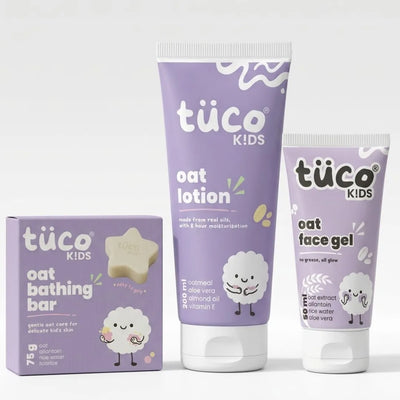
Tuco Kids tip: For reactive facial skin, start with the gentlest formula available — the Oat Kit's face gel is built specifically for calming, barrier-friendly care.
Shop Oat Kit →

Contents
- Quick Comparison: Best Tuco Products for Baby Facial Rashes
- How Dry Skin Looks Like vs. a Rash vs. Infection
- Common Causes of Baby Face Rashes
- Decision Tree: Home Remedies by Cause
- Ingredients: What Helps and What to Avoid
- Preventing Facial Rashes Before They Start
- Common Myths About Baby Face Rashes
- When to See a Doctor
- FAQs
- Related Reads
Quick Comparison: Best Tuco Products for Baby Facial Rashes
| Ingredients | Tuco Product Solution | Key Product Features | Age-wise Recommendation |
|---|---|---|---|
| Oat extract, aloe vera | 3-in-1 Oat Kit | Barrier-repair bathing bar, lotion & face gel — the gentlest starting point for facial rashes | 2–15 years, best for toddlers |
| Turmeric, Kakadu Plum, almond oil | 3-in-1 Bath Kit | Includes a dedicated face cream for a complete, gentle daily routine | 3–15 years |
| Shea butter, almond oil, aloe vera | Deep Moisture Body Lotion | Best for stubborn dryness elsewhere on the body once the facial rash has calmed | 3–15 years |
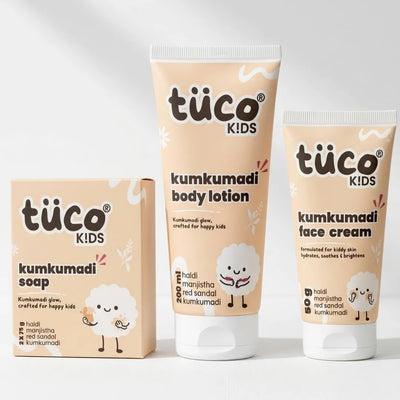
| Saffron, sandalwood, turmeric | 3-in-1 Kumkumadi Kit | Best once skin has calmed and needs an even-tone finishing touch | 4–15 years |
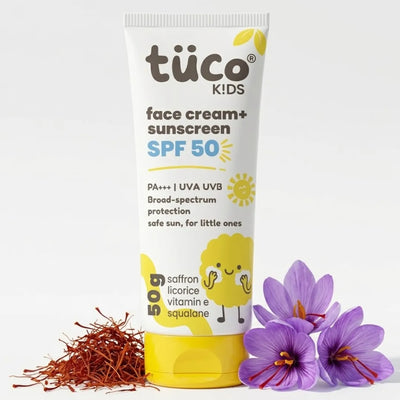
| SPF 30, turmeric, Kakadu Plum | 3-in-1 Dull Skin Kit (SPF 30) | Best once skin has healed and needs sun protection during outdoor time | 4–15 years |

How Dry Skin Looks Like vs. a Rash vs. Infection
- How dry skin looks like on a baby's face: fine, powdery flaking, a slightly rough texture, and sometimes a faint pink tinge — but no clear raised bumps or defined borders.
- A typical rash: small, raised bumps or patches, sometimes clustered together, often with a clearer border than plain dryness and sometimes slightly warm to the touch.
- Possible dry skin infection: look for increasing redness, warmth, swelling, pus-filled bumps, or a rash that's rapidly spreading rather than staying in one area — these signs point beyond simple dryness or a mild rash.
- The general rule: dryness alone feels rough and flat, a rash has some texture or raised quality, and an infection adds heat, spreading, or visible fluid — each step up in this list is a step up in how quickly it's worth addressing.
Common Causes of Baby Face Rashes
- Drool rash: constant moisture from drooling, especially during teething, breaks down the skin barrier around the mouth and chin, leading to redness and small bumps.
- Contact irritation: new soaps, lotions, wipes, or even fabric from bibs and burp cloths rubbing against the face can trigger a reactive rash.
- Heat rash: small, red bumps that show up during hot weather or overheating, often on the forehead and cheeks where sweat can't easily evaporate.
- Baby acne: small, common bumps that typically appear in the first few weeks of life, related to maternal hormones and usually resolving on their own without treatment.
- Simple dryness: often mistaken for a rash, but lacking the raised texture — usually resolves with a gentler routine rather than needing anything specifically "anti-rash."
- A gap most generic parenting content misses: rotating burp cloths and bibs more frequently, and switching to a softer fabric, resolves a surprising share of "unexplained" facial rashes that parents assume are product-related.
- Cold, dry winter air can also trigger or worsen facial rashes in babies, since the same thin, exposed skin that's prone to drool rash is equally prone to windburn-style irritation during colder months.
Shop Oat Kit →
Decision Tree: Home Remedies by Cause
- Is the rash concentrated around the mouth and chin, and does your baby drool a lot? → This points to drool rash. Gently pat the area dry throughout the day, and apply a thin barrier of a gentle, fragrance-free moisturizer to protect skin from constant moisture contact.
- Did the rash start right after a new product, wipe, or fabric touched your baby's face? → Remove the suspected irritant first and switch to the simplest, most fragrance-free option you have.
- Did the rash appear during hot weather or after your baby was bundled up too warmly? → This fits heat rash. Dress your baby in lighter layers, keep the room cool, and avoid heavy lotions until the bumps clear.
- Is the rash made of tiny, consistent bumps and your baby is under a few weeks old? → This is likely baby acne, which typically resolves on its own within a few weeks without any specific treatment beyond gentle cleansing.
- Does the area look increasingly red, warm, swollen, or is it spreading quickly? → This goes beyond home remedies — see "When to See a Doctor" below.
Shop 3-in-1 Bath Kit →

Ingredients: What Helps and What to Avoid
- Look for: oat extract and aloe vera for calming, barrier-supporting care, and mild, fragrance-free cleansers that won't add further irritation.
- Avoid: sulfates, synthetic fragrance, dyes, and alcohol-based products, all of which can turn a mild rash into a more stubborn, reactive one.
- Petroleum jelly or a thin layer of a gentle barrier cream can help protect against drool-related irritation, especially reapplied a few times throughout the day.
- Always patch-test a new product on a small area first, especially during an active rash — even gentle, naturally derived formulas can occasionally cause a reaction on already-irritated skin.
- Simplicity wins for facial skin — fewer products, applied consistently, tend to outperform layering multiple treatments at once.
Preventing Facial Rashes Before They Start
- Change bibs and burp cloths frequently. Damp fabric left against the skin for long periods is one of the most common, easily-fixed causes of recurring drool-area irritation.
- Pat the drool area dry throughout the day rather than letting moisture sit, especially during heavy teething phases.
- Introduce new products one at a time. Waiting a few days between introducing a new soap, lotion, or wipe makes it much easier to identify the actual cause if a rash does appear.
- Keep the room temperature moderate. Overheating and overdressing are common, overlooked triggers for heat rash on the face and elsewhere.
- Stick with fragrance-free products for facial skin specifically, even if you use a lightly scented option on the body — facial skin reacts to fragrance more readily than skin elsewhere.
Shop Oat Kit →
Common Myths About Baby Face Rashes
- "Any rash means an allergy." True allergic rashes are less common than parents assume — irritation from moisture, friction, or a mild product mismatch accounts for the majority of facial rashes in babies.
- "You should stop bathing until the rash clears." Gentle, short baths with a mild cleanser are usually fine to continue — skipping baths doesn't address the underlying cause and can let other irritants (like drool residue) linger longer.
- "Baby acne needs treatment to clear faster." Baby acne almost always resolves on its own within a few weeks; treating it with adult acne products can actually irritate a newborn's sensitive skin further.
- "Natural remedies are always safer than store-bought creams." Some home remedies, particularly undiluted essential oils or unfamiliar kitchen ingredients, can be just as irritating as a poorly-formulated commercial product — gentleness comes from the ingredient, not the source.
- "A rash that comes back means the first one never really healed." Recurring rashes in the same spot are often about a recurring trigger (like ongoing drool contact) rather than incomplete healing — addressing the trigger matters more than treating each occurrence individually.
Shop 3-in-1 Bath Kit →
When to See a Doctor
Most baby facial rashes calm down within a few days to a week with simple home care. It's worth a doctor's visit instead of continuing home remedies alone if:
- The rash looks increasingly red, warm, swollen, or has pus-filled bumps — signs of a possible dry skin infection rather than simple irritation.
- The rash spreads rapidly or covers a large area within a day or two.
- Your baby seems unusually fussy, feverish, or generally unwell alongside the rash.
- The rash hasn't improved after a week of consistent, gentle home care.
- You notice blistering, crusting with a yellow color, or any oozing, which can indicate a bacterial infection needing prompt treatment.
FAQs
What's a good home remedy for baby rashes on the face?
Gently patting the area dry, applying a thin layer of a fragrance-free barrier moisturizer, and removing any recently introduced product or fabric are the most effective first steps for most mild facial rashes.
How can I tell what's causing my baby's face rash?
Location and timing are the biggest clues — rashes around the mouth after drooling suggest drool rash, sudden appearance after a new product suggests contact irritation, and small bumps in hot weather suggest heat rash.
How does dry skin look like compared to a rash on a baby's face?
Dry skin typically looks flat with fine, powdery flaking, while a rash usually has some raised texture or defined bumps. If you're unsure, gently running a finger over the area can help — rough and flat suggests dryness, while bumpy suggests a rash.
How do I know if my baby's face rash has become a dry skin infection?
Increasing redness, warmth, swelling, pus-filled bumps, or rapid spreading are all signs that go beyond simple dryness or a mild rash and are worth a doctor's evaluation.
Is drool rash the same as eczema?
No — drool rash is caused by constant moisture breaking down skin around the mouth and chin, while eczema is a chronic, flare-and-remit condition linked to a weaker skin barrier that can appear anywhere on the body, not just where drool contacts skin.
How long does a typical baby face rash last?
Most mild rashes, like drool rash or contact irritation, improve within a few days to a week with gentle care. Baby acne can take a few weeks to fully resolve but doesn't typically need treatment.
What products should I avoid using on a baby's face rash?
Avoid fragranced products, sulfates, and anything with active ingredients not specifically labeled for infant use. Simpler, fewer products tend to help facial rashes calm down faster than layering multiple treatments.
When should I take my baby to the doctor for a face rash?
See a doctor if the rash looks infected (warm, swollen, pus-filled), spreads rapidly, comes with fever or fussiness, or hasn't improved after a week of gentle home care.
It's also worth remembering that facial rashes tend to look more alarming than they actually are, simply because they're so visible and hard to ignore compared to a similar rash elsewhere on the body. Most facial rashes in babies are a normal, temporary part of early skin development rather than a sign that something's wrong. A calm, simple routine — gentle products, prompt drying, and a little patience — resolves the vast majority of cases without needing to escalate beyond home care, and trusting that pattern gets easier with each rash you see through to resolution.