



Vitamin E for Kids: Benefits for Skin, Face, and Hair Care
Your pediatrician mentions your 9-year-old's dry, flaky skin needs more moisture. A friend suggests Vitamin E capsules. Online forums rave about Vitamin E oil for children's hair growth. Your mother-in-law insists Vitamin E prevents dark circles. But you're confused—can children safely use Vitamin E topically? How much is appropriate for young skin? Your daughter's friend had a bad reaction to a Vitamin E cream, making you nervous. Is Vitamin E genuinely beneficial for children, or is it overhyped? And honestly, with so many conflicting recommendations about dosage and application, how do you use it safely without causing more problems than you solve?
Appreciated by thousands of people in the beauty industry, Vitamin E was proven to be a remarkable component in the early 20th century. The Nobel Prize in Physiology/Medicine (1938) recognized Vitamin E's importance, and decades of subsequent research have validated its powerful antioxidant properties and skin benefits.
Not only is it good for face care but it also has several roles to play in skin and hair care as it is rich in antioxidants. This isn't marketing hype—scientific studies consistently demonstrate Vitamin E's ability to protect cells from oxidative damage, support skin barrier function, and promote healing.
Vitamin E, along with botanicals and minerals, is a powerhouse moisturising package as well. This comprehensive guide explores Vitamin E for children—what it is, scientifically-proven benefits for kids' skin and hair, safe usage guidelines, proper dosage, potential side effects, and quality products—because understanding this powerful nutrient helps you make informed decisions for your child's skincare needs.
What Is Vitamin E? Understanding This Essential Nutrient
The basics:
Scientific Identity
Scientific name: Tocopherol or Alpha-Tocopherol (most biologically active form)
Chemical composition: (2R)-2,5,7,8-Tetramethyl-2-[(4R,8R)-4,8,12-trimethyltridecyl]-3,4-dihydrochromen-6-ol
Forms: Eight naturally occurring forms (four tocopherols, four tocotrienols); alpha-tocopherol most potent and commonly used in skincare.
Natural Sources
There are natural Vitamin E sources in plenty. It is generally extracted from oils like palm oil, sunflower oil, vegetable oil and soybean oil.
Dietary sources (internal consumption):
- Nuts: Almonds, hazelnuts, peanuts
- Seeds: Sunflower seeds
- Vegetable oils: Sunflower, safflower, wheat germ
- Green leafy vegetables: Spinach, broccoli
- Fortified foods: Cereals, juices
Topical sources (for skincare):
- Extracted from plant oils
- Synthesized (identical to natural)
- Added to lotions, creams, oils, serums
Why Vitamin E Matters
Key functions:
- Antioxidant: Neutralizes free radicals (pollution, UV, metabolic processes)
- Cell protection: Prevents oxidative damage to cell membranes
- Skin barrier support: Maintains lipid barrier integrity
- Anti-inflammatory: Reduces skin inflammation, irritation
- Moisturizing: Enhances water retention in skin
The deficiency of Vitamin E can have physical implications. Skin and hair may witness rashes and redness as a result.
For children: Adequate Vitamin E (diet + topical care) supports healthy skin development, protection from environmental stressors, and proper healing.
Available Forms
Owing to its popularity, you will find Vitamin E Capsule, serums and other products on the market in a wide variety.
Common forms:
- Vitamin E capsules: Liquid in gel caps (can be opened for topical use)
- Vitamin E oil: Pure or diluted
- Vitamin E serum: Concentrated, ready-to-apply
- Vitamin E cream: Diluted in moisturizer base
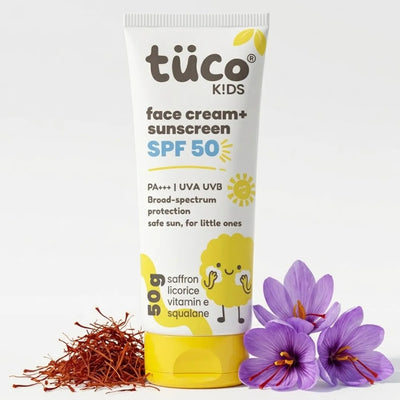
- Products containing Vitamin E: Lotions, soaps, shampoos, sunscreens
That being said, you need to be careful while choosing a product containing Vitamin E.
Vitamin E Uses & Benefits for Children
Comprehensive advantages:
Vitamin E Uses for Skin
1. Natural Skin Protection
Several studies show that Vitamin E is found in the skin oil sebum which acts as a natural barrier from bacterial infections.
How it works:
- Part of skin's natural defense system
- Reinforces barrier function
- Prevents moisture loss
- Protects against pathogens
For children: Developing skin benefits from Vitamin E supporting natural protective mechanisms.
2. Enhanced Moisturizer Effectiveness
Vitamin E works as a catalyst when added to a moisturiser. A lotion or cream for moisturising our skin absorbs and works faster in the presence of Vitamin E sources.
The synergy:
- Improves penetration of other moisturizing ingredients
- Enhances hydration retention
- Boosts overall product efficacy
Practical application: Products combining Vitamin E with other moisturizers work better than either alone.
3. Sun Damage Protection and Healing
When it comes to protection from the inflammatory reactions due to sun damage and UV ray absorption, Vitamin E for skin works wonders. It soothes the skin by reducing redness, swelling and thickening.
Sun protection benefits:
- Not a sunscreen (doesn't block UV)
- Antioxidant protection: Neutralizes free radicals generated by UV exposure
- Post-exposure healing: Reduces inflammation after sun damage
- Combination with sunscreen: Enhanced protection when used together
For Indian children: High sun exposure year-round = constant UV stress. Vitamin E provides additional protective layer.
4. De-tanning and Brightening
Vitamin E Capsules for skin whitening are efficient in their job. Many people suffer from harsh tanning. In such cases, Vitamin E fastens the process of de-tanning when applied regularly.
Important clarification: "Whitening" = restoring natural tone after tanning, NOT changing inherent skin color.
How it helps:
- Antioxidants reduce melanin oxidation
- Supports skin renewal
- Fades tanning over time with regular use
Anti-colorism note: Focus on healthy, even tone, not "whitening" or lightening natural color.
5. Skin Softening
Many studies show that Vitamin E manages to effectively soften the skin.
Mechanism:
- Maintains lipid barrier (prevents dryness)
- Supports moisture retention
- Improves texture
For children: Soft, comfortable skin = reduced itching, scratching, irritation.
6. Environmental Protection
The replenishing capacity of Vitamin E protects cells from damage due to harsh environmental conditions.
What it protects against:
- Pollution: Free radicals from air pollutants
- Wind, cold: Harsh weather stress
- Indoor heating: Dry air damage
Presently, Vitamin E serum is available in all cosmetic stores that are immensely beneficial to the skin.
7. Dark Circle Reduction
It is a saviour for people suffering from dark circles. Undereye roll-ons and creams use Vitamin E for dark circles as an essential ingredient.
How it helps dark circles:
- Reduces oxidative stress (pigmentation cause)
- Improves skin thickness (less visible blood vessels)
- Moisturizes delicate under-eye area
- Anti-inflammatory (reduces puffiness)
For children: Dark circles from allergies, poor sleep, genetics—Vitamin E can help, but address underlying causes too.
Vitamin E Uses in Face Care
Vitamin E for face has been one of the most significant components for face creams like sunscreen and moisturisers.
1. Anti-Aging Prevention
Vitamin E for face anti-ageing cream is quite effective.
For children: While anti-aging not primary concern, early protection prevents premature aging. Sun damage in childhood = wrinkles in adulthood. Starting protective care early matters.
2. Universal Ingredient in Face Products
In the present world of organic cosmetics and eco-friendly skincare products, Vitamin E uses are inevitable. Be it a face mask or a face sheet you will hardly find any of these without Vitamin E added to them.
Why so common:
- Proven effectiveness
- Generally safe, well-tolerated
- Stabilizes other ingredients
- Natural preservative properties
You can find a Vitamin E capsule for face to be added to your skincare products if they do not have Vitamin E as an ingredient.
Vitamin E Uses for Hair
Just like Vitamin E benefits for skin are numerous, it also has a significant effect on our hair. It supports our hair and scalp and makes the roots stronger.
1. Strengthens Hair
Vitamin E for hair manages to strengthen it as it enhances capillary circulation in the scalp. The roots can withhold our hair because of proper circulation in the scalp.
How it works:
- Improves blood flow to follicles
- Better nutrient delivery
- Stronger hair anchoring
- Reduced breakage
2. Nourishment and Elasticity
Vitamin E for hair is also essential to provide nourishment and promote hair elasticity.
Benefits:
- Moisturizes hair shaft
- Improves flexibility (less brittle)
- Reduces breakage from brushing, styling
3. Scalp Oil Balance
Vitamin E balances the production of oil in our scalps. The absence of Vitamin E can cause disbalance in natural scalp oil production.
Balance mechanism:
- Supports healthy sebum production
- Prevents excessive dryness (overcompensating oil production)
- Prevents excessive oiliness
On the other hand, deficiency of Vitamin E can cause hair fall.
4. Enhanced Hair Oil Treatments
You can upgrade the age-old tradition of oiling hair by adding a few drops of Vitamin E oil.
Application: Add Vitamin E to coconut oil, almond oil, or other hair oils for enhanced benefits.
However, you should not apply Vitamin E directly to the scalp as it may have side effects.
Vitamin E capsule for hair is often used in salons for different treatments.
Complete Hair Care with Vitamin E
Quality systems:
- Hair Oil (100ml) likely contains Vitamin E
- Complete system: Shampoo + Conditioner + Oil + Detangler
- Formulated for children's hair needs
Related products: Hair oils, conditioners, leave-in treatments incorporating Vitamin E benefits.
Recommended Dosage of Vitamin E for Children
Safe usage amounts:
The dose of Vitamin E will be different for different purposes. Below are more details.
For Skin Application
Vitamin E capsule benefits the skin but it should not be used in large quantities as it might have side effects.
Application guidelines:
NEVER apply pure Vitamin E directly: You should not directly apply Vitamin E oil to the skin. Add the oil to a carrier oil or cream and then gently apply throughout the body.
Proper dilution:
-
Vitamin E capsule (pure): Break open, mix 2-3 drops with:
- 1 tablespoon carrier oil (coconut, almond, jojoba)
- OR regular amount of body lotion/cream
- Apply diluted mixture to skin
If you apply the compound directly, you may end up experiencing a break out of rashes.
So get Vitamin E capsules for skin or any other product and mix them with other skincare products to get glowing and spotless skin.
For children specifically:
- Start with even lower concentration (1-2 drops per tablespoon)
- Test on small area first
- Use less frequently than adults (every other day initially)
For Face Application
You must be careful while using Vitamin E face cream. Many people are sensitive to it and witness pimple breakouts.
Safe face application:
If you are thinking of using Vitamin E oil for your face, you should mix it with your regular face cream or a carrier oil like olive or coconut oil.
Recommended amounts:
- You should use only 2 to 3 drops of vitamin oil with the regular quantities of cream or carrier oil.
- For children: 1-2 drops sufficient
Vitamin E serum for face can be applied directly to the skin (already properly diluted).
Frequency for children:
- Ages 8-12: 2-3 times weekly (not daily initially)
- Ages 13+: Can progress to daily if tolerated
For Hair Application
Just like hair and skin, Vitamin E oil for hair should be used in measured quantities. It also should be applied along with a carrier oil.
Vitamin E benefits for hair are numerous but only when applied carefully.
Hair application method:
Take a handful of carrier oil and add 4 to 5 drops of vitamin E to it.
For children:
- 2-3 tablespoons carrier oil (coconut, almond)
- 3-4 drops Vitamin E capsule liquid
- Mix thoroughly
- Apply to scalp, massage gently
- Work through hair lengths
- Leave 30 minutes to overnight
- Wash out thoroughly
It will result in lustrous, long and strong hair.
You can also find Vitamin E cream that is suitable for your hair. This cream can be directly applied to the scalp. However, some of these creams have to be washed off after keeping on for a few minutes.
Frequency for children: Once weekly for hair oiling treatments.
Complete Skincare Systems with Vitamin E
Quality formulated products:
Facial Care
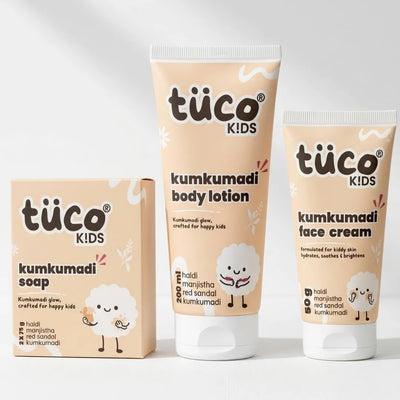
- Kumkumadi Face Cream + Dull Skin Face Wash
- Likely contains Vitamin E among other beneficial ingredients
- Addresses uneven tone, dullness
- Complete facial care system
- Traditional formulation with modern benefits
- May include Vitamin E
General Skincare
Quality cleansers:
- 10 Best Moisturizing Soaps In India For Dry Skin
- Best Soap And Face Washes For Pre-Teens And Teenagers
- Best Kids Soap In India: Gentle, Safe And Effective
Vitamin E Side Effects for Children
Potential concerns:
If you do not follow the adequate dosage, you can have Vitamin E side effects on the skin, face and hair.
1. Facial Irritation and Breakouts
Vitamin E cream sometimes is irritating to the face. Some even notice redness over the skin, although it fades away after a few hours.
Common reactions to excessive Vitamin E:
- Breakouts: Can be comedogenic (pore-clogging) for some
- Redness: Temporary irritation
- Itching: Sensitivity reaction
For children: More prone to sensitivity—use lower concentrations, less frequently.
2. Scalp Irritation
Vitamin E capsule for hair also can have side effects. If used in undiluted form, it irritates the scalp.
Scalp problems from improper use:
- Itching, burning sensation
- Redness, inflammation
- Flaking (mistaken for dandruff)
Always dilute for scalp/hair use.
3. Hair Fall from Overuse
Long exposure to pure Vitamin E serum on hair can also result in hair fall.
Why this happens:
- Over-moisturizing weakens hair shaft
- Buildup weighs hair down (pulls from roots)
- Scalp pore clogging (affects follicle health)
Solution: Proper dilution, appropriate frequency, thorough washing.
Precautions While Using Vitamin E on Children
Safety guidelines:
Following precautions can be taken to avoid side effects of Vitamin E.
1. Medical Consultation for Sensitive Skin
Some people witness such side effects even after application following the dosage. So, assessment of your skin and consulting a doctor can be good steps before starting using Vitamin E oil for face or hair.
Consult pediatrician/dermatologist if:
- Child has eczema, severe dry skin, or other skin conditions
- History of allergic reactions to skincare products
- Very young child (under 5 years)
2. Strict Dosage Adherence
You should be careful while using a Vitamin E face cream. It should be used as per the recommended dosage. If not, Vitamin E side effects can end up giving you rashes and pimples.
Dosage reminders:
- Skin: 2-3 drops per tablespoon carrier
- Face: 1-2 drops per application (children)
- Hair: 3-4 drops in 2-3 tbsp carrier oil
- Frequency: Start 2-3x weekly, not daily
3. Proper Dilution of Pure Vitamin E
If you have an undiluted sample of Vitamin E, ask an expert for the dilution concentration as per your requisition.
Never use pure Vitamin E directly on children—always dilute properly.
4. Patch Testing
Before any new Vitamin E product or DIY mixture:
- Apply small amount to inner forearm
- Wait 24-48 hours
- Check for any reaction (redness, itching, bumps)
- Only proceed if clear
Critical for children's sensitive skin.
5. Appropriate Use for Skin Tone Concerns
Many people use Vitamin E capsules for skin whitening. They should restrict to the advised quantities to get the best results.
Important messaging: Frame as "restoring natural tone" or "brightening dull skin," NOT "whitening" or changing natural color—avoid promoting colorism.
FAQs on Vitamin E for Children
Common questions:
Q1. How to apply Vitamin E capsule on face for kids?
Vitamin E benefits the face by making it soft and supple. Applying it is easy.
For children:
- A Vitamin E capsule for face should be added to a carrier oil or a face cream.
- Take some face oil or cream and add a couple of drops of Vitamin E capsule drops (1-2 drops for children, not adult amounts)
- Mix them well and gently apply to the face in a circular motion.
- Use 2-3 times weekly initially, not daily
Vitamin E oil for face is also available in the market. You can buy them and apply directly (these are already diluted—check label).
Q2. How to use Vitamin E capsule for hair on children?
Vitamin E capsule for hair can be used by mixing it with almond oil or coconut oil. It works better with hot oil (warm, not hot—comfortable temperature for children).
Vitamin E capsule benefits the hair by strengthening and making it shiny.
For children:
- 2-3 tbsp carrier oil (coconut, almond)
- 3-4 drops Vitamin E
- Warm mixture slightly
- Massage into scalp and hair
- Leave 30 minutes to 2 hours (or overnight if tolerated)
- Wash thoroughly
Also, Vitamin E oil for hair, if used in the right quantities, reduces hair fall.
Q3. Can I leave Vitamin E capsule on face overnight for kids?
For adults: Yes, you can keep Vitamin E oil for the face capsule overnight as Vitamin E capsule benefits the face and makes it radiant.
For children:
- Ages 8-12: Start with 1-2 hours, not overnight initially
- Ages 13+: Can try overnight if no sensitivity
- Always properly diluted
- Monitor for any reaction
You can also go for face serum. Vitamin E serum for face does not have to be diluted, unlike Vitamin E capsules (serums already properly formulated).
Q4. Can Vitamin E cure dark circles in children?
Yes, Vitamin E for dark circles effectively reduces undereye darkness. It also helps in decreasing puffiness under the eyes. It is one of the most popular Vitamin E uses.
For children with dark circles:
- Often caused by allergies, poor sleep, genetics
- Address underlying cause (treat allergies, improve sleep)
- Vitamin E can help appearance but not "cure" if cause remains
- Very gentle application (delicate area)
- Diluted only (never pure around eyes)
Q5. At what age can children start using Vitamin E topically?
General guidelines:
- Under 5: Generally avoid (use complete formulated products designed for young children, not pure Vitamin E)
- Ages 5-8: Can use in very diluted form (in products designed for kids)
- Ages 8+: Can use properly diluted Vitamin E with supervision
- Teens: Can use with same precautions as adults (proper dilution, dosage)
Always: Start conservatively, patch test, monitor closely.
The Bottom Line
Vitamin E for kids: Powerful antioxidant with proper precautions.
Key Takeaways
What Vitamin E is: ✓ Tocopherol (alpha-tocopherol most active) ✓ Fat-soluble antioxidant vitamin ✓ Found naturally in plant oils, nuts, seeds ✓ Added to skincare products for benefits
Vitamin E benefits for children's skin: ✓ Antioxidant protection (neutralizes free radicals) ✓ Moisturizing (enhances hydration, skin barrier) ✓ Sun damage protection (reduces UV-induced inflammation) ✓ Softens skin (improves texture) ✓ Environmental protection (pollution, harsh weather) ✓ Dark circle reduction (under-eye care) ✓ De-tanning (restores natural tone after sun exposure)
Vitamin E benefits for children's hair: ✓ Strengthens hair (improves scalp circulation) ✓ Nourishes (promotes elasticity, reduces breakage) ✓ Balances scalp oil (prevents over-dry or over-oily) ✓ Prevents hair fall (when deficient)
Proper dosage for kids: ✓ NEVER pure/undiluted (always mix with carrier) ✓ Skin: 2-3 drops per tbsp carrier oil/cream ✓ Face: 1-2 drops per application (children) ✓ Hair: 3-4 drops in 2-3 tbsp carrier oil ✓ Frequency: 2-3x weekly initially, not daily
Critical precautions: ✗ Never apply pure Vitamin E directly ✗ Always dilute properly (carrier oil or cream) ✗ Patch test before full application ✗ Start with lower concentrations for children ✗ Can cause breakouts, irritation if overused ✗ Consult doctor for sensitive skin, young children
Quality products with Vitamin E: ✓ Ultimate Hair Care Kit ✓ Patchy Skin Kit ✓ Kumkumadi Glow Kit
The Core Message
Your 9-year-old's dry, flaky skin can benefit from Vitamin E—but not pure capsules applied directly. Instead: properly formulated children's moisturizers containing Vitamin E, OR carefully diluted Vitamin E added to regular lotion (2-3 drops per application), applied 2-3 times weekly.
Your daughter's hair doesn't need salon Vitamin E treatments—simple home care works: Add 3-4 drops Vitamin E to 2-3 tablespoons coconut oil, massage into scalp and hair, leave 1-2 hours, wash thoroughly. Once weekly sufficient.
Start safely: Choose quality products formulated for children (Ultimate Hair Care Kit for hair, moisturizing products for skin), OR if using pure Vitamin E capsules, strictly follow dilution guidelines, patch test, start conservatively.
Within 2-3 weeks: Softer, more hydrated skin; stronger, shinier hair—validating Vitamin E's benefits when used properly for children's unique needs.
Because Vitamin E is genuinely beneficial for children's skin and hair—but only when respected as the powerful compound it is, used in appropriate concentrations, applied safely, and integrated thoughtfully into age-appropriate care routines.
Related Resources: