



Tea Tree Oil for Kids: Safe Use, Benefits, and Age-Appropriate Acne Treatment
Your 11-year-old son comes to you upset, pointing at the breakouts on his forehead. "Everyone at school has clear skin except me," he says, self-consciously touching the red spots. You want to help, but you're overwhelmed by options. Your friend swears by tea tree oil: "It's natural, works great!" But when you research, you find conflicting information—some sources praise it, others warn it's too harsh for children. Can you use pure tea tree oil on his face? What concentration is safe? Should you make a DIY mixture or buy a product? And honestly, will it even work, or will you just irritate his already sensitive pre-teen skin?
Tea tree oil has gained massive popularity in natural skincare, praised for its antibacterial and anti-inflammatory properties. Parents searching for gentle acne solutions for their children often stumble upon tea tree oil as a promising natural alternative to harsh chemical treatments. But is tea tree oil safe for children's delicate facial skin? Can it be used daily? What concentration is appropriate for young skin?
The truth is that while tea tree oil offers genuine benefits for kids struggling with breakouts, oily skin, or minor skin issues, it must be used correctly. This comprehensive guide explains what tea tree oil for kids actually does, proven benefits, critical safety guidelines, appropriate concentrations, potential risks, and why professionally formulated products work better than DIY approaches—because understanding the difference between "natural" and "safe" could prevent serious skin damage.
What Is Tea Tree Oil and How Does It Work
Understanding the science:
Botanical Origin and Extraction
Source: Tea tree oil (also called melaleuca oil) extracted from leaves of Melaleuca alternifolia tree, native to Australia.
Historical use: Aboriginal Australians used tea tree leaves for centuries—crushed leaves for wounds, skin infections, colds.
Modern extraction: Steam distillation of leaves produces concentrated essential oil—extremely potent.
Active Components and Mechanisms
1) Natural Antibacterial Powerhouse:
Tea tree oil, extracted from the leaves of the Australian Melaleuca alternifolia tree, contains compounds called terpenes that kill bacteria and fungi.
Key components:
- Terpinen-4-ol: 30-48% (primary active compound)
- γ-Terpinene: 10-28%
- α-Terpinene: 5-13%
- 1,8-Cineole: 0-15% (higher concentrations = more irritating)
The main active component, terpinen-4-ol, specifically targets the bacteria that cause acne (Cutibacterium acnes, formerly Propionibacterium acnes) without the harsh side effects of benzoyl peroxide or antibiotics.
How it works:
- Disrupts bacterial cell membranes
- Kills acne-causing bacteria
- Antifungal action (treats fungal skin issues)
- Broad-spectrum antimicrobial
2) Anti-Inflammatory Action:
Beyond killing bacteria, tea tree oil reduces inflammation and redness. When diluted properly, it calms irritated skin, making it useful for various skin concerns beyond just acne.
Mechanism:
- Inhibits inflammatory mediators
- Reduces swelling, redness
- Soothes reactive skin
- Supports healing
3) Oil Control Properties:
Tea tree oil helps regulate sebum production. For children developing oily skin as they approach puberty, this natural oil control prevents the excessive shine and greasiness that often leads to breakouts.
How it works:
- Mild astringent action
- Reduces excess oil without over-stripping
- Balances production (not just removes)
- Keeps pores clearer
The Critical Safety Factor
4) Why Dilution Matters:
Pure tea tree essential oil is extremely concentrated and caustic. Applied directly to skin, it causes chemical burns, severe irritation, and potentially permanent damage.
The danger:
- Pure essential oil = 100% concentration
- Skin contact toxic concentration
- Can cause: Severe burns, blistering, allergic reactions, permanent scarring
Children's skin is even more sensitive than adult skin, making proper dilution absolutely critical.
Why children especially vulnerable:
- Thinner skin (higher absorption)
- More reactive immune systems
- Less developed skin barriers
- Smaller body mass (systemic effects from absorption)
Tea Tree Oil Benefits for Kids' Facial Skin
When used correctly, proven advantages:
1) Treating Acne and Breakouts
The primary benefit of tea tree oil for children is acne treatment.
As kids enter ages 9 to 16, hormonal changes trigger breakouts. Tea tree oil provides effective treatment without the harshness of adult acne medications.
How it works for acne:
- It penetrates pores, killing acne-causing bacteria
- Reduces inflammation to calm existing breakouts
- Prevents new breakouts by maintaining bacterial balance
- Doesn't contribute to antibiotic resistance (unlike oral antibiotics)
Clinical evidence: Studies show 5% tea tree oil gel as effective as 5% benzoyl peroxide for acne, with fewer side effects (less drying, less irritation).
For children: Milder formulations (1-2.5%) still effective with even better tolerance.
2) Controlling Oily Skin
Many children develop oily T-zones as they approach puberty.
The problem: Hormonal changes → increased sebum production → oily appearance, enlarged pores, breakout vulnerability.
Tea tree oil naturally balances oil production, reducing the greasy appearance that makes kids self-conscious. Regular use helps skin maintain comfortable oil levels rather than swinging between extremely oily and stripped dry.
Benefit:
- Reduces shine without over-drying
- Balanced, comfortable skin
- Less frequent breakouts (excess oil = more acne)
- Improved confidence
3) Soothing Minor Skin Irritations
Small cuts, insect bites, or minor rashes benefit from tea tree oil's antibacterial and anti-inflammatory properties. Properly diluted formulations help these heal faster while preventing infection.
Applications:
- Minor cuts, scrapes (prevents infection)
- Insect bites (reduces itching, inflammation)
- Small rashes (soothes, protects)
- Post-sports skin irritation
Important: Only properly diluted formulations—never pure oil, even for spot treatment.
4) Preventing Breakouts
Used consistently, tea tree oil prevents future acne by keeping pores clear and bacteria levels low. This proactive approach works better than only treating breakouts after they appear.
Prevention mechanism:
- Maintains clean pores
- Keeps bacterial population controlled
- Reduces inflammation before it becomes visible
- Prevents cascade leading to breakouts
For children: Establishing good preventive routines early = better long-term skin health.
Safe Tea Tree Oil Concentration for Children
Critical safety guidelines:
Never Use Pure Essential Oil
This cannot be stressed enough. Pure tea tree essential oil should never touch children's faces. Even adults should dilute it. For children, the concentration must be much lower than products designed for adults.
Why pure oil dangerous:
- 100% concentration = chemical burn risk
- Even single drop can cause severe reaction
- Children's skin absorbs more = systemic effects possible
- No therapeutic benefit justifies this risk
Case reports exist: Children hospitalized from pure tea tree oil application—confusion, inability to walk, coma in severe cases (from large area application with high absorption).
Appropriate Dilution Range
For children's facial products, tea tree oil should be diluted to 1% to 2.5% concentration maximum. This provides therapeutic benefits without irritation risk. Products exceeding this concentration are inappropriate for young skin.
Safe concentrations by age:
- Ages 6-10: 0.5-1% maximum (if used at all—generally unnecessary)
- Ages 11-13: 1-2% maximum
- Ages 14-16: 1-2.5% maximum
- Adults: Up to 5% (but children are NOT small adults)
Math matters: 2.5% means 2.5ml tea tree oil per 100ml product—this is VERY dilute compared to pure oil.
Proper Formulation Matters
Simply mixing tea tree oil with carrier oil isn't enough.
Why DIY risky:
- Difficult to achieve exact dilution (too strong = burns, too weak = ineffective)
- No stability testing (separates, degrades)
- No preservatives (bacteria, mold growth in mixture)
- Missing complementary ingredients (soothing, moisturizing components)
Professionally formulated products combine tea tree oil at safe concentrations with complementary ingredients that enhance benefits while minimizing any potential irritation.
Example of proper formulation: Tea tree oil + aloe vera (soothing) + rose water (calming) + appropriate preservatives + pH balance = safe, effective, stable product.
Combining Tea Tree Products with Complete Face Care
Comprehensive routine for best results:
1) Proper Cleansing First
Tea tree oil works best on clean skin.
Why cleansing matters: Dirt, oil, pollution on skin surface block tea tree oil penetration—won't reach bacteria in pores.
Gentle cleansing removes excess oil and dirt without stripping skin, preparing it perfectly for tea tree treatment. The gentle formula ensures skin isn't already irritated before applying active ingredients.
For oily, acne-prone skin: Use mild cleanser designed for children—removes oil without over-stripping (which paradoxically increases oil production).
2) Tea Tree Treatment Application
After cleansing:
- Pat skin dry (not rubbing)
- Apply tea tree gel to entire face (if generalized oiliness/acne) or spot-treat problem areas
- Use pea-sized amount—more isn't better
- Allow to absorb fully (2-3 minutes)
Frequency:
- Start once daily (evening)
- If tolerated well after 1 week, can increase to twice daily
- Monitor for any irritation
3) Moisturizing for Balance
Even oily, acne-prone skin needs moisture.
The paradox: Skipping moisturizer → skin compensates by producing MORE oil.
After tea tree gel absorbs, apply moisturizer if needed (lightweight, non-comedogenic formulation).
The lightweight formula provides moisture without interfering with tea tree oil's acne-fighting action.
For children: Choose oil-free moisturizers or gels designed for acne-prone skin.
4) Sun Protection Is Essential
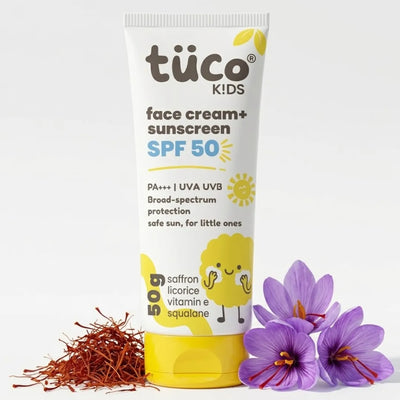
Some acne treatments increase sun sensitivity. Always apply sunscreen every morning after tea tree products. This prevents sun damage and hyperpigmentation that acne can leave behind.
Why critical:
- Prevents dark spots from healing acne
- Protects from UV damage
- Non-negotiable daily step
Choose: Broad-spectrum SPF 30-50, non-comedogenic (won't clog pores).
5) For Combination Skin Issues
Some children have the challenging combination of dry skin with occasional breakouts.
Targeted approach: Use moisturizing products for overall hydration, applying tea tree acne treatment only to specific problem areas. This targeted approach treats acne without drying the entire face.
Strategy:
- Moisturizer: Entire face
- Tea tree gel: Only oily/breakout-prone areas (T-zone, specific spots)
- Best of both worlds
Complete Skincare Systems for Children
Coordinated care works best:
For Brightening and Even Tone
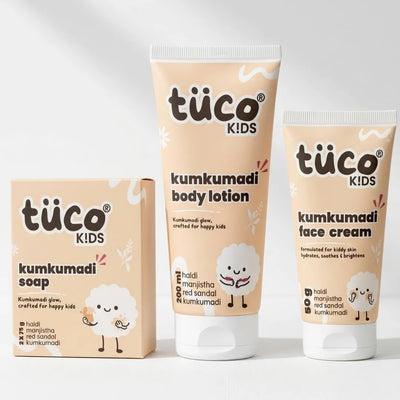
- Kumkumadi Face Cream + Dull Skin Face Wash
- Addresses uneven tone, dark spots from healed acne
- Gentle, effective brightening
- Complete facial care system
- Traditional Ayurvedic formula for radiance
- Complements acne treatment
For Complete Dull Skin Treatment
- Lotion + Soap + Sunscreen SPF 30
- Comprehensive approach
- Addresses multiple concerns
Complementary Body Care
General gentle cleansing:
- Best Kids Soap In India: Gentle, Safe And Effective
- 10 Best Moisturizing Soaps In India For Dry Skin
- Best Soap And Face Washes For Pre-Teens And Teenagers
What Tea Tree Oil Cannot Do
Realistic expectations:
1) It's Not a Cure-All
While effective for mild to moderate acne, tea tree oil won't solve severe, cystic acne. These cases need dermatologist care with prescription treatments. Parents should recognize when natural remedies aren't sufficient.
When to see dermatologist:
- Large, painful cystic acne
- Acne not improving after 6-8 weeks proper treatment
- Scarring developing
- Severe inflammation
- Child significantly distressed
2) Results Take Time
Unlike harsh chemical treatments that force rapid changes, tea tree oil works gradually. Parents expecting overnight results will be disappointed. Visible improvement typically takes two to three weeks of consistent use.
Realistic timeline:
- Week 1: May see slight reduction in new breakouts
- Weeks 2-3: Noticeable improvement in oiliness, fewer active breakouts
- Weeks 4-6: Significant improvement, clearer skin
- Months 2-3: Optimal results with consistent use
Key: Consistency over intensity—gentle daily use beats occasional harsh treatment.
3) Not for All Skin Types
Some children have skin too sensitive even for properly diluted tea tree oil. If redness, excessive dryness, or irritation occurs, discontinue use immediately. Always patch test before full facial application.
Who may not tolerate:
- Very sensitive skin
- Eczema-prone
- Rosacea (though rare in children)
- Allergies to tea tree oil components
Potential Side Effects and How to Avoid Them
Safety considerations:
Dryness or Peeling
Tea tree oil can be drying, especially when first introduced.
Prevention: Combat this by ensuring adequate moisturization and starting with once-daily application before increasing to twice daily.
Management:
- Use gentle, hydrating moisturizer
- Reduce frequency if excessive dryness
- May resolve as skin adjusts (1-2 weeks)
Redness or Irritation
If skin becomes red or uncomfortable, the concentration may be too strong or the child may be sensitive to tea tree oil. Switch to gentler alternatives and consult a pediatric dermatologist.
Action plan:
- Stop use immediately
- Apply gentle moisturizer/soothing gel
- If persists beyond 24 hours, consult doctor
- Don't resume without medical clearance
Allergic Reactions
Though rare, some individuals are allergic to tea tree oil. Symptoms include severe itching, swelling, or rash. Stop use immediately and seek medical advice if this occurs.
True allergy signs:
- Hives, severe rash
- Swelling (face, lips, tongue)
- Difficulty breathing (extremely rare but emergency)
- Systemic symptoms (nausea, dizziness)
If suspected: Emergency medical care—allergic reactions can escalate.
Prevention Through Proper Use
These side effects are largely preventable by using professionally formulated products at appropriate concentrations rather than attempting DIY tea tree formulations.
Safety checklist: ✓ Properly formulated product (1-2.5% for children) ✓ Patch test first ✓ Start once daily ✓ Monitor closely ✓ Adequate moisturization ✓ Stop if any concerning symptoms
Age Considerations for Tea Tree Use
When appropriate to introduce:
Ages 9 to 12
This is when many children start experiencing early breakouts or increased oiliness. Tea tree products become appropriate and beneficial. Start conservatively with once-daily use and monitor skin response.
Developmental context:
- Hormonal changes beginning
- Sebum production increasing
- First breakouts appearing
- Self-consciousness developing
Approach:
- Very gentle formulations (1-1.5% maximum)
- Once daily initially
- Heavy monitoring
- Emphasize this is normal developmental change
Ages 13 to 16
Teenagers can use tea tree products more like adults, with twice-daily application for persistent acne. Their skin tolerates the active ingredients better and often needs consistent treatment.
Context:
- Peak hormonal changes
- More persistent acne common
- Can handle slightly stronger formulations (1.5-2.5%)
- May benefit from twice-daily application
Approach:
- Teach independent skincare routine
- Emphasize consistency
- Address emotional/social aspects
- When to seek professional help
Under 9 Years
Generally not necessary or appropriate:
- True acne rare (if present, see doctor)
- Skin still very delicate
- Other gentler solutions for minor issues
Why Professionally Formulated Products Matter
The case against DIY:
Proper Concentration and Testing
Formulated specifically for children: Unlike adult products simply marketed to kids, properly formulated children's products created from ground up for young skin—safe concentrations proven effective for developing skin, not adult-strength formulas that can cause harm.
Professional formulation advantages:
- Exact concentration control
- Stability testing (doesn't degrade)
- Preservatives (prevents contamination)
- pH balanced for skin
- Complementary ingredients
Safety Testing and Quality
Safety-tested specifically on children (or age-appropriate protocols), free from unnecessary harsh chemicals.
Understanding: Developing bodies need gentle formulations—never compromise safety for faster results.
Quality assurance:
- Dermatologically tested
- Appropriate preservatives
- Stable formulation
- Consistent batch-to-batch
Complementary Ingredients
Professional products don't just dilute tea tree oil—they add beneficial components:
- Aloe vera (soothing, hydrating)
- Rose water (calming, anti-inflammatory)
- Glycerin (humectant, moisture)
- Appropriate pH buffers
Result: Tea tree oil's benefits + minimized irritation risk = optimal outcomes.
The Bottom Line
Tea tree oil for children: Natural doesn't mean automatically safe.
Key Takeaways
Tea tree oil benefits for kids' skin (when used correctly): ✓ Effective acne treatment (mild-moderate) ✓ Natural antibacterial action ✓ Reduces inflammation, redness ✓ Controls excess oil ✓ Prevents future breakouts ✓ Fewer side effects than harsh chemicals
Critical safety requirements: ✓ NEVER use pure essential oil on children ✓ Proper dilution: 1-2.5% maximum for children ✓ Professionally formulated products only (not DIY) ✓ Patch test before use ✓ Start once daily, increase gradually if tolerated ✓ Adequate moisturization ✓ Daily sunscreen
Age appropriateness: ✓ Generally not before age 9 ✓ Ages 9-12: Very gentle formulations, careful monitoring ✓ Ages 13-16: More standard use, twice daily if needed ✓ Always supervise younger children
When to use alternatives: ✓ Severe/cystic acne (needs medical treatment) ✓ Very sensitive skin ✓ Allergic reactions ✓ Under age 9 (usually unnecessary)
Complete care approach: ✓ Gentle cleansing first ✓ Tea tree treatment ✓ Appropriate moisturizing ✓ Daily sun protection ✓ Quality products: Patchy Skin Kit, Kumkumadi Glow Kit, Dull Skin Regimen
The Core Message
Tea tree oil offers genuine benefits for children's facial skin when used correctly in safe, age-appropriate formulations. The key is choosing products designed for kids rather than attempting DIY solutions or using adult-strength treatments.
Your son's breakouts are treatable—but the solution isn't a bottle of pure tea tree oil from the health food store. It's a properly formulated product at safe concentrations, used consistently as part of complete gentle routine.
Natural isn't synonymous with safe—tea tree oil proves this. Pure essential oil can burn children's skin severely. But properly diluted, professionally formulated? Effective, gentle, appropriate.
The difference between helping and harming often comes down to concentration, formulation, age-appropriateness—details that matter enormously for developing skin.
Choose wisely: Your child's skin is worth the investment in quality formulated products over risky DIY experiments.
Related Resources:
- Best Soap And Face Washes For Pre-Teens And Teenagers
- 10 Best Moisturizing Soaps In India For Dry Skin
- Best Kids Soap In India: Gentle, Safe And Effective
SAFETY WARNING: Never apply pure tea tree essential oil directly to children's skin. Always use properly diluted formulations designed specifically for young skin. If accidental exposure to pure essential oil occurs and severe irritation develops, rinse thoroughly with water and seek medical attention if symptoms persist.