



Sesame Oil for Kids' Hair: Benefits, Uses, and Safe Application
Your grandmother insists sesame oil is the solution to your 8-year-old's dry, tangled hair. "We've used it for generations!" she says, warming the oil in her palms. Your daughter's hair does look dull lately, and you've heard about sesame oil's benefits. But you're hesitant—is it really safe for children's hair? Will it make her hair too oily for school? How often should you use it? And with so many oils available, why choose sesame specifically?
Did you know sesame oil is the oldest oil ever to be used by mankind? If you are wondering what makes it a favorite even now, here's something you need to know. This natural oil, derived from sesame seeds, is known for its antibacterial, antiviral, and anti-inflammatory properties. Now, it makes sense how this natural oil made its way into haircare and skincare products, doesn't it?
But here's what parents specifically need to understand: While sesame oil has been used traditionally for thousands of years, modern application on children's hair requires consideration—proper usage techniques, realistic expectations about benefits, age-appropriate frequency, and understanding when formulated products might work better than pure oil. Not every traditional remedy translates directly to convenient, effective modern haircare for busy families with active children.
Read on to know the numerous benefits, uses, and side effects of sesame oil for hair—specifically tailored for children's unique hair and scalp needs, because what worked for your grandmother's generation can be adapted smartly for today's children.
Understanding Sesame Oil: Ancient Remedy, Modern Applications
What makes sesame oil special:
Historical and Botanical Context
The oldest cultivated oilseed crop:
- Sesame (Sesamum indicum) cultivated for over 5,000 years
- Originated in Africa, widely grown in Asia
- One of first plants used for oil extraction
- Deep roots in Ayurvedic medicine
Traditional uses:
- Hair and skin care
- Cooking oil
- Massage therapy
- Medicinal applications
- Religious ceremonies
Composition and Properties
What's in sesame oil:
Fatty acid profile:
- Oleic acid (omega-9): 40%
- Linoleic acid (omega-6): 45%
- Palmitic acid: 9%
- Stearic acid: 5%
The high concentration of omega-6 fatty acids in sesame oil makes it the best moisturizing oil for hair massage.
Beneficial compounds:
- Vitamin E: Antioxidant, protects hair
- Vitamin B6: Supports hair health
- Zinc: Essential for hair growth, scalp health
- Magnesium: Mineral supporting hair structure
- Sesamolin, sesamin: Unique antioxidants
Cold-pressed sesame oil is a storehouse of nutrients such as zinc and vitamins E and B6.
Types of sesame oil:
- Cold-pressed (unrefined): Retains all nutrients, best for hair
- Toasted sesame oil: Cooking oil, not typically for hair
- Refined sesame oil: Processed, fewer nutrients
Why Sesame Oil for Hair?
The properties that matter:
- Antibacterial, antiviral, anti-inflammatory
- Deep moisturizing
- Protective coating ability
- Nutrient-rich
- Traditional wisdom + modern validation
Sesame Oil Benefits for Hair (Children-Specific)
How sesame oil supports children's hair health:
1. No More Premature Hair Greying
Grey hair at a young age is a nightmare for many of us. Sometimes, environmental stressors meddle with our hair health and cause a build-up of harmful chemicals. And the result is premature greying.
For children specifically:
- Rare in young children (if occurs, consult doctor—may indicate underlying condition)
- More relevant for teens experiencing early greying
- Environmental pollutants affect hair health
This is when sesame oil for hair can be a real game changer. With its antioxidants, sesame oil fights such build-up and prevents premature greying.
How it works:
- Antioxidants (vitamin E, sesamin) neutralize free radicals
- Protects hair follicles from oxidative stress
- Supports melanin production
Realistic expectations: Won't reverse existing grey hair but may support healthy pigmentation in developing hair.
2. For Better Hair Growth
Massaging your hair with any oil improves blood circulation and promotes hair growth. But why use sesame oil?
Benefits for children's developing hair:
- Nourishes follicles with essential nutrients
- Zinc supports hair growth cycle
- Vitamins E and B6 support healthy hair development
- Omega-6 fatty acids strengthen hair structure
The mechanism:
- Massage + oil = improved scalp circulation
- Better blood flow = more nutrients to follicles
- Healthy follicles = optimal growth
For children: Supports natural hair development, doesn't accelerate growth beyond genetic rate.
3. Shield Your Hair from Harmful UV Rays
Out in the sun, a sunscreen is a must. But how do we protect the scalp and hair from the bright, harsh sun?
Sesame oil to the rescue, of course! It forms a protective coating around the hair shaft just like sunscreen and protects it from sun damage and pollutants.
How it works:
- Natural SPF properties (though modest—around SPF 4)
- Creates physical barrier on hair shaft
- Antioxidants fight UV-induced free radicals
- Prevents protein loss from UV exposure
For active children: Outdoor play, sports = sun exposure. Sesame oil provides some protection (though not substitute for proper sun safety).
4. Shoo Away Those Head Lice
Thanks to the build-up of pollutants, our scalp has become the home for fungus, bacteria, and lice. There can be nothing more irritating than an itchy and flaky scalp.
But no worries. Sesame oil, with its anti-bacterial properties, takes care of this. Use some sesame oil diluted with neem or tea tree oil on the scalp and see how the magic unfolds.
Lice treatment approach:
- Sesame oil suffocates lice (physical method)
- Antibacterial properties support scalp health
- Combined with neem or tea tree (additional antimicrobial action)
- Not instant—requires proper application, time, combing
For school-age children: Lice common—sesame oil can be part of treatment, but complete regimen needed (combing, washing, environmental cleaning).
5. Revive Your Heat-Damaged and Dry Hair
Sometimes we compromise our hair health and heat it for that perfect look. And the result? Dry and frizzy hair.
For children: Heat damage less common (most don't use styling tools), but environmental dryness (sun, wind, chlorine) very relevant.
But relax. You can revive the lost shine with a few drops of sesame oil. It deeply moisturizes and nourishes the hair shafts and follicles, giving you smooth, healthy, and shiny hair.
How it works:
- Penetrates hair shaft
- Fills in damage, rough spots
- Seals cuticle (smoothness, shine)
- Prevents moisture loss
For children's hair challenges: Swimming, outdoor play, winter dryness—sesame oil addresses all.
6. Prevent Hair Fall Due to Stress
Did you know your mind, body, and skin are all related to each other? Stress can exacerbate your existing hair concerns and even cause hair fall.
For children: Yes, children experience stress (school, social, family changes)—can affect hair health.
This is when sesame oil benefits for hair become relevant. Through the ages, it has been known for its tranquilizing properties. Massaging the scalp with sesame oil relieves stress and soothes the tired scalp and mind simultaneously.
The calming effect:
- Massage itself: Relaxing, stress-reducing
- Warm oil: Soothing sensory experience
- Ritual: Bonding time (parent massaging child's hair)
- Result: Stress reduction may reduce stress-related hair fall
Practical benefit: Oil massage as calming bedtime routine.
7. Prevent Dandruff
A dry and itchy scalp is always a matter of concern. But how do we treat flaky scalp and keep it clean and healthy?
Using sesame oil with its anti-fungal and antibacterial properties makes the fight against dandruff an easy task. Massage the scalp with sesame oil and say no to dandruff and an itchy scalp.
Anti-dandruff mechanism:
- Moisturizes dry scalp (addressing dry-scalp dandruff)
- Antimicrobial properties fight Malassezia fungus (common dandruff cause)
- Anti-inflammatory soothes irritated scalp
- Regular use maintains healthy scalp balance
For children: Common dandruff issue—sesame oil gentle, natural approach.
Wondering How to Use It?
Safe, effective application for children:
Basic Application Method
Simple technique:
Apply the oil to the scalp and gently massage from the root to the tip. Leave it for some time and wash it off with a gentle shampoo.
Step-by-step for children:
- Choose quality oil: Cold-pressed, pure sesame oil
- Warm slightly (optional): Comfortable temperature (test on your wrist first)
- Amount: 1-2 tablespoons for most children (depending on hair length/thickness)
- Apply to scalp: Part hair into sections, apply oil to scalp with fingertips
- Massage gently: Circular motions, 5-10 minutes (relaxing, circulatory benefit)
- Work through lengths: Distribute oil from roots to tips
- Leave on: 30 minutes to 2 hours (or overnight for intensive treatment)
- Wash out: Gentle shampoo, may need double wash (sesame oil can be heavy)
Enhanced Applications
You can even combine it with other oils like neem, sweet almond, or coconut oil for added benefits.
Beneficial combinations:
Sesame + Coconut:
- Extra moisturizing
- Pleasant scent
- Antimicrobial boost
Sesame + Neem:
- Enhanced dandruff fighting
- Stronger antimicrobial
- Lice treatment
Sesame + Tea Tree (diluted):
- Powerful antifungal
- Scalp health
- Dilute tea tree properly (2-3 drops per tablespoon sesame)
Sesame + Almond:
- Lighter texture
- Nourishing vitamins
- Good for fine hair
Frequency Recommendations
Use sesame oil for hair regularly and deeply nourish the scalp and revive your damaged hair.
For children:
- Normal hair/scalp: Once weekly
- Dry hair/scalp: Twice weekly
- Oily hair/scalp: Every 2 weeks or less
- Dandruff treatment: 2-3 times weekly until improved, then weekly maintenance
Why wait when you can give the best to your hair?
Is Sesame Oil Good for All Hair and Scalp Types?
Understanding appropriateness:
The topical application of sesame oil is generally safe for every scalp and hair type. But sometimes even natural oils can cause irritation to some sensitive scalps. So a patch test is highly recommended before trying it out.
Hair Type Considerations
Dry hair: Excellent choice—deep moisturizing Normal hair: Works well—maintenance care Oily hair: Use sparingly—may be too heavy Fine hair: May weigh down—use small amounts or lighter oil Thick/coarse hair: Perfect—nourishing, smoothing Curly hair: Great—defines curls, reduces frizz
Scalp Type Considerations
Dry scalp: Ideal—moisturizes, soothes Normal scalp: Good—maintains health Oily scalp: Use cautiously—may worsen oiliness Sensitive scalp: Generally well-tolerated, but patch test Dandruff-prone: Beneficial—antifungal properties
Patch Testing Procedure
Always test first:
- Apply small amount sesame oil to inner forearm
- Wait 24 hours
- Check for redness, itching, rash
- If clear, proceed to scalp
- If reaction, don't use
Complete Haircare for Children: Sesame Oil vs. Formulated Products
Choosing the right approach:
When Sesame Oil Makes Sense
Good choice if:
- Weekly intensive treatment
- Dry, damaged hair
- Cultural/traditional practice
- Parent has time for preparation, application, washing
- Child tolerates oil treatments
When Formulated Products Better
Choose modern formulations if:
- Daily hair care needed
- Convenience important
- Child resists messy oil treatments
- School schedule tight (oil hard to wash out completely)
- Want targeted solutions (dandruff-specific, etc.)
Complete Hair Care Systems
Balancing traditional and modern:
- Shampoo, conditioner, hair oil, detangler
- May contain sesame oil or similar beneficial oils
- Convenient, complete system
- Age-appropriate formulations
Benefits:
- Daily convenience
- Properly formulated concentrations
- Multiple benefits coordinated
- Child-friendly application
Combination approach (best of both):
- Daily care: Formulated products
- Weekly treatment: Pure sesame oil intensive massage
- Sustainable, effective long-term
Complementary Skin and Body Care
Complete care for children:
For Face and Skin
While sesame oil primarily for hair, can be used on body:
- Very dry skin areas (elbows, knees)
- Gentle massage oil for babies (properly diluted)
- Not typically for face (too heavy for most children)
Better facial care options:
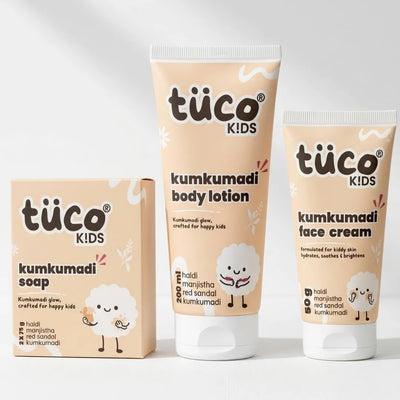
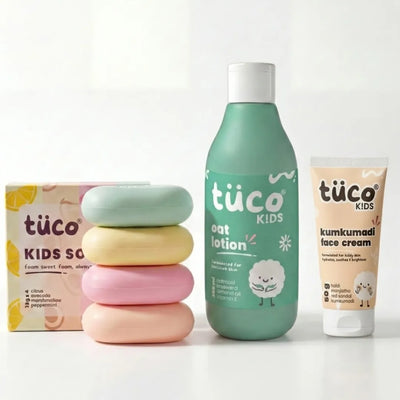
- Kumkumadi Face Cream + Dull Skin Face Wash
- Specifically formulated for facial skin
- Gentle, effective
- Complete facial care
- Age-appropriate
For Body Cleansing
Quality gentle cleansers:
- Is Soap Necessary For Bathing Young Children Every Day
- 10 Best Moisturizing Soaps In India For Dry Skin
- Best Soap And Face Washes For Pre-Teens And Teenagers
- Best Kids Soap In India: Gentle, Safe And Effective
Supporting overall health: Healthy skin and body = healthy hair growth.
Practical Considerations for Modern Families
Making it work:
Time Management
Oil treatments are time-intensive:
- Application: 10-15 minutes
- Wait time: 30 minutes to 2 hours
- Washing: 15-20 minutes (thorough removal needed)
- Total: 1-2.5 hours
Realistic scheduling:
- Weekend mornings
- Lazy Sunday afternoons
- School holidays
Mess Management
Oil treatments messy:
- Protect clothing (old t-shirt, towel around shoulders)
- Cover furniture child sits on
- Bathroom easier cleanup than bedroom
- Expect some oil on everything
For parents: Worth it for benefits, but requires preparation.
School Considerations
Oil needs complete removal:
- Greasy hair at school = teasing risk
- May need double or triple shampooing
- Plan oil treatment with sufficient washing time
- Don't do morning of school day
The Bottom Line
Sesame oil for children's hair: Ancient wisdom, modern application.
Key Takeaways
Sesame oil benefits for children's hair: ✓ Prevents premature greying (teens) ✓ Supports healthy hair growth ✓ UV protection (modest) ✓ Lice treatment (part of regimen) ✓ Revives dry, damaged hair ✓ Reduces stress-related hair fall (massage benefit) ✓ Prevents dandruff (antimicrobial, moisturizing)
How to use: ✓ Apply to scalp and hair ✓ Gentle massage (5-10 minutes) ✓ Leave 30 minutes to 2 hours ✓ Wash with gentle shampoo ✓ Once weekly for most children ✓ Can combine with other oils
Considerations: ✓ Patch test first ✓ Time-intensive treatment ✓ May be too heavy for fine/oily hair ✓ Complete washing important (school considerations) ✓ Formulated products more convenient for daily care
Best approach: ✓ Weekly sesame oil intensive treatment ✓ Daily care with formulated products (Ultimate Hair Care Kit) ✓ Sustainable, effective long-term
The Practical Reality
Now you know the numerous sesame oil benefits for hair.
But the complete picture:
- Traditional remedy with real benefits
- Requires time, effort, commitment
- Works best as part of comprehensive routine
- Not magical solution—one tool among many
Being natural is being Intelligent®
True intelligence means:
- Respecting traditional wisdom (sesame oil used for millennia)
- Applying it appropriately to modern context (busy families, school schedules)
- Combining with modern formulations when they work better
- Choosing what's sustainable long-term
For most families: Weekly sesame oil treatment + daily formulated products = best of both worlds.
Moving Forward
Your grandmother was right—sesame oil is wonderful for hair. It's been used for 5,000+ years because it works.
But she also:
- Had more time for extensive oil treatments
- Lived in different context (no school bus schedules, swimming chlorine, hair dryers)
- Used what was available (now we have options)
You can honor tradition while adapting:
- Weekly sesame oil ritual (bonding time, intensive treatment)
- Daily convenience products (sustainable routine)
- Best results, realistic approach
Your child's hair doesn't have to choose between ancient wisdom and modern convenience—it can benefit from both.
Related Resources: