


How to Remove Tan from Kids' Face: Gentle, Safe Methods for Indian Children
Your 8-year-old son returns from summer cricket camp several shades darker. Your daughter's face is noticeably tanned after daily walks to school. Relatives comment on their "sunburnt" appearance. You're worried—not about their natural complexion (which is beautiful), but about the uneven tone, the visible tan lines, the dullness that comes from sun damage. Your mother-in-law suggests lemon juice and gram flour. Online forums recommend adult de-tan packs. The pharmacy stocks bleaching creams. But you hesitate—children's skin is so sensitive. Can you safely remove tan without harsh chemicals? How do you restore their natural, even tone? And honestly, how do you balance protecting them from sun damage while allowing the outdoor play essential to healthy childhood?
Summer holidays, sports practice, and endless hours in the park are the hallmarks of a happy childhood. But all that fun in the sun often leaves a visible mark: a facial tan. In India's intense sun—UV index regularly 10+ from March through October—children's outdoor activities inevitably lead to tanning, particularly on faces, arms, and necks.

While a tan might seem harmless, it's the skin's response to sun exposure, and for children's delicate skin, it signals a need for gentle recovery and powerful protection. This isn't about vanity or colorism—it's about addressing actual sun damage (tanning = DNA damage response) and preventing long-term harm while restoring skin's healthy, even appearance.
Many parents worry about the uneven skin tone and dullness that follows, yet hesitate to use conventional de-tan products filled with harsh chemicals. Your hesitation is justified: Adult de-tan products, bleaches, and harsh scrubs can seriously damage children's developing skin.
This comprehensive guide explains how to remove tan from kids' face safely—understanding why children tan easily, gentle 3-step routine for tan removal and prevention, natural ingredients that work, complete body care, and long-term protection strategies—because active, happy children deserve sun-safe outdoor play AND healthy, protected skin.
☀️ Complete Routine
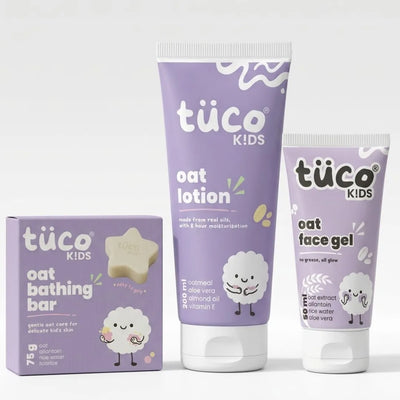
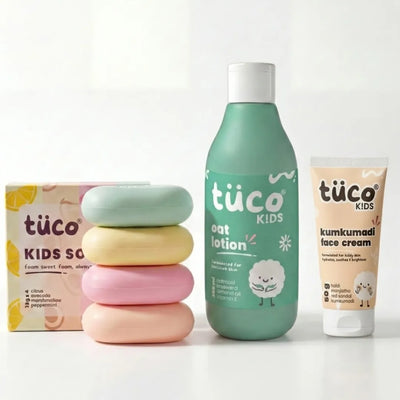
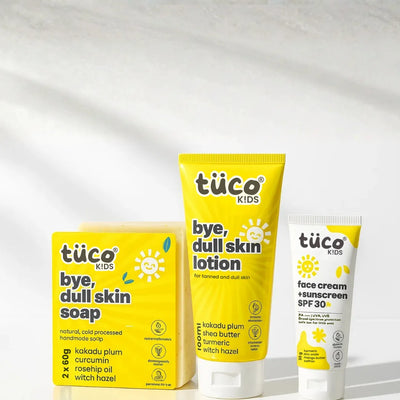
Ultimate Dull Skin Kit — Soap + Cleanser + Lotion + SPF 50
₹749 ₹1,450
Shop Now →Why Do Kids Tan So Easily?
Understanding children's vulnerability:
Structural Differences in Children's Skin
A child's skin is thinner and more delicate than an adult's.
Key differences:
- 20-30% thinner epidermis: Less protective barrier
- Higher permeability: Absorbs substances more readily (good and bad)
- Developing melanocytes: More reactive to UV exposure
- Immature skin barrier: Less resilient against environmental stress
- Higher surface-to-volume ratio: More skin exposed relative to body size
Result: Same sun exposure = greater impact on children than adults.

Shop Ultimate Dull Skin Kit →
The Tanning Mechanism
When exposed to the sun's UV rays, the skin produces a pigment called melanin as a defense mechanism. This increase in melanin is what we see as a tan.
How tanning works:
- UV exposure → DNA damage in skin cells
- Melanocytes activated → produce more melanin
- Melanin migrates to skin surface (protective umbrella)
- Visible darkening = tan
Important understanding: Tan = damage response, not healthy glow. Every tan = accumulated sun damage.
Why Children's Tans Develop Quickly
Because their skin is still developing, children's melanocytes (the cells that produce melanin) can be highly reactive, leading to a quick and noticeable tan.
Children's unique vulnerability:
- More reactive melanocytes: Respond strongly to UV
- Less natural protection: Lower baseline melanin in fair-skinned children
- Outdoor play patterns: More time outside than many adults
- Less sun-aware: Don't seek shade instinctively
- Inadequate protection: Often under-protected (insufficient sunscreen, reapplication)
Indian children specifically: Year-round intense sun, outdoor school activities, sports, festivals—constant UV exposure.
Why Adult Products Are Dangerous for Children
This is why you can't use adult tan removal creams or bleaches on children. These products often contain strong exfoliants and chemicals that can damage a child's sensitive skin barrier, leading to irritation, redness, and dryness.
Dangerous ingredients in adult de-tan products:
- Hydroquinone: Skin-lightening agent, toxic, banned in many countries
- Mercury compounds: Extremely toxic
- Strong acids (glycolic, salicylic high concentrations): Too harsh
- Bleaching agents: Chemical burns, hypopigmentation
- Harsh exfoliants: Damage skin barrier
- Synthetic fragrances, preservatives: Allergic reactions
Never use adult de-tan, bleach, or "fairness" products on children.
Understanding Tan vs. Natural Skin Color
Critical distinction:
What Tan Removal Means (and Doesn't Mean)
Goal: Restore skin's natural, even tone after sun damage—NOT changing inherent skin color.
Tan removal addresses:
- Uneven pigmentation: Tan lines, patchy darkening
- Dullness: Sun-damaged skin loses radiance
- Texture changes: Rough, dry from UV damage
- Excess melanin: Produced in response to sun exposure
Tan removal does NOT:
- "Whiten" or "lighten" natural skin color
- Change genetic complexion
- Make child "fairer"
Anti-colorism stance: Every skin tone is beautiful. Focus on health, evenness, protection—not "fairness."
The Real Concern: Sun Damage, Not Color
Why address tanning in children:
- Cumulative damage: Childhood sun exposure = adult skin cancer risk
- Premature aging: UV damage shows decades later
- Uneven tone: Genuine cosmetic concern (patchiness, tan lines)
- Skin health: Damaged skin needs repair, protection
Not about: Making children "whiter" or conforming to colorist beauty standards.
A Gentle 3-Step Routine for Tan Removal and Prevention
The complete approach:
The solution isn't to keep kids indoors, but to adopt a skincare routine that gently removes tan, restores the skin's natural brightness, and shields it from future sun exposure.
For active kids, this routine needs to be simple, effective, and made with ingredients that respect their skin's sensitivity.
Managing a tan isn't about harsh scrubbing; it's about a consistent routine of cleansing, nourishing, and—most importantly—protecting.
Step 1: Cleanse to Gently Brighten
The first step to addressing a tan is to wash away the surface-level dullness without stripping the skin of its natural oils. A harsh cleanser can worsen dryness and irritation, making the skin look even more tired.
What gentle cleansing does:
- Removes dead skin cells (surface tan)
- Clears dirt, sweat, sunscreen buildup
- Prepares skin for nourishment
- Gradually evens tone over time
What it doesn't do: Instant dramatic lightening (that's bleaching—avoid!)
Recommended approach: Natural brightening ingredients in gentle cleanser formula.
Quality products incorporating brightening botanicals:
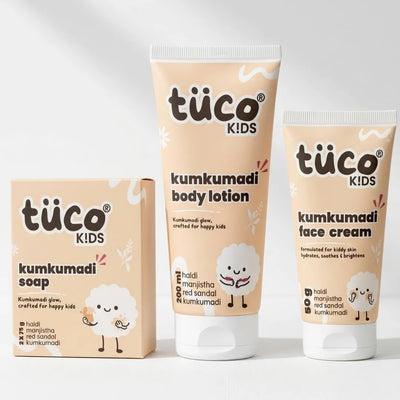
- Kumkumadi Face Cream + Dull Skin Face Wash
- Addresses uneven tone, dullness
- Traditional ingredients (turmeric, saffron)
- Dull Skin Face Wash + Kumkumadi Face Cream
- Ayurvedic formulation
- Gentle daily use
Key ingredients to look for:
- Turmeric: Helps gently cleanse and reduce dullness, natural anti-inflammatory
- Saffron: Works to improve the skin's natural glow, antioxidant
- Kakadu plum: Highest natural Vitamin C source, brightening
Application:
- Wet face with lukewarm water
- Apply small amount of gentle cleanser
- Massage gently 30-60 seconds
- Rinse thoroughly
- Pat dry
Frequency: Morning and evening.
Step 2: Nourish to Repair and Restore
After cleansing, sun-exposed skin needs deep nourishment to repair itself and regain its natural tone. A moisturizer designed for kids will provide hydration and support the skin barrier without feeling heavy or greasy.
Why nourishing matters after sun exposure:
- Skin dehydration: UV dries skin (contributes to dull appearance)
- Barrier damage: Needs repair to function properly
- Antioxidants needed: Combat oxidative stress from UV
- Gradual tone restoration: Healthy skin = more even tone
Quality nourishing treatments:
- Kumkumadi Face Cream + Dull Skin Face Wash
- Traditional formulation with saffron
- Deeply nourishing
- Dull Skin Face Wash + Kumkumadi Face Cream
- Based on traditional Kumkumadi formulation
- Saffron as key ingredient
Key ingredients:
- Saffron: Potent antioxidant, protects from environmental damage, promotes bright even complexion
- Sandalwood: Soothing, cooling
- Turmeric: Anti-inflammatory, brightening
- Traditional herbs: 10-16 herbs in classic Kumkumadi
This cream delivers lasting hydration, soothes sun-stressed skin, and works to restore a healthy glow, making it a wonderful natural alternative to a harsh face tan removal cream.
Application:
- After cleansing, pat face mostly dry
- Apply pea-sized amount of cream
- Massage gently into face, neck
- Allow to absorb completely
Frequency: Morning and evening after cleansing.
Step 3: Protect to Prevent (Most Critical!)
This is the most critical step. Without sun protection, any efforts to reduce a tan are temporary. Sunscreen is not just for beach days; it's an everyday essential for active children.
Why protection is non-negotiable:
- Prevents new tan: Stops additional darkening
- Allows existing tan to fade: Skin naturally sheds, renews over 4-6 weeks
- Prevents cumulative damage: Each unprotected exposure adds to lifetime damage
- Essential during de-tanning: Skin more vulnerable as it repairs
Sunscreen application:
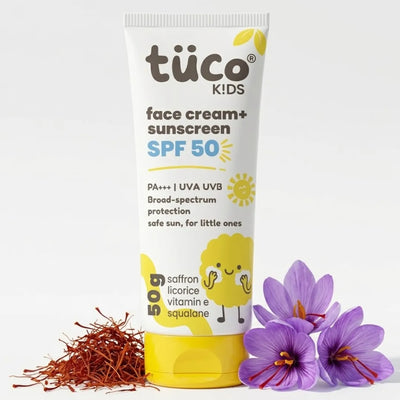
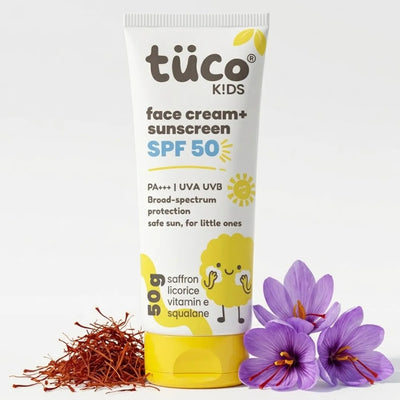
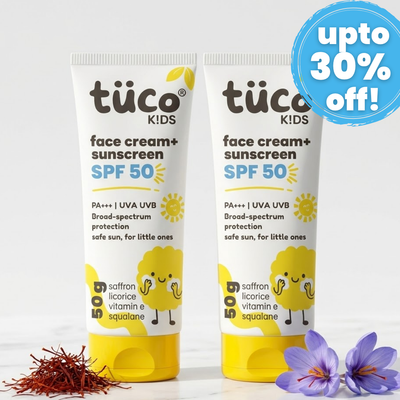
- Includes Sunscreen SPF 50
- Plus Soap, Lotion, Face Cleanser
- Complete system
SPF 50 for high-exposure days:
- School sports, outdoor play
- Peak sun hours (10 AM - 4 PM)
- Beach, pool, hiking
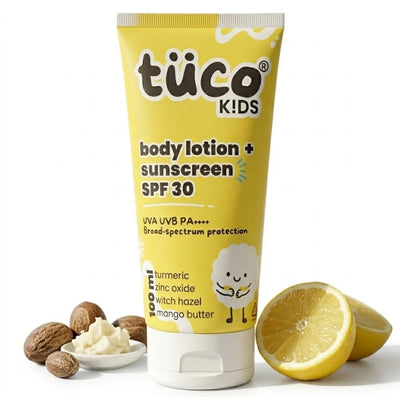
SPF 30 for moderate exposure:
- Indoor days with some outdoor time
- Cloudy days (UV penetrates clouds!)
- Winter months (UV still present)
Proper application:
- Amount: 2 finger-lengths for face (adults), slightly less for children
- Timing: 15 minutes before sun exposure
- Reapplication: Every 2 hours, after swimming/sweating
- Every day: Not just "sunny" days—UV present year-round
Should be the final, non-negotiable step of your child's morning routine.
Complete Body Tan Removal
Beyond facial care:
Facial tanning is usually accompanied by tanned arms, necks, and legs. A complete de-tan routine should address the whole body.
For Body Cleansing
Gentle brightening body wash incorporating same beneficial ingredients:
Natural soap with:
- Turmeric: Brightening, anti-inflammatory
- Saffron: Antioxidant, glow-promoting
- Kakadu plum: Vitamin C, brightening
It cleanses without drying, helping to even out skin tone all over the body.
Application:
- Wet body in bath/shower
- Lather soap
- Gentle application (no harsh scrubbing)
- Rinse thoroughly
- Pat dry
For Body Moisturizing
Follow up the bath with moisturizing body lotion.
This lotion hydrates the skin and continues the work of brightening and reducing tan, ensuring your child's skin is soft, healthy, and even-toned from head to toe.
Focus areas:
- Arms, legs (often tanned from outdoor play)
- Neck (commonly forgotten in sun protection)
- Hands, feet
- Any uneven areas
Application: Daily after bathing, while skin still slightly damp (maximum absorption).
Complete Body Care System
- Dull Skin Soap
- Dull Skin Lotion (100ml)
- Sunscreen SPF 50
- Face Cleanser
- Everything needed for complete face + body care
Natural Ingredients That Safely Remove Tan
What works for children:
Traditional Ayurvedic Ingredients
1. Turmeric (Haldi):
- Anti-inflammatory
- Gentle brightening
- Antioxidant
- Reduces pigmentation gradually
2. Saffron (Kesar):
- Potent antioxidant
- Improves complexion
- Promotes glow
- Reduces dullness
3. Sandalwood (Chandan):
- Cooling, soothing
- Skin-brightening
- Reduces inflammation
- Traditional tan remedy
4. Kakadu Plum:
- World's highest natural Vitamin C
- Powerful brightening
- Collagen support
- Antioxidant protection
What to Avoid (DIY)
Common recommendations that are problematic for children:
Lemon juice:
- Too acidic (irritates)
- Photosensitizing (worsens sun damage if applied before sun exposure)
- Can cause chemical burns
Baking soda scrubs:
- Too abrasive
- Disrupts skin pH
- Damages barrier
Tomato, potato:
- Inconsistent results
- Messy
- Better options exist
Adult de-tan packs:
- Harsh chemicals
- Bleaching agents
- Not formulated for children
Stick to professionally formulated products designed for children rather than DIY experiments.
Timeline: How Long Does Tan Removal Take?
Realistic expectations:
Natural Skin Renewal Cycle
Skin naturally sheds and renews over 28-40 days in children (faster than adults).
Tan fading timeline with proper care:
- Week 1: Surface dullness begins reducing
- Week 2-3: Noticeable improvement in tone evenness
- Week 4-6: Significant tan fading, approaching natural tone
- 2-3 months: Complete restoration to pre-tan appearance
Factors affecting timeline:
- Tan severity: Light tan = 2-3 weeks, deep tan = 2-3 months
- Consistency: Daily routine faster than sporadic care
- Sun protection: Essential—new exposure prevents fading
- Individual variation: Some children's skin renews faster
No instant results: Beware products promising "overnight" fairness—these contain dangerous chemicals.
Complementary Hair and Overall Care
Beyond skin:
Caring for an active child goes beyond just their skin. The sun, sweat, and dirt from outdoor play affect their hair and overall well-being.
Post-Play Hair Care
After a day of running around or swimming, hair can become tangled and dry.
Sun, chlorine, salt water damage hair:
- Dryness, brittleness
- Tangles
- Color lightening (in dark hair)
Complete hair care: Gentle shampoo removes sweat, grime; good conditioner detangles, moisturizes.
Related guidance: Best soap and face washes, moisturizing soaps.
Prevention: The Ultimate Tan Removal
Long-term protection:
Daily Sun Protection Habits
Most effective tan "removal" = prevention:
- Daily sunscreen (every morning, even cloudy days)
- Reapplication (every 2 hours outdoors)
- Protective clothing (hats, long sleeves when practical)
- Seek shade (especially 10 AM - 4 PM)
- Sunglasses (protect eyes, surrounding skin)
School and Activity Considerations
For Indian children's realities:
- Morning assembly: Brief sun exposure daily
- Sports practice: High exposure
- Walking to/from school: Cumulative damage
- Outdoor festivals: Holi, Diwali, etc.
Practical strategies:
- Apply sunscreen before school (not optional)
- Reapply mid-day if possible (pack in bag)
- Hats for walking
- Post-exposure care (cleanse, moisturize)
Addressing Cultural Attitudes
Navigating colorism in Indian society:
Teaching children:
- All skin tones beautiful
- Tan = sun damage, not beauty issue
- Sun protection = health, not vanity
- Even tone vs. "fairness"
Responding to comments:
- Relatives: "Don't worry about tan—we're protecting from sun damage."
- "Fairness" pressure: "We focus on healthy, glowing skin, not color."
Building confidence despite societal pressures around skin color.
The Bottom Line
Safe tan removal for kids: Gentle, consistent, protective.
Key Takeaways
Why children tan easily: ✗ Thinner, more delicate skin (20-30% thinner than adults) ✗ Highly reactive melanocytes (strong UV response) ✗ Outdoor play patterns (more sun exposure) ✗ Inadequate protection (inconsistent sunscreen use)
Never use on children: ✗ Adult de-tan products ✗ Bleaching creams ✗ Harsh scrubs, acids ✗ Lemon juice, baking soda (irritating) ✗ "Instant fairness" products (dangerous chemicals)
Safe 3-step routine:
- Cleanse gently (brightening face wash morning, evening)
- Nourish deeply (moisturizing cream with traditional ingredients)
- Protect always (SPF 50 daily, reapply every 2 hours)
Best products for tan removal: ✓ Patchy Skin Kit (Face wash + Kumkumadi cream) ✓ Kumkumadi Glow Kit (Complete facial care) ✓ Ultimate Dull Skin Kit (Face + body system)
Safe ingredients: ✓ Turmeric (anti-inflammatory, brightening) ✓ Saffron (antioxidant, glow-promoting) ✓ Sandalwood (soothing, brightening) ✓ Kakadu plum (Vitamin C, potent brightening)
Realistic timeline: ✓ Noticeable improvement: 2-3 weeks ✓ Significant fading: 4-6 weeks ✓ Complete restoration: 2-3 months ✓ Consistency + sun protection essential
Complete care: ✓ Face and body (tan doesn't stop at face) ✓ Hair care (sun damages hair too) ✓ Daily prevention (sunscreen non-negotiable)
The Core Message
Your son's cricket camp tan doesn't require harsh chemicals, bleaching agents, or keeping him indoors next summer. It needs: consistent gentle cleansing with brightening ingredients (Kumkumadi-based face wash), nourishing repair (Kumkumadi cream), and religious sun protection (SPF 50 reapplied every 2 hours during sports).
Your daughter's school-walk tan will fade naturally over 4-6 weeks with proper care—but only if you prevent new damage with daily morning sunscreen.
Start today: Morning routine = cleanse, moisturize, sunscreen (before leaving house). Evening = cleanse, moisturize. Within a month, you'll see noticeable restoration toward her natural, even tone—proving that gentle, consistent care works better than harsh quick fixes.
By adopting a gentle, consistent routine, you can effectively manage your child's tan, restore their skin's natural radiance, and keep it protected for all their sunny adventures to come.
Because childhood should include outdoor play, sports, adventures—with proper sun protection allowing active, happy lives AND healthy, protected skin free from damage.
Frequently Asked Questions
What is the best tan removal soap for kids in India?
The best tan removal soap for kids in India uses natural brightening actives like turmeric, kakadu plum, and rosehip — not bleaching chemicals. The Bye Dull Skin Soap (part of the Patchy Skin Kit) is specifically formulated for children aged 3–15 — SLS-free, paraben-free, and safe for daily use.
How long does tan removal take for kids?
With consistent daily cleansing + SPF protection, most children see visible tan improvement in 2–4 weeks. The skin's natural renewal cycle is 21–28 days — tan correction works with this cycle, not against it. No product can safely remove tan overnight in children.
Can I use home remedies like lemon or besan to remove tan from my child's face?
No — lemon is too acidic (pH 2–3) for children's skin and causes photosensitivity. Besan scrubs can cause micro-tears in young skin. Stick to gentle, pH-balanced products formulated for children. See the "What to Avoid (DIY)" section above for a full list.
Is sunscreen enough to prevent tanning in kids?
Sunscreen is the single most effective prevention — but only if applied correctly (20 minutes before sun exposure, reapplied every 2 hours). Pair it with a gentle brightening cleanser for best results. The Ultimate Dull Skin Kit includes SPF 50 cream alongside a detan soap and lotion — covering both prevention and correction.
At what age can children start using tan removal products?
Safe, natural brightening products (turmeric, kakadu plum, saffron at child-appropriate concentrations) are generally safe from age 3. Avoid adult detan creams, chemical peels, and anything with kojic acid or hydroquinone for children under 16.
Related Resources: