




Head Lice in Winter: Why Cold Weather Doesn't Kill Lice and How to Protect Your Child
It's January. Your daughter's school sent home another lice notification letter—the third this month. Your neighbor dismisses your concern: "Don't worry, it's winter. The cold will kill them." Your mother-in-law agrees: "Lice don't survive in cold weather. This will blow over." So you skip the thorough head check, assuming the freezing temperatures will handle the problem naturally.
Two weeks later, your daughter is scratching constantly. You finally inspect her scalp under bright light and your stomach drops—tiny brown insects scurrying through her hair, white nits firmly attached to dozens of hair shafts. The infestation is severe. It's been growing unchecked while you waited for winter to solve the problem that winter never solves.
Many Indian parents mistakenly believe head lice problems end when winter arrives. This dangerous misconception leaves children vulnerable to infestations that actually thrive during cold months when conditions favor lice survival and transmission. Understanding why winter doesn't eliminate lice and implementing proper prevention protects children throughout the season.
This comprehensive guide explains the science behind why lice persist in winter, how to recognize infestations during cold months, evidence-based treatment approaches, and year-round prevention strategies—because the worst time to discover lice is after weeks of undetected growth due to false assumptions about seasonal protection.
The Winter Lice Myth: Why Cold Doesn't Kill Lice
Debunking the dangerous misconception:
Cold Doesn't Kill Lice
The fundamental misunderstanding:
Head lice live exclusively on warm human scalps, not in outdoor environments. They cannot survive away from body heat for more than 24-48 hours. Cold outdoor temperatures are completely irrelevant because lice never leave the warm protected environment of hair and scalp.
The biology of head lice:
- Scientific name: Pediculus humanus capitis
- Obligate ectoparasites (must live on host—cannot survive independently)
- Thrive at human body temperature (37°C / 98.6°F)
- Die quickly without this warmth (within 1-2 days maximum)
- Cannot jump, fly, or survive off the scalp for extended periods
Where lice actually live:
- Directly on scalp skin, close to blood supply (feed on blood)
- In hair very near scalp (within 6-8mm typically)
- Protected by hair from external environment
- Maintained at constant body temperature
Why outdoor cold doesn't matter:
- Your child's scalp temperature stays 37°C regardless of weather
- Hair insulates scalp, providing additional warmth
- Lice experience no temperature change whether it's 35°C summer or -5°C winter outside
- The environment lice live in is identical year-round
Winter weather doesn't reduce lice populations at all. The parasites remain comfortable at body temperature regardless of freezing outdoor conditions. Parents who skip lice checks during winter thinking "it's too cold for lice" create perfect conditions for undetected infestations spreading through entire families and classrooms.
School Transmission Continues Year-Round
The primary lice transmission route unaffected by season:
Schools remain primary lice transmission locations year-round. Children's heads touch during group work, play, and normal interaction regardless of season. Winter doesn't reduce this close contact; it might actually increase it.
Winter school transmission factors:
1. Indoor recess keeping children in close quarters:
- Bad weather = indoor recess
- More children in smaller spaces
- Increased crowding
- More opportunities for head-to-head contact
2. Crowded heated classrooms:
- Windows closed (poor ventilation concentrates children)
- Desks closer together for warmth
- Group seating arrangements for winter activities
- Cozy story time on carpet (heads close together)
3. Shared winter clothing hooks creating contact:
- Coats hung touching each other
- Hats stored together
- Scarves overlapping
- Lice can crawl from one item to adjacent items
4. Group sitting for story time or activities:
- Children huddled together for warmth
- Collaborative winter projects
- Sitting close during indoor activities
5. Continued playground equipment sharing:
- Outdoor play still occurs (weather permitting)
- Indoor play equipment shared
- Sports equipment (helmets for hockey, etc.)
Lice transmission requires only brief head-to-head contact. School environments provide countless opportunities daily throughout winter—possibly more than during warmer months when children spread out outdoors more.
Shared Winter Clothing: New Transmission Routes
Winter accessories create additional lice spread opportunities:
Winter brings new lice transmission routes through shared scarves, hats, hoodies, and jackets. Children trying on classmates' winter accessories create perfect lice transfer opportunities.
How winter clothing facilitates lice spread:
Hats and caps:
- Directly touch hair and scalp
- Lice can crawl from hair to hat fabric
- Trying on friend's hat = direct lice transfer route
- Common sharing during outdoor play
Scarves:
- Wrap around head and neck
- Touch hair extensively
- Often shared or traded among children
- Lice can hide in fabric folds
Hoodies:
- Hoods rest directly on head
- Children frequently share or swap hoodies
- Lice transfer from hair to hood lining
- Warm hood interior = temporary lice habitat
Jackets with hoods:
- Similar to hoodies
- Hung together on hooks (lice crawl between items)
The mechanism: Lice crawl quickly from one head to nearby fabric and wait for next warm scalp. Shared winter clothing facilitates this transfer more than summer's minimal accessories do.
Winter = higher lice transmission risk through clothing, not lower.
Indoor Heating Actually Helps Lice
The hidden winter advantage for lice:
Warm indoor heating during winter creates ideal conditions for lice survival. Lice thrive in warm environments. Heated homes and schools maintain perfect temperatures for lice reproduction and activity.
How heating benefits lice:
Optimal temperature maintenance:
- Indoor heating keeps ambient temperature 20-25°C
- Combined with body heat = perfect lice environment
- No exposure to temperature fluctuations
- Consistent conditions year-round
Humidity considerations:
- Indoor heating often reduces humidity (dry air)
- But scalp remains moist regardless
- Lice unaffected by ambient humidity—they live in microenvironment of scalp
Accelerated reproduction:
- Warm conditions speed lice life cycle
- Eggs hatch faster in warmth
- Nymphs mature to adults quicker
- More generations possible in same time period
Increased activity:
- Warm lice move faster
- Feed more frequently
- Lay eggs more prolifically
- Transfer between heads more readily
Far from discouraging lice, winter's artificially heated environments actually support their life cycles perfectly.
The irony: Parents think cold kills lice, but heating systems create paradise for them.
Recognizing Winter Lice Infestations
Don't let winter assumptions prevent early detection:
1. Persistent Scratching
The most obvious sign is constant head scratching, especially behind ears and at back of neck where lice prefer feeding. If your child suddenly starts scratching head persistently during winter, check for lice immediately.
Why lice cause itching:
- Saliva injected during feeding causes allergic reaction
- Hypersensitivity develops over time (initial infestations may not itch)
- Scratching intensity varies by individual
Critical distinction: Don't dismiss scratching as "just winter dryness" without proper inspection. Lice and dry scalp both cause itching, but they require completely different treatments.
Winter dry scalp vs. lice:
- Dry scalp: Flaking, general itchiness, responds to moisturizing
- Lice: Intense scratching in specific areas (behind ears, nape), visible nits, doesn't respond to moisturizing
If child scratches persistently: Assume lice until proven otherwise.
2. Visual Detection
Check hair carefully in bright light using fine-tooth comb. Look for adult lice (tiny brown insects moving quickly), nymphs (smaller immature lice), and nits (white or brown eggs attached firmly to hair shafts near scalp).
What to look for:
Adult lice:
- Size: 2-3mm (sesame seed size)
- Color: Grayish-brown (darker on dark hair, lighter on light hair)
- Movement: Fast crawling, avoid light
- Location: Near scalp, in hair
Nymphs (immature lice):
- Smaller than adults
- Similar appearance but less visible
- Also mobile
Nits (eggs):
- Size: 0.8mm (tiny, oval)
- Color: White (empty hatched nits) or brown/tan (viable eggs with developing lice inside)
- Location: Attached to hair shaft very near scalp (within 6mm)
- Glued firmly to hair (cannot brush off easily)
Key distinction: Nits look different from dandruff. They stick firmly to individual hair strands and cannot be brushed away easily. Dandruff flakes brush off with light touch.
Detection technique:
- Bright natural light (near window) or strong lamp
- Part hair into small sections
- Use fine-tooth lice comb
- Check systematically section by section
- Look at comb after each stroke (lice may be caught in teeth)
3. Location Patterns
Lice prefer warm areas: behind ears, at nape of neck, and crown of head. Check these areas most carefully during inspections.
Prime lice locations:
- Behind ears: Warm, protected, moist
- Nape of neck: Similar warmth, frequent feeding site
- Crown of head: Center scalp, near blood supply
- Above ears: Also common
Why these areas: Warmest spots with easiest access to blood supply.
Finding even one louse or several nits requires immediate treatment—where there's one, there are likely many more.
4. School Notifications
When schools send lice notification letters, check your child thoroughly even if they don't complain of itching.
Why immediate checking critical:
- Many children with lice don't itch initially (takes time to develop sensitivity)
- Early infestation = fewer lice, easier treatment
- School notification = your child was exposed
Finding infestations early prevents spreading and makes treatment easier.
After notification:
- Check that evening (don't wait)
- Check all family members
- Notify school if you find lice
- Treat immediately if found
Effective Winter Lice Treatment
Evidence-based approaches that actually work:
Immediate Action Required
Don't delay treatment hoping lice will "go away on their own" or waiting to see if it's "really lice." Immediate action prevents spreading to family members and classmates.
Why delay dangerous:
- Every day of delay allows lice to lay more eggs (female lays 6-10 eggs daily)
- Increases infestation severity (more lice = harder treatment)
- Spreads to family members (shared bedding, couches, car seats)
- Spreads to classmates (continued school attendance)
- More eggs = longer treatment period
Timeline matters: Finding 5 lice today might be 50+ lice in two weeks.
Specialized Treatment Products
Use products specifically formulated for complete lice removal including both live lice and nits.
Why specialized products necessary:
- Regular shampoos don't kill lice
- Home remedies (mayonnaise, olive oil, vinegar) ineffective for complete elimination
- Specialized treatments contain active ingredients that kill lice
Treatment approaches:
Insecticide-based (permethrin, pyrethrin):
- Kill live lice effectively
- Don't kill all nits (eggs)
- Require retreatment in 7-10 days
- Some lice populations developing resistance
Non-insecticide (physical methods):
- Suffocation agents (dimethicone, isopropyl myristate)
- Dissolve lice exoskeletons
- Work on resistant lice
- Still require thorough application
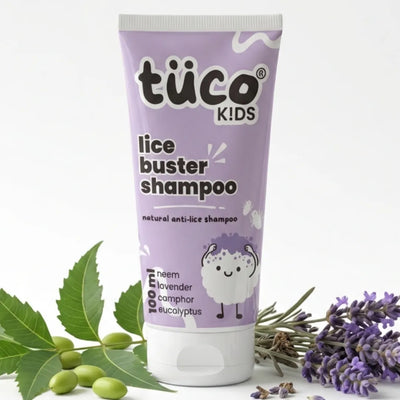
Natural formulations:
- Neem, tea tree, other botanicals
- Varying effectiveness
- Gentler but may require more applications
These specialized treatments contain ingredients that kill lice effectively while being safe for children's scalps.
Follow product instructions precisely. Under-treating or stopping treatment early allows surviving lice to rebuild population. Complete treatment requires following through entire recommended course.
Comprehensive Treatment Systems
Complete systems address all aspects of lice elimination:
- While primarily for dandruff, contains ingredients that discourage lice
- Shampoo + conditioner system
- Scalp health support (healthy scalp more resistant to lice irritation)
- Complete hair care including shampoo, conditioner, oil, detangler
- Maintaining hair health during and after lice treatment
- Makes post-treatment combing easier
- Reetha (soapnut) based—traditional lice deterrent
- Shampoo, conditioner, hair oil
- Gentle cleansing that supports lice prevention
- Natural approach to hair care
Using coordinated lice treatment systems ensures all necessary steps happen properly. These comprehensive approaches include:
- Initial treatment eliminating live lice
- Thorough nit removal tools and products
- Follow-up treatments catching newly hatched lice
- Preventive maintenance reducing reinfection risk
Complete systems work better than using single products hoping they solve everything alone.
Systematic Nit Removal: The Critical Step
After applying treatment product, use fine-tooth lice comb removing every single nit from hair. This tedious process is essential. Even few surviving nits can restart infestation within weeks.
Why nit removal critical:
- Most treatments don't kill all nits (eggs)
- Each surviving nit = future lice
- Nymphs hatch in 7-10 days
- Immediate reinfestation if nits remain
Proper nit removal technique:
1. Section hair into small portions:
- Quarter-size sections
- Use hair clips to separate
- Work systematically (don't miss areas)
2. Work through each section methodically:
- Start at scalp
- Comb from root to tip
- Slow, deliberate strokes
- Overlapping coverage
3. Wipe comb on white paper towel after each stroke:
- Inspect what you removed
- See nits clearly on white background
- Ensures comb clean for next stroke
4. Ensure complete coverage of entire head:
- Every section, no exceptions
- Easy to miss areas behind ears, nape
5. Repeat daily for week after treatment:
- Catches any nits missed initially
- Removes newly hatched nymphs before they mature
- Ensures complete elimination
Missing even small hair sections during nit removal leads to treatment failure.
Time investment: 30 minutes to 2+ hours depending on hair length and infestation severity. Worth every minute to prevent reinfestation.
Environmental Cleaning During Treatment
Eliminating lice from surroundings:
Bedding and Clothing
Wash all bedding, clothing worn during past 48 hours, and towels in hot water (at least 60°C). Dry on highest heat setting. Heat kills lice and nits that may have transferred to fabrics.
What to wash:
- All sheets, pillowcases, blankets
- Pajamas
- Clothes worn yesterday and today
- Bath towels
- Stuffed animals child sleeps with
Washing instructions:
- Hot water cycle (60°C / 140°F minimum)
- Regular detergent
- High heat dryer cycle (at least 30 minutes)
- Heat = key lice killer
Items that cannot be washed should be sealed in plastic bags for two weeks. Lice cannot survive this long without feeding, so bagging effectively eliminates them.
For non-washables:
- Heavy coats
- Backpacks
- Decorative pillows
- Seal in plastic bags
- Store away from living areas
- After 2 weeks, lice dead (starved)
Hair Accessories and Brushes
Soak all brushes, combs, hair ties, and accessories in hot soapy water for 10 minutes. This kills any lice or nits present on these items.
What to clean:
- All brushes and combs
- Hair ties, clips, headbands
- Barrettes, bobby pins
- Any item touching hair
Cleaning method:
- Hot water (not boiling—can damage plastic)
- Dish soap
- 10 minute soak
- Rinse thoroughly
Don't share these items between family members during treatment period. Each person should have dedicated hair care tools preventing cross-contamination.
Furniture and Carpets
Vacuum furniture, car seats, and carpets thoroughly. While lice rarely survive away from heads, vacuuming removes any that may have fallen. Dispose of vacuum bag immediately in outdoor trash.
Areas to vacuum:
- Upholstered furniture
- Car seats (entire car interior)
- Carpets and rugs
- Child's bedroom thoroughly
- Play areas
Important: Don't use insecticide sprays on furniture or carpets. These chemicals are unnecessary and potentially harmful. Thorough vacuuming provides adequate cleaning.
Why insecticides unnecessary:
- Lice can't survive off head long
- Sprays don't reach lice on heads (where they actually are)
- Chemical exposure risk to children
- False sense of security (people skip real treatments)
School Items
Clean backpacks, lunch boxes, and jackets following same protocols. Notify school of infestation so they can check other children and clean shared spaces if needed.
School communication:
- Follow school lice notification policies
- Inform teacher/nurse promptly
- Allows school to alert other parents
- Helps break transmission cycle
Prevention Strategies: Year-Round Vigilance
Preventing lice more effective than treating:
Regular Weekly Checks
Institute weekly lice checks for all family members during school year, winter included. Early detection prevents minor problems from becoming major infestations.
Check timing:
Sunday evenings work well:
- End of week (maximum exposure time)
- Before Monday return to school
- Becomes routine family health check
- Time to treat before school if found
Good lighting essential:
- Bright natural light or strong lamp
- Can't see lice/nits in dim light
Use fine-tooth comb:
- Special lice combs best
- Metal better than plastic (firmer, more effective)
Part hair into small sections:
- Systematic checking
- Don't miss areas
Focus on warm areas behind ears and neck:
- Most likely lice locations
- Check thoroughly
Making checks routine removes the stigma and ensures consistent vigilance.
No Sharing Policy
Teach children never to share hats, scarves, hair accessories, brushes, combs, or any items touching heads. This firm rule prevents most school-based transmission.
What never to share:
- Hats, caps, beanies
- Scarves
- Hoodies
- Hair ties, clips, headbands
- Brushes, combs
- Helmets (sports, bike)
- Earbuds, headphones (touch head/hair)
Explain why sharing these items spreads lice. Children who understand reasons follow rules better than those just told "don't share" without explanation.
Age-appropriate explanation:
- Young children: "Tiny bugs can crawl from one person's hat to another person's hair"
- Older children: Full explanation of lice transmission, biology
Hair Management
Keep long hair in braids, buns, or ponytails during school. Contained hair has less opportunity for head-to-head contact that spreads lice.
Protective hairstyles:
- Tight braids
- Buns
- Ponytails
- French braids
- Any style keeping hair close to head
Why this helps:
- Reduces hair flying loose during play
- Less likely to touch other children's hair
- Makes head-to-head contact less effective for lice transfer
This doesn't prevent lice completely but reduces transmission risk significantly during activities involving close contact.
Preventive Products
Some families use products containing ingredients that repel lice. While not foolproof, these deterrents add extra protection layer for children in schools experiencing frequent outbreaks.
Lice-repellent ingredients:
- Tea tree oil
- Neem oil
- Eucalyptus
- Lavender
- Rosemary
Application: Products formulated with these (shampoos, conditioners, leave-in sprays)
Apply these products as directed before school days, especially after lice notification letters come home.
Realistic expectations: Deterrents reduce risk but don't guarantee prevention. Continue checking regularly.
Managing School Situations
Navigating lice in school community:
Notification Protocols
Many schools require notification if child has lice. Follow these policies promptly. Other parents deserve warning so they can check their children preventing continued spread.
How to notify:
- Inform teacher or school nurse
- Schools typically send anonymous notification letters
- Your child's identity usually protected
Don't feel embarrassed. Lice infestations reflect exposure and transmission, not cleanliness or hygiene. Any child can get lice regardless of how clean their hair is.
Lice facts:
- Prefer clean hair (easier to attach to)
- No connection to socioeconomic status
- Happen in best schools
- Common childhood issue affecting millions yearly
Return-to-School Guidelines
Most schools require one complete treatment and thorough nit removal before allowing children to return. Some require verification from healthcare provider or school nurse.
Typical requirements:
- At least one full treatment completed
- Thorough nit removal (no live lice visible)
- Some schools: "nit-free" policy (no nits either)
- Verification: Parent signature or nurse check
Keep children home until they meet return criteria. Sending infested children back to school causes continued outbreak spreading.
Balance: Missing school is inconvenient, but spreading lice to 20+ classmates creates bigger problem.
Addressing Social Issues
If your child experiences teasing about lice, address it with teachers immediately. Educate your child about lice being common medical issue, not personal failure or uncleanliness.
Build child's confidence helping them understand:
- Lice can affect anyone
- Lots of kids get lice (more common than most realize)
- Successful treatment means problem is solved
- Nothing to be ashamed about
School responsibility: Teachers should educate students that lice not shameful, teasing unacceptable.
Persistent Infestation Solutions
When treatment doesn't work:
Retreatment Timing
Single treatments often fail because products don't kill all nits. Newly hatched lice emerge days after initial treatment. Follow product instructions about retreatment timing precisely.
Why retreatment necessary:
- Initial treatment kills live lice
- Some nits survive
- Nits hatch 7-10 days later
- Newly hatched nymphs need killing before they mature and lay more eggs
Typically, retreatment occurs 7-10 days after initial treatment catching lice that hatched from surviving nits.
Don't skip retreatment even if you don't see lice—they may be present but not yet visible.
Professional Help
If home treatments repeatedly fail, consult healthcare provider. Resistance to common lice treatment ingredients develops in some lice populations. Doctors can prescribe stronger medications for resistant cases.
When to seek medical help:
- Three failed home treatment attempts
- Persistent lice despite correct treatment and nit removal
- Severe scalp irritation or infection from scratching
- Uncertainty about what you're dealing with
Prescription options:
- Stronger insecticides
- Oral medications (for severe resistant cases)
- Professional nit removal services
Don't continue ineffective treatments hoping they'll eventually work. Three failed home treatment attempts warrant professional evaluation.
Checking All Family Members
Persistent infestations often result from family members passing lice back and forth. Check and treat all household members simultaneously even if only one shows symptoms.
Why whole-family treatment critical:
- Asymptomatic carriers (have lice but don't itch)
- Shared bedding, furniture, car
- Reinfection cycle if one person untreated
Missing one infested family member creates reservoir reinfecting others repeatedly.
Include:
- All children
- Parents
- Anyone regularly sleeping in house
- Check thoroughly before assuming "clear"
Complete Hair Care During and After Treatment
Supporting scalp health:
Recommended Care Systems
- Scalp health during lice treatment
- Flake Fighter shampoo + Tangle Tamer conditioner
- Soothing irritated scalp
- Preventing secondary issues
- Complete care: shampoo, conditioner, oil, detangler
- Post-treatment hair recovery
- Making combing easier (reduces stress during nit checks)
- Reetha-based natural deterrent
- Gentle on treated scalp
- Preventive maintenance
Why quality hair care matters during lice treatment:
- Treated scalp often irritated
- Gentle products reduce additional stress
- Good condition makes nit combing easier
- Supports scalp recovery
Long-Term Prevention Mindset
Sustained vigilance:
Ongoing Vigilance
Don't relax vigilance after treating one infestation. Lice remain common problem throughout children's school years requiring consistent attention year-round including all winter months.
Regular checks, education about avoiding head contact and sharing, and quick response to school notifications create defense against future infestations.
Maintenance routine:
- Weekly checks continue
- No-sharing rules reinforced
- Protective hairstyles maintained
- Quick response to any symptoms
Community Cooperation
Lice control requires community effort. When schools experience outbreaks, all families must check children and treat infestations promptly. Individual family diligence doesn't work if others ignore problems.
Community responsibility:
- Respond to school notifications
- Notify school if you find lice
- Don't send infested children to school
- Support school lice policies
Participate in school lice awareness programs and support policies reducing transmission and stigma.
Education Over Shame
Approach lice as manageable medical issue requiring specific treatments, not reflection of hygiene or parenting. This perspective reduces shame and improves community cooperation in outbreak management.
Children pick up on parental attitudes. Treating infestations matter-of-factly prevents emotional distress and social anxiety around common childhood problem.
Healthy mindset:
- Lice = common parasite, like getting a cold
- Treatment = straightforward medical intervention
- No shame, no panic
- Problem solved, move on
The Bottom Line
Winter doesn't protect against lice—vigilance does.
Key Takeaways
Why lice persist in winter: ✗ Cold doesn't kill lice (they live on warm scalps unaffected by outdoor temperature) ✗ School transmission continues (possibly increases with indoor crowding) ✗ Shared winter clothing creates new transmission routes ✗ Indoor heating provides ideal conditions for lice
Treatment essentials: ✓ Treat immediately (don't delay) ✓ Use specialized products (regular shampoo won't work) ✓ Perform thorough nit removal (every single nit) ✓ Wash bedding and clothing in hot water ✓ Retreatment 7-10 days later (critical—don't skip)
Prevention strategies: ✓ Weekly family checks (winter included) ✓ Strict no-sharing policies (hats, accessories, brushes) ✓ Contained protective hairstyles during school ✓ Quick response to school outbreak notifications ✓ Quality hair care systems supporting scalp health
Complete treatment systems ensure proper elimination addressing all life stages simultaneously.
The Critical Message
Don't let winter give you false security. Lice thrive year-round, potentially more so in winter when conditions favor them. The cold weather that parents trust to kill lice actually has zero effect on parasites living comfortably on warm scalps inside cozy hats and heated classrooms.
Check your children weekly. Check them in winter. Check them especially in winter when shared clothing and indoor crowding increase transmission risk while parental vigilance decreases due to seasonal myths.
Your child's winter coat may protect them from cold—but it won't protect them from lice. Only knowledge, vigilance, and prompt treatment do that.
Related Resources: