



Best Natural Soap & Body Wash for Kids in Winter
Winter changes what a good soap for dry skin actually needs to do. A bar or wash that felt perfectly fine in humid summer months can leave skin tight, flaky, and uncomfortable once the air turns cold and dry — here's exactly what to look for instead.
Tuco Kids tip: A gentle, moisturizing bath routine matters just as much as the lotion that follows it.
Contents
- Quick Comparison: Best Tuco Winter Bath Products
- Why Winter Needs a Different Soap
- Ingredients to Avoid in a Kids' Body Wash
- What to Look for Instead
- Bar Soap vs. Body Wash: Which Is Better for Winter?
- Using It Right: A Winter Bath Routine
- Choosing by Age
- Reading Labels: What "Natural" Actually Means
- Quick Recap Checklist
- When to See a Doctor
- FAQs
- Related Reads
Quick Comparison: Best Tuco Winter Bath Products
| Ingredients | Tuco Product Solution | Key Product Features | Age-wise Recommendation |
|---|---|---|---|
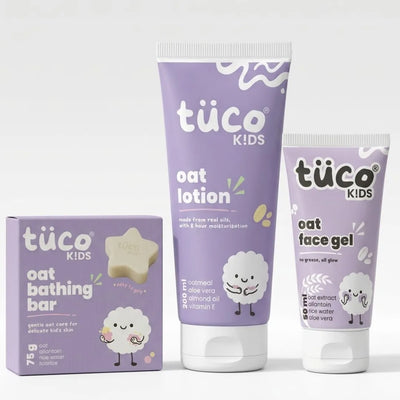
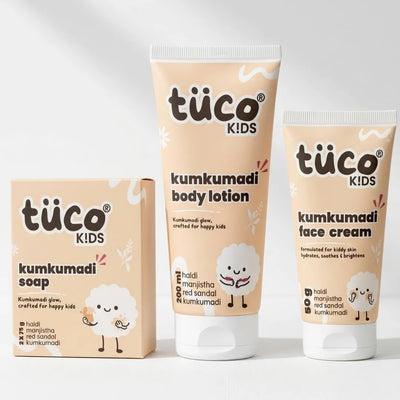
| Turmeric, Kakadu Plum, almond oil | 3-in-1 Bath Kit | Daily soap, lotion & face cream — a complete gentle winter routine | 3–15 years |
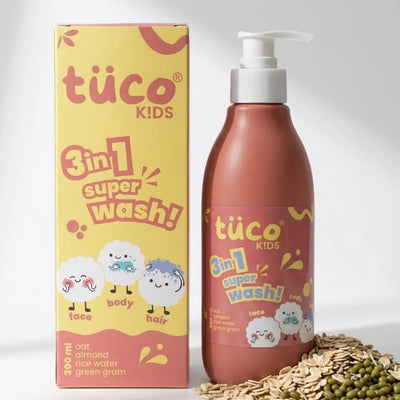
| Oat extract, aloe vera | 3-in-1 Oat Kit | Barrier-repair bathing bar for reactive, over-washed skin | 2–15 years, best for toddlers |
| Shea butter, almond oil, aloe vera | Deep Moisture Body Lotion | Post-bath follow-up for the driest winter skin | 3–15 years |
Why Winter Needs a Different Soap
A body wash for dry skin matters more in winter for a simple reason: skin's natural oil production doesn't increase to compensate for the drying effect of cold air and indoor heating, but a harsh cleanser still strips whatever oil is there just as effectively as it would in summer. The net effect compounds — environmental dryness plus a soap that strips further leaves noticeably less protective barrier than either factor alone. Choosing a gentler formula specifically for the colder months, even if a family's regular soap was perfectly fine in summer, addresses one of the most overlooked contributors to winter dryness.
Ingredients to Avoid in a Kids' Body Wash
Sulfates (sodium lauryl sulfate and similar foaming agents) create the rich lather many people associate with "clean," but that same foaming action strips natural oils aggressively — a real problem when skin is already fighting seasonal dryness. Added fragrance is a common irritant too, especially for kids with any tendency toward sensitive or reactive skin, and alcohol-based ingredients (sometimes added for a fresh feel) dry skin further rather than helping it. Reading the ingredient list on a best soap for kids product, rather than trusting marketing claims like "gentle" or "mild" alone, is worth the extra minute during winter shopping specifically.
What to Look for Instead
Moisturizing ingredients built into the wash itself — shea butter, almond oil, aloe vera, or turmeric — help offset some of the natural stripping any cleanser does, unlike a purely foaming formula with no added benefit. A pH-balanced, fragrance-light formula labeled specifically for kids' skin is generally a safer bet than an adult product, since kids' skin is thinner and more reactive to begin with. For families specifically hunting for the best body wash for kids during winter, prioritizing these moisturizing, gentle-cleansing qualities over strong fragrance or heavy lather delivers noticeably better results by the end of the season.
Bar Soap vs. Body Wash: Which Is Better for Winter?
Neither format is inherently superior — the formulation matters far more than whether it's a bar or a liquid. A well-formulated bar soap with moisturizing oils built in can outperform a poorly formulated liquid wash, and vice versa. That said, bar soaps do tend to dry out faster between uses (making them slightly easier to over-scrub with), while liquid washes are easier to dispense in a controlled, gentler amount, which can matter for younger kids who tend to use more product than needed. For most families, the deciding factor should be the ingredient list rather than the format itself.
Shop 3-in-1 Oat Kit →

Using It Right: A Winter Bath Routine
Even the best kids body wash works better as part of a complete routine than used alone. Keep water lukewarm rather than hot, limit bath time to 5–10 minutes, apply the wash gently without heavy scrubbing (which adds mechanical irritation on top of any chemical stripping), and rinse thoroughly to avoid leaving any residue on skin. Moisturizing within a few minutes of drying off, while skin is still slightly damp, is the single step that makes the biggest difference to how skin holds up through the rest of the day.
Choosing by Age
Toddlers and younger kids generally benefit most from the gentlest, most fragrance-light formulas available, since their skin is thinnest and most reactive. Older kids can generally tolerate a somewhat wider range of formulas, though the same core principles — avoiding sulfates and heavy fragrance during winter specifically — still apply across the board. Always check that a product's labeled age range genuinely covers your child before switching, rather than assuming a "gentle" claim applies universally.
Reading Labels: What "Natural" Actually Means
"Natural" isn't a regulated term on most personal care labels, which means it can be applied fairly loosely by marketing rather than reflecting a consistent standard. The more useful approach is checking the actual ingredient list for the specific things that matter — no sulfates, no added synthetic fragrance, and ideally a recognizable moisturizing ingredient like shea butter, almond oil, or turmeric near the top of the list rather than buried at the bottom in a trace amount. A short, recognizable ingredient list is often a more reliable signal of genuine gentleness for a best soap for kids than the word "natural" printed on the front of the bottle alone.
Quick Recap Checklist
Look for a sulfate-free, fragrance-light formula with a genuine moisturizing ingredient near the top of the list. Choose bar or liquid based on what's easiest for your household to use gently and consistently, rather than assuming one format is inherently better. Follow with a rich lotion within minutes of bathing. And check the actual ingredient list rather than trusting "natural" or "gentle" marketing claims at face value — together, these habits do more for winter comfort than any single product swap alone.
One more practical habit worth building in: doing a quick patch test on a small area of skin whenever trying a genuinely new soap or wash for the first time, especially for kids with any history of sensitivity. Waiting a day to confirm there's no reaction before using it across the whole body is a small extra step that can save a week of discomfort if a particular formula doesn't agree with your child's skin.
When to See a Doctor
Switching to a gentler, more moisturizing wash resolves most soap-related dryness within a week or two. See a doctor if skin becomes increasingly irritated or red after switching products (a sign of possible allergy or sensitivity to a specific ingredient), if cracking or bleeding develops, or if dryness persists despite a genuinely gentle routine — at that point, an underlying skin condition may be a better explanation than the soap itself.
FAQs
What's the best soap for dry skin in kids during winter?
A sulfate-free, fragrance-light formula with moisturizing ingredients like shea butter, almond oil, or turmeric built in tends to work best for winter-specific dryness.
Should I switch soaps between summer and winter?
It's a good idea — a soap that's fine in humid summer conditions can strip too much oil once winter air is already drying skin on its own.
Is bar soap or body wash better for kids' winter skin?
Neither format is inherently better — the ingredient list matters more than whether it's a bar or a liquid, though liquid washes are easier to dose gently for younger kids.
What ingredients should I avoid in a kids' body wash?
Sulfates, added fragrance, and alcohol-based ingredients are the main culprits that strip natural oils and irritate already-dry winter skin.
What is the best body wash for kids with sensitive winter skin?
Look specifically for pH-balanced, fragrance-light, sulfate-free formulas labeled for children, ideally with a moisturizing ingredient built directly into the wash.
How often should kids bathe in winter?
Daily or every other day is generally fine for most kids — the key factors are keeping water lukewarm and baths brief, not the frequency itself.
Does the best soap for children need to be unscented?
Not necessarily unscented, but fragrance-light is a safer bet, since added fragrance is one of the most common triggers for winter skin irritation.
When should I see a doctor about my child's reaction to a new soap?
If skin becomes more irritated or red after switching, if cracking or bleeding develops, or if dryness persists despite a genuinely gentle routine.
Can I use the same soap for my baby and older kids?
Only if it's labeled as suitable for the youngest child's age range — a gentle, fragrance-light formula rated for babies is usually safe for older kids too, though the reverse isn't always true.
Does a moisturizing soap replace the need for a separate lotion?
Not entirely — a moisturizing wash reduces how much oil is stripped during bathing, but a dedicated lotion applied afterward still does most of the work of restoring and sealing in moisture.
Can a fragranced soap ever be okay for winter?
Light, naturally derived fragrance from an ingredient like turmeric is generally better tolerated than added synthetic perfume, but for kids with any history of sensitivity, fragrance-free remains the safer default during winter months.
How do I introduce a new winter soap without upsetting my child's existing routine?
Swap gradually rather than all at once — using the new formula for a few days while watching for any reaction gives you a clear read before fully replacing the old product.