



Aloe Vera for Kids' Skin: Complete Benefits Guide for Indian Parents
Your 10-year-old daughter develops her first pimples. You reach for your aloe vera plant, breaking off a leaf to apply the gel—something your mother did for you growing up. But she resists: "That's gross and slimy!" Your 7-year-old son comes home sunburned from cricket practice. The pharmacy stocks dozens of aloe products, but you're overwhelmed—which are safe for children? Are all aloe products equally effective? Your neighbor swears by pure aloe gel for everything, but your pediatrician recommends formulated products. Who's right? And honestly, is aloe vera genuinely beneficial for children's skin, or is it just another overhyped "natural" ingredient?
Aloe vera has earned its reputation as a skincare superstar for good reason. For children, aloe vera offers exceptional benefits without the harsh chemicals found in many conventional skincare products. The evidence is compelling: Over 200 bioactive compounds, 4,000+ years of traditional use, and extensive modern research validating benefits for hydration, healing, inflammation reduction, and antibacterial action.
Parents searching for gentle yet effective solutions for their children's skin concerns often discover aloe vera as a safe, natural option. This comprehensive guide explains aloe vera for kids' skin—what it is, scientifically-proven benefits, how it works for different skin types and concerns, safe usage guidelines, and choosing between pure gel and formulated products—because understanding this powerful ingredient helps you make informed decisions for your child's skin health.
What Is Aloe Vera and Why It Works for Skin
Understanding this ancient remedy:
Nature's Healing Gel
Aloe vera gel comes from the thick leaves of the aloe plant (Aloe barbadensis miller).
Extraction process: When broken, the leaves release a clear, cooling gel packed with over 75 active compounds including vitamins, minerals, enzymes, amino acids, and antioxidants.
Physical properties:
- Clear to slightly yellow gel
- Cooling sensation on contact
- Lightweight, non-greasy
- 99% water, 1% active compounds (but that 1% is powerful!)
This complex composition makes aloe vera uniquely effective for multiple skin concerns.
Key Active Components
Aloe contains vitamins A, C, and E, all powerful antioxidants. It has B vitamins including folic acid.
Vitamins:
- Vitamin A: Supports skin cell renewal, healing
- Vitamin C: Antioxidant, collagen production, brightening
- Vitamin E: Protection, moisture retention
- B-complex (including folic acid): Overall skin health
The polysaccharides in aloe provide anti-inflammatory benefits while acemannan stimulates immune function and wound healing.
Key compounds:
- Polysaccharides: Anti-inflammatory, moisturizing
- Acemannan: Immune stimulation, wound healing
- Gibberellins and auxins: Growth hormones, healing
- Enzymes: Gentle exfoliation, inflammation reduction
Natural salicylic acid offers gentle exfoliation and antibacterial action.
Salicylic acid (naturally occurring): Unclogs pores, antibacterial, anti-inflammatory—much gentler than synthetic versions.
Perfect for Children's Skin
Unlike many active skincare ingredients that require careful concentration control, aloe vera is naturally gentle.
Safety profile:
- Non-toxic: Safe even if accidentally ingested in small amounts
- Hypoallergenic for most people: Rare allergic reactions
- Safe even for very young children's delicate skin
- pH-balanced: Close to skin's natural pH
- No irritation: Soothing, not sensitizing
For Indian children: Traditional ingredient (used for centuries in Indian households), climate-appropriate (cooling in hot weather), culturally familiar.
Aloe Vera Benefits for Children's Facial Skin
Comprehensive advantages:
1. Intense Hydration Without Weight
Aloe vera is 99% water, making it incredibly hydrating. The remaining 1% contains the active compounds that make it so beneficial.
This composition provides serious moisture without any heavy, greasy feeling that children hate.
Hydration mechanism:
- Humectant properties: Draws moisture into skin
- Moisture retention: Polysaccharides lock water in
- Lightweight delivery: No heavy oils, no greasiness
- Fast absorption: Sinks in immediately
Perfect for Indian climate: Hydration without heaviness = ideal for hot, humid conditions where heavy creams feel suffocating.
2. Anti-Inflammatory Soothing
Children's skin faces constant irritation from sun, wind, pollution, and minor injuries. Aloe vera's anti-inflammatory properties calm all these irritations quickly.
What it soothes:
- Mild sunburn: Cooling relief, reduces redness
- Windburn: Calms irritation
- Heat rash, prickly heat: Common in Indian summers
- Minor scrapes, scratches: Reduces inflammation
- Insect bites: Decreases itching, swelling
- Acne inflammation: Reduces angry, red appearance
Whether it's mild sunburn, windburn, or the redness from a scraped knee, aloe provides immediate cooling relief.
Indian summers: Heat, humidity, sun exposure = frequent skin irritation. Aloe's soothing properties particularly valuable.
3. Antibacterial Protection
The natural salicylic acid and other compounds in aloe vera have gentle antibacterial properties. This helps keep skin clean and prevents the minor infections that can develop when children touch their faces with dirty hands or share sports equipment.
Antibacterial action:
- Kills acne-causing bacteria (Propionibacterium acnes)
- Prevents secondary infections in cuts, scrapes
- Maintains clean skin environment
- Gentle, non-resistance-forming (unlike antibiotics)
For school-age children: Constant touching, sharing items = bacterial exposure. Aloe's antibacterial properties protective.
4. Accelerated Healing
Aloe vera stimulates collagen production and increases blood circulation to damaged areas. This means cuts, scrapes, bug bites, and breakouts all heal faster when aloe is applied regularly.
Healing mechanisms:
- Collagen stimulation: Rebuilds damaged tissue
- Increased circulation: More nutrients, oxygen to wound
- Immune activation: Acemannan enhances healing response
- Reduced scarring: Anti-inflammatory action prevents excessive scar formation
For active children: Constant minor injuries (scrapes, cuts, bug bites) = frequent need for healing support.
5. Antioxidant Protection
Vitamins C and E in aloe vera neutralize free radicals from pollution and UV exposure. For children spending hours outdoors, this antioxidant protection supports long-term skin health and prevents premature damage.
Free radical protection:
- UV damage: Neutralizes oxidative stress from sun
- Pollution: Combats urban environmental damage
- Prevents long-term damage: Childhood sun exposure = adult skin cancer risk
- Maintains healthy skin: Prevents premature aging
Indian urban children: High pollution exposure (Delhi, Mumbai, Bangalore) = significant free radical damage. Antioxidant protection crucial.
6. Gentle Exfoliation
The natural enzymes in aloe vera gently dissolve dead skin cells, preventing the buildup that leads to dullness and clogged pores. This happens so gently that children don't experience any irritation or peeling.
Enzymatic exfoliation:
- Gentle, gradual: Not abrasive scrubbing
- No irritation: Unlike harsh physical or chemical exfoliants
- Prevents clogged pores: Removes dead cell buildup
- Brightens complexion: Reveals fresh, glowing skin
Better than: Harsh scrubs, strong acids inappropriate for children's skin.
Aloe Vera for Specific Children's Skin Concerns
Targeted applications:
For Acne-Prone Skin
Soothing Inflammation Without Dryness: Acne treatments typically dry skin as they work to control oil and kill bacteria. This dryness can become so uncomfortable that children stop using the products, defeating the purpose.
Aloe vera solves this problem by providing lightweight moisture that doesn't clog pores. Children can treat their acne consistently because the product doesn't make their skin feel awful.
Healing Active Breakouts: Aloe vera accelerates wound healing, helping pimples resolve faster.
Preventing Acne Scars: The compounds in aloe vera support skin regeneration and reduce inflammation that leads to scarring. Regular use of aloe-containing acne products helps minimize the dark marks and texture issues that acne often leaves behind, particularly important for children's developing self-esteem.
Why aloe essential in acne products: Balances drying antibacterial ingredients, maintains moisture, reduces inflammation, accelerates healing—comprehensive approach.
For Oily Skin (The Hydration Paradox)
The Hydration Paradox: Oily skin still needs moisture. When oily skin becomes dehydrated, it overproduces sebum to compensate, making oiliness worse. The challenge is finding moisture that hydrates without adding grease. Aloe vera solves this perfectly.
How aloe vera helps oily skin:
- Lightweight hydration: Water-based, no oil added
- Balances oil production: Proper moisture = less compensatory sebum
- Non-comedogenic: Won't clog pores
- Matte finish: No greasy shine
Oil Control Through Proper Hydration: When skin receives adequate moisture from aloe vera, it stops overproducing oil. Over 2 to 3 weeks of consistent use, children notice their faces don't become as greasy throughout the day.
For Indian children: High humidity already makes skin feel oily—heavy creams unbearable. Aloe's lightweight hydration perfect.
For Dry Skin
While aloe hydrates beautifully, very dry skin may need additional moisture.
Aloe for dry skin:
- Base hydration: Excellent first layer
- May need support: Layer richer cream over aloe if very dry
- Combination approach: Aloe gel + nourishing face cream for complete care
Layering strategy: Aloe gel (hydration) → wait 1-2 minutes → richer cream (occlusion, additional nourishment).
For Sensitive Skin
Aloe vera is exceptionally gentle, making it perfect for reactive skin. Children who can't tolerate most products usually handle aloe beautifully.
Why aloe ideal for sensitive skin:
- Anti-inflammatory: Calms reactivity
- No harsh chemicals: Natural, gentle
- Hypoallergenic: Rare reactions
- Soothing: Immediate comfort
Common with Indian children: Hard water, pollution, climate = many develop sensitive, reactive skin. Aloe's gentleness makes it suitable.
For Combination Skin
Apply aloe gel to oily zones and richer creams to dry areas, or use aloe-containing gel products all over for balanced hydration.
Targeted approach: Different zones need different care—aloe's versatility allows customization.
For Sun-Damaged Skin
After Sun Exposure: Immediately after outdoor play, apply aloe-containing products to soothe any sun exposure. The cooling, anti-inflammatory properties provide instant relief while preventing damage from progressing.
Post-sun benefits:
- Immediate cooling: Soothes sunburn
- Reduces inflammation: Prevents worsening
- Repairs damage: Antioxidants neutralize free radicals
- Prevents peeling: Maintains moisture
Critical understanding: Aloe vera soothes sun damage but doesn't prevent it. Always use sunscreen for protection, with aloe products providing additional support and repair.
Using Aloe Vera Products in Daily Skincare
Practical application:
Morning Routine for Oily Skin
- Cleanse with gentle face wash
- Apply aloe vera gel for hydration, oil control
- Protect with Sunscreen SPF 30 before outdoor activities
Lightweight approach: Quick, comfortable, no greasiness.
Morning Routine for Acne-Prone Skin
- Cleanse with gentle face wash
- Apply acne gel with aloe vera for treatment + hydration
- Protect with Sunscreen SPF 30
Treatment + moisture: Addresses acne without excessive dryness.
Evening Routine (All Skin Types)
- Cleanse thoroughly (remove dirt, sweat, sunscreen)
- Apply aloe-containing product appropriate for skin type
- Allow overnight healing, repair
Repair time: Skin regenerates most actively during sleep—aloe supports this process.
Post-Sun or Post-Play
Immediately after outdoor activity:
- Cleanse (remove sweat, dirt)
- Apply aloe generously
- Allow cooling, soothing action
- Follow with regular routine
Quick recovery: Prevents accumulated damage.
Complete Skincare Systems
Quality formulated products:
Facial Care with Aloe Benefits
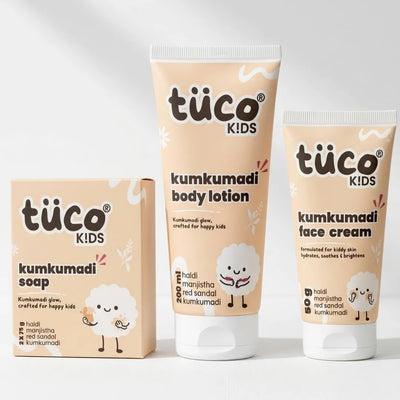
- Kumkumadi Face Cream + Dull Skin Face Wash
- May contain aloe or complementary soothing ingredients
- Addresses uneven tone, dullness
- Complete facial care system
- Traditional + modern benefits
- Gentle, effective for children
Complementary Care
Cleansing:
- Best Soap And Face Washes For Pre-Teens And Teenagers
- 10 Best Moisturizing Soaps In India For Dry Skin
- Best Kids Soap In India
Hair care: Ultimate Hair Care Kit
Pure Aloe Gel vs. Formulated Products
Choosing the right approach:
Benefits of Pure Aloe Gel (From Plant)
Advantages:
- 100% natural: No additives
- Cost-effective: Grow at home
- Fresh: Maximum potency
- Traditional: Cultural connection
Challenges:
- Messy application: Slimy texture children resist
- Oxidizes quickly: Loses potency rapidly once cut
- Storage issues: Must use immediately or refrigerate
- Inconsistent results: Potency varies plant to plant
- Limited shelf life: Goes bad quickly
Benefits of Formulated Products
Advantages:
- Convenient: Ready to use, portable
- Stable: Longer shelf life, consistent potency
- Enhanced benefits: Combined with complementary ingredients
- Pleasant texture: Children more willing to use
- Tested concentration: Optimal effectiveness
- Clean application: No sliminess
Why formulations often better for daily use: Consistency, convenience, willingness to use regularly = better results than occasional pure gel application.
Combination Approach
Best of both:
- Daily care: Formulated products (consistent, convenient)
- Acute needs: Fresh aloe plant gel (immediate sunburn, bug bite relief)
- Backup: Keep plant for emergencies, rely on products for routine
What Aloe Vera Cannot Do
Realistic expectations:
Not a Complete Acne Solution Alone
While beneficial, aloe vera works best combined with antibacterial ingredients like tea tree oil. Aloe alone won't clear significant acne—needs comprehensive approach.
Best approach: Aloe + antibacterial + oil control + proper cleansing = effective acne care.
Requires Sunscreen Partnership
Aloe soothes and repairs sun damage but doesn't prevent it. Never rely on aloe for sun protection—it's not sunscreen.
Proper use: Sunscreen (prevention) + aloe (repair) = comprehensive sun care.
Not for Severe Skin Conditions
Serious eczema, psoriasis, or cystic acne need medical treatment. Aloe vera supports skin health but doesn't replace dermatologist care when needed.
When to see doctor:
- Severe, persistent acne
- Chronic eczema, psoriasis
- Infected wounds
- Any concerning skin condition
Aloe role: Supportive, complementary—not primary treatment for serious conditions.
Safety and Precautions for Children
Using aloe safely:
Patch Testing
Even natural ingredients can cause reactions:
- Apply small amount to inner forearm
- Wait 24 hours
- Check for any reaction
- Proceed if clear
Rare but possible: Some children allergic to aloe (very uncommon).
Age Appropriateness
Generally safe for all ages:
- Infants: Can use on skin (not internally)
- Toddlers: Gentle application
- School-age: Can self-apply with supervision
- Teens: Full independence
Always: Age-appropriate formulations, proper supervision.
Oral Consumption Warning
Topical aloe = safe. Oral aloe = caution:
- Don't give aloe internally to children without medical advice
- Laxative effects can cause problems
- Topical use only
If accidentally ingested small amount (from plant or product): Usually no concern, but monitor.
The Bottom Line
Aloe vera for kids: Gentle, effective, versatile.
Key Takeaways
What aloe vera is: ✓ Gel from aloe plant leaves ✓ 99% water, 1% bioactive compounds (75+ active substances) ✓ Vitamins A, C, E, B-complex; polysaccharides; acemannan; enzymes ✓ Natural salicylic acid
Aloe vera benefits for children's skin: ✓ Intense hydration (lightweight, non-greasy) ✓ Anti-inflammatory soothing (sunburn, irritation, heat rash) ✓ Antibacterial protection (acne, infections) ✓ Accelerated healing (cuts, scrapes, breakouts) ✓ Antioxidant protection (UV, pollution damage) ✓ Gentle exfoliation (removes dead cells, brightens)
Best for specific concerns: ✓ Acne-prone: Hydrates without clogging, reduces inflammation, prevents scars ✓ Oily skin: Lightweight moisture balances oil production ✓ Dry skin: Hydration (may need additional moisture) ✓ Sensitive skin: Exceptionally gentle, soothing ✓ Sun damage: Immediate cooling relief, repair
How to use: ✓ Morning: Cleanse → aloe product → sunscreen ✓ Evening: Cleanse → aloe product → overnight healing ✓ Post-sun: Immediate application for soothing ✓ Twice daily for best results
Pure gel vs. formulated products: ✓ Pure gel: Fresh, natural, traditional (but messy, inconsistent, short shelf life) ✓ Formulated products: Convenient, stable, enhanced benefits (better for daily use) ✓ Best approach: Daily formulated products + fresh gel for acute needs
What aloe cannot do: ✗ Clear acne alone (needs comprehensive treatment) ✗ Replace sunscreen (soothes damage, doesn't prevent) ✗ Treat severe conditions (medical care needed)
Safety: ✓ Generally very safe for children ✓ Patch test new products ✓ Topical use only (no oral without medical advice) ✓ Rare allergic reactions possible
Quality products: ✓ Patchy Skin Kit, Kumkumadi Glow Kit ✓ Complementary care products
The Core Message
Your daughter's first pimples don't need your grandmother's fresh-cut aloe plant (though it works!). Modern formulated products incorporating aloe + tea tree + rose water provide comprehensive acne care she'll actually use (not resist slimy texture).
Your sunburned son benefits from aloe's immediate cooling relief—fresh plant gel OR quality aloe product applied generously post-exposure, repeated several times daily.
The winning approach: Keep aloe plant for acute needs (sunburn, bug bites, minor scrapes), use quality formulated products for daily skincare routine—combining traditional wisdom with modern convenience.
Start today: Morning and evening gentle cleansing followed by aloe-containing product appropriate for skin type, plus religious sunscreen during day. Within 2-3 weeks, notice improved hydration, fewer breakouts, faster healing, calmer skin—proving aloe's 4,000-year reputation well-deserved.
Aloe vera offers exceptional benefits for children's facial skin, particularly when combined with complementary ingredients in professionally formulated products—honoring ancient wisdom while meeting modern practical needs.
Because the best skincare for children bridges traditional ingredients with scientific formulation, cultural wisdom with evidence-based practice, natural gentleness with proven effectiveness—and aloe vera perfectly embodies this balance.
Related Resources: