

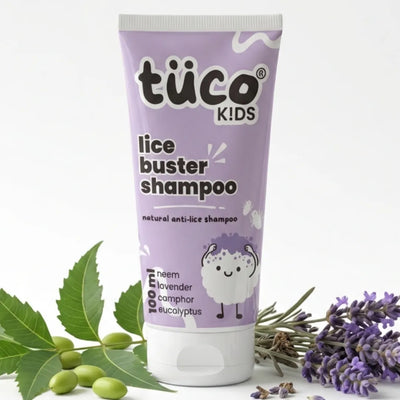



Best Hair Conditioner for Kids in 2026
Most parents shampoo their child's hair every wash day and stop there — conditioner feels like an "adult" step, or something reserved for special occasions. But a child's hair strand is thinner and more porous than an adult's, which means it tangles faster, frizzes faster, and loses moisture faster after every single shampoo. Skipping conditioner isn't saving a step; it's usually what's behind the daily hairbrush battles, the flyaways, and the dry, rough ends parents assume are just "how kids' hair is."
Tuco Kids tip: If bath-time detangling turns into tears more often than not, a purpose-built hair conditioner routine solves this in one wash — no more wrestling a comb through knots.
Shop Tangled & Frizzy Hair Regimen →

Contents
- Quick Comparison: Best Tuco Conditioning Products for Kids
- Why Kids Need a Conditioner, Not Just Shampoo
- Signs Your Child's Hair Needs Conditioner
- The Right Ingredients — and What to Avoid
- Decision Tree: Which Conditioner Fits Your Child's Hair
- How to Apply Conditioner the Right Way
- Building a Simple Weekly Hair-Care Routine
- When to Loop In a Dermatologist
- FAQs
- Related Reads
Quick Comparison: Best Tuco Conditioning Products for Kids
| Ingredients | Tuco Product Solution | Key Product Features | Age-wise Recommendation |
|---|---|---|---|
| Botanical detanglers, shea butter, argan oil | Tangled & Frizzy Hair Regimen | Full detangling routine built for knots, flyaways, and frizz — the closest thing to a dedicated conditioner in the range | 3–15 years |
| Reetha (soap nut), cold-pressed coconut oil | Reetha Shampoo & Coconut Hair Oil | Pre-wash oil massage plus a gentle cleanse — conditions strands and calms the scalp before the tangle-prone bath step | 2–15 years |
| Reetha, natural saponins, no sulphates | Reetha Shampoo for Kids | A mild, everyday cleanser that leaves hair soft enough to pair with lighter conditioning on non-oily days | 2–15 years |
| Tea tree, neem, gentle botanicals | Anti-Dandruff Shampoo | Best paired with conditioner (not skipped) when flaking or oil buildup needs addressing at the same time as dryness | 4–15 years |

Why Kids Need a Conditioner, Not Just Shampoo
- Shampoo cleans the scalp and strands but strips away natural oils in the process — a child's hair strand is thinner than an adult's, so that loss shows up faster as dryness, static, and tangles.
- A good mild conditioner replaces that lost moisture and smooths the outer layer of the hair shaft, which is what actually makes a comb glide through instead of catching on every knot.
- Most parents can apply conditioner from around age 2, and by 6+ years it can become a regular part of every wash — occasional use for very long or curly hair earlier on, and a consistent step once hair is thicker or shoulder-length and beyond.
- Conditioning also reduces breakage from daily brushing and ponytails — repeated friction on dry, unconditioned hair is one of the most overlooked reasons kids seem to have frizzy, flyaway strands no matter how often they're brushed.
- Where most competitor guides stop at "pick a gentle formula," the bigger overlooked factor is consistency — a conditioner used once a month does very little; it's the repeated moisture-replenishing habit after every wash that actually changes how manageable a child's hair becomes.
Signs Your Child's Hair Needs Conditioner
- Tangles that form within hours of a fresh wash — a sign the hair shaft is rough and catching on itself rather than lying smooth.
- Static and flyaways, especially in dry weather or after wearing a hat — dry strands hold static far more than moisturized ones.
- Dull, rough-looking ends, particularly on longer hair, where the oldest, most weather-exposed strands show damage first.
- Audible or visible "crunching" when running fingers through hair after it dries — a telltale sign of a stripped, unconditioned hair cuticle.
- Comb resistance — if detangling takes several minutes and multiple sections every single wash day, that's your clearest cue that a rinse-out hair conditioner for frizzy hair needs to join the routine.
Shop Tangled & Frizzy Hair Regimen →

The Right Ingredients — and What to Avoid
- Look for: glycerin, aloe vera, and panthenol, which draw moisture into the hair shaft, plus light oils like argan, jojoba, and coconut that seal that moisture in without weighing fine hair down.
- A genuinely good conditioner for rough hair: in kids should feel almost invisible once rinsed — no heaviness, no residue, just noticeably smoother strands.
- Avoid: harsh sulfates, parabens, drying alcohols, synthetic fragrance, and heavy silicones or waxes — silicones in particular coat the hair rather than nourish it, and build up over repeated washes until hair actually feels heavier and duller.
- A genuine sulfate free conditioner or rinse doesn't just avoid irritation — it also preserves whatever natural shine and softness your child's hair already has, instead of stripping it with every wash.
- Because children's scalps are more delicate than adults', a paraben free conditioner matters just as much as the moisturizing ingredients themselves — it's not just a nice-to-have label, it's what keeps a sensitive scalp from reacting over time.
- Competitor roundups often focus purely on curl definition or shine — a gap worth flagging for Indian parents is humidity resistance, since high-humidity climates need a slightly richer, more sealing formula than what's typically recommended for drier climates abroad.
Decision Tree: Which Conditioner Fits Your Child's Hair
- Is your child's hair long, thick, or prone to tangling into knots? → A full detangling regimen with a rinse-out conditioner built specifically for knots is the most effective starting point — this is exactly what the Tangled & Frizzy Hair Regimen is built for.
- Is the hair fine, short, or shoulder-length with only occasional frizz? → A lighter conditioning step — even a leave-in mist worked through damp ends — is usually enough, rather than a heavy rinse-out formula.
- Is your child's scalp also oily or flake-prone alongside the dryness at the ends? → Don't skip conditioner to "fix" the oily scalp; instead pair a clarifying shampoo at the roots with conditioner applied only from mid-length to ends.
- Does your child have very dry, coily, or curl-pattern hair? → This hair type loses moisture fastest of all and benefits most from a richer, oil-based conditioning routine used every wash, not just occasionally.
- Is frizz mainly showing up in humid weather or after swimming? → Rinse hair promptly after pool time and follow with conditioner the same day — chlorine and humidity both strip moisture in ways a once-a-week routine won't keep up with.
Shop Reetha Shampoo & Coconut Hair Oil →
How to Apply Conditioner the Right Way
- Apply conditioner mid-length to ends first, since roots rarely need it and over-conditioning near the scalp can leave hair looking flat or greasy faster.
- Comb the conditioner through with a wide-tooth comb before rinsing — this is a step most parents skip, but detangling while the conditioner is still in the hair is significantly gentler than combing dry or post-rinse hair.
- Leave it in for the time stated on the product rather than rinsing immediately — most conditioning ingredients need a minute or two of contact time to actually smooth the hair cuticle.
- Rinse with cool or lukewarm water rather than hot — hot water reopens the hair cuticle, undoing some of the smoothing effect you just added.
- For a conditioner for daily use, a lighter formula prevents buildup — reserve richer, more intensive conditioning for once or twice a week rather than every single wash if hair is fine or short.
Shop Reetha Shampoo →
Building a Simple Weekly Hair-Care Routine
Consistency does more for a child's hair than any single "best" product — the same way a skipped conditioner step shows up as tangles within days, a regular routine shows results within a wash or two.
- Every wash day: shampoo at the roots, then apply conditioner from mid-length to ends before rinsing. This two-step habit alone resolves most everyday tangling and frizz.
- Twice a week for longer or curlier hair: a slightly richer conditioning treatment left in for a couple of extra minutes helps thicker strands hold onto moisture between washes.
- Before school or sports days: a quick comb-through with conditioner still in the hair keeps knots from setting in overnight, which is often the real reason morning hair routines take so long.
- After swimming or heavy sweating: rinse and condition the same day rather than waiting for the next scheduled wash — chlorine and sweat both dry out hair faster than a weekly routine alone can offset.
- Once a month: check in on how detangling is going. If knots are still forming quickly despite regular conditioning, it may be time to size up to a richer best organic hair conditioner rather than adjusting technique alone.
A well-conditioned routine also protects against everyday styling damage — ponytails, braids, and hats all put repeated friction and tension on hair, and strands that are properly moisturized handle that stress with far less breakage than dry, unconditioned ones.
Find Your Solution →
When to Loop In a Dermatologist
Most tangling, frizz, and dryness responds well to a consistent conditioning routine within a wash or two. It's worth a dermatologist's opinion instead of continuing to switch products if:
- The scalp becomes red, itchy, or irritated after introducing a new conditioner — a sign of possible sensitivity to an ingredient rather than something more conditioner can fix.
- Hair is breaking off or thinning noticeably rather than just tangling, which points to a different underlying issue than dryness alone.
- Flaking or oiliness at the scalp persists despite a good routine — in that case, pair a clarifying, dandruff-focused shampoo with your conditioning step rather than dropping conditioner altogether.
- Dryness and roughness don't improve at all after 2–3 weeks of consistent conditioning, which is unusual and worth a second look.
FAQs
Do kids really need conditioner, or is shampoo enough?
Kids benefit from conditioner even more than adults in many cases — their hair strands are thinner and more porous, so they lose moisture faster after shampooing. Conditioner replaces that moisture and makes daily detangling far easier.
What age can kids start using conditioner?
Conditioner is generally fine from around age 2 for very long or curly hair used occasionally, and can become a regular step in the routine by age 6 and above. Under 2, it's usually unnecessary unless a doctor has advised otherwise.
What ingredients should I avoid in a kids' conditioner?
Steer clear of harsh sulfates, parabens, drying alcohols, and heavy silicones or waxes. These can irritate a delicate scalp or build up on hair over time, making it look duller and heavier rather than softer.
What should I look for in a good kids' conditioner?
Moisture-drawing ingredients like glycerin, aloe vera, and panthenol, paired with light sealing oils such as argan, jojoba, or coconut, tend to work best. A sulfate-free, paraben-free formula is the safest baseline for a child's sensitive scalp.
How often should I condition my child's hair?
Most kids do well with conditioner after every shampoo wash, applied from mid-length to ends. Fine or short hair can use a lighter formula more frequently, while thicker or curlier hair often benefits from a richer conditioner used consistently.
Can conditioner really fix frizzy or tangled hair in kids?
Yes — frizz and tangling are usually signs of a dry, roughened hair cuticle, and conditioner smooths that cuticle back down. Most parents see a noticeable difference in detangling ease from the very first conditioned wash.
Is sulfate-free or paraben-free conditioner actually better for kids?
Yes — children's scalps are more delicate and reactive than adult scalps, so sulfate-free and paraben-free formulas are less likely to cause irritation, dryness, or a reaction over repeated use.
My child has an oily scalp — should I skip conditioner?
No — skipping conditioner doesn't fix an oily scalp, and it usually leaves the ends drier and more prone to frizz. Instead, keep the conditioner focused on the mid-lengths and ends while using a clarifying shampoo at the roots.
Related Reads
- Kids' Dandruff Home Remedies for Winter: Natural Solutions That Work
- Post-Fever Hair Fall in Children, Explained
- Why Is My Child's Scalp So Itchy? A Parent's Diagnostic Guide
- Dandruff vs. Dry Scalp in Kids: How to Tell the Difference and Treat Each
- What Causes Dandruff in Children? Top Causes and Triggers Explained
- Child Dandruff Remedies: Causes and Best Remedies for Quick Relief